No time like now

Other people’s words about … cages

At not yet thirty, she can feel her life shrinking into the gentle sameness of her days and she knows she is pacing back and forth in a comfortable cage of her own construction. She needs someone to bump against, to disrupt things. she can’t go on like this, she knows. She must resolve the tension between longing and fear.

From ‘The Fragments
by Toni Jordan

I’m back! I’ve missed blogging. I’ve missed you all, too.

And I’ve gone on collecting other people’s words, gone on taking photographs of the world around me, gone on wanting to have a place to keep the words I’ve collected and the pictures I’ve taken. So I’ve decided, rather than ending this blog completely, as I first planned to do, to pop in every now and then with a quote I love or a photograph I’ve taken. I’d like to keep the practice up, and I hope that some of you will continue to enjoy reading the words I’ve found, or seeing the photographs I’ve taken, as you might have done in the past.

Last year, as some of you may remember, I lost my job. In the end, instead of looking for a new job straight away, I decided I would take a few weeks or months off first. And so that’s what I’ve been doing in the weeks since I last wrote: living on my savings and trying out, meantime, new habits, new practices. I’m trying to disrupt some of my old ways, like Caddie in the passage I’ve quoted above; I’m trying to stop pacing back and forth in a comfortable cage of [my] own construction; I’m trying to let my life expand, rather than to shrink. There’s no time like now!

Because there is always a way through … always

Thank you for accompanying me so far on my blogging journey. Thank you, too, to the readers who wrote to me and encouraged me to keep posting, if only sporadically: who told me I was missed. I hope you all find pleasure in the posts that are still to come.

Rebecca xo

Fleeting

Other people’s words about … happiness

Happiness doesn’t come in the way I expected; not a massing of good things over time, but a succession of small, strange and unowned moments — the sun makes a hot oblong on the bedroom floor and I stand in it with my eyes closed. The coriander germinates in the window box and up comes the seedling. The bled radiators stop knocking at night.

From ‘Dear Thief
by Samantha Harvey

I thought it was apt to write a post on happiness today, to accompany my previous post on sadness — though perhaps both posts are, after all, about the same thing, simply taken from opposing perspectives.
But also it seemed apt to me to write a post about happiness because today’s post, I think, will be my last post, at least on this blog, twenty-one words.

Over the years, I’ve written about many things on this blog — the sea, the sky, vomiting, writing, books, therapy, running, walking, travel, birds, flowers, hope, to name a few. But in many ways, I see, looking back, that I’ve been exploring, post by post, what it means to live a small life in the happiest, or at least the most meaningful and most humble, way I know.

Happiness, as Harvey says, isn’t something you can accumulate or amass; it most surely isn’t something you can own. It flits into our lives and out again. Writing this blog has been, for me, both a meaningful and a humbling experience — and in that sense it has been a happy experience for me, too. I don’t know if my posts have brought you, my readers, any moments of happiness, but I hope so: I do.

I spent over half my life waiting for the accumulation of happiness and then I realised that it doesn’t accumulate at all, it just occurs here and there, like snow that falls and never settles. Not the drifts that you and I imagined we would plough ourselves into, but instead gently, opportunistically, holding one’s tongue out to catch the flakes.

I’m not sure yet whether I’ll leave this blog up for posterity (i.e. for a little while!) or whether I’ll take it down altogether, or whether, perhaps, I’ll change its privacy settings so that you can only access it by contacting me first. (Please feel free to do that, if it’s what I do.)

In the meantime, I’ll go on running and walking and hoping and reading and looking, looking, looking.

Fleeting


Thank you to everyone who’s read this blog. Take care of yourselves. Keep reading and looking. Keep savouring those fleeting moments of happiness, whenever they come your way.

Observation

Other people’s words about … sadness

Why was she so sad? The unspoken question had dangled over the [therapist’s] beige couch and the framed degrees and the economy of Kleenex. He commanded a cache of Ohs and I sees in varying grades of volume and texture, knew when to prod and when to sink with her. Why was she so sad?

Ada was sad because she was sad because she was sad. She experienced extreme difficulty in reaching past the tautological.

From ‘Infinite Home
by Kathleen Alcott

Some time ago, for much the same reason as Ada in the passage above, I quit therapy. I had come to my therapist feeling sad; but years of therapy later, I still felt sad. It seemed to me at last that, whether my sadness was unique or universal or — like Ada’s — purely tautological, the time for exploring it was over.

In the years that have passed since then, I’ve learned that I feel better when I try to make peace with sadness than I do when I try to overcome it. There is much to be said for acceptance and for patience. And for seeing things through.

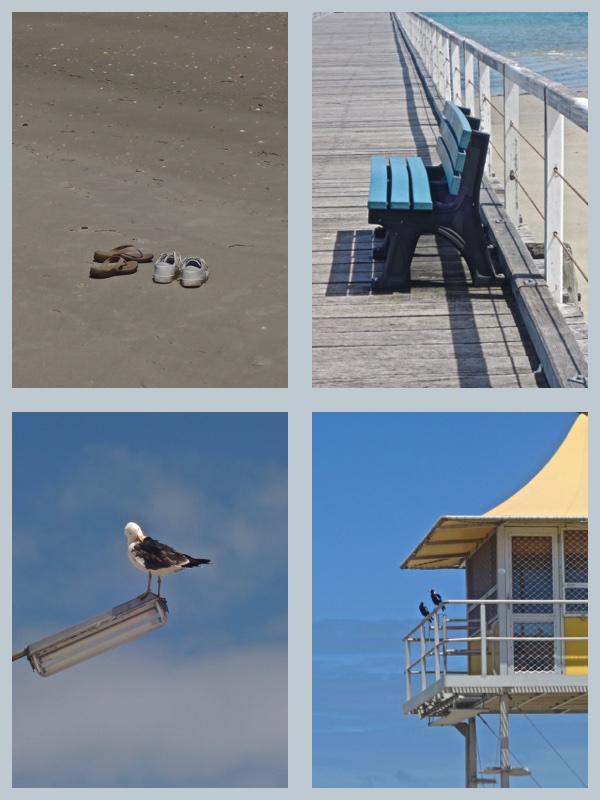
I took the pictures in today’s post on a day when I had just heard that I will be losing my job at the end of this year. I felt, that day, as though I had been cheated of something — of an income, yes, but also of something less tangible, some essential part of me that I couldn’t actually name. I felt anxious and old and vulnerable and as though I had failed. Most of all, I just felt sad.

What I saw

I couldn’t sit still with my sadness that day; I couldn’t see it through. So I did the only thing that seemed manageable to me in the moment: I took myself off for a run by the beach. I ran what seemed to me a long way, the furthest I’d ever run, in fact — although the distance didn’t matter, really. What mattered was that I was outside: moving, breathing deeply, looking around. Seeing. Sadness, I’ve found, stops me from seeing. But stepping outside returns my vision to me, at least for a while.

Losing a job — especially a job that you love, especially when you are nearing fifty — entails a specific kind of sadness, one that is wrapped up in grief and fear. Still, I’m curious. What do you do when you are sad?

Why do you write?

Other people’s words about … writing and joy

Still, Connell went home that night and read over some notes he had been making for a new story [that he was writing], and he felt the old beat of pleasure inside his body, like watching a perfect goal, like the rustling movement of light through leaves, a phrase of music from the window of a passing car. Life offers up these moments of joy despite everything.

From ‘Normal People
by Sally Rooney

I have a friend, whom I very much respect, who has been writing fiction for as long as I’ve known her, without any desire to seek either publication or readership. It seems to me that she writes purely for the pleasure of the process itself, and for what that process brings her; it seems to me that writing, for her, is an entirely internal process of discovery and exploration, requiring no further justification, either to herself or to others.

Light through leaves (1)

Since my own decision to stop writing a while back, I’ve gone on thinking about writing and the role that it plays, or has played, in my life. And I’ve come to find my friend’s concept — whereby writing is a private act, an act for no-one other than herself, with no thought to the future or to the past — consoling and inspiring in equal measures. I like the honesty of her act. I like the wonder in it. I like the courage. Sometimes, it takes courage to do things just because.

Light through leaves (2)

So I hope that my friend experiences, when she writes, those brief, flickering, sun-dappled moments of joy Rooney describes so beautifully in the passage above. I hope she feels the old beat of pleasure inside [her] body.

And I’m sure that she does.

Snatched phrases: the sky

Look at the sky. (It’s amazing. It’s always amazing.)

From ‘Notes on a Nervous Planet’
by Matt Haig

Matt Haig is right. The sky is amazing.

It is always amazing.

It is a story that is forever unfolding …

PS Shout-out to my father, whose birthday it is today! 

Snatched phrases: on translation

But a certain dullness of mind seems an almost necessary qualification, if not for every public man, at least for everyone seriously engaged in making money.

From ‘The Idiot’
by Fyodor Dostoevsky

Hmmm … read and weep. Dostoevsky’s observation about people is as relevant now as it was when he wrote it in the late nineteenth century. If only our public figures, our business people, our politicians would take heed!

But onto other things — no more weeping for now. One of the overarching reasons I’ve had for writing this blog in the last few years has been to give myself (and hopefully you, my readers) the chance to explore the joys of reading: to revel in other people’s words, to find meaning in their thoughts and the way they express them, to learn from them, to find communion and kinship with them. As I’ve remarked before, without books and reading, I would be a far lonelier person.

Recently, I’ve found a different kind of companionship in my reading. On Mother’s Day earlier this year, my mother and I started a reading ‘project’ together, our own little two-woman book club. At her suggestion, we have decided to read works of translation. We take it in turns to pick a title and read it, and then we exchange titles, and, having read them, meet up for coffee or for a walk to talk about them. The Idiot was one of her choices.

My mother is an inveterate reader. She reads widely, hungrily, curiously. Her joy in reading is contagious and almost palpable. I’m glad — and privileged — to have ‘caught’ that joy from her. And I’m extra glad to be exploring new books with her, to be having my world opened by her and by the writers she chooses.

Meanwhile, while we’re on the subject of translation, here’s the thing about reading, and the happiness you can find in it: it translates into life.

And that happiness is only amplified when it is shared.

Chasing clouds

When the run does its work, I will become lost in its beating heart.
We run on.

From ‘Running with the Pack’
by Mark Rowlands

Today’s photos come from a run I went on in early September on a day when the first faint hint of spring was in the air.

I followed a path that wound through scrub and vineyards and wetlands and beach.

Somewhere along the path, an elderly couple were standing, leaning against a wooden fence. The man greeted me as I came closer, and called out, ‘Where have you come from? Where does this path lead to?’ And so I stopped to chat to them, describing how to get to the beach from where they were.

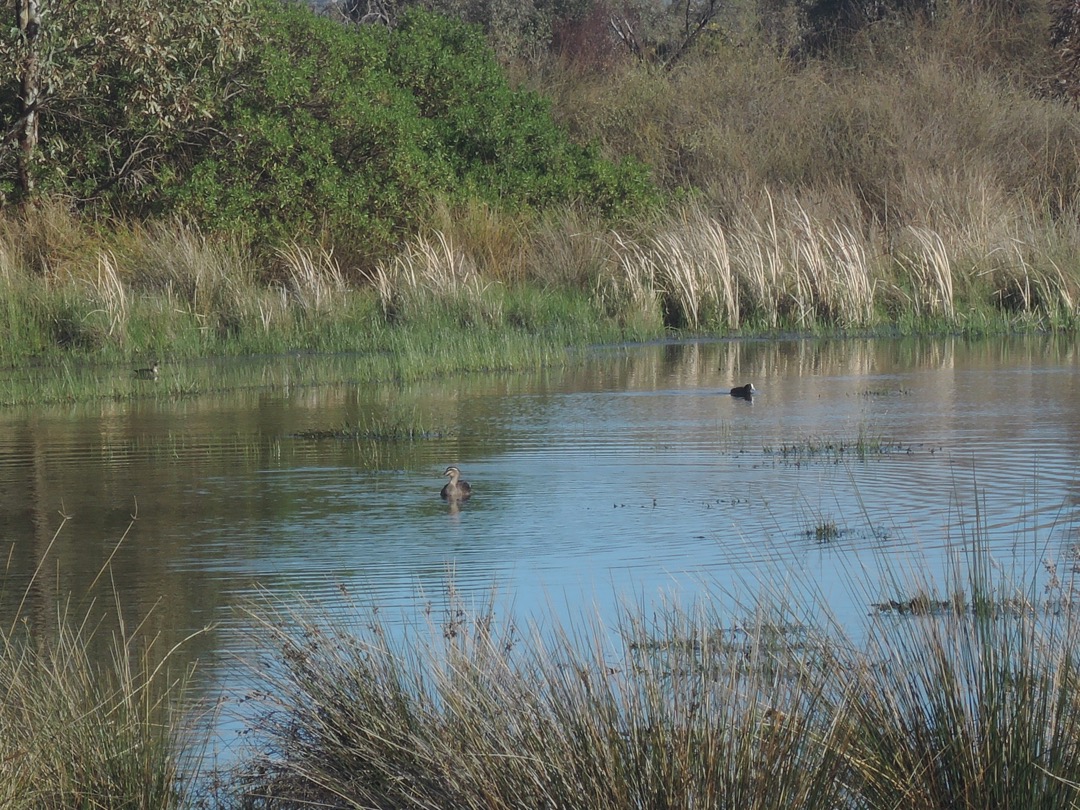
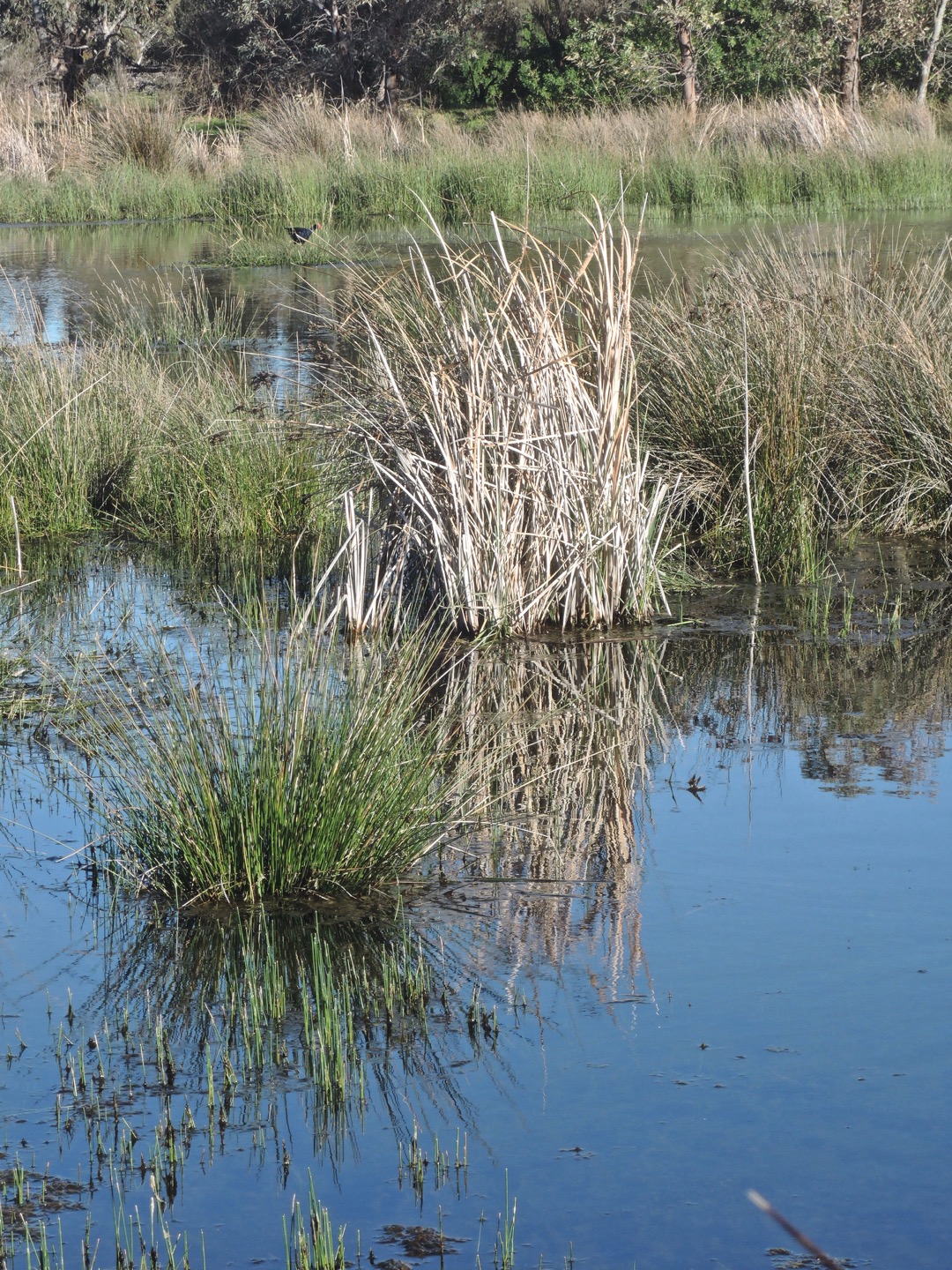
In the wetlands I pulled out my camera. The pictures show the landscape, but they don’t convey the sounds — frogs croaking, a hidden moorhen squawking wildly in amongst the reeds.

And they don’t convey the feeling of the sun on my skin, either: warm and sweet and new, the way the sun always feels in the first, early days of spring.

Grey

Other people’s words about … the sea

He opened the window and let in the ocean, gulped in that grey air as though oxygen was enough to save him from the people in the house, watched the waves, noted the dark rip forming at the southern end of the beach. He ignored the sound of Charlie’s voice in the lounge, hilarious, oblivious, the sounds of the girl in the bathroom behind him, scrubbing insistently; called to mind the tentacles of the cloud from earlier, saw the colours he’d mix [if he were to paint it], the strokes, the shapes. After a few moments, his breathing slowed and he began to enter the place where no one else could come.

From ‘Bluebottle
by Belinda Castles

Like Jack in the quote above, sometimes I find that the best cure, the only cure, for my day’s woes is a few deep breaths of fresh ocean air. That’s why I live so close to the sea, just a few minutes’ walk away.

The kind of seaside scene Castles describes in the passage above isn’t your stereotypical calm blue seas and white sands and warm, soft air. No, it’s a grey day, a wild day, an ominous day, heralding the end of summer. And yet it save[s] Jack, all the same.

When I took the beachside photos you see in this post, just a few weeks ago, the air was grey, just as it is for Jack as he looks out of his bedroom window onto the beach scene below. But in my case, the greyness came from a winter fog rather than a summer storm. This was a thick, dank, spectral fog that hung over the ocean for half an hour or so and then drifted away again.

And, like Jack, I gulped in that grey air and let the rest of my day fade away — and felt all the better for it.

Out & about: spring flowers

‘When you’re walking the view shifts and changes.
Walking’s a form of hope.’

from ‘The World Without Us
by Mireille Juchau


I’ve just spent a week on holiday, during which I did a lot of walking.

Common (variegated) groundsel

I had planned to go running as much as I could, but due to illness, in the end I had to opt for a gentler form of movement.

Vanilla lily

And that turned out to be not such a bad thing.

Red parrot pea

The sun was gentle and soft most days, though the wind felt distinctly chilly. On a walk through Aldinga Scrub, I saw native flowers blossoming everywhere, in every colour: yellow, purple, orange, white, pink, blue.

Rice flowers

Paper flowers

Blue Grass Lily (Caesia calliantha)

Even the parts of plants that weren’t flowering seemed exotic and gorgeously coloured.

Twining vines (devil’s twine)

Crimson branches

Bees darted about, drinking nectar.

Bee on a coast beard heath plant (or a rice flower?)
with curling shoot

And though they’re not pictured here, roos observed me as I walked the sandy trail, while whistlers burbled hidden in the trees and a frogmouth boomed in the distance.

Yellow bush peas
(that’s what I call them, but apparently they’re called common eutaxia)

Spring has truly arrived.

Out & about: enough

‘When you’re walking the view shifts and changes.
Walking’s a form of hope.’

from ‘The World Without Us
by Mireille Juchau


Some days, after work, I don’t have time to go for the kind of walk that the passage above, which I quote on this blog so often, describes: a long walk, a wandering walk, a wondering walk. Some days there just aren’t enough hours of daylight left — not for that kind of walk.

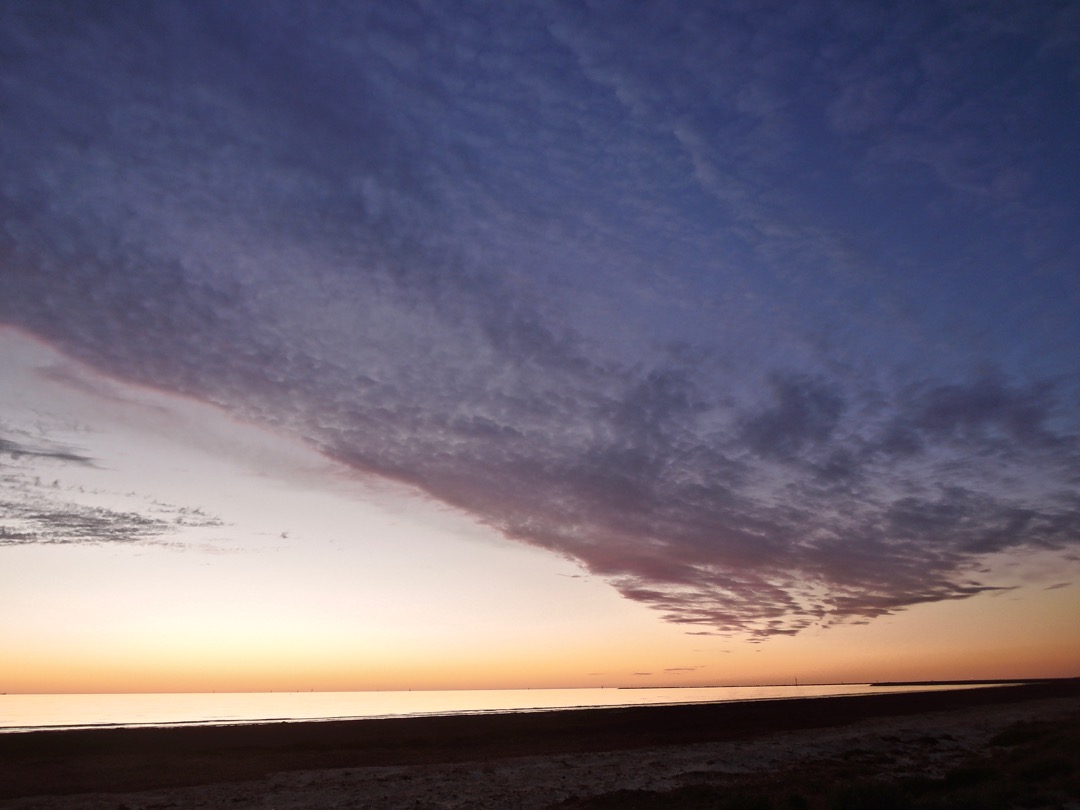
There might be a few moments, though — just enough moments to dash down the road and glimpse a dark swathe of clouds in the sky —

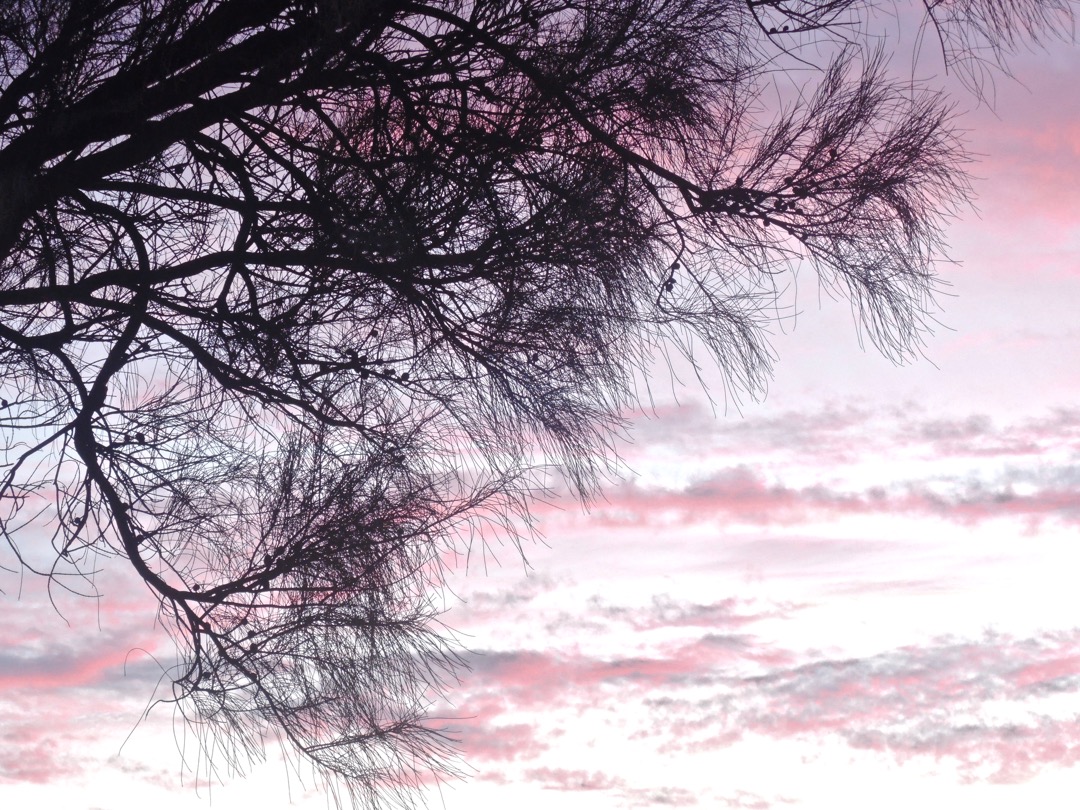
— or the branches of a sheoak tree silhouetted against cotton-pink clouds —

— or a sea turned opal.

Beacons to guide the ships home

The day I took the photos in this post was one of those days. All I had left of that day were those few moments — the last few moments of the day. So I told myself that they were enough, those few moments.

And for a few moments they were. They really were.