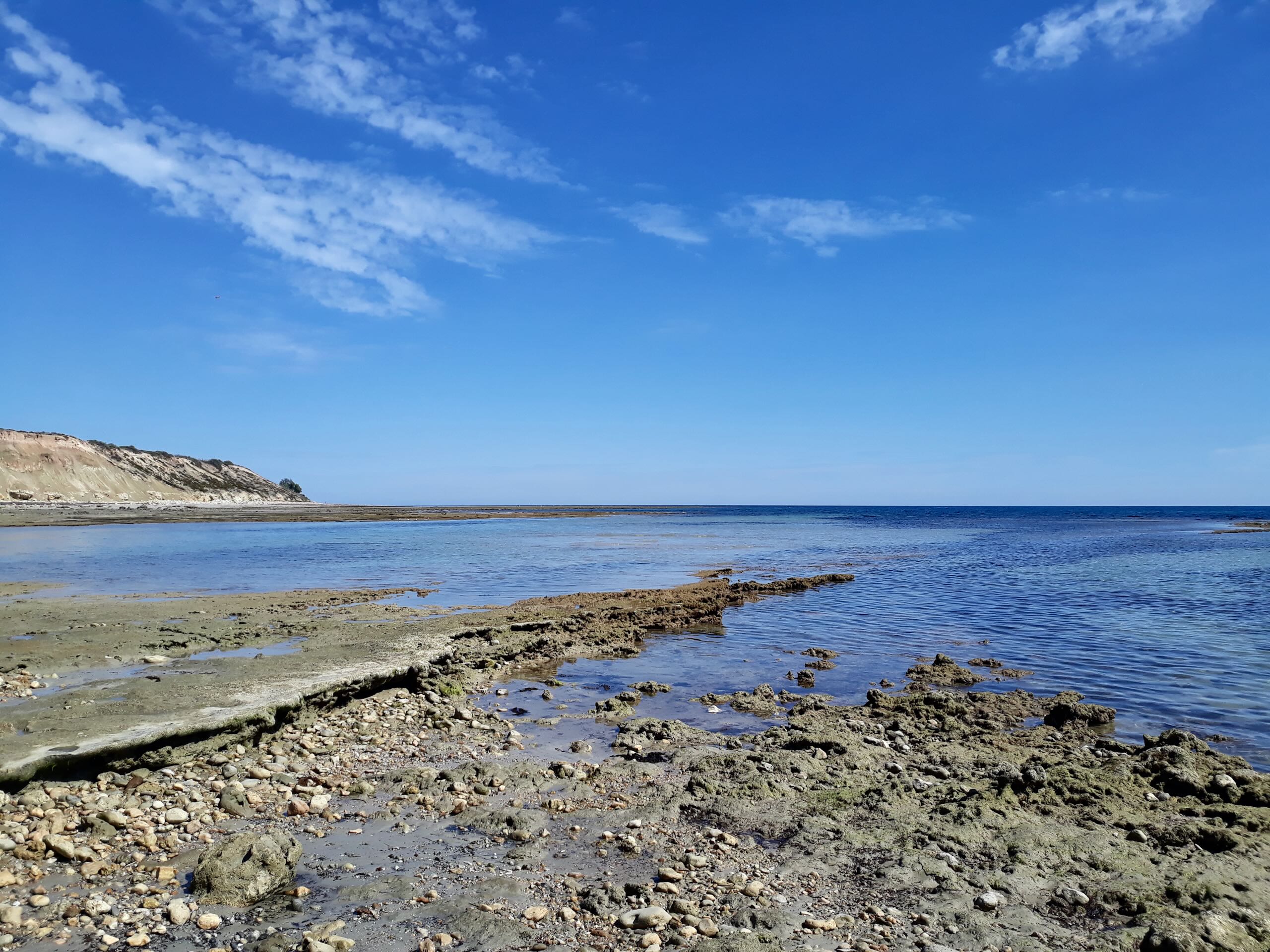
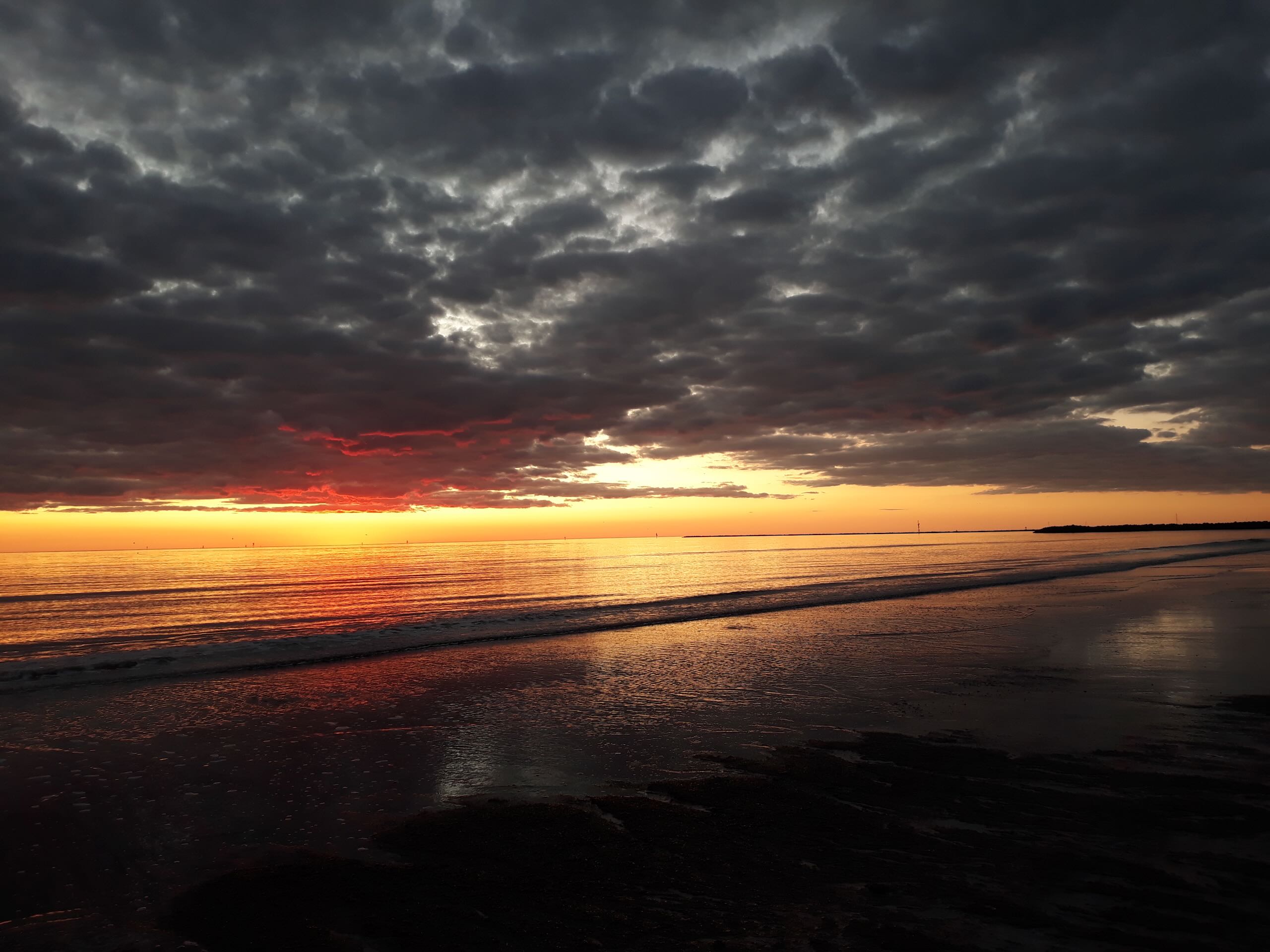
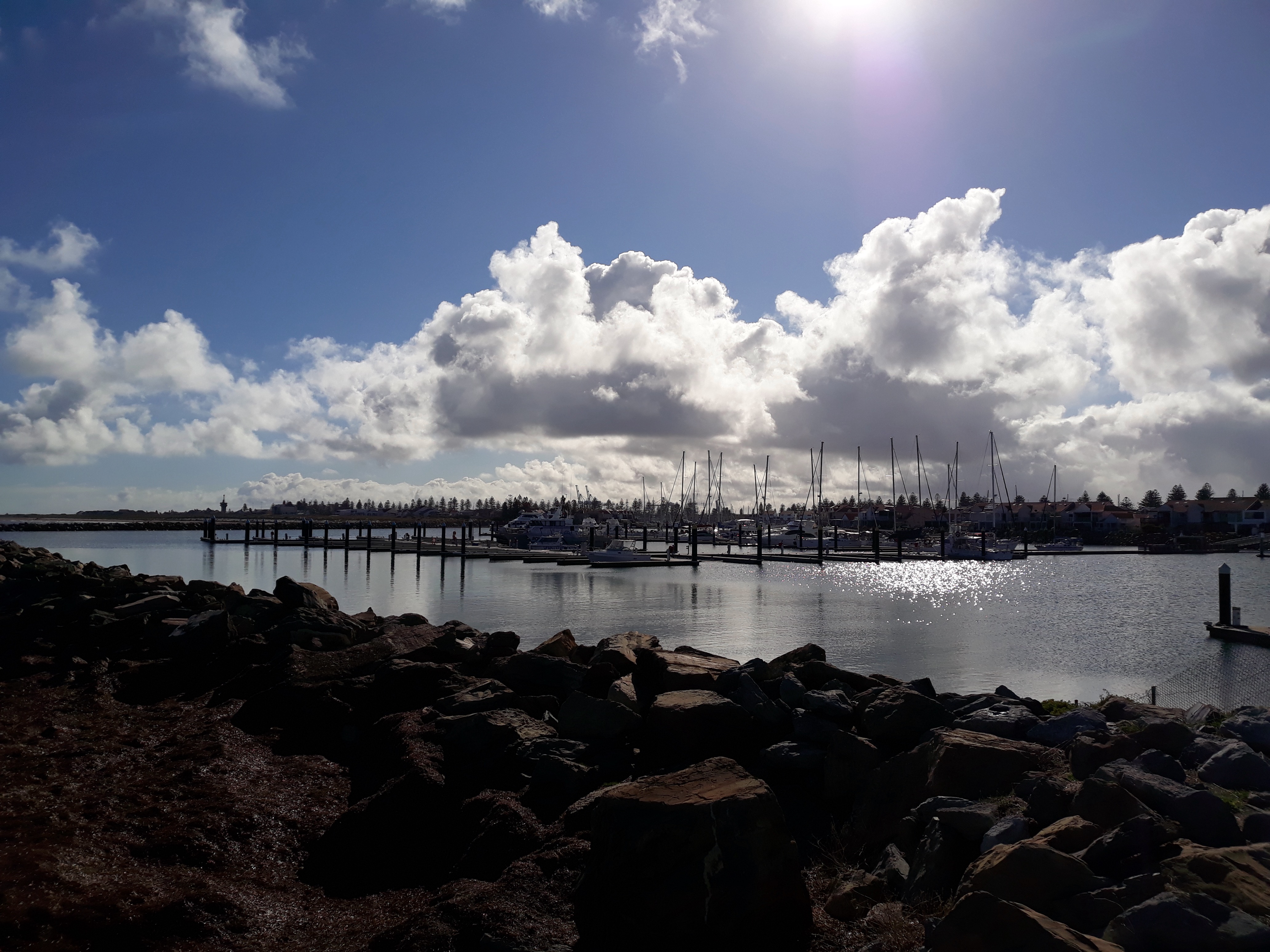
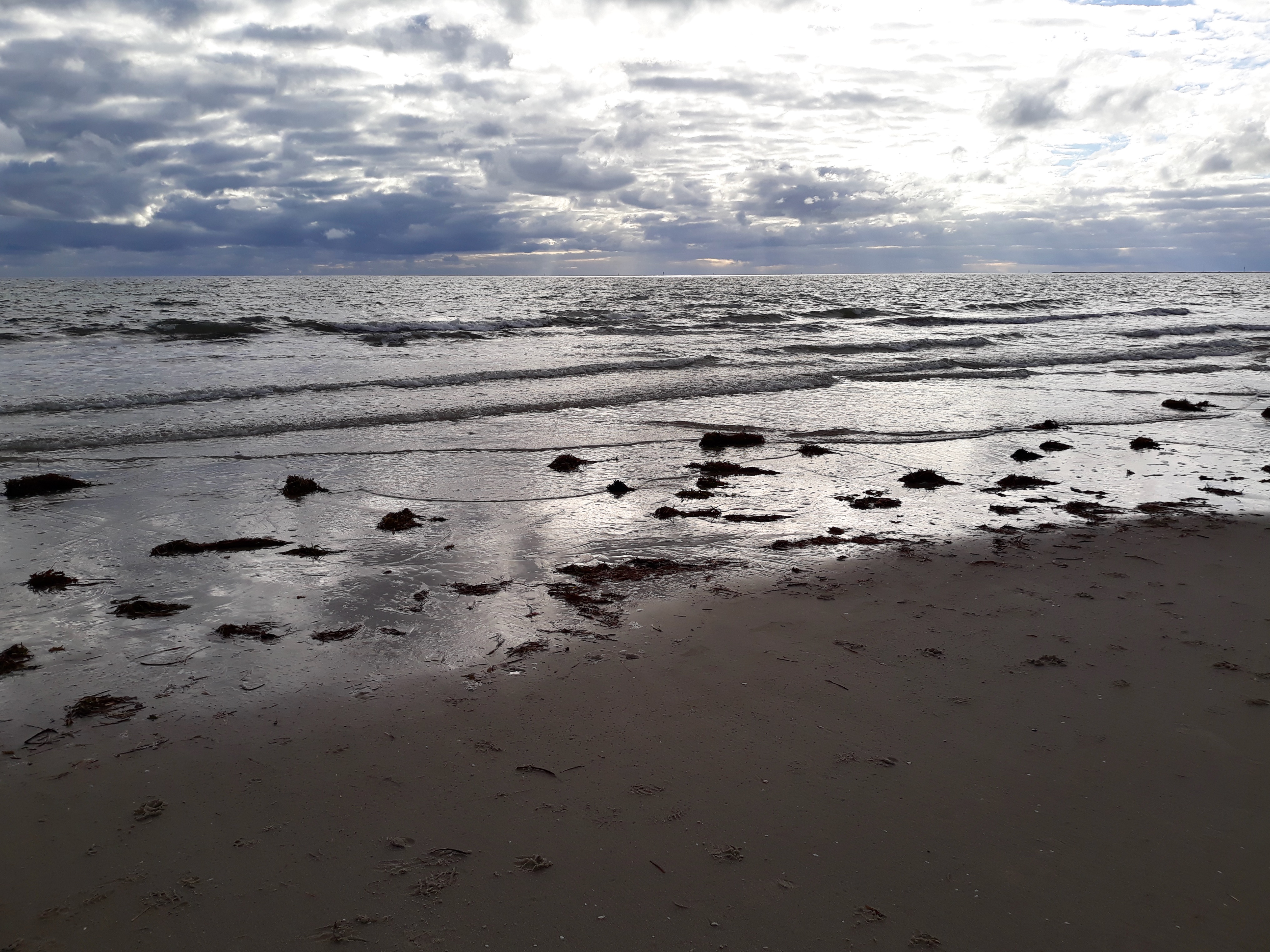
How do you know?

Other people’s words about … writing

Seamus went into the hall after Oliver, and they kicked the snow off their boots. Their professor had just come back from the bathroom. He put a hand on Seamus’s arm and said, ‘Great work, Seamus. It’s a good poem.’
‘Was it?’ Seamus asked. The professor’s expression opened just slightly. Oliver patted Seamus on his lower back and returned to the seminar room. It was Seamus and the professor alone in the hall. Seamus could feel himself dripping cold water on the rug.
‘Is that what you need? For someone to tell you that your work is good?’
Seamus flushed.
‘I don’t know what I need. I don’t know what I’m doing. I feel like I’m wasting my time.’
‘Oh, Seamus,’ the professor said, and Seamus looked at him.
‘How do you know?’ Seamus asked.
‘How do you know what?’ the professor retorted, his head jostling a little, like it was a game or a riddle.
‘How do you know you’re not just wasting your time?’
‘If you don’t know the answer to that, then I can’t do anything for you,’ the professor said with a chastening laugh.
Seamus felt that he had been slapped on the nose and called childish. The world grew deep and saturated. It felt as if something vast and Godlike had peeled back the veil of his life and peered in at him. He had gone around giving away all his power, seeking certainty, approval. But that’s what children did. Seamus had been a child, selfish and stubborn in his ways.

from ‘The Late Americans
by Brandon Taylor

I’ve been thinking again about the process of writing fiction — how a writer takes the story they hear inside their head and puts it into written words. That’s what the process involves for me, at least, most of the time. I hear a story in my mind, a story with a very distinct voice, and I try to translate that story into one that other people can read — a story on paper, a story on a screen. A story, I was going to say, that is tangible. Tangible is the wrong word, though. Perhaps what I mean is, a story that exists in a form that other people can access.

The strange, sad part of this process is that mostly, while the story is still inside my mind, it feels like a very beautiful thing, whereas once it becomes something I can share with other people, it often turns out not to be a beautiful thing at all.

Lizzie in a pool of sunshine (and a room with a view), Easter 2024.

Unlike Brandon Taylor’s character Seamus in the passage above, I have never studied writing. One of the reasons I haven’t is that I don’t think that studying writing will answer the question that I always have about my own writing, which is the same question that Seamus has, How do you know you’re not just wasting your time? The truth is that you can’t know, which is what (I think) the professor is trying to say to Seamus without actually spelling it out for him. You will never know. If you try to find out, you’re going down the wrong track, asking yourself the wrong question.

A better question, I think, would be, How do you sit with the fact that you don’t know whether you are wasting your time or not? But I don’t know the answer to that, either.
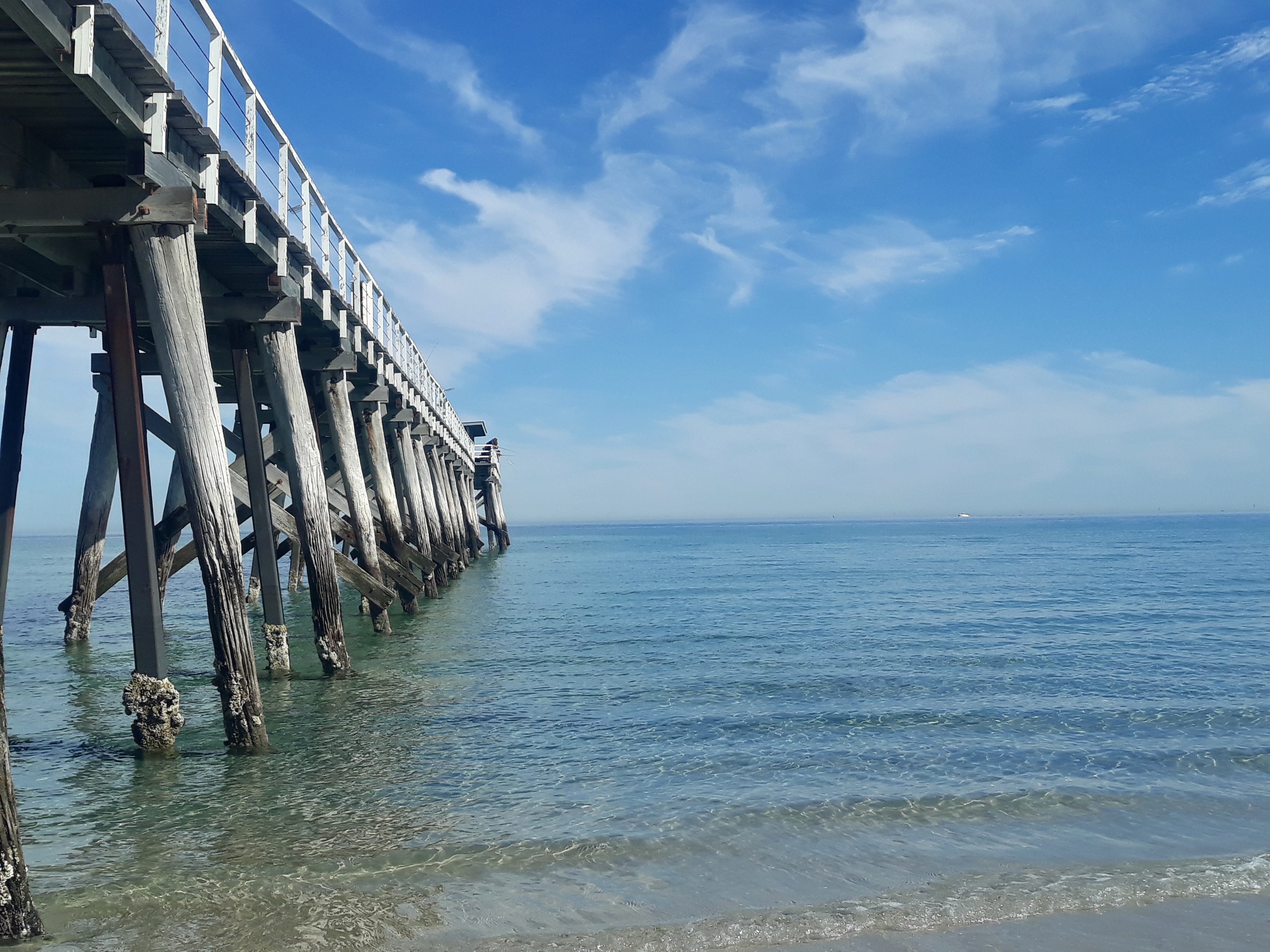
The other side of the jetty from the photo in my last post, Easter 2024.

Since my novella Ravenous Girls came out late last year, I’ve been working on a story centred around the same characters, a sequel of sorts — the next instalment. I don’t know whether it will ever get published; I don’t know whether what I’m writing is any good; I don’t know whether anyone will want to read it. Like Seamus, I keep wanting to ask someone whether I’m wasting my time, but there is no-one who can tell me.

And so, like Seamus, all I can do is sit with the unknowing. There’s nothing else you can do. There’s no other way through.

Lately I’ve been reading …

All grown up

Other people’s words about … becoming an adult

When he got his first office job, he got dressed each morning with a certain ironic remove. It was a game that everyone had to play to make a living. To be an adult is to sell out, but as long as there’s someone to recognise the irony you bring to this game it’s easier to maintain a sense of self-respect. These days there’s nobody in his life who would understand that irony, and he suspects that he’s transmitting his signal on a wavelength only he can hear. He knows that the outside observer will think of him as at one with his blazer and button-down shirt; there’s no crack for the irony to push through and unhitch the image of an indifferent, middle-aged man. When [his] students look at him, what do they see? A hypocrite? [His old friends] Thora and August would have laughed about it.

from ‘The Trio
by Johanna Herman (translated by Kira Josefsson)

I ran into an acquaintance the other day whose daughter had told me many years ago, when she was around twenty years, that she wanted to be a writer, like me. To that end, she’d enrolled in a Creative Writing degree. She wasn’t going to compromise, she said. Why do a vocational degree when what she wanted to be was a writer?

I hemmed and hawed and said quietly, ‘It’s useful to have a vocational skill as a back-up, though.’

I haven’t seen this man or his daughter for many years, and so when I ran into him the other day, I asked after him and his wife and then after his daughter.

‘What’s she doing now?’ I asked.

‘Oh,’ he said, ‘she got her creative writing degree and now she’s working in the tax office.’

And then we shrugged at each other.

So it is.

Largs Bay Jetty, March 2024.

I still feel, when I’m getting ready for work, getting changed into my office clothes, that I’m taking on an identity that doesn’t match the ‘real’ me, though I’m not sure that I see the irony in this, as Johanna Hedman’s protagonist Hugo does. It feels more like a charade to me, a performance that isn’t very convincing. I doubt that I’m alone in this, though. As Hugo himself says: To be an adult is to sell out.

Indeed. Perhaps it’s unavoidable. In any case, here we all are.

Under the jetty, March 2024.

Lately I’ve been reading …

Community

Other people’s words about … social media and the internet

My suitcase was a water bottle, a P60, my clothes without a wardrobe and brutalised with creases — but, I thought, I should not be complaining, there was always someone who had it worse than me. Whenever I forgot, I looked at my phone or self-flagellated with the Guardian. There was a proliferation of opinions on Twitter about what it took to be a good, inclusive, progressive person, but I read such lists and threads on the cusp of going to Waitrose or preparing for sleep, whereupon they were quickly replaced with other lists: sliced bread to be bought, teeth to be brushed. When I remembered I had forgotten them, I felt like a terrible person anew. I wanted to discuss this with someone, but there was never any time. Quickly, I realised the absurd wealth of the places I had been in over the past year: rooms in which such discussions could be played with in theory, without urgency, at any time, and then set aside to be taken up at a later date. The internet was one such room: a constant, useless distress in my pocket. I had resolved to stop looking at my phone if I could help it; to turn off my notifications and live less theoretically.

from ‘Three Rooms
by Jo Hamya

We all bewail the role of social media and the internet in our lives while continuing to use it unceasingly, it seems to me, but I found the passage above by Jo Hamza’s narrator particularly poignant.

Recently, I read online about what some people are calling the ‘Nazi problem’ on Substack. I gather, from my brief research (online, of course), that Substack has been accused of not proactively removing Nazi content, and that as a result, people are now querying whether it’s an acceptable platform to continue to publish on. Some of the opinions I read (again, online) were by people who had only recently moved from another platform to Substack, and they were expressing exhaustion at the thought of moving to yet another platform.

I sympathise. I think it’s impossible to keep up with all the news about the relevant platforms. I prefer to work towards longevity and sustainability in one or two spaces — either the spaces you are most comfortable with or the spaces that you feel are most suitable for what you are writing about. For that reason, I’ve been writing this blog since 2014 here on WordPress, and I don’t intend to move away.

I hesitate to use the word community (despite its very common usage in this context), but nonetheless, here I am, still blogging away. And here you are, some of you, still reading my posts. So thank you. Truly, thank you ❤️.

Beach tree and seaweed, Island Beach, Kangaroo Island, January 2024.

I’ve spent the first couple of weeks of 2024 quietly, catching up with family and working. Since the publication of my novella, Ravenous Girls, in 2023, I’ve begun writing something new, a continuation in the story of the characters I introduced in Ravenous Girls. I am a slow, doubtful writer, and the publishing world is, in contrast, a fast, uncertain world, but I am quietly enjoying my writing these days — for the moment, at least.

And if there’s one thing I’ve learned about writing over the last few years, it’s that you have to celebrate the moments of joy and hope. They are rare and tentative and they quickly disappear, but they happen — every now and then.

PS On that note, if you are curious about my novella or my writing process, you can listen to me in conversation with Elizabeth Walton over on WordRoom, where we discuss novellas, anorexia, literary prizes, the difference between YA novels and literary fiction for adults … and much more.

Lately I’ve been reading …

Solace

Other people’s words about … stepping outside

I went outside. Often I walked till the late hours. The sky’s was a darkness I could deal with. I wanted to stop living by the measures of everyone else: before and after, death and life, sea and self. Being out there — in towns where I spoke to no-one, in green deserted parks, along the edge of the gulf’s water — allowed me to turn inwards. It reflected the silence I felt in me. I wanted to be outdoors for good. Yes, I went outside.

from ‘The Memory Artist
by Katherine Brabon

Pasha, the narrator of Katherine Brabon’s novel The Memory Artist, is a Russian man in his mid-thirties, a writer trying to make sense of his life post-glasnost, post-perestroika. While the story in Brabon’s novel is about the effect of political repression on people, and particularly on artists, I found uncanny echoes in Pasha’s voice of my own thoughts and feelings (although not, clearly, in response to any political repression or trauma, neither of which I have experienced).

Sky and Sea, Snapper Point, April 2023.

I wanted to stop living by the measures of everyone else, Pasha writes, by which he means not that he wants to stop living, but that he wants to accord his own values to this life he is living. Where he finds it most possible to do this is outside, under the great arch of the sky.

It’s a similar impulse, I think, that makes running so appealing to me — running through the scrub, running on the beach, running beside the sea. It’s outside where I find some of the things I most long for in life: silence, neutrality, the sense that I could (if I went on running long enough, if I stayed outdoors long enough) dissolve.

Sometimes, when I’m inside going about my day — working, sleeping, eating, showering — I remind myself that the sky is just a few steps away, literally at my feet. It feels to me like the very definition of solace.

Sun and shadow, Aldinga Beach, April 2023.

Lately I’ve been reading …

An apology of sorts: today’s list is lengthy, I know, but it’s been a while since I last posted here, and meanwhile I’ve been enjoying my online reading! I hope you will dip in and out of the list below and find something that you enjoy.

Roar

Other people’s words about … country and city life

Ramesh was used to the sounds of the suburbs. He never noticed barking dogs or level crossings. On the train to work every morning he turned up the volume of his audiobook so it was louder than other passengers’ mobile phone conversations. But [tonight he was in] the country [and it] roared. He could hear the air move in the trees. He had grown up in Croydon, moved to Glasgow at seventeen, back to London at twenty-three, then Sydney at thirty-six. As a child he’d stood outside his parents’ bedroom listening to his father’s whistling snore. He liked living in places where he could hear others alive. He reached for his phone where it sat charging. For an instant he saw his hands illuminated in the bluish light of its screen. He set his rain sound app to the setting called ‘Harbour Storm’.

‘What are you doing?’ Henry croaked. His face was pressed to the pillow. ‘You don’t need that tonight.’ 

Ramesh opened his mouth to argue, then he heard the rain outside, like gunfire on the corrugated iron roof.

from ‘Pulse Points
by Jennifer Down

I love this passage, not because I’m in accordance with Ramesh, but for the opposite reason. I love the ‘roar’ of the country. I spend most of my time living in a house in the suburbs. It’s close to the beach, which I love, but it’s even closer to the railway line, a line that trains zip up and down every half an hour from five in the morning until midnight.

Sunset, early August 2022.

I don’t mind the sound of trains, actually — as suburban sounds go, I find it vaguely comforting — but when I leave my house to stay outside the city, to visit Aldinga Scrub or to camp in Yorke Peninsula, I feel a knot inside my chest of which I wasn’t even aware releasing itself.

Sounds I love when I am away from the city: the dull roar of the ocean at the end of the road (yes, another roar). The whistle of a hot wind through the trees. A frogmouth letting out its low, persistent, booming call at dusk. A shrike thrush singing. A magpie warbling. Frogs croaking. Insects clicking in the grass. And, yes, like Ramesh, the rain drumming on the roof.

Still, the photo accompanying my post today, like so many of my photos on this blog these days, comes from the suburban beach at the end of the street I live on. The sand is being eroded away and there are car parks dotted along the coast line and on most weekends a food truck selling hot donuts sets up shop during daylight hours.

But it’s still the beach. It’s still wide and beautiful and open and … The sea still roars.

Lately I’ve been reading …

It’s a lengthy list today, because I’ve been reading far more than I’ve been posting. But I hope you find something interesting below.

Only [dis]connect

Other people’s words about … beauty

I wondered if a more complex language like [my mother’s native language] Korean had a singular word to describe the feeling of getting off a long shift of a physically demanding job and finding that, for at least half an hour after, everything, every last thing, was too beautiful to bear.

Jenny asked the question so simply — ‘Okay, what do you want to talk about?’ — and I nearly reached across the table and grabbed her hands back, whispered thanks against each of her knuckles. I was about to ask her opinion on lakes and oceans — which did she prefer, contained and musty, or vast and salty? — when she suddenly sat up straight, eyes wide. ‘So — what did you think of that meeting today? Hold nothing back.’

‘Oh,’ I said. ‘I don’t know, it was fine.’

from Pizza Girl
by Jean Kyoung Frazier

I thought of Sally Rooney’s novel Beautiful World, Where Are You? when I read the passage above. In Beautiful World, Rooney’s characters variously mourn the loss of the sense they used to have that they were moving through a beautiful world, or they lament the ugliness of the everyday world, or they remark upon what Rooney calls a hidden reality: the presence at all times, in all places, of a beautiful world.

Sunset, early July 2022.

I think this is what Kyuoung Frazier’s narrator is getting at. She wants to tell Jenny about the beautiful world she sees all around her — but Jenny, like everyone else in the narrator’s life, either doesn’t want to hear what she has to say or doesn’t know how to hear it.

Some years ago when I was going through a difficult patch, a friend of mine offered to exchange a daily photograph with me via text message. ‘We’ll just send each other a picture of something we see,’ she said. ‘Something we like. Something that makes us smile. We’ll share our pictures, and it’ll be a way to reach out. To say hello.’

Dune flowers, early July 2022.

We ended up exchanging daily photographs for over a year, and it was a way to say hello, but it was also so much more. What I loved most about our exchange, beyond the sense of connection it gave me with another human being, was the knowledge that we were each finding something beautiful in our day and then sharing it with someone else. Passing the beauty on.

Maybe we should all share more beauty. Maybe it doesn’t matter if beauty is fleeting and makes us feel fragile. Maybe that’s exactly why we should keep on sharing it.

Before sunset, early July 2022.

Lately I’ve been reading …

Treasure your beautiful world

Wild Geese (a poem by Mary Oliver)

You do not have to be good
You do not have to walk on your knees
for a hundred miles through the desert repenting.
You only have to let the soft animal of your body
love what it loves.
Tell me about despair, yours, and I will tell you mine.
Meanwhile the world goes on.
Meanwhile the sun and the clear pebbles of the rain
are moving across the landscapes,
over the prairies and the deep trees,
the mountains and the rivers.
Meanwhile the wild geese, high in the clean blue air,
are heading home again.
Whoever you are, no matter how lonely,
the world offers itself to your imagination,
calls to you like the wild geese, harsh and exciting –
over and over announcing your place
in the family of things.

It was the wonderful Gena Hemshaw who introduced me to Mary Oliver’s poem ‘Wild Geese’, and I have loved it ever since. Like Gena, I’ve found that the poem comforts me in times when the thoughts in my head are loud and tangled. And like Oliver herself, I’ve sought comfort in nature for many years. Looking up at the sky and down at the ground and out to the horizon reminds me of my place in the world. It heals me, if only temporarily.


Light on water.


But how true are Oliver’s words these days? How much longer can we find solace in nature if by nature what we mean is the way things are naturally, the way things have always been and the way they always will be?

It is impossible to ignore the discussion scientists and environmentalists are now having across the world about the climate crisis, the climate emergency. (That is, it’s impossible to ignore unless — and forgive me for saying this, but I will say it anyway — unless you are a white, male, middle-aged politician who thinks only about getting re-elected for another term of leadership.) It is impossible, too, to ignore the evidence of it as we go about our days. Wildfires, polar ice melt, rising land and sea temperatures, coral bleaching, floods, not to mention pandemics — here they all are, right in front of our faces.

These days when I read Mary Oliver’s words I feel despair rise thick in my throat.


Clouds above water.


I work very hard to inject a positive note in the posts on this blog. I don’t intend this to be a site for depression and maudlin pondering. But I cannot find a positive note to interject here when it comes to our changing natural environment.

I can only urge you, each and every one of you, myself included, to read Oliver’s poem often, to experience the feelings that arise in you as you read it, and to do what you can, in whatever way you can, to treasure this beautiful world while we still have it. Meanwhile the world goes on, Oliver says, but does it anymore?


Dying light.


Lately I’ve been reading …

Only connect: When we can

Other people’s words about connection

[My friend] Maeve took a strand of my hair and smoothed it into place as she talked. I was afraid of her leaving [to work in Vietnam]. Her breath was warm on my neck, her fingers easing through my hair. I depended on all of her small intrusions of affection. In Vietnam it would be hot, and I would be lonely in Sydney without her.

From ‘The Inland Sea’
by Madeleine Watts

I met a friend I hadn’t seen for several months for a walk on the beach recently, and we walked and talked and laughed and commiserated with each other, and I thought again how I miss her when I don’t see her for a while, and how sad that feeling of missing her is. But I also thought, knowing that I would miss her again when we’d walked away from each other that morning, that what I feel in missing her, mixed in with my sadness, are gratitude and joy for having met her, and for knowing her, and for seeing her when I do, and for talking to her when I can.

This, for me, is what Madeleine Watts means when her unnamed narrator says, of her friendship with Maeve, that she depend[s] on all of her small intrusions of affection. It is such a lovely phrase to describe that connection we feel with the people we love, such a perfect description of the way we bump into our friends and then ricochet away from them and then bump back into each other again.

This morning, as my friend and I walked, she touched my shoulder from time to time, and I in turn bumped her elbow a moment later. Sometimes she spoke too softly for me to hear her — because that’s something she often does, speak softly — and I was too embarrassed to keep asking her to repeat herself. And then sometimes I spoke for too long and was worried I was boring her.

And this, too, I think, is what Watts means when she speaks of those small intrusions of affection from our friends — without which, I sometimes think, it would be impossible to live.


A morning together.

Lately I’ve been reading …

Chasing clouds

Other people’s words about … running

Once he warmed up, once the tension was gone, once the sweat had properly broken and his breathing was rhythmically heavy and every twinge of stiffness and pain from previous workouts had been obliterated by adrenaline and endorphins, when all of that had happened, there was almost nowhere on earth he’d rather be, even on up-and-down back roads with no shoulder or, as now, on the old railroad path too crowded with entitled cyclists or groups of power-walking mums in their pastel tops and self-crimped hair.

For forty-five minutes, or an hour, or an hour and a half, the world was his, and he was alone in it. Blissfully, wonderfully, almost sacredly alone.

From ‘Release’
by Patrick Ness

One of the things I think I most love about running is that the act itself is so full of mysterious contradictions. For example, it’s hard work, and yet I look forward to it as a luxurious treat, in much the same way I look forward to eating an oversized piece of decadent chocolate cake. Similarly, when I’m running I feel as though I’m moving purposefully forward, following a path to something new. And yet it’s obvious that, unless your plan when you set out is to run away and never return, any run is circular, ending right back where it began.

Even the sense that I am on my own when I run — blissfully, wonderfully, almost sacredly alone, as Patrick Ness puts it in the excerpt above — is unreliable. I am never alone when I run. I run on roads, on shared paths, on trails, on beaches. There are always others inhabiting the space with me, running or walking or cycling or just sitting on a bench enjoying the view (like the views you see in the photographs I took for this post). Running, even for a lone runner like me, is an entirely communal activity.

Another contradiction: sometimes, when I feel unwell — headachey, perhaps, or queasy or tired or sleep-deprived — I know that from the moment I step outside those symptoms will leave me for the duration of my run. Probably, I’ll feel unwell again afterwards; running isn’t ever, in my experience, a cure. But for those fifteen or thirty or forty-five minutes when my feet are drumming the ground in the old, familiar rhythm, I know I’ll be symptom-free.

I have no explanation for this. It’s just part and parcel of this beloved thing I know as running.

Maybe that’s why running appeals to so many different kinds of people — because the concept itself, what it involves, what it means, is so flexible, so all-encompassing. Some of us run to lose weight; some of us run to get fit; some of us run to break records; some of us run to find joy. Whatever the reason, those of us who are physically lucky enough to be able to consider running for the long term, in whatever fashion we can manage, have one thing in common.

We know it makes us feel like a better version of ourselves.

Lately I’ve been reading …

Perspective

Other people’s words about … the way we look at things

In the sky [above the garden] a plane glints, tiny as a metal cracker toy, and draws a roar reduced to a whisper after it, as it follows the flight path over Bexford Hill towards distant Heathrow. There’s always a plane up there if you look, near or far, visible or only betrayed by a line of vapour, but always moving westwards … It’s as if the aeroplanes were part of the mechanism of the garden; a necessary part. As if this tidy patch of lawn surrounded by its fence, with its brilliant blossoms too many to count and its coiled yellow hose, together formed the bottom half of a machine of bliss, which required for its complete working the dome of sky above, and for the furthest component of its clockwork the timekeeping planes on their celestial track. Patiently they tick from east to west. Or perhaps they are joined to the sky, and it is the sky that is moving, a blue sphere studded with occasional silver that cranks around, and around, and around.

From ‘Light Perpetual’
by Francis Spufford

I love the way Francis Spufford, in the passage above, turns on its head the way we usually look at a place that is deeply familiar to us to create a whole new way of looking at it.

Sometimes maybe that’s all we need, right? A new perspective.

One day this week: A blue world.

In the past few weeks, I’ve been busy editing and working and making, meanwhile, small decisions about the way I plan to work from now on. I say they were small decisions and they were, really, but in some ways — the best ways — they have transformed the way I feel about how I live my daily life.

Over the years I’ve read a great deal about the benefits of cognitive behavioural therapy, which in essence is a therapy that aims to help a person change the way they think so that they can overcome their own particular mental obstacles.


Another day the same week: A grey world.

But I’ve never found much resonance in cognitive therapy. For me, it’s less about changing the way I think about things than it is about changing the way I see things.

Semantics, you think? Maybe. But it works for me.

Lately I’ve been reading …