When the water runs dry

Other people’s words about … drought

Many years ago, when I was in my twenties and travelling overseas, my American boyfriend took me back home to meet his family and friends in Michigan. We had been living for the previous few months in Cairo, that famous desert city, and to begin with we had, like all Westerners, drunk bottled water, fearing that the local water might make us sick. But we didn’t have much money and we had read that the municipal water in Cairo was safe to drink, even for Westerners, and so after a few weeks we had transitioned to drinking tap water. Neither of us had become sick as a result, but the Cairo water was so heavily chlorinated (presumably to make it safe to drink) that even I, hailing from Adelaide, found it hard to stomach.

In my home town, the tap water was similarly heavily chlorinated — so heavily, in fact, that it was said that aeroplanes, landing in Adelaide to refuel, didn’t refill with local water. How apocryphal this story is, I am not sure, but in any case, back in Cairo my boyfriend and I had taken to adding Tang to our water to take the taste of chlorine away. When I think of Cairo now, I still think of the taste of the water we drank in our last few weeks there, tangy with artificial orange flavour. How it sat in your belly afterwards like a stone. It was in Cairo, not Adelaide, that I came to understand the meaning of the term hard water.

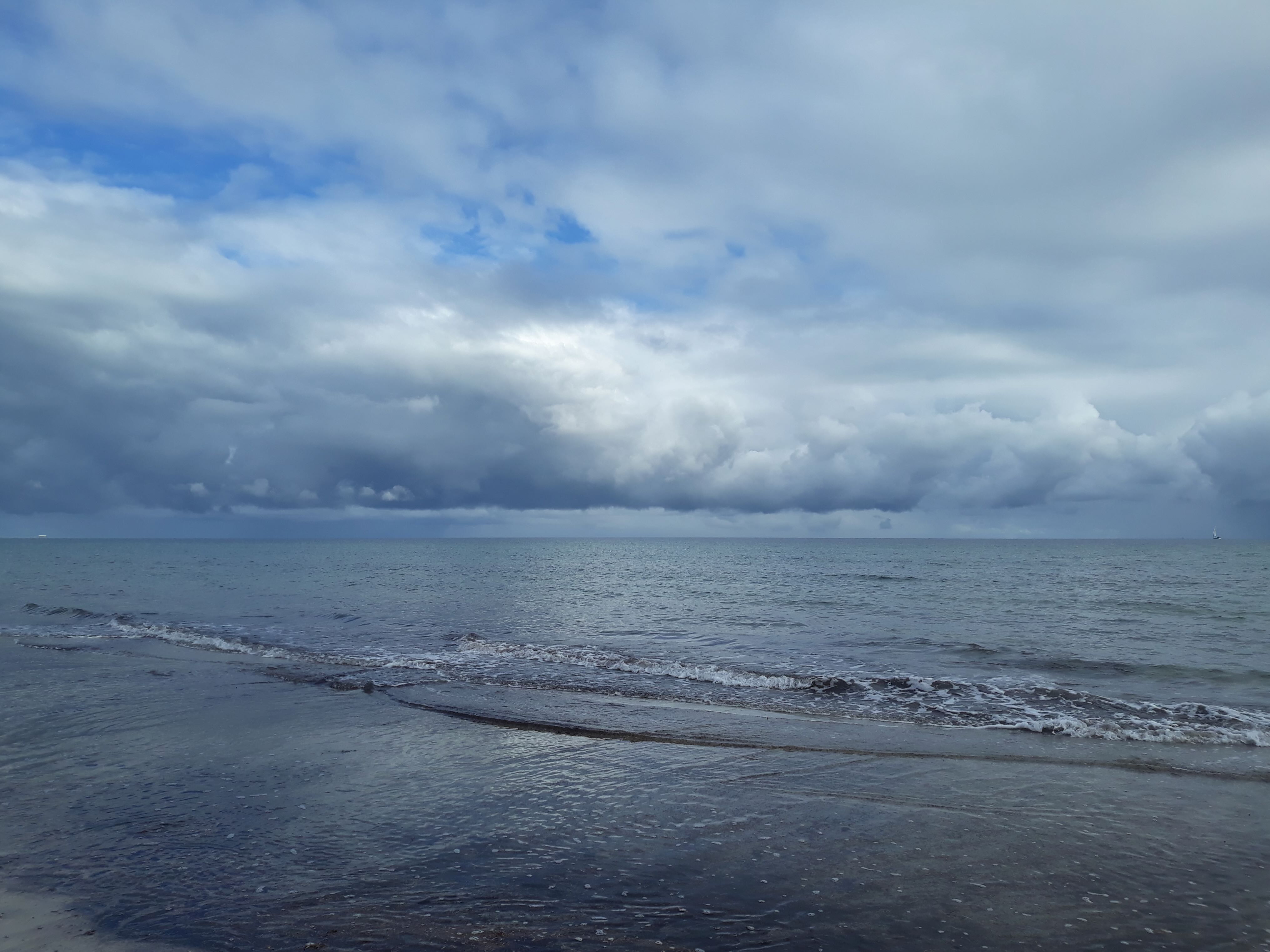
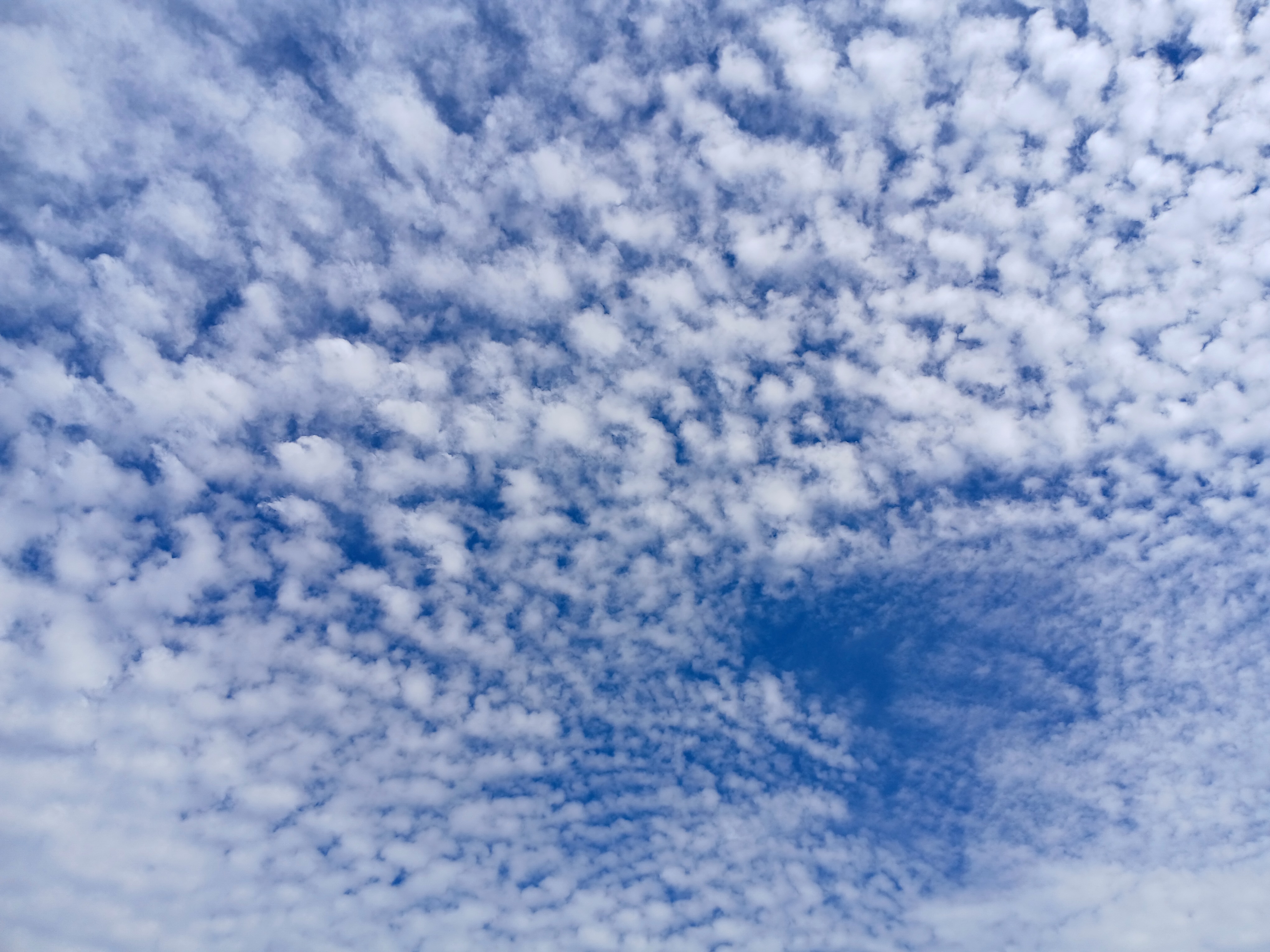
Clouds but no rain, Aldinga Beach, May 2025.

The narrator in Madeleine Watt’s quietly devastating novel Elegy, Southwest, Eloise, is a young Australian woman, twenty-nine years old in the present day, which makes her, I guess, a Millennial. And yet when I read the passage I’ve quoted above I thought of myself, most decidedly a Gen X-er, and my own reactions to water scarcity when I was travelling in the nineties. In Michigan, when my boyfriend left the tap running as he brushed his teeth, when his mother washed the dishes under a running tap, I struggled to swallow back my protests.

‘We’re surrounded by the Great Lakes,’ my boyfriend said, teasing me. ‘We’re hardly experiencing water scarcity.’

But my response to the sight of running water was instinctive, fundamental. Water was a precious resource. You didn’t waste it. You just didn’t.
This year in South Australia we’re experiencing record low rainfall. After the driest summer in thirty-three years, we’ve moved into an equally dry autumn, and we’ve been saved from water restrictions only through the existence of the desalination plant that opened in 2012 in response to the Millennium Drought. Meanwhile, the native local flora and fauna are visibly, heart-breakingly struggling to stay alive. Those beautiful wide blue skies of South Australia? I’ve come almost to dread them.

Like Eloise, I grew up watching Hollywood movies where teenagers hung out in malls with fountains in them. Like Eloise, I don’t remember seeing a fountain in our local malls (though in the much-loved TV comedy from the noughties Kath and Kim, the local shopping mall is aptly — prophetically? — named Fountain Lakes). And like Eloise, all these years later, in these years of drought after drought, I, too, want to ask: Who is in charge? Why isn’t somebody doing something?

Lately I’ve been reading …

A sad place

Other people’s words about … accessing feelings

Some years ago an older woman said to me that she had noticed she didn’t cry very much anymore. She said that when she was younger she had been someone who cried easily, when she was sad, when she was angry, sometimes when she was happy. But now, in her seventies, the tears didn’t well up anymore.

I remember thinking that that wouldn’t be the case for me. I remember thinking that I would always be someone who cried a lot — too much, probably, rather than not enough. I have always cried copiously and easily and very often self-piteously. I have cried at the most inappropriate times, during moments that weren’t about me at all, moments when I should have been comforting someone, not dealing with my own emotions.

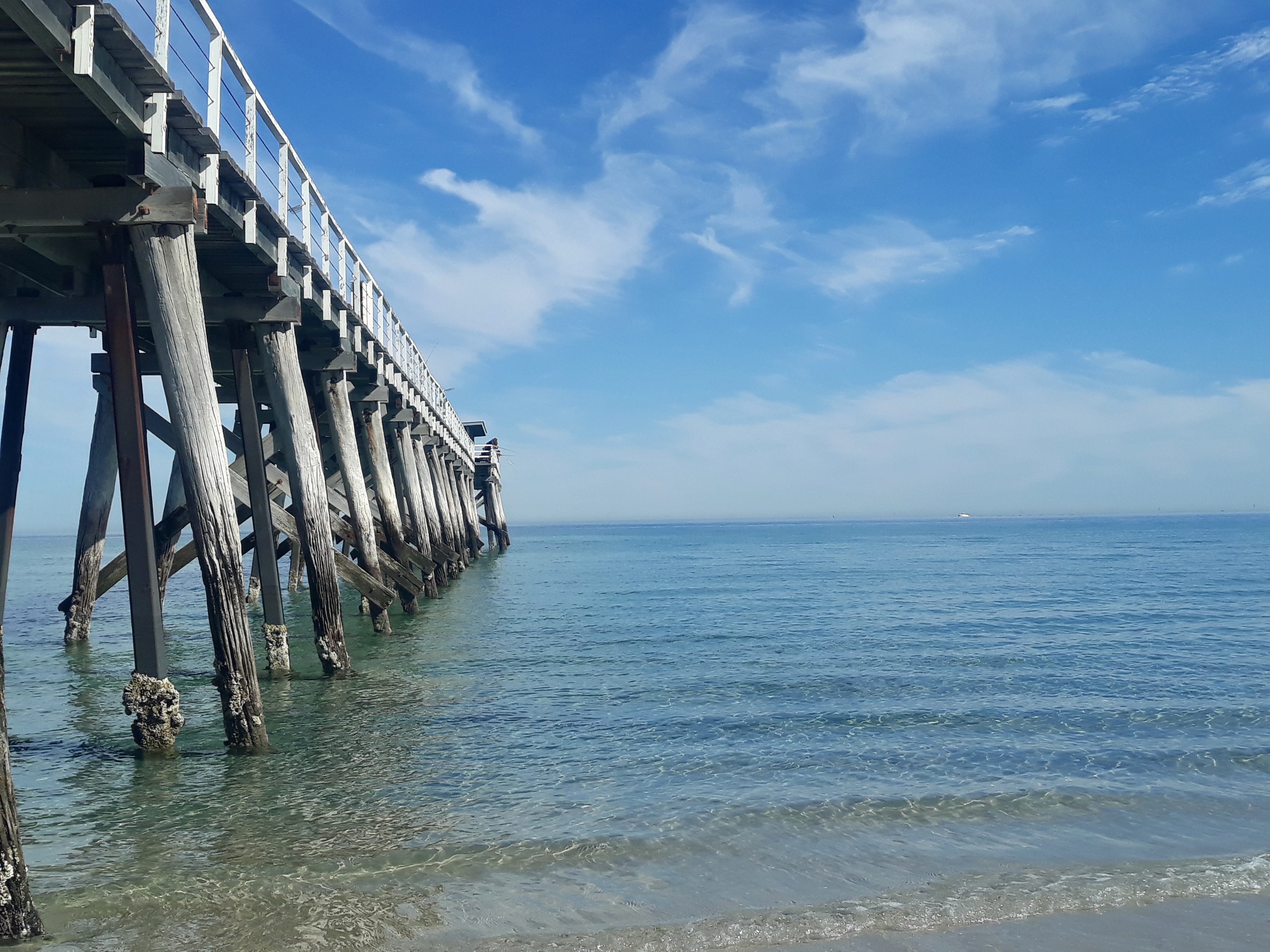
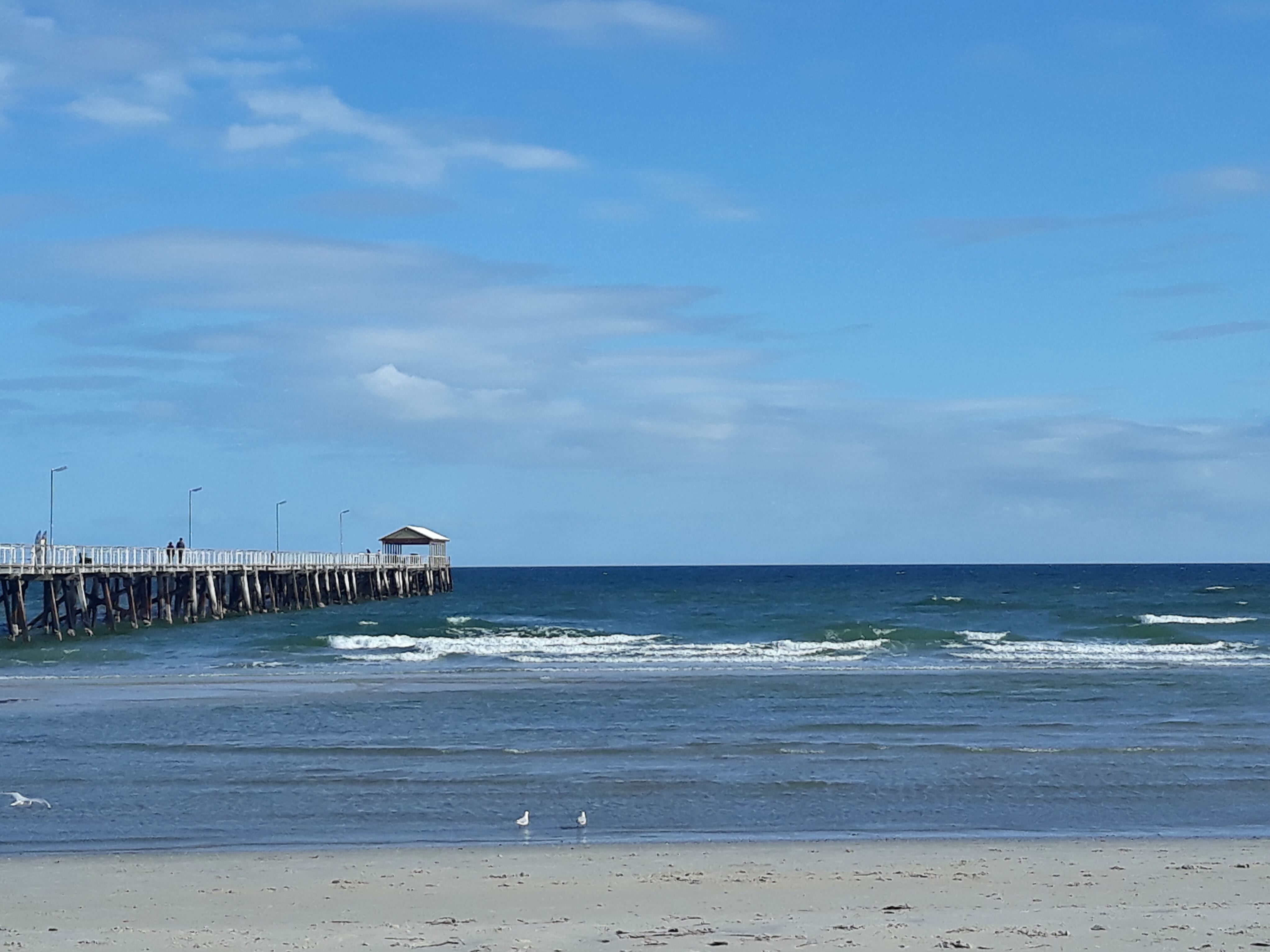
Largs Bay Jetty, April 2025.

And yet here I am, mid-fifties, and it’s happening to me, too. In the passage I’ve quoted above from Tove Ditlevesen’s memoir, Ditlevsen is describing the way she felt as a teenager, but the feelings she expresses in this passage describe the way I often feel now, the way the older woman I mentioned above also expressed feeling. It’s a feeling of seeing sad things, being moved by them, being aware that I’m sad about them even, but not being able to access the sadness itself directly. When I do cry, it’s usually, like the adolescent Ditlevesen, when the feeling is being conveyed to me through another medium — a book, a film, a poem, a song.

I miss crying. Perhaps that sounds odd or self-indulgent, but I miss the feeling that came when my eyes grew hot and tears fell down my cheeks and my throat tightened and my breath snagged. I miss the feeling of being there with my sadness, right there. I miss the feeling that follows a crying bout, too, that feeling of being healed, even if only temporarily.

The world is a sad place right now. People will say in response to this that the world has always been sad for someone somewhere, and that’s true. Partly, then, I say that it’s a sad place from a place of privilege, because I’ve experienced times when it seemed that there was a lot of hope in the world, if you could only learn to access it. Still, when I think about the climate crisis, when I think about Presidents Trump and Putin and Xi Jinping and Yoon Suk Yeol, when I think about the rise of Artificial Intelligence, the world seems to me a very sad place indeed. Would it help if I were able to cry about this? I don’t know. Like the adolescent Divletsen, I don’t think very much of reality.

Lately I’ve been reading …

How do you know?

Other people’s words about … writing

Seamus went into the hall after Oliver, and they kicked the snow off their boots. Their professor had just come back from the bathroom. He put a hand on Seamus’s arm and said, ‘Great work, Seamus. It’s a good poem.’
‘Was it?’ Seamus asked. The professor’s expression opened just slightly. Oliver patted Seamus on his lower back and returned to the seminar room. It was Seamus and the professor alone in the hall. Seamus could feel himself dripping cold water on the rug.
‘Is that what you need? For someone to tell you that your work is good?’
Seamus flushed.
‘I don’t know what I need. I don’t know what I’m doing. I feel like I’m wasting my time.’
‘Oh, Seamus,’ the professor said, and Seamus looked at him.
‘How do you know?’ Seamus asked.
‘How do you know what?’ the professor retorted, his head jostling a little, like it was a game or a riddle.
‘How do you know you’re not just wasting your time?’
‘If you don’t know the answer to that, then I can’t do anything for you,’ the professor said with a chastening laugh.
Seamus felt that he had been slapped on the nose and called childish. The world grew deep and saturated. It felt as if something vast and Godlike had peeled back the veil of his life and peered in at him. He had gone around giving away all his power, seeking certainty, approval. But that’s what children did. Seamus had been a child, selfish and stubborn in his ways.

from ‘The Late Americans
by Brandon Taylor

I’ve been thinking again about the process of writing fiction — how a writer takes the story they hear inside their head and puts it into written words. That’s what the process involves for me, at least, most of the time. I hear a story in my mind, a story with a very distinct voice, and I try to translate that story into one that other people can read — a story on paper, a story on a screen. A story, I was going to say, that is tangible. Tangible is the wrong word, though. Perhaps what I mean is, a story that exists in a form that other people can access.

The strange, sad part of this process is that mostly, while the story is still inside my mind, it feels like a very beautiful thing, whereas once it becomes something I can share with other people, it often turns out not to be a beautiful thing at all.

Lizzie in a pool of sunshine (and a room with a view), Easter 2024.

Unlike Brandon Taylor’s character Seamus in the passage above, I have never studied writing. One of the reasons I haven’t is that I don’t think that studying writing will answer the question that I always have about my own writing, which is the same question that Seamus has, How do you know you’re not just wasting your time? The truth is that you can’t know, which is what (I think) the professor is trying to say to Seamus without actually spelling it out for him. You will never know. If you try to find out, you’re going down the wrong track, asking yourself the wrong question.

A better question, I think, would be, How do you sit with the fact that you don’t know whether you are wasting your time or not? But I don’t know the answer to that, either.

The other side of the jetty from the photo in my last post, Easter 2024.

Since my novella Ravenous Girls came out late last year, I’ve been working on a story centred around the same characters, a sequel of sorts — the next instalment. I don’t know whether it will ever get published; I don’t know whether what I’m writing is any good; I don’t know whether anyone will want to read it. Like Seamus, I keep wanting to ask someone whether I’m wasting my time, but there is no-one who can tell me.

And so, like Seamus, all I can do is sit with the unknowing. There’s nothing else you can do. There’s no other way through.

Lately I’ve been reading …

Solace

Other people’s words about … stepping outside

I went outside. Often I walked till the late hours. The sky’s was a darkness I could deal with. I wanted to stop living by the measures of everyone else: before and after, death and life, sea and self. Being out there — in towns where I spoke to no-one, in green deserted parks, along the edge of the gulf’s water — allowed me to turn inwards. It reflected the silence I felt in me. I wanted to be outdoors for good. Yes, I went outside.

from ‘The Memory Artist
by Katherine Brabon

Pasha, the narrator of Katherine Brabon’s novel The Memory Artist, is a Russian man in his mid-thirties, a writer trying to make sense of his life post-glasnost, post-perestroika. While the story in Brabon’s novel is about the effect of political repression on people, and particularly on artists, I found uncanny echoes in Pasha’s voice of my own thoughts and feelings (although not, clearly, in response to any political repression or trauma, neither of which I have experienced).

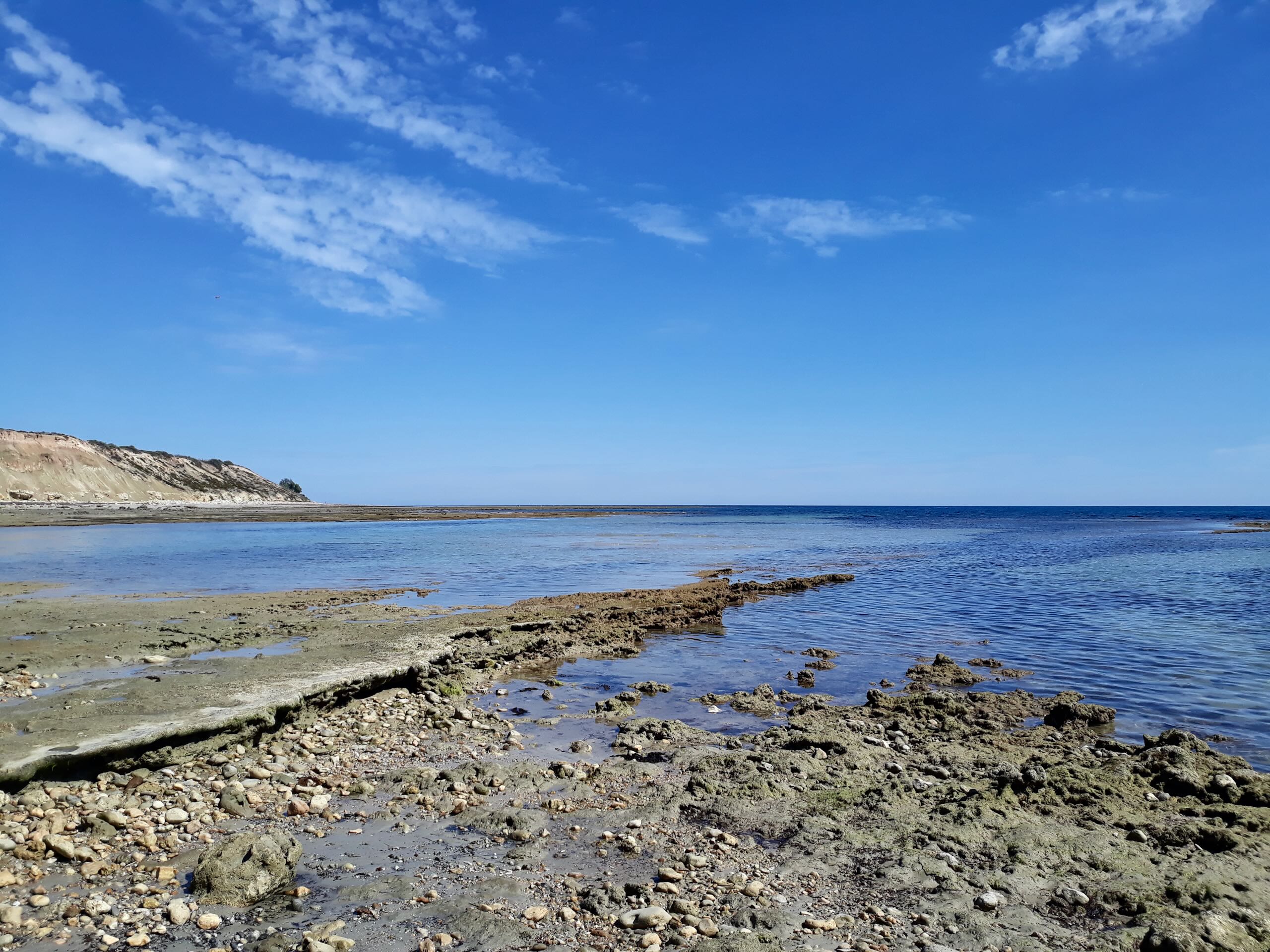
Sky and Sea, Snapper Point, April 2023.

I wanted to stop living by the measures of everyone else, Pasha writes, by which he means not that he wants to stop living, but that he wants to accord his own values to this life he is living. Where he finds it most possible to do this is outside, under the great arch of the sky.

It’s a similar impulse, I think, that makes running so appealing to me — running through the scrub, running on the beach, running beside the sea. It’s outside where I find some of the things I most long for in life: silence, neutrality, the sense that I could (if I went on running long enough, if I stayed outdoors long enough) dissolve.

Sometimes, when I’m inside going about my day — working, sleeping, eating, showering — I remind myself that the sky is just a few steps away, literally at my feet. It feels to me like the very definition of solace.

Sun and shadow, Aldinga Beach, April 2023.

Lately I’ve been reading …

An apology of sorts: today’s list is lengthy, I know, but it’s been a while since I last posted here, and meanwhile I’ve been enjoying my online reading! I hope you will dip in and out of the list below and find something that you enjoy.

How to write

Other people’s words about … writing (and shame)

The voice I wrote with felt new to me — unrestrained. For years I had been trying to cool down the temperature of my writing, to pull it back, pull it back, pull it back — neutralise it, contain it, make it crisp, clear, and sharp, every word carved out of crystal. This writing was nothing like that — it was drippy, messy, breezy. I was working through a mind frame, not a conceit. I was creating a world, not words on a page.

from ‘Vladimir
by Julia May Jonas

There is a practice called Loving Kindness Meditation that I first encountered some years ago when I was participating in a forty-day meditation challenge that involved raising money for a particular charity by pledging to my sponsors to meditate for ten or more minutes every day for forty days. Although I tried many different kinds of meditation during those forty days, and although ultimately I didn’t keep meditating after the challenge was over, the idea behind Loving Kindness Meditation has stuck with me. Essentially, this kind of meditation is about generating, through your meditation practice, kindness and love to other people — as well as to yourself.

There’s a quote by Femi Kayode about writing that I keep close to me whenever I myself am writing. I don’t remember where I got the quote from, and I’ve tried but failed to trace it back to its source. In it, though, Kayode says:

Most of all, write in love. Love for the characters — good or bad, and the story. Love for the reader, for the craft, for humanity. An unconditional compassion for the human condition is the one true gift I believe a writer can give the world.

I thought about Kayode’s words when I came across the passage I’ve quoted at the start of this post, from Julia May Jonas’s wonderful novel Vladimir. The narrator in Vladimir is, like me, a middle-aged female writer who has had two novels published early on in her writing career but has struggled to bring out a third novel. Now, when I think about the ten years I spent between having my second novel for young adults published and submitting my third manuscript to my agent, a novel for middle-grade readers that remains as yet unpublished, what I remember most is how I wrote and rewrote the same manuscript, then wrote and rewrote it some more, all the while trying to perfect it — all the while not understanding that there is no such thing as perfect, and that the search for perfection can take you a long way away from the place you started, that place of excitement and hope.

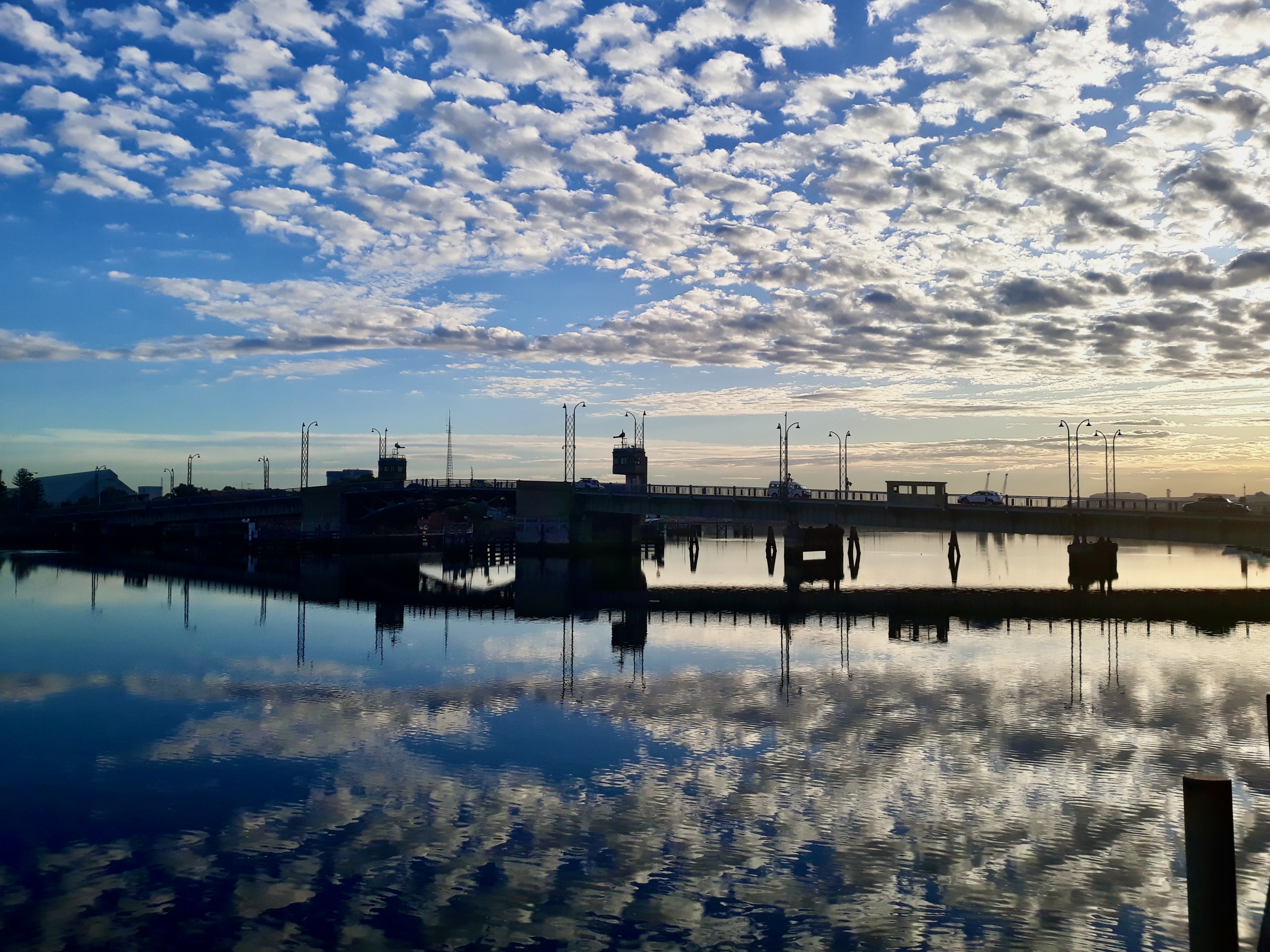
Stormy skies over the Port River, Port Adelaide, February 2023.

I mentioned recently that I’ve now begun working on a fourth manuscript, a literary fiction novel. This time around, in an attempt to break free of the tangle of lonely perfectionism that I’d somehow found myself ensnared in during the writing of my third novel, I’ve deliberately sought feedback from readers early on in the process. Predictably, some of the feedback I’ve received has been positive, and some less so. Your writing lacks introspection, one reader said. And: We never really get to know or understand your narrator, so it’s hard to care about what happens to her.

To be honest, I was a little shocked when I got this feedback. I thought I’d been writing with great restraint; I thought I’d been ‘showing, not telling’; I thought I’d been practising the principle of ‘less is more’. All those old writing saws. But I’ve slowly come to see, as I’ve mulled this feedback over, that in writing this way I’d been falling into the same trap as Jonas’s narrator, trying to carve my words out of crystal. To neutralise my writing. To contain it. To pull it back.

And here is where I find myself returning to the idea of loving kindness and compassion that I began this post with. It’s okay to try to improve your writing, to see the flaws in it and work hard to make it better: more interesting, perhaps, or more insightful, or more moving. But trying to improve your writing isn’t the same thing as condemning it. Because what is the act of trying to neutralise your writing other than a reflection of your own self-doubt and self-hatred? What is the act of trying to contain your words and thoughts other than a reflection of the shame you feel about yourself? What is this whole painful process, other than a way of saying to yourself that your writing is not good enough? That your characters are not good enough? That you, by extension, are not good enough?

Calmer waters, the Port River, Port Adelaide, February 2023.

In the end, what I’ve learned from all of this over the last few weeks (or perhaps over the last ten years) — what I’ve learned from Jonas’s words, and from the words of those people who were kind enough to read my manuscript and give me feedback, and from, finally, the words of Kayode — is that writing, any kind of writing, can’t come from a place of shame.

If, as a writer, you ask your readers to care about your characters, then you have to allow yourself to care about your characters, too. You have to write from a place of compassion. You have to write — yes — in love.

Lately I’ve been reading …

Only [dis]connect

Other people’s words about … beauty

I wondered if a more complex language like [my mother’s native language] Korean had a singular word to describe the feeling of getting off a long shift of a physically demanding job and finding that, for at least half an hour after, everything, every last thing, was too beautiful to bear.

Jenny asked the question so simply — ‘Okay, what do you want to talk about?’ — and I nearly reached across the table and grabbed her hands back, whispered thanks against each of her knuckles. I was about to ask her opinion on lakes and oceans — which did she prefer, contained and musty, or vast and salty? — when she suddenly sat up straight, eyes wide. ‘So — what did you think of that meeting today? Hold nothing back.’

‘Oh,’ I said. ‘I don’t know, it was fine.’

from Pizza Girl
by Jean Kyoung Frazier

I thought of Sally Rooney’s novel Beautiful World, Where Are You? when I read the passage above. In Beautiful World, Rooney’s characters variously mourn the loss of the sense they used to have that they were moving through a beautiful world, or they lament the ugliness of the everyday world, or they remark upon what Rooney calls a hidden reality: the presence at all times, in all places, of a beautiful world.

Sunset, early July 2022.

I think this is what Kyuoung Frazier’s narrator is getting at. She wants to tell Jenny about the beautiful world she sees all around her — but Jenny, like everyone else in the narrator’s life, either doesn’t want to hear what she has to say or doesn’t know how to hear it.

Some years ago when I was going through a difficult patch, a friend of mine offered to exchange a daily photograph with me via text message. ‘We’ll just send each other a picture of something we see,’ she said. ‘Something we like. Something that makes us smile. We’ll share our pictures, and it’ll be a way to reach out. To say hello.’

Dune flowers, early July 2022.

We ended up exchanging daily photographs for over a year, and it was a way to say hello, but it was also so much more. What I loved most about our exchange, beyond the sense of connection it gave me with another human being, was the knowledge that we were each finding something beautiful in our day and then sharing it with someone else. Passing the beauty on.

Maybe we should all share more beauty. Maybe it doesn’t matter if beauty is fleeting and makes us feel fragile. Maybe that’s exactly why we should keep on sharing it.

Before sunset, early July 2022.

Lately I’ve been reading …

Mysterious

Other people’s words about … ageing (yes, again, but bear with me …)

I was not a happy or a healthy young person. I had chronic asthma exacerbated by smoking; I was unfit; my diet was ordinary. ‘Orphaned’ by 29, I spent most of my 20s and 30s in grief. I was deeply anxious with little confidence, my fretful neediness causing relationship problems. For many of those years, I cried every week.
The day I turned 50, I felt a mysterious surge of what I could only think of as power. A deep optimism, energy and peacefulness took up space inside me. Give or take a few crises since, it hasn’t really left. In my mid-50s, I’m physically and emotionally stronger, healthier, more calmly loved and loving, more productive, more organised, smarter, wealthier and exponentially happier than I ever was in my youth. In the past four years I’ve really cried about three times, on one occasion because a good friend died.

From ‘The Luminous Solution

by Charlotte Wood

In my last blog post I talked about how a feeling of invisibility is something many women complain of experiencing as they grow older — and about how that feeling of invisibility doesn’t have to be (only) a negative experience. I talked about how feeling invisible can confer a certain grace and dignity to the way we live our lives.

It was my mother who reminded me subsequently of Charlotte Wood’s words about ageing. I have heard other women in their fifties and sixties express similar things and while so far I can’t say I share their feelings or their experiences, I find a certain comfort in their words. In my early fifties, I am, unlike Wood, neither more energetic nor healthier than I was as a younger woman; nor am I more productive or smarter. And I certainly don’t cry any less frequently.

And yet. The words optimism and peacefulness resonate deeply with me. I have fewer expectations of life than I did in my twenties and thirties — less hope, perhaps, but also, strangely, more joy.

Optimism, peacefulness, hope, joy. These are all invisible things. Maybe that’s what makes them feel so profound.

Shining sea, Late May 2022.

Lately I’ve been reading …

Spectrum

Other people’s words about … being invisible

Sandra is the contrail of light left on the back of the eye by the sun. Like so much of Muriel’s life she is invisible. Muriel thinks that there is some dignity in that, yet it leaves a life so immaterial it may be erased in a blink.

From ‘On Swift Horses

by Shannon Pufahl

The older we get, the more invisible we feel, or so the story goes — particularly if you are a woman. I think it’s natural to feel some grief in response to this. For so many of us, it can feel as though we are losing something — our sex appeal, perhaps, or our looks, or our matriarchal role in the family, or our authority in the workforce.

Ragged sky, May 2022.

When I was a younger woman I was proud of how articulate I was. I was fluent with words, both spoken and written, and I felt that people were listening to me, hearing me, because of this. As the years pass, though, I feel this less and less. Moving from early to middle age and beyond feels to me like a process of being muted. That’s not the same thing as feeling invisible, I know, but it’s clearly on the same spectrum.

But I like Shannon Pufahl’s perspective on invisibility, particularly invisibility of the female kind. I like the way she weighs up both the dignity and the immateriality of an invisible life, its grace and its insignificance. It seems to me a metaphor for everything that we think of when we talk of a person’s life: the sorrow of it. The joy.

Ragged sea, May 2022.

Lately I’ve been reading …


Absolution

Other people’s words about … being loved

We were sitting on a cushioned bench [in the pub]. Eddie had one thick thigh crossed over the other, and he was wagging his right foot gently. He was wearing beautiful Italian brogues and talking to the man next to him, laughing at something a little too loudly, and then suddenly he turned to me, rested his hand on my leg and asked softly was I okay.
‘You okay there, pet? Can I get you something?’
It was there in the tone. I knew that I was loved as I had never been before. I don’t mean that Eddie loved me with remarkable passion or insight. I don’t mean that I felt most fully myself with him. I mean that, in the strangest way, I felt forgiven. For as long as I could remember there’d been a vague disquiet in me, as if I lived in the shadow of some humiliation whose particulars I could not recall. Until Eddie, until he absolved me, I hadn’t known there was any other way to feel.

From ‘When Light is Like Water

by Molly McCloskey

In the last few years I’ve noticed that when I’m reading a book or watching a movie the two kinds of scenes that most move me are those where two people connect for the first time (mostly, though not always, through falling in love) and those where someone forgives someone else.

Both kinds of scenes make me cry. I’m still not sure whether my tears come from a place of catharsis or from a place of yearning.


Port Adelaide, early April 2022.

I particularly love how Molly McCloskey’s narrator, Rachel, elucidates her experience of falling in love with her first husband in the passage above: how she moves away from romance to something gentler, and kinder, and deeper.

Like Rachel, I can’t remember a time when I didn’t live with a sense that I was inherently wrong, flawed, in need of forgiveness. I sense that my experience is a relatively common one, but I also sense that in me the feeling is perhaps particularly strong.


Aldinga wetlands, April 2022.

How to manage anxiety: Be kind. Be curious. I read these words somewhere once. I remind myself of them from time to time. In their simplicity and compassion, they are helpful. What McCloskey’s narrator Rachel understands in the passage above is that kindness is inherent in true love. I think that’s why her words move me so much.

Lately I’ve been reading …

Treasure your beautiful world

Wild Geese (a poem by Mary Oliver)

You do not have to be good
You do not have to walk on your knees
for a hundred miles through the desert repenting.
You only have to let the soft animal of your body
love what it loves.
Tell me about despair, yours, and I will tell you mine.
Meanwhile the world goes on.
Meanwhile the sun and the clear pebbles of the rain
are moving across the landscapes,
over the prairies and the deep trees,
the mountains and the rivers.
Meanwhile the wild geese, high in the clean blue air,
are heading home again.
Whoever you are, no matter how lonely,
the world offers itself to your imagination,
calls to you like the wild geese, harsh and exciting –
over and over announcing your place
in the family of things.

It was the wonderful Gena Hemshaw who introduced me to Mary Oliver’s poem ‘Wild Geese’, and I have loved it ever since. Like Gena, I’ve found that the poem comforts me in times when the thoughts in my head are loud and tangled. And like Oliver herself, I’ve sought comfort in nature for many years. Looking up at the sky and down at the ground and out to the horizon reminds me of my place in the world. It heals me, if only temporarily.


Light on water.


But how true are Oliver’s words these days? How much longer can we find solace in nature if by nature what we mean is the way things are naturally, the way things have always been and the way they always will be?

It is impossible to ignore the discussion scientists and environmentalists are now having across the world about the climate crisis, the climate emergency. (That is, it’s impossible to ignore unless — and forgive me for saying this, but I will say it anyway — unless you are a white, male, middle-aged politician who thinks only about getting re-elected for another term of leadership.) It is impossible, too, to ignore the evidence of it as we go about our days. Wildfires, polar ice melt, rising land and sea temperatures, coral bleaching, floods, not to mention pandemics — here they all are, right in front of our faces.

These days when I read Mary Oliver’s words I feel despair rise thick in my throat.


Clouds above water.


I work very hard to inject a positive note in the posts on this blog. I don’t intend this to be a site for depression and maudlin pondering. But I cannot find a positive note to interject here when it comes to our changing natural environment.

I can only urge you, each and every one of you, myself included, to read Oliver’s poem often, to experience the feelings that arise in you as you read it, and to do what you can, in whatever way you can, to treasure this beautiful world while we still have it. Meanwhile the world goes on, Oliver says, but does it anymore?


Dying light.


Lately I’ve been reading …