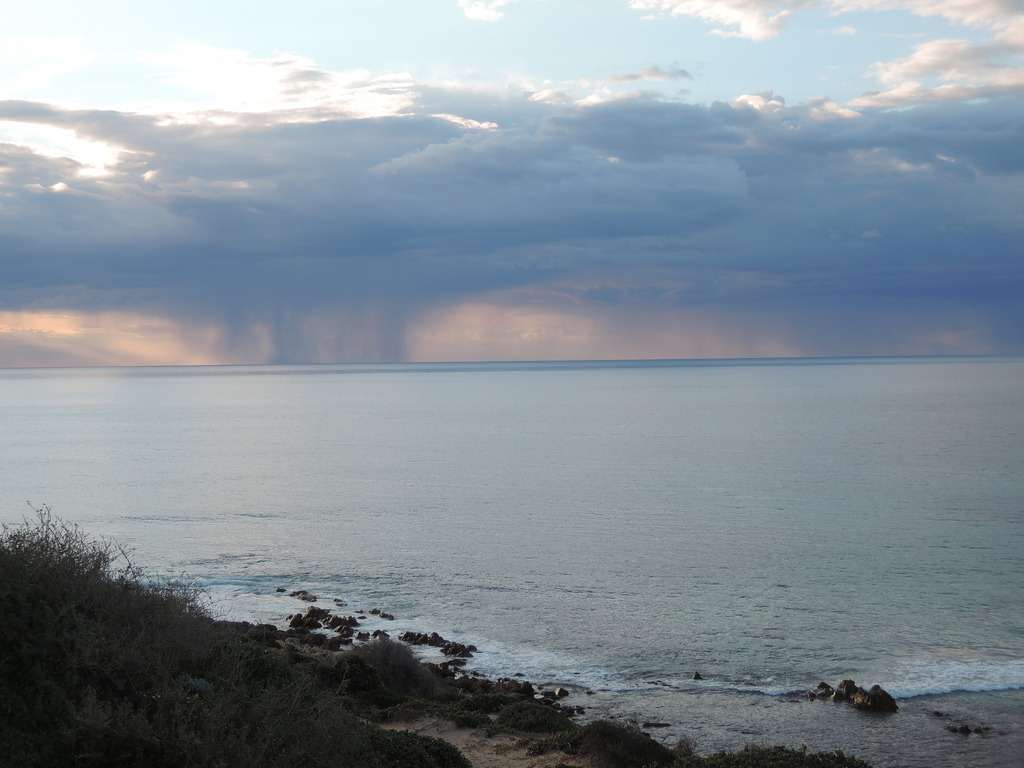
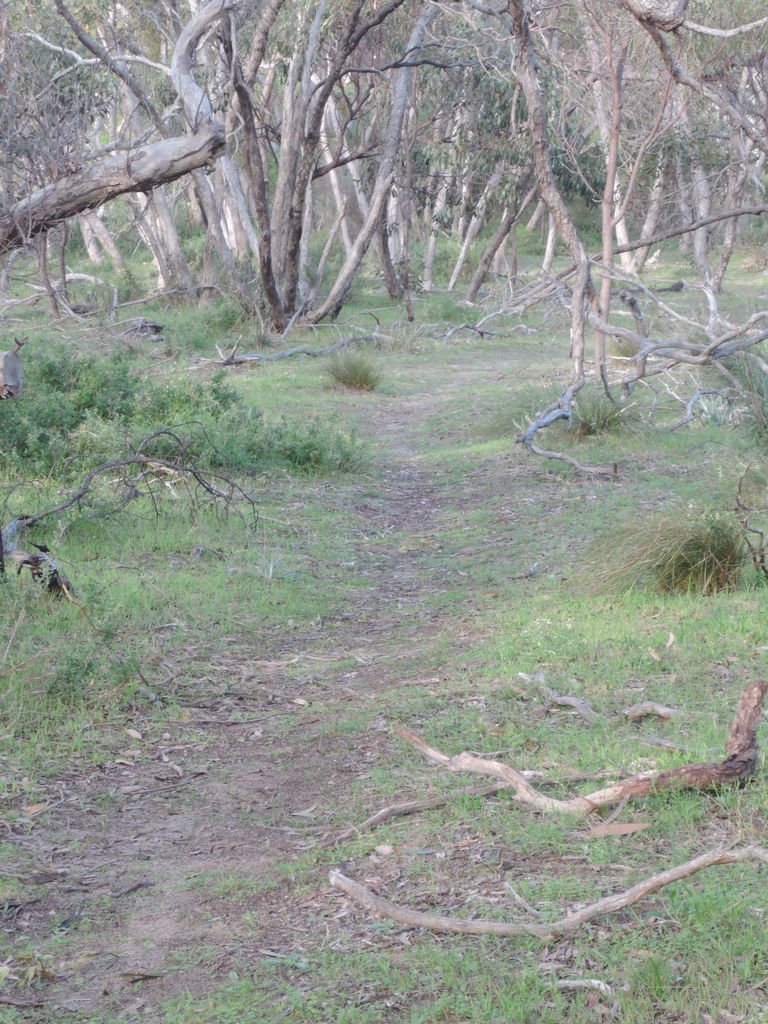
Because

Other people’s words about … settlement

It is no wonder that most Adelaide inhabitants have little idea of what the pre-European vegetation of the Adelaide Plains looked like, because over vast swathes of suburbia, unless one knows exactly where to look, it is basically all gone and has been for over a hundred years. Add to this the interest in recent decades in planting Australian natives that may have been sourced from regions over a thousand kilometres away and there is little wonder that confusion exists about the identity of the truly indigenous plants of the Adelaide Plains.

from ‘The Native Plants of Adelaide
by Phil Bagust and Lynda Tout-Smith

One of my favourite places to spend time in is Aldinga, south of Adelaide, though I didn’t grow familiar with it until I was well into adulthood. When I was a child, Aldinga was still a little coastal country town within driving distance of Adelaide. City people spent their summer holidays there each year. That was all I knew about it.
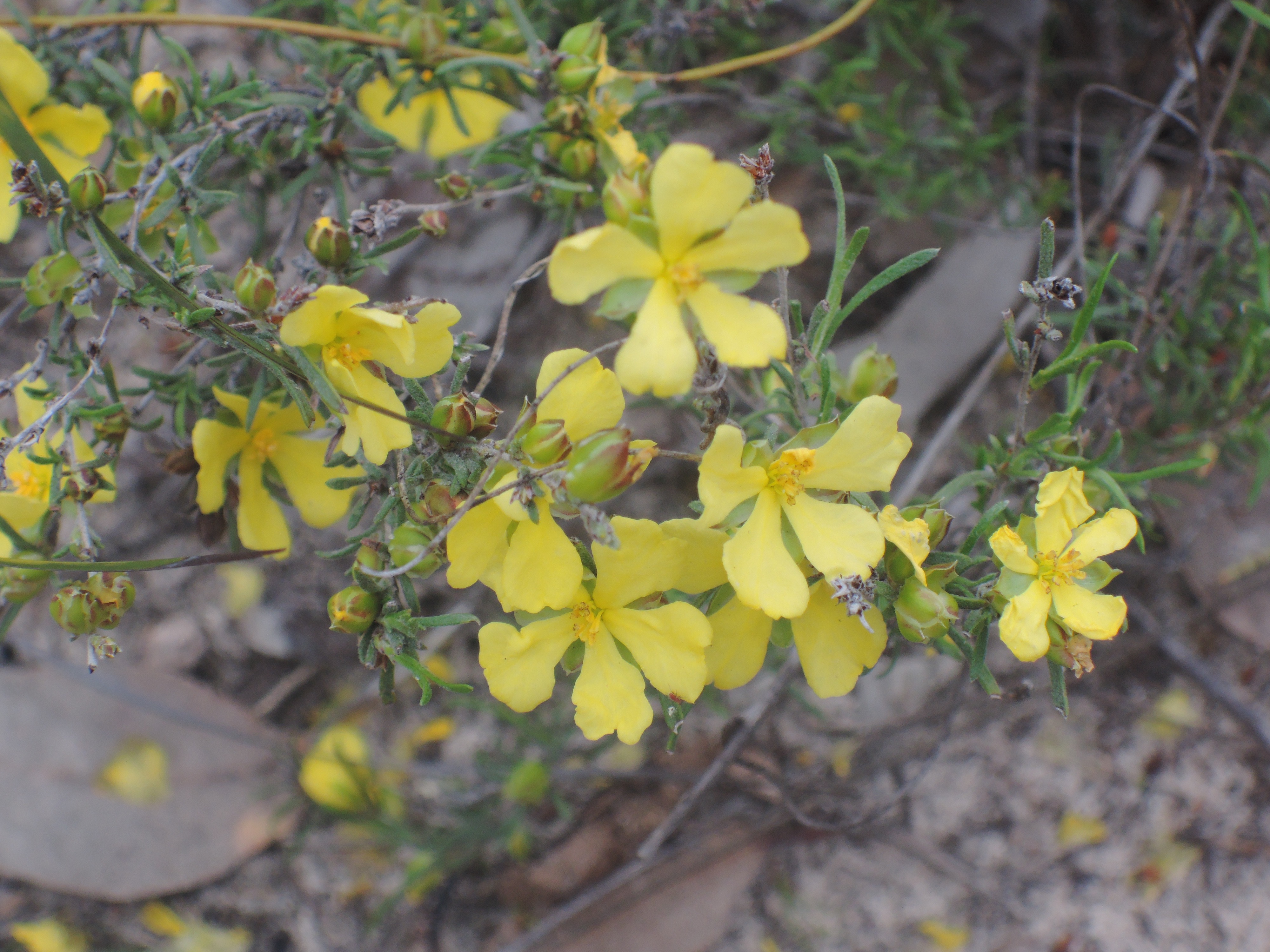
Guinea flower (hibbertia)
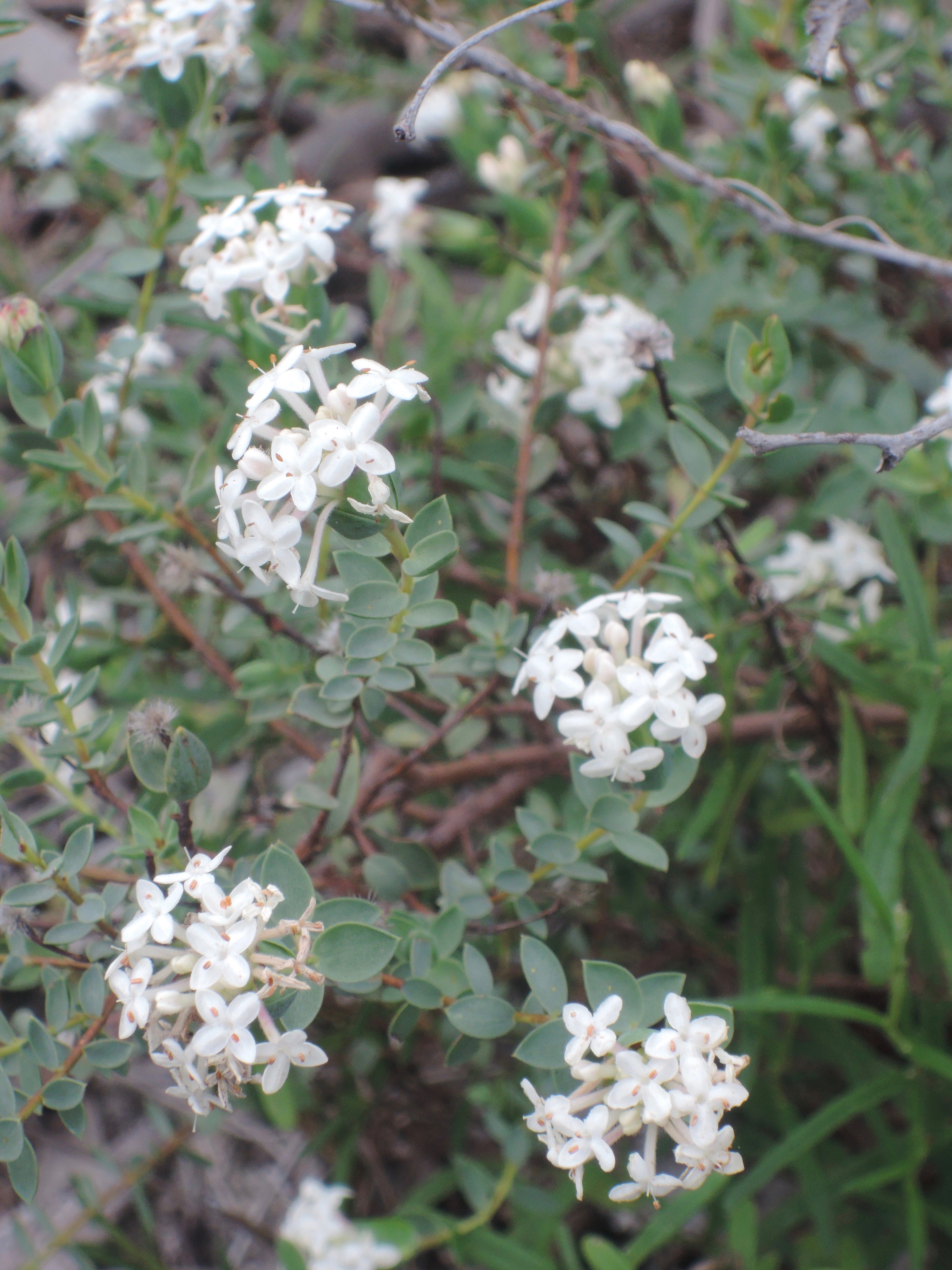
Smooth riceflower (pimelea glauca)

Aldinga isn’t a small country town anymore: over the years, it’s been swallowed up in the growing suburban sprawl — those vast swathes of suburbia — along the coast north and south of Adelaide. It’s no longer a holiday town, either. People travel farther afield these days for their holidays, mostly overseas. Many of the beach shacks have been knocked down, but some still stand.
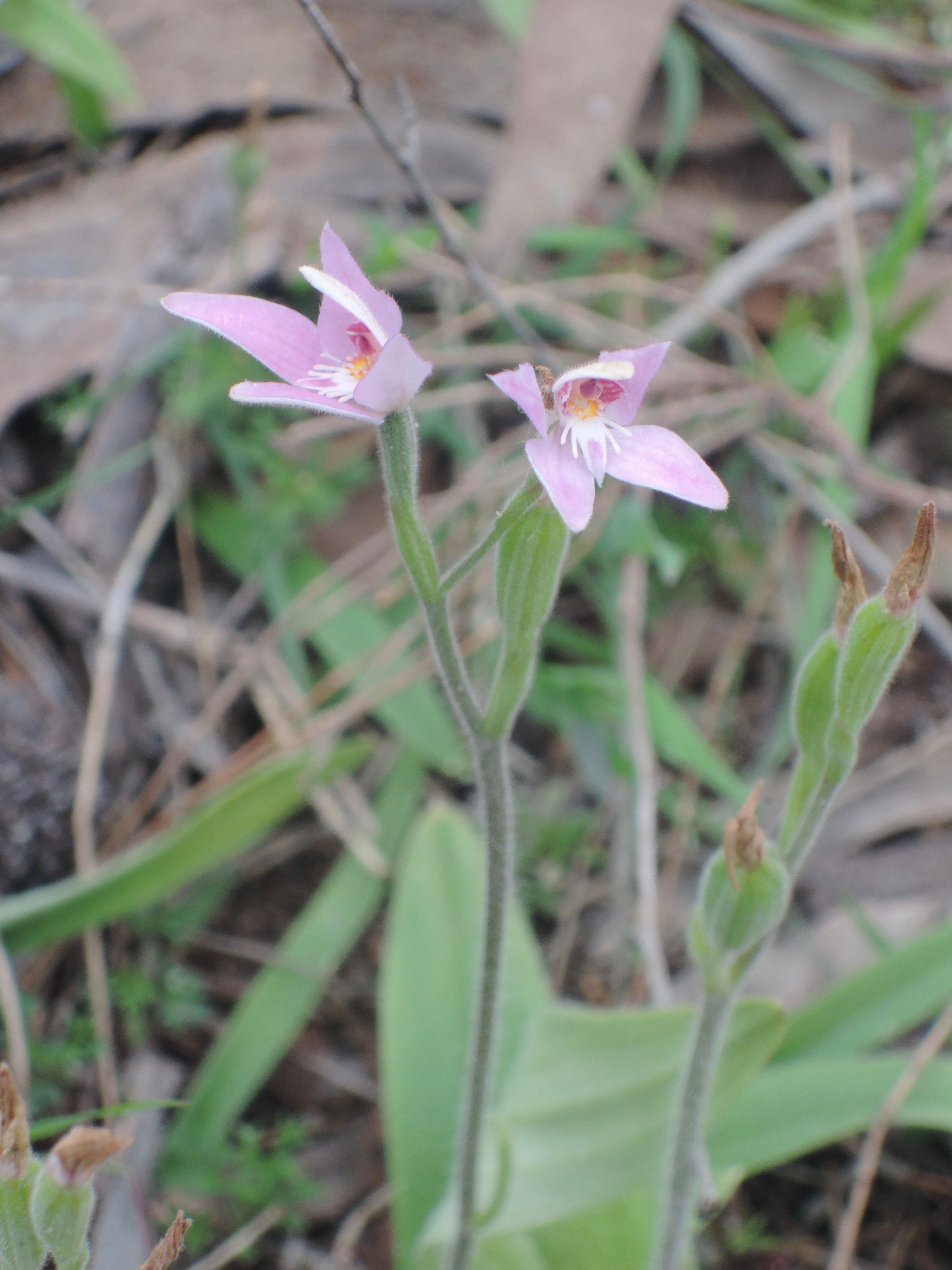
Pink fairy, a spider orchid (caladenia latifolia)
Old man's beard (clematis microphylla)
Old man’s beard (clematis microphylla)
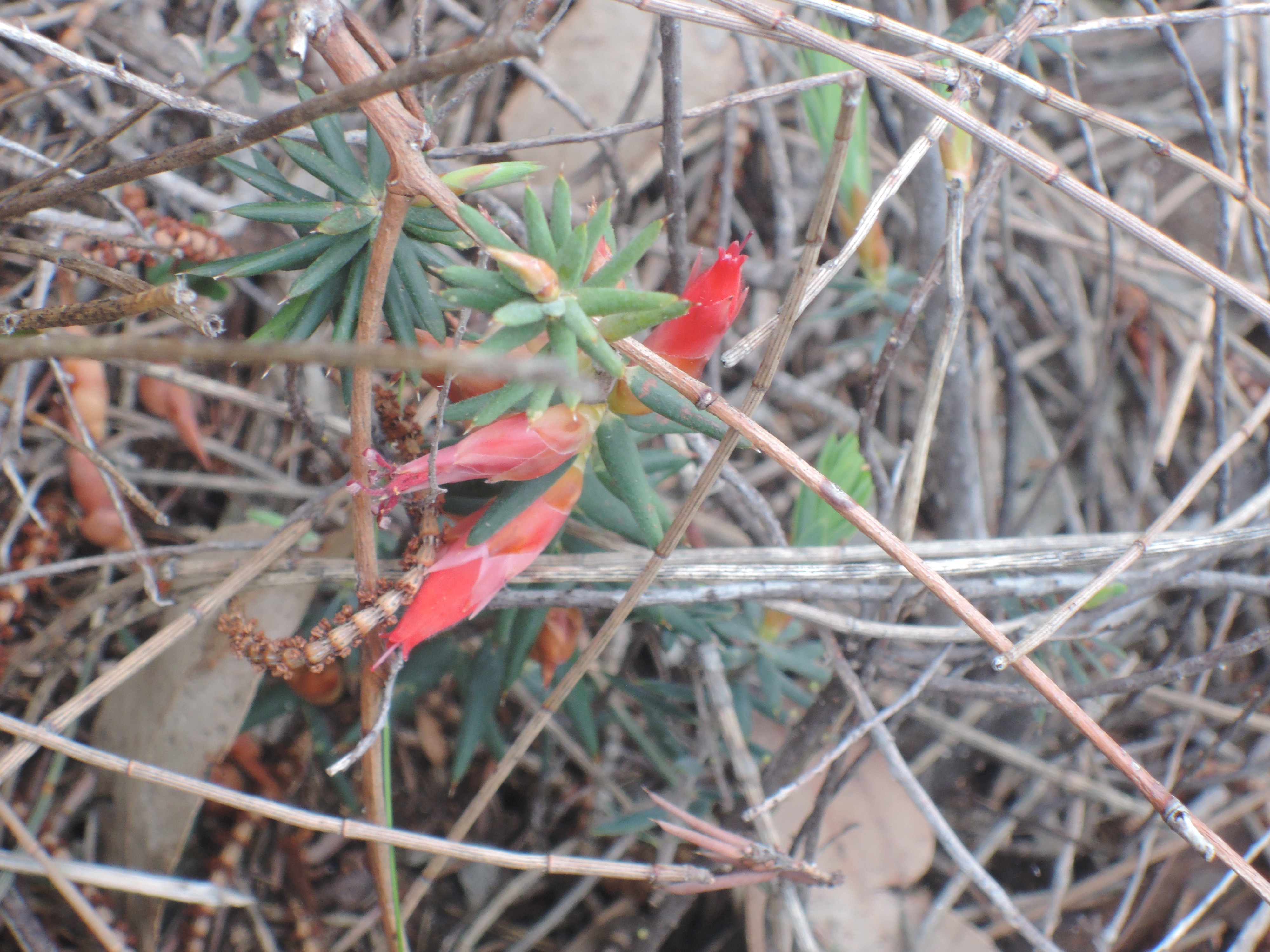
Flame heath (astraloma conostephioides)

Aldinga Scrub is a patch of native coastal vegetation growing just inland of the beach: an environment of dense, bushy vegetation growing on low sandy dunes. As a child, I didn’t even know of its existence, though now I try to make the effort to visit it as often as I can. It is, in fact, the only patch of remnant (pre-European) coastal vegetation left in South Australia. It’s not pristine — there are many weeds growing in it. The climate within the Scrub itself has changed, too, due to the diversion of natural stormwater by farmers onto encroaching farmland.

And yet, wandering through on a precious day off work — listening to the songs of the shrike-thrushes and whistlers and magpies and fantails; stumbling across a lone echidna trundling through the undergrowth; standing back to allow a kangaroo with a joey in her pouch bound past — I feel as though I get a hint of what the place was like before European settlement. Hence the photographs on today’s post, which I took on a visit in mid-September, as spring took hold of the Scrub.
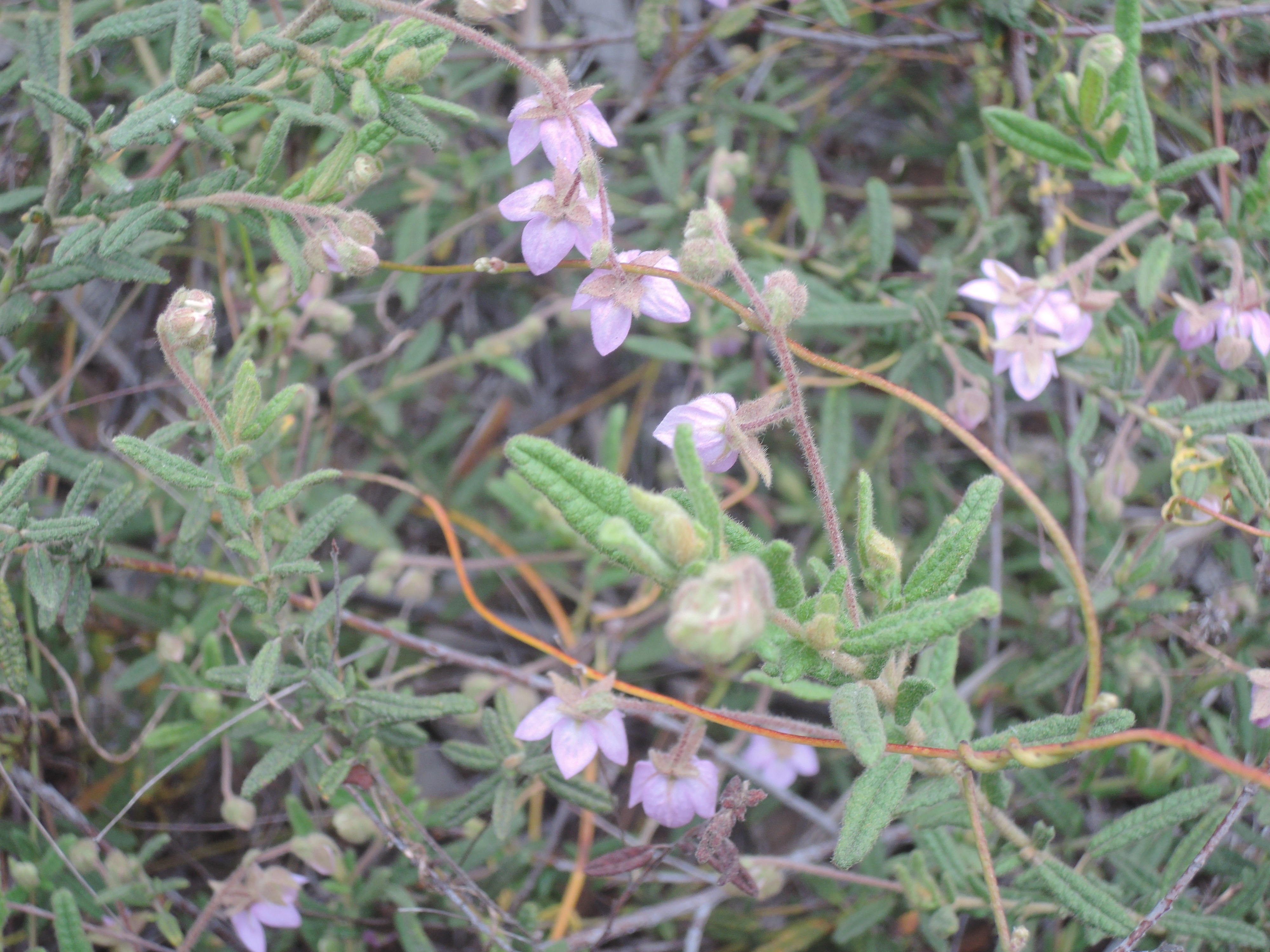
Paper-flower (thomasia petalocalyx)
Variable groundsel (senecio lotus)

I’ve never named the Scrub explicitly on my blog before, though I’ve posted many photographs from my visits to it. I feel fiercely protective of the place — because of its unique status; because I discovered it late in life; because I know that the more that humans like me encroach upon it, the more it disappears. Because, because, because.

Meanwhile, whenever I visit the Scrub, I continue to teach myself the names of the native birds and animals and plants and insects who inhabit it. I wander about, learning and wondering. I may never really know its original nature, but I plan to go on teaching myself about it until the day I die.

Recovery

Other people’s words about … therapy

And perhaps not coincidentally, he also found himself doubting therapy — its promises, its premises — for the first time. He had never before questioned that therapy was, at worst, a benign treatment: when he was younger, he had even considered it a form of luxury, this right to speak about his life, essentially uninterrupted, for fifty minutes proof that he had somehow become someone whose life deserved such lengthy consideration, such an indulgent listener. But now, he was conscious of his own impatience with what he had begun to see as the sinister pedantry of therapy, its suggestion that life was somehow reparable, that there existed a societal norm and that the patient was being guided toward conforming to it.

‘You seem to be holding back, Willem,’ said Idriss — his shrink now for years — and he was quiet. Therapy, therapists, promised a rigorous lack of judgment (but wasn’t that an impossibility, to talk to a person and not be judged?), and yet behind every question was a nudge, one that pushed you gently but inexorably toward a recognition of some flaw, toward solving a problem you hadn’t known existed.

From ‘A Little Life
by Hanya Yanaghihara (p. 568)

When I was sixteen, I received in-patient treatment for an eating disorder. Though my weight loss wasn’t life-threatening, I had become stuck in a pattern of abstinence that my doctor considered a risk to both my physical and my mental health in the long term. And so, into hospital I went.

I am grateful for the treatment I received during the six weeks I spent on that ward. I am grateful to the dietitian who laughed when I told her I didn’t like Mars Bars, and said, ‘That’s your anorexia speaking.’ (Actually, I genuinely don’t like Mars Bars, but I am extremely fond of Cherry Ripes, so I think I pass the test.) I am grateful to the plump, curly-haired nurse whose pudgy feet squelched in her white shoes as she plodded down the corridor carrying a bedpan, who said, ‘If you can’t help yourself to a biscuit from that tin on the table just because you feel like eating one, you’re not better.’ I am grateful to the patient in her mid-fifties who sat opposite the dinner table from me one evening, asking me to pour her a glass of water, ‘because, you see,’ she told me — and her face was a maze of articulated wrinkles and creases as she leaned across the table to speak, her shoulders prematurely humped, her voice husky from years of smoking instead of eating — ‘my wrist bones are so fragile from osteoporosis that I can’t lift the water jug in case I get a fracture.’

I am grateful to these people, because they helped to strip starvation of its glamour for me. Because they helped me to escape.

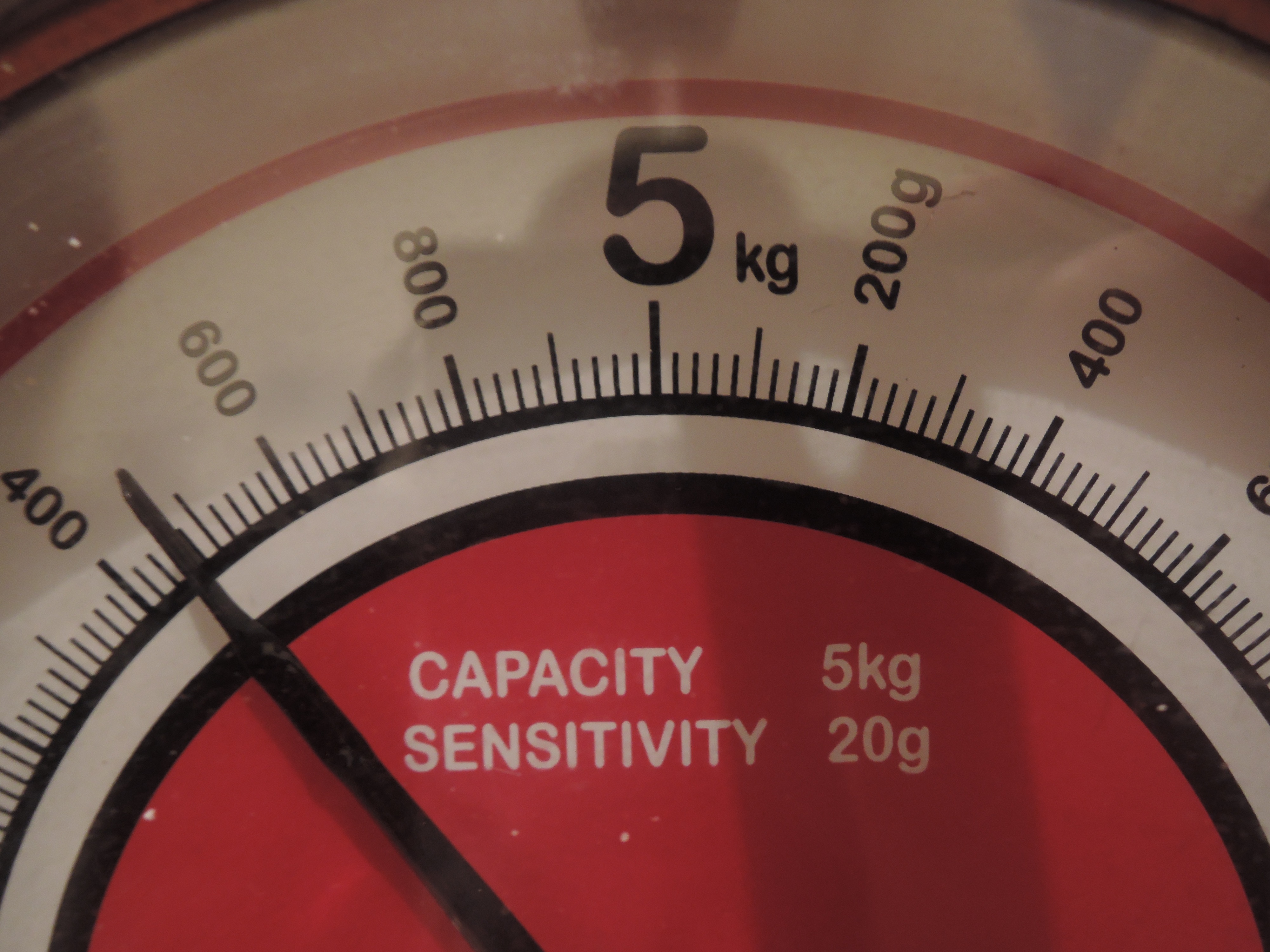
Regular weigh-ins were a part of the hospital treatment ...
Regular weigh-ins were a part of the hospital treatment …

During my time in hospital and afterwards, my therapists talked to me about getting well, moving on, recovering, leading a normal life, finding happiness. Because we talked about these things, I assumed they were not only achievable but also desirable — essential, even. Many people make the same assumption.

But now I am not so sure. I don’t think therapy’s orientation towards focusing on health and happiness and normality is sinister (Yanaghihara’s word). But I do think, like Yanaghihara, that some people’s lives are not reparable, or that some aspects of their lives are not reparable. Some people suffer terribly, some people less so; in either case, there are times when a person’s suffering cannot be eased, either through therapy or through other means. In that context, perhaps there are qualities other than health and happiness which a person might explore. Resilience, for example. Dignity. Grace. Surrender.

I think of Viktor Frankl, who wrote so eloquently and poignantly about people’s need to find meaning in their suffering, if that suffering was unavoidable. I think we shy away from that word, these days — unavoidable. We form goals, we foster dreams, we try to shape our lives, based on that act of shying away. I think this is a mistake.

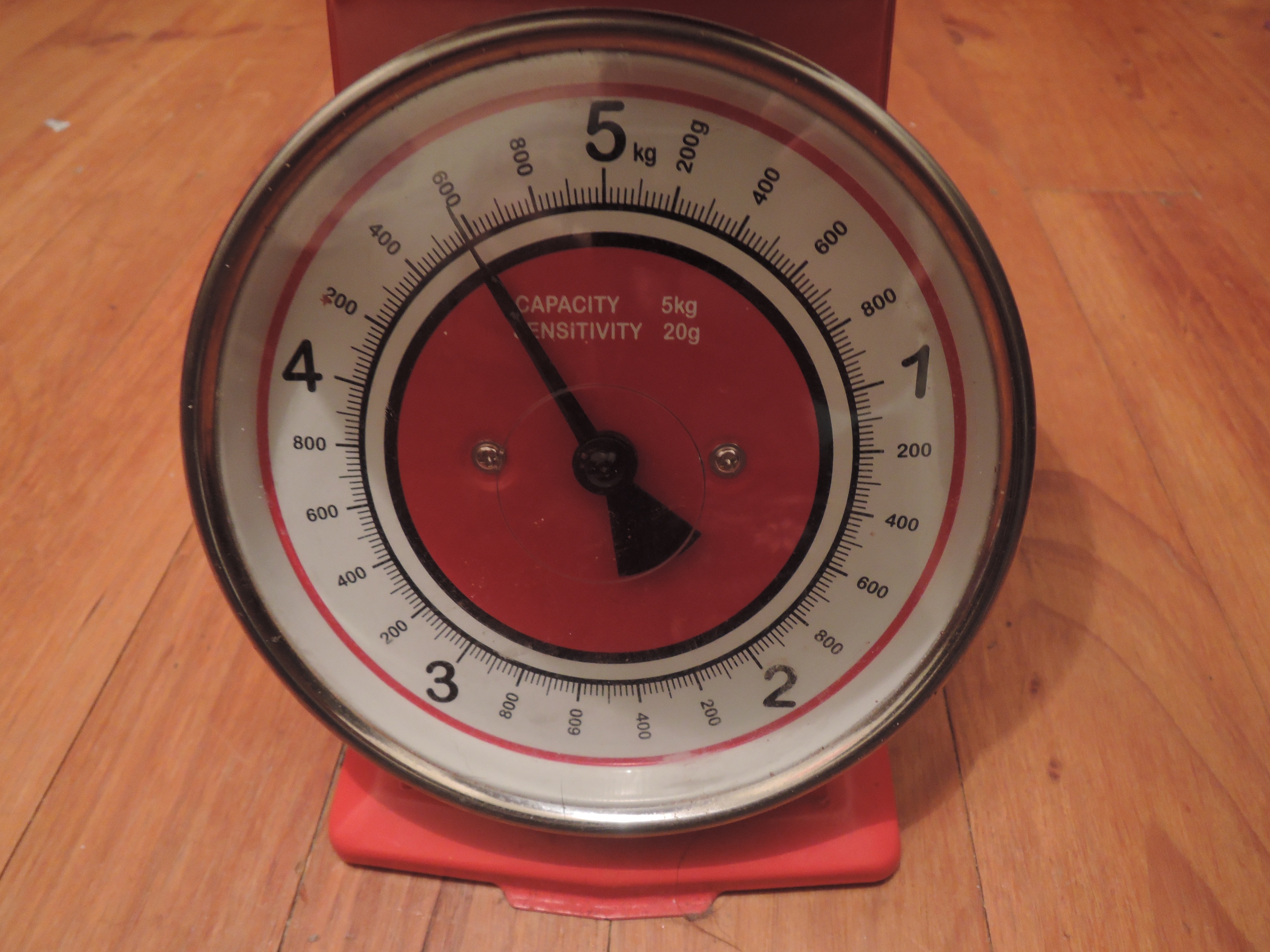
... but the number on the scale is only one factor in the equation
… but the number on the scale is only one factor in the equation

There is only so much you can can say in one post, and so I will leave the rest for another day. Instead, I will finish with some more words by Yanaghihara — words that, I think, complement these thoughts, though the millennial New York society she writes about is so far away from the terrible world of Frankl’s concentration camp:

But these were days of self-fulfillment, where settling for something that was not quite your first choice of a life seemed weak-willed and ignoble. Somewhere, surrendering to what seemed to be your fate had changed from being dignified to being a sign of your own cowardice. There were times when the pressure to achieve happiness felt almost oppressive, as if happiness were something that everyone should and could attain, and that any sort of compromise in its pursuit was somehow your fault.

(p. 41)

This is a tricky subject to write about, not least because it involves personal disclosure, if only on my side. But I would love to know what you, my readers, think about this. Please leave a comment and let me know. Your thoughts matter to me.

Snatched phrases (on books)

‘A book is a heart that only beats in the chest of another.’

from ‘The Faraway Nearby
by Rebecca Solnit

Sometimes, when I’m reading, a small phrase or a sentence will catch my eye, hidden away in the middle of the paragraph, or at the bottom of a page. Perhaps the words in that phrase snag my attention because they are beautiful; or perhaps the thought behind the phrase is beautiful — complex and lingering — despite the simplicity of the actual words.

I write these phrases down in a notebook and treasure them, as you might a necklace your mother gave you when you were a young woman, or a china teacup that once belonged to your grandmother. Sometimes, when I’m writing them down, the word ‘stolen’ creeps into my mind: there is something about the act of recording them which makes me feel I have snatched them from their creator and reappropriated them as mine, storing them inside my heart.

Snatched phrases: today’s post, quoting Rebecca Solnit’s beautiful words about books, is the first in an occasional series here with this theme. However you think of these words, whatever your definition of the word ‘stolen’, they are yours now, too. Writers write for others, after all; writing is about the transmission of words and ideas from a writer to his or her readers — readers like you and me.

And they are not really stolen at all, these words. It feels that way at first, because they are so precious and so beautiful. But in fact, it is the other way around: the words have stolen our hearts. To read is to be captured, over and over again. I can think of no better form of thievery.

At ease on this earth

Other people’s words about … beauty

I am haunted by waters. It may be that I’m too dry in myself, too English, or it may be simply that I’m susceptible to beauty, but I do not feel truly at ease on this earth unless there’s a river nearby.

from To the River
by Olivia Laing

Haunted by waters. Isn’t that a beautiful phrase?

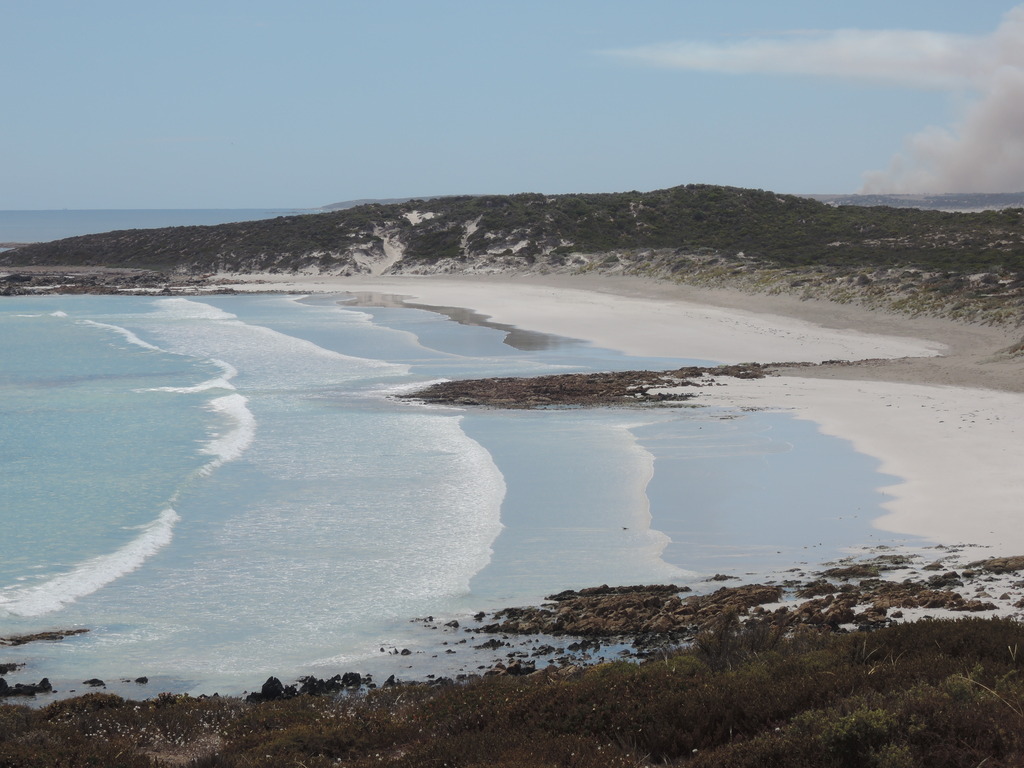
Though the words I’ve quoted above are about a river rather than the sea, still, they ring true for me. For most of my adult life — except for the two or three years I spent in my early twenties, travelling and working abroad — I have chosen to live within walking distance of the sea. In my late twenties and thirties, as I’ve mentioned before, I lived in a series of share households: different houses every eighteen months or so, different housemates. But each of those houses was close to the sea.

These days, I live in a house just a few minutes’ walk to the beach. Open a window, and you can hear waves rolling onto shore. Step onto the front porch, and you’ll smell seaweed drying out beyond the water’s reach — a damp, bleached, faintly rotten smell. Look around indoors, and you’ll see drifts of sand piling up in the corners.

The sea surrounds me. It’s how I make sense of things. It’s how I feel at ease.

DSCN2831

There’s another phrase I love in the words above: susceptible to beauty.

Like anyone else, I have good days and bad days. There are days when I feel at home, here on this earth: when my skin feels comfortable beneath the layers of my clothes, and the warmth of the sun feels kind and good. And there are days when the world seems vast, alien, spinning, remote. What gets me through those latter kinds of day are tiny moments of beauty, out there by the water: pinpricks of sunlight sparkling on the tips of waves, like sequins on a piece of cloth; clouds chasing across the horizon, billowing and grey; a cluster of yellow flowers growing in the dip of a dune, petals cupped to reflect the light.

DSCN2833

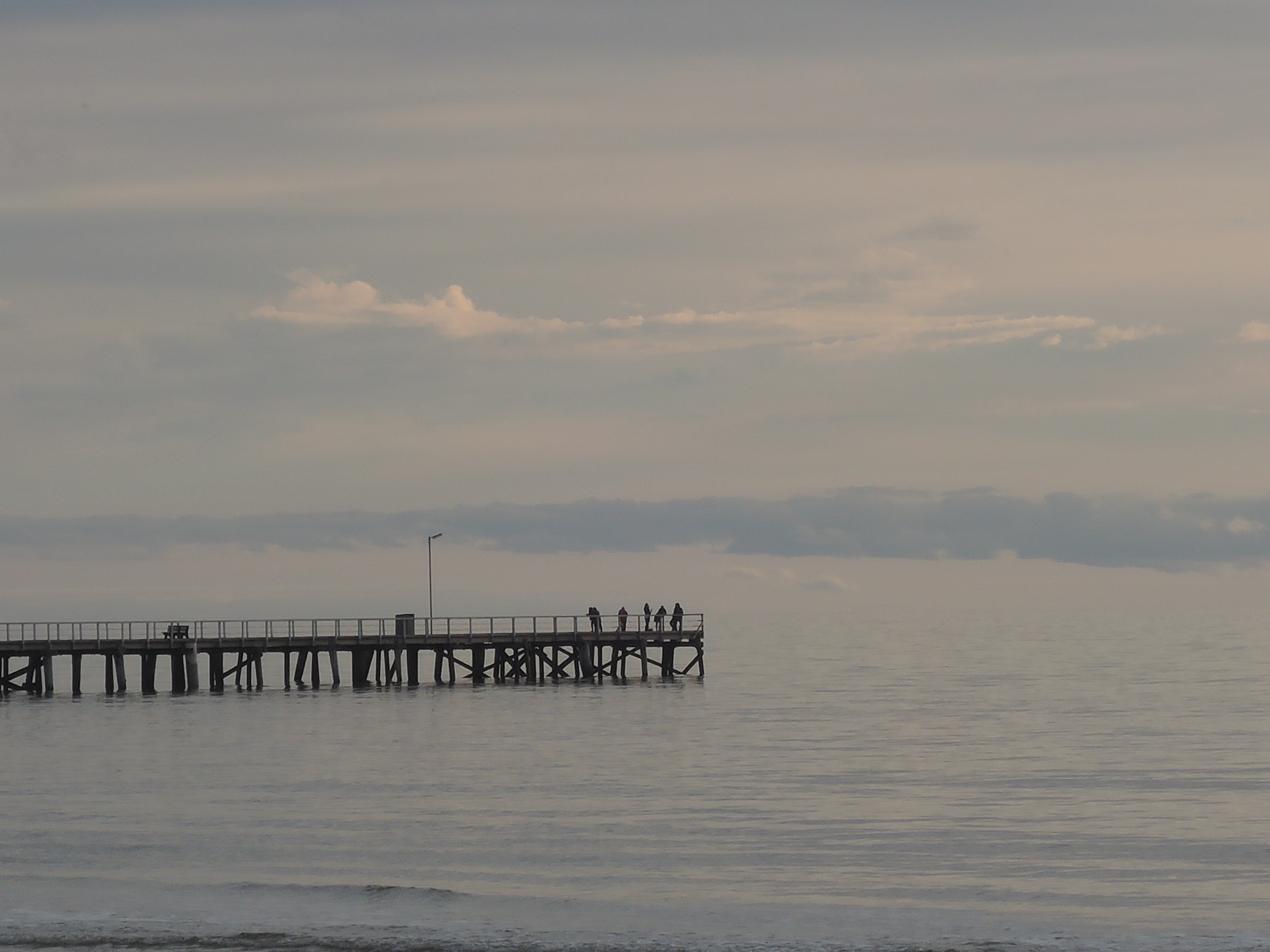
I took the photographs you see here late one August afternoon, just a few weeks ago. Sitting at my desk, working at my computer, I felt hemmed in suddenly: by streets and footpaths, by fences and cement driveways, by the sound of my neighbour hawking up sputum in his bathroom. The longing to get away from all of that was so strong it felt akin to starving. I felt hollow through and through.

I shut down my computer, stepped outside, and walked down the road to the sea.

DSCN2832

Five minutes later there I was, standing on the sand, looking out at the water and the sky. It was close to sunset and I wandered a while along the shore, released at last: from work and worry and words. And I saw something, then, that I don’t know how to describe, though I’ll try: I saw spring coming. The air had a certain quality to it — a softness, perhaps, after the steely bleakness of winter. I thought that if I reached out with my hand I might touch that beautiful softness. It seemed possible, just for a moment.

Looking at the photographs now, I don’t see what I did then. Perhaps you don’t, either. But I know that I saw it, all the same. It was one of those moments — those tiny moments of beauty — to which I, like Olivia Laing, am susceptible.

I am grateful for those moments, is what I’m trying to say. They give me a kind of gladness. They bring me home.

The reader

Other people’s words about … books

She has always been the reader — no-one else in the family is that interested. She had carted her books from house to house as a student, the boxes growing in number each time, keeping them because she could not imagine doing otherwise, and because she thought that there was something permanent in a book, that it lasted forever. But now, when she takes an older paperback out to reread or loan, she is surprised at how fragile it has become, the paper threatening to tear in her hands if she turns the page, tiny black specks embedded in its tissue pages; bugs, probably. She should have cleared them out, she thinks. Packed them up in boxes for recycling. No-one would want them when she was gone.

From ‘Between a Wolf and a Dog
by Georgia Blain

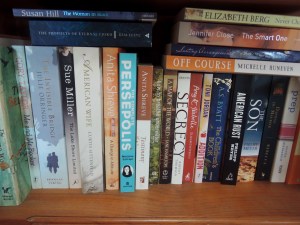
I grew up in a house in which every room contained a bookcase or a wall lined with bookshelves. I remember kneeling in front of those shelves as a child, scanning them, trying to make sense of the order in which they had been shelved, trying — with a child’s sense of incomprehension — to understand the titles. There were lots of orange paperback spines (oh, those old Penguin classics!). There were fat, hardback dictionaries — volume after volume of them. There were thick novels with white covers and raised lettering. There were books with titles like Fear of Flying, which didn’t seem to be about flying at all. There were books with titles containing words like ‘teach’ and ‘literature’ and ‘linguistics’ and ‘semantics’.

And none of these books had pictures in them.

DSCN2822

I made a vow when I was about seven or eight years old that I would never, ever read an adult book. The books on my parents’ shelves seemed to be about — or to come from — a disturbing adult world: a world of which I knew I wanted no part. And so the first time I read a book without any illustrations, I felt half-proud, and half-afraid. Was I crossing over to adulthood now, after all? Could I stop myself? It seemed not. Reading, in the end, was more than just enjoyable: it was essential.

As a young woman, I lived for many years in a series of rented houses and share households. My housemates and I each had our own bedroom, but we shared saucepans and bowls and TVs and washing machines. We talked about the films we wanted to see, the music we liked to listen to, the books we had just read. We cooked for each other and shared bottles of cheap red wine and chardonnay. We borrowed novels from the local library, and bought tattered secondhand paperbacks from the local op shop.

During those years, I stored any books I owned on a makeshift shelf that I’d constructed by putting bricks on my bedroom floor and laying a plank of wood over the top of the bricks. Later, I went through a phase where I decided that lettuce crates were a cool way to store my books. I couldn’t bring myself to buy a proper bookshelf. I was afraid, I think, of making the commitment. A bookshelf spelled permanency. It spelled adulthood. It spelled turning into your parents. I wasn’t going to do that. (Why, I wonder, are we so fervently against turning into our elders when we are young? Now I would be honoured to think I was, or am, like either of my parents.)

DSCN2825

I don’t remember exactly when I gave in to owning a bookshelf: to growing up, to admitting, happily, that I shared my parents’ passion for literature. I am glad that I did, though. The books on my shelves may one day fade, their pages tearing, their covers warping with damp. They may seem meaningless to anyone else. And yet there is something permanent in them: there is something that lasts forever, despite their physical frailty.

Reading transports to you another world: a world of someone else’s creation. It makes you feel things — sadness, joy, anger, bewilderment. Writers share their worlds with us; their books are their gifts. Those gifts leave an imprint on us. You can’t store that imprint on a plank of wood resting on a brick. You can’t stack it in a lettuce crate. And you certainly can’t pack it up and recycle it.


An open door

Other people’s words about … inspiring teachers

DSCN2815

I brought Vera to one of [my mother’s] lectures. It was held in the quadrangle at Sydney Uni and the hall was packed. Vera and I squeezed in at the back next to the open window and then my mother made her entrance, rushing in with a briefcase under her arm. She didn’t know we were there and didn’t see us. Applause broke out, brief but enthusiastic.

‘Oh,’ she said as she reached the front, ‘you are being entirely silly and adorable.’ And then she put on her reading glasses and began the lecture. I didn’t hear a word of what she was saying. I just kept thinking that I too would have clapped had I not known her. There had always been a kind of heat emanating from her. People responded to it, and that day was no exception; that day she made everyone feel that Political Science 101 was a gateway to a brilliantly inspired life.

from ‘What the Light Hides
by Mette Jakobsen

When I began my Arts degree at university, the one subject I refused to enrol in was the subject in which my father was a lecturer. I didn’t want to have the experience of being tutored by, or lectured to, or graded by, a parent. I wanted to make my own way through university, no strings attached.

DSCN2818

Still, word gets around. My father was an immensely popular lecturer: fallow students in other subjects began to come up to me and say incredulously, seeing the surname I shared with him, ‘I think your Dad’s my lecturer.’ The lecture theatre was always packed when it was his turn to speak. He told anecdotes that made students rock with laughter, and the passion he expressed for his subject lit up his eyes, filled his voice, guided his gestures. He was cool; he was a legend: friends told me this all the time. I know now, as I did then, that his students, walking under the shaded trees of that campus, strolling past the old stone buildings with the arched doorways and the spreading lawns, were lucky to have him.

DSCN2821

It’s a cliché, but teachers and lecturers really do change our lives. When I was in Year 12, I had a teacher who shared the same kind of popularity amongst students as my father did at university. She taught Australian history — a subject as dry and dusty as any you could think of, at least back then, in the days when the history of Australia’s first people was rarely considered or contemplated in high school classrooms. She took us through the history of the Australian Labor Party, the social history of (white) women in Australia, the beginning of national pride in Australia.

Like my father, she taught by telling stories. She had a flat, slightly croaky voice, and crinkled, grey hair through which she would push her hand as she walked between our desks. The whiff of cigarette smoke hung about her clothes — woollen jumpers, tweed skirts — leaving a trail behind her. She kept a sheaf of notes on her desk to consult if she needed to, which she rarely did. Mostly, she just talked. Sometimes her voice grew sad, sometimes urgent. If I close my eyes, I can still hear her talking.

Beyond history, she also taught us how to study. It was from her that I learned how to take notes, how to structure an essay, how to study for exams, how to practise good time management so that you could hand in an essay on time. I took those skills with me to university. I wasn’t happy socially the first time I attempted university — indeed, I left at the end of that first year and didn’t return for another six years or so — but I loved the academic challenge of the subjects I was studying, and I have my Year 12 Australian history teacher to thank for that. To this day, I still use the skills she taught us to structure anything I’m writing or drafting, and I rarely miss deadlines. That’s because of her.

DSCN2819

If you look closely, you’ll see a common theme in each of the photos I’ve chosen to accompany this post. They are all taken on or around my local campus, the University of Adelaide — and every one of them shows a door or a window. That’s because learning should be about opening doors, letting fresh air into our minds. It should be about allowing us to enter new worlds, to see things from a new perspective.

Gifted teachers guide us through this process — people like my history teacher, people like my father. They change our lives for the better.

In return, we carry their teaching with us for the rest of our lives. We never forget them.

Why I drink tea, not coffee

Other people’s words about … tea

The MOTH (the Man of the House) thinks the world’s drowning in a tsunami of expensive [cappuccino] froth. He’s fighting the trend single-handedly. He drinks tea made from tea leaves. He doesn’t like ‘gift’ teas that arrive with house guests and distant cousins …

DSCN2773

Every morning and most evenings, the MOTH makes tea following the rules set down by his mother. Bring a kettle of water to a ‘rolling’ boil. Warm the teapot. Put in a generous measure of loose tea. Fill the pot with boiling water, replace the lid and wait patiently. In the meantime, put out china cups and saucers, teaspoons, the sugar bowl and a jug of milk. Hot buttered toast and a jar of homemade marmalade will do nicely as well.

From ‘Tea and Sympathy’ by Pat McDermott
featured in
The Australian Women’s Weekly, July 2016

Old-time readers of this blog will know of my love for tea by now. I would rather give up wine, chocolate or cheese than give up my daily pot(s) of tea.

DSCN2777

Many years ago, I attempted to become a coffee drinker. I was working as a student barista in a cafe in Port Adelaide at the time, and the coffees I made for my customers smelt enticing. There is nothing better than the smell of freshly brewed coffee.

But. I soon discovered that I am extremely sensitive to caffeine. Give me a cappuccino at nine o’clock in the morning, and I will be jittery and fidgety and twitchy all day. I won’t sleep. I’ll still be awake the next morning, heart hammering away, eyes dry and wide. And don’t even get me started on that sense of the walls of the room caving in on me …

DSCN2776

My grandmother drank tea, and I remember her making me cups when I was a child: the ritual of it, the alluring whiff of mysterious adulthood that came with it. Still, for years after I’d begun reacting to coffee, I avoided drinking tea because I knew it also had caffeine in it, though in a smaller dose. Eventually, though, I became close to someone who was an inveterate tea-drinker, and I felt tempted again. Eventually, tea wooed me back in just the way that coffee had once done.

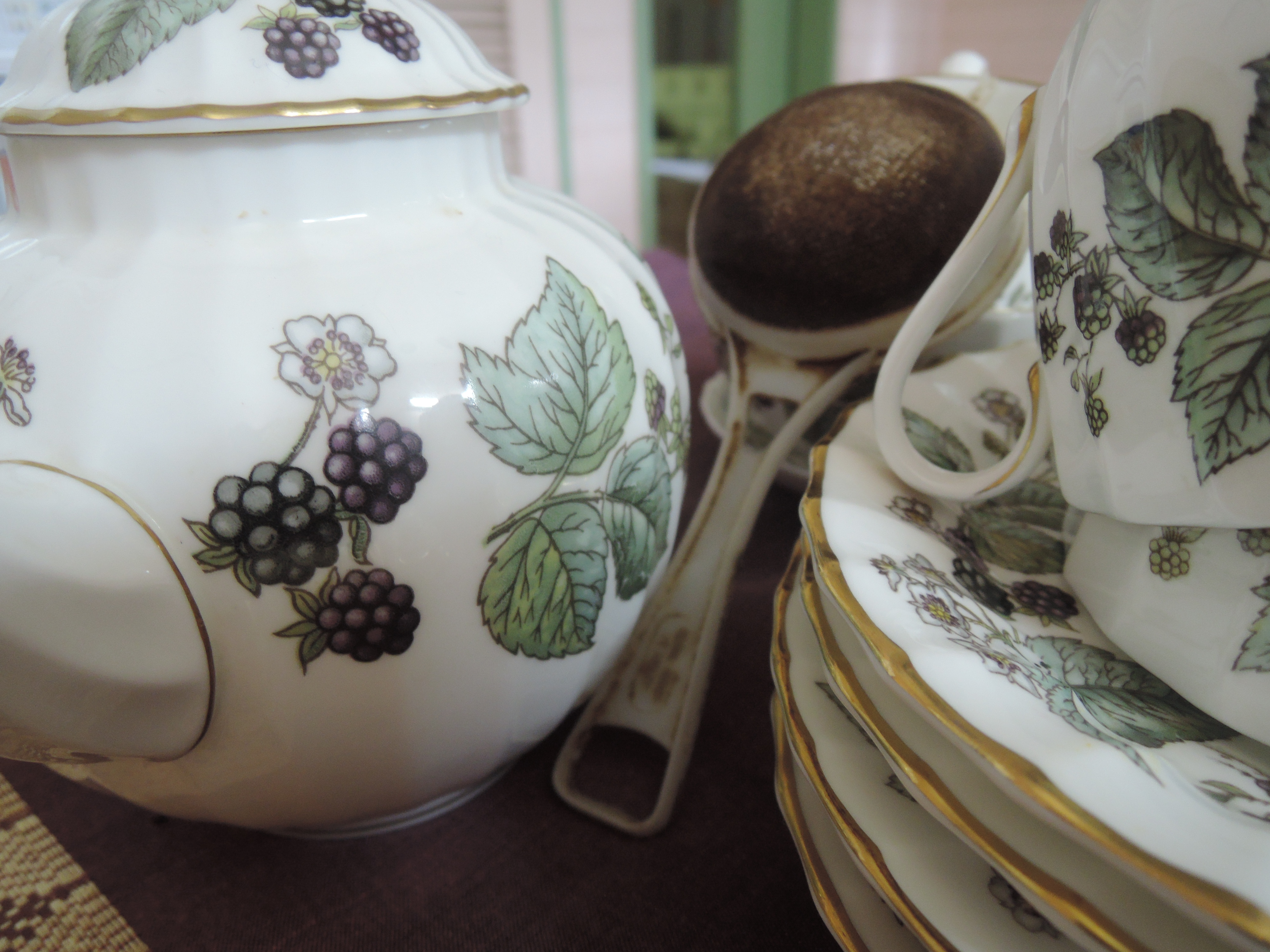
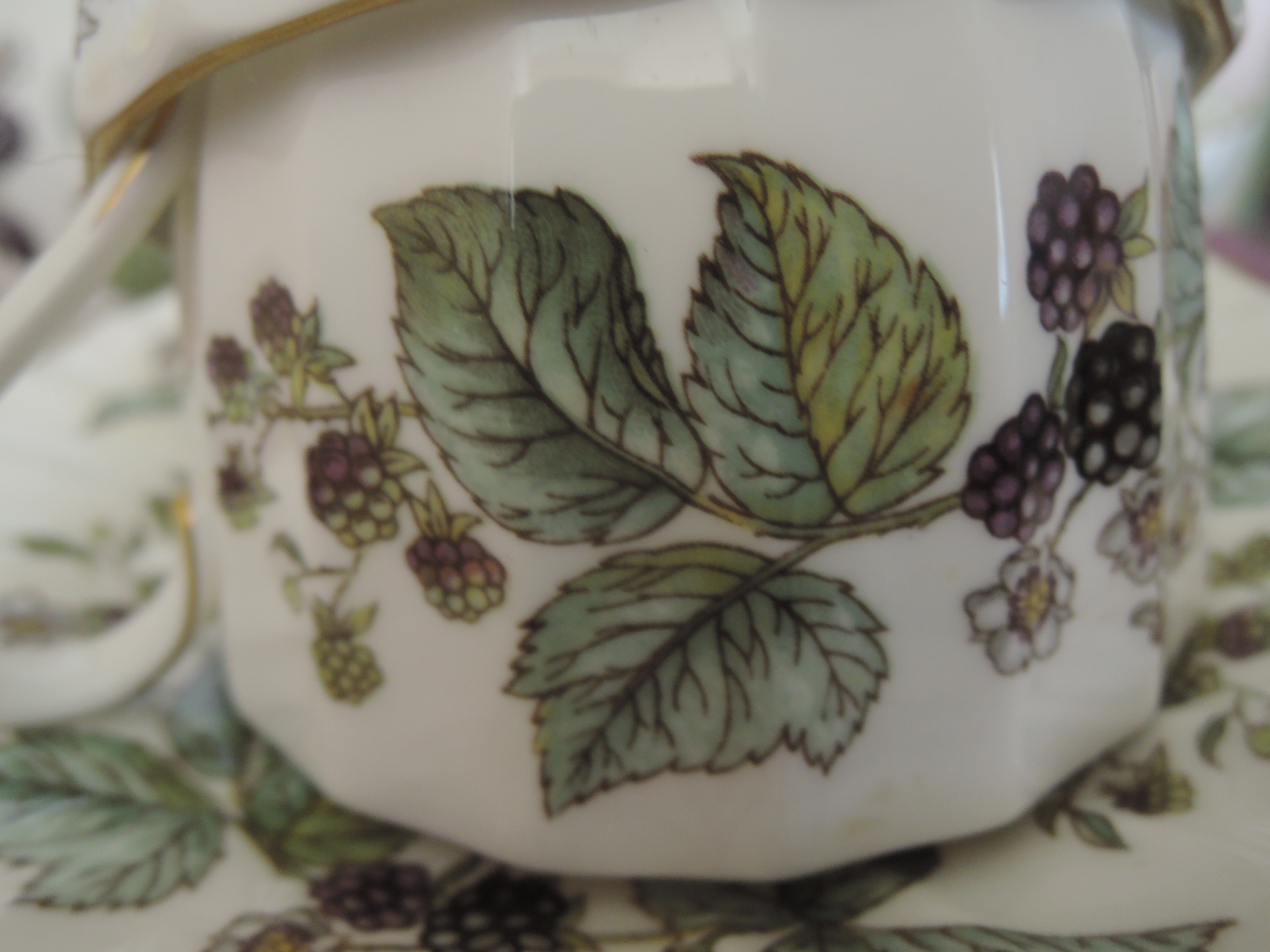
Maybe it’s the smaller amount of caffeine. Maybe it’s psychological. Maybe it’s the ritual of tea-making: my grandmother’s Royal Worcester china, the pot, the brewing, the accompaniment of sourdough toast spread with a (thick!) layer of my mother’s grapefruit marmalade or my father’s quince jam. Whatever it is, I have found that I can handle the caffeine in tea.

I read recently in The Australian Healthy Food Guide (p. 14) that Lord Twining, of Twinings Tea fame, has been known to state that anything less than nine cups of tea per day is a totally unsatisfying tea-drinking day. Clearly, Lord Twining may have vested interests in making statements like this … but I can’t help admiring such a line of thinking, all the same.

And so … let the tea-drinking continue!

How (not) to surf

Other people’s words about … surfing

He tried to show me the basics [of surfing], but he made it look too simple. Surfing was in his muscle memory, in his blood, in his thoughts. It was like his shadow, simply part of him …

We got back into the water one more time, and the sea tugged me under and tossed me around under a wave, like a plaything, like it was laughing at me. I came up ready to go home, mouth full of salt, hair full of sand.

from Season of Salt & Honey
by Hannah Tunnicliffe
( p. 134)

I know a man who is a surfer. In his fifties now, he started surfing in his teens, catching a ride to the south coast with an older friend who had a driver’s licence.

Though I love the sea, I have a fear of waves, of getting dumped. Still, when I first came to know this man (nearly twenty years ago now), I wanted to give surfing a go. I wanted to see what made him love it so. I asked him if he could help me brave the waves.

So one day, we paddled out into the salt water, he on his surfboard and I on my boogie board, paddling hard. He set me up for a couple of waves. Each time, when the wave rolled towards me, he said, ‘Now!’ and then, when I froze, he gave my board a push, and away I went. I rode the wave towards shore, lying flat on my belly on the board as he’d shown me, and it was fast and terrifying and exhilarating all at once.

And I got it. I got what he felt out there in the ocean. I got the magic of it. The awe.

Yorke Peninsula waves
Waves

But I’ve never attempted it again. I can’t read the waves or the currents. I’m afraid of getting caught in a rip. I don’t understand the sea. I love it; I’m awed by it; but I don’t know it.

She gives me that sad, hopeful look that says [surfing] can be for everyone, should be for everyone. That surfing is the best thing in the world. Her strange, blue-grey eyes fix on me, like she wants to explain. I imagine her in the sea, like a fish, moving as though made for the water. She would know where to put her feet, how to balance, how to fall without hurting herself, without drowning. She’s probably one of those girls who rides the waves as though she’s dancing with the whole of the ocean; her and the water taking different roles, moving in different ways. The ocean leads and she simply responds.

(p. 134)

I think, for me, the sea will always remain a beautiful, mysterious, unknown quantity. There are different ways of loving it, perhaps. Mine isn’t the way of the surfer, but it’s still there. It will always be there. I have lived by the sea for twenty years or more now, and the sand and the salt and the sea are in my blood.

And that is enough for me.

Storm approaching, Yorke Peninsula
Storm approaching.

It’s not always about speed. Or winning.

Other people’s words about … running (slowly)

I didn’t fight my way across the finishing line — nor did I float. The significance of that marathon didn’t lie in speed or in pain, but in the exchange between my body and the city. I didn’t need a personal best trophy; I could prize the run on its own terms. After many years of early morning runs and all kinds of races, running is to me a way of being, not a way of testing myself against invisible antagonists and not a competition with my peers. I had nothing to vanquish but my doubts, and now — in ways I could never have predicted — running has brought me into a rich communion with the world. It still surprises me. I’m careful not to slip on dirt tracks, and I pay more attention to warnings about overstraining my knees than I used to. I want to avoid injury. I don’t want a show-stopping finish line moment. I want to keep running.

From ‘The Long Run
by Catriona Menzies-Pike

When I (briefly, as it turned out, at least for now) took up running again last year, it wasn’t the thought of speed, or competition, or races, or personal bests, that appealed to me. Nor, God forbid, was it the thought of getting super-fit and toned. Lone beast that I am, it wasn’t the thought of companionship, either: of joining a running team, or running with new friends. I know these are the things that runners often find joy in, but they weren’t drawcards for me.

No, what drew me back to running was what I remembered from the period in my twenties when I ran: how meditative running can make you feel. There is the beat of your heart, the rhythm of your feet, the taking-in and letting-out of your breath. There is the simplicity of moving your feet over the ground, taking you there (wherever ‘there’ is) and back again. There is the joy, afterwards, of feeling reawakened. And alive.

I'm careful not to slip on dirt tracks
I’m careful not to slip on dirt tracks

I suspect that Catriona Menzies-Pike is a kindred spirit. Her whole book, if you care to read it, is an eloquent essay on how running helped to heal the grief she felt for her parents’ untimely death when she was still a child. It is also an exploration of the joys of running slowly — and making the choice to do so. Imagine running, but not forcing yourself to race. Imagine running, but allowing yourself to enjoy the moment rather than the end-result. Imagine running, with no particular aim in mind other than to take the time it takes.

Imagine.

A rich communion with the world

We talk big about fitness these days. We talk about heart-rate and VO2 and pace and gait. We talk about sub-four-hour marathons and heel-striking and foam rollers. We have instruments and apps to help us talk this talk — Garmins and GPS trackers and Apple Watches and the like. (Wait, maybe those instruments created the talk. Have you ever thought that?) So choosing to run slowly, in a world full of talk like this, is tantamount to an act of anti-consumerist, anti-conformist rebellion.

I don’t want a show-stopping finish line moment. Those words apply equally well to life as they do to running, don’t they? There’s another metaphor in the quote above, too. Running, Menzies-Pike says, still surprises me. I get that. I do.

Because life still surprises me. I hope it always will.