
Other people’s words about … the city at night
But should you happen to arrive at night you might think you were in a different place altogether. From over there is a sound of argument, from over there a clamour of complaint, from over there a gospel choir, from over there the muezzin’s call, from over there three or four sputtering generators, from over there the squall of the bus stop and taxi stand, from over there revellers and water sellers, from over there the neighbour’s relentless television blaring out soap operas, from over there disconsolate wailing, from over there passionate lovemaking, from over there disputation and rancour, a vast sonic mix of an ocean that beats in incessant waves the whole night through until sunrise arrives and the pale light of morning settles a dazzled silence once again over the city.
From ‘Tremor‘
By Teju Cole
When I read Teju Cole’s description above of Lagos, I thought of my own experiences of Cairo when I lived there for a few months many years ago in the 1990s. Yes, I thought. A vast sonic mix of an ocean, I thought, yes. They are different cities — of course they are — but still, Cole’s description captures something of the essence of Cairo for me. That tremendous, beautiful clamour.
Hello, everyone! It’s been a minute since I last posted. I’ve been busy writing and living (and, yes, living and writing), and — always — reading. Meanwhile, an algal bloom has spread along the coast of South Australia. A bushfire has burned through beautiful Deep Creek. A president in a country much bigger and more powerful than my own has tried to buy Greenland. In the face of all the sadness and madness and badness of this world, it’s hard not to feel anything but grief. In the face of all of this, that is to say, I do only what I know how to do, which is to remain present. Show up. Keep living and breathing and writing and reading. Keep living in a way that is meaningful to me. This is all I can think of to do.
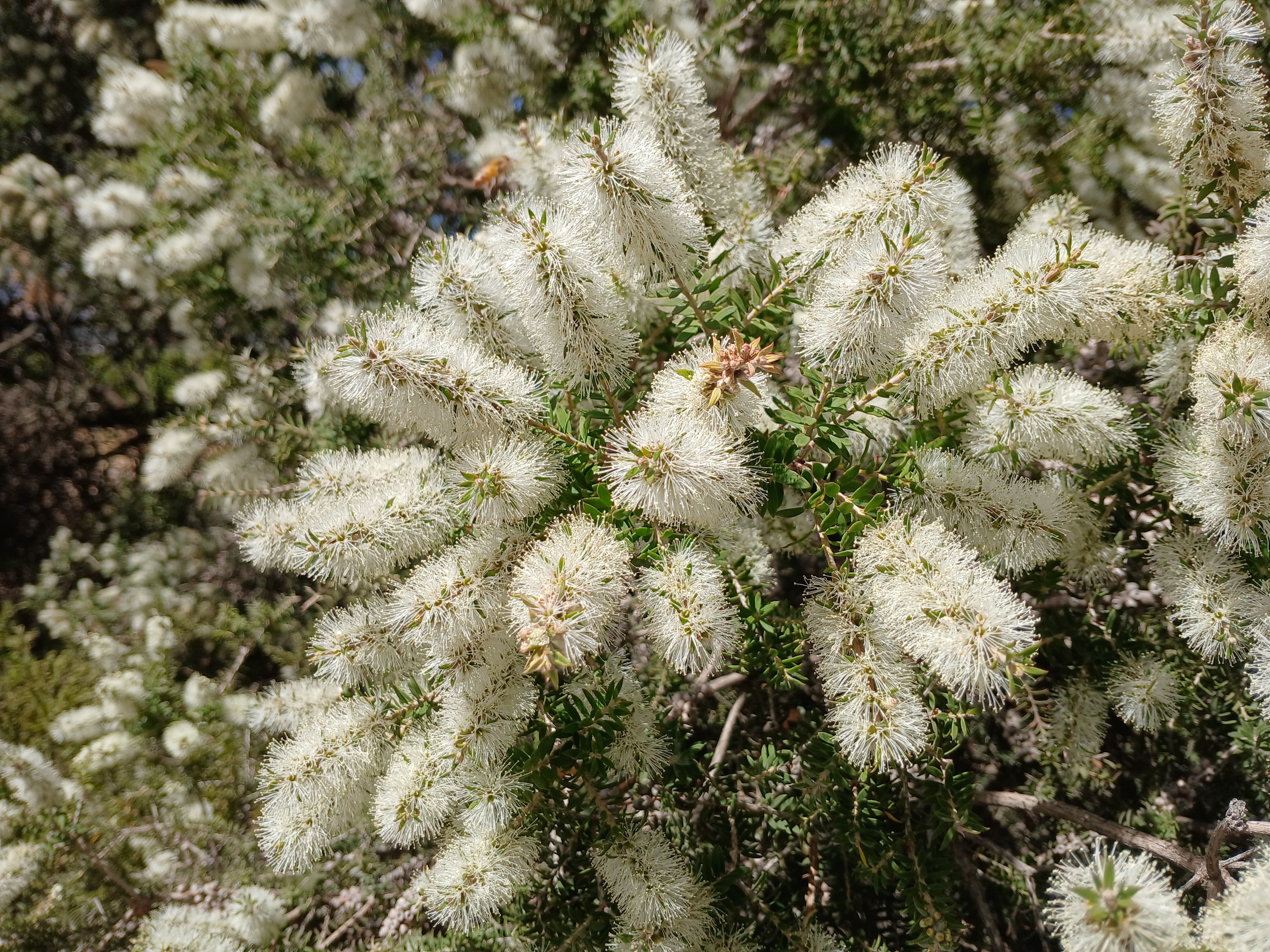
Melaleuca bush in flower in the scrub, February 2026.
I took the photo in this post this week while I was out on a run through the scrub. It was a hot afternoon and I was tired and my legs felt very heavy, but I still treasure running, no matter how slow a runner I am these days, and so I pushed on for twenty minutes or so. All along the path, as I ran, the melaleuca bushes were in flower, their creamy blossoms emitting a kind of musty, dusty scent that I love. Can you see a bee in the photograph? There is one, if you look closely; indeed, there were many bees in the bushes, busying themselves with pollen. In close-up, here in this photograph, what you can see is only beauty, but the truth is that on the opposite side of the path along which these bushes grow, the land has been cleared for subdevelopment; it is now bare of growth.
More houses, less trees, less bees — that’s the bigger picture. Yes, this is a metaphor. To extend the metaphor, I will add that I also took a picture of the road, the cleared land (the bigger picture), which I planned to include in this post, but at the last moment I changed my mind. It doesn’t help, I think, to focus on the bigger picture. Let’s be grateful for the small islands of beauty that remain in this world.
I’ll be back again in a few weeks with links to some stories that I’ve had accepted for publication in online literary magazines, for anyone interested in reading my short fiction. In the meantime, for today, I’ll leave you, as always, with some reading. This year, I’m changing my focus in the ‘Lately I’ve been reading’ section and will be providing links to a selection of fiction and poetry there instead of essays and articles. Micro fiction, flash fiction, short stories, poetry — there’s a wealth of beautiful work out there, and that’s what I’ll be providing links to this year.
Lately I’ve been reading …
- They are prone to many things. They are prone to squabbling, which for some is another way of conversing: ‘Bluebird’, a short story in L’Esprit Literary Magazine by Michael Edman
- At Mercy Memorial, the examination room walls are paper-thin. A man in the next room tells the psych registrar that he will top himself if he doesn’t get the money today, the seventeen-thousand dollars his brother stole from him: ‘Skin Hunger’, a short story in The Masters Review by Melissa Goode
- Once when I was young, I read a story in the newspaper: ‘An Accident of Love’, a piece of flash fiction in Necessary Fiction by Nan Byrne
- We went out / into the school yard together, me and the boy / whose name and face’: ‘The Shout’, a poem by Simon Armitage
- Mom is a groupie, so when Dad has a gig, no matter how big or small, she forces us to go as a family: ‘A Genius Can Always Get Their Hands on a Violin’, a piece of flash fiction in Electric Literature by Drue Denman
- I’m sorry about that time I ran over a piece of wood in the road: ‘Swerve’, a piece of micro fiction in Brevity by Brenda Miller











 twenty-one words