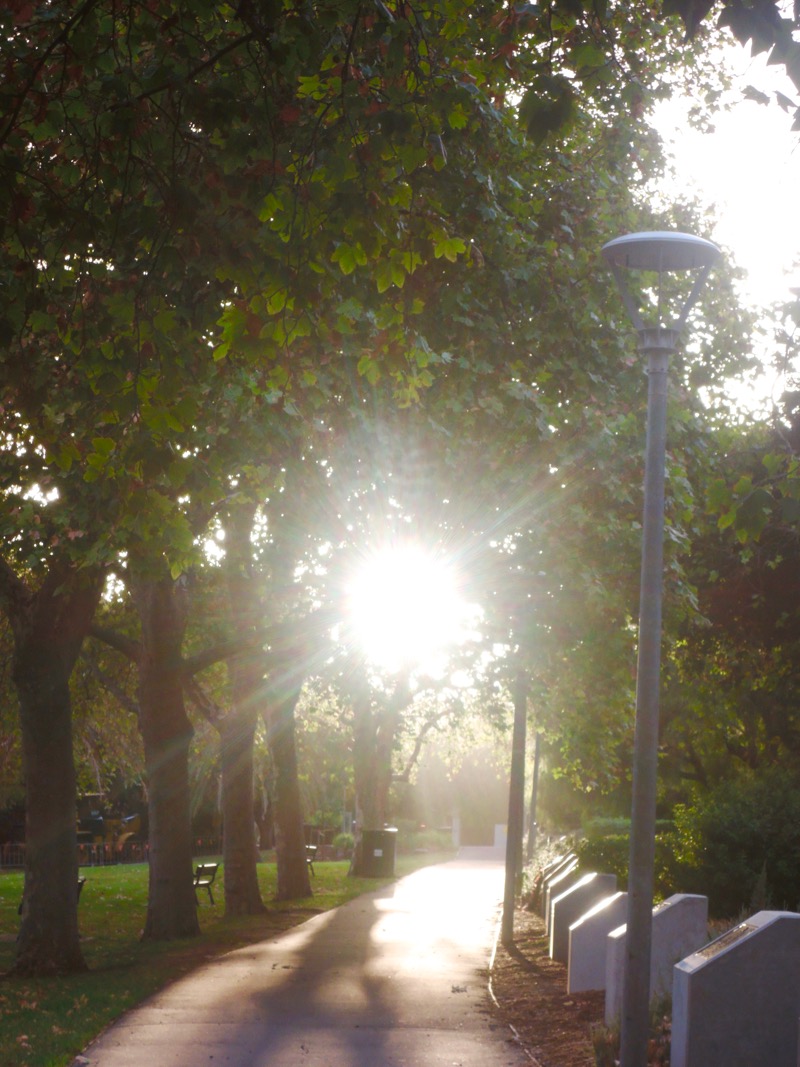
Small

Other people’s words about … the passage of time

‘ … We can be like sisters,’ she says. And then she freezes.

I smooth my hair behind my ear. I look at the snow.

‘I didn’t … ‘ She leans forward, cradles her head in her hands.

And I think of how time passes so differently for different people. Mabel and Jacob, their months in Los Angeles, months full of doing and seeing and going. Road trips, the ocean. So much living crammed into every day. And then me in my room. Watering my plant. Making ramen. Cleaning my yellow bowls night after night after night.

‘It’s okay,’ I say. But it isn’t.

from ‘We are Not Alone
by Nina La Cour

Some people in the Western world — most people, perhaps, if you take at face value the world we see portrayed on social media, and on TV, and in the ads — live big, busy, crammed lives, like Mabel and Jacob in the passage above. They go overseas on holiday. Borrow money to buy houses and cars. Renovate and redecorate. Eat out at restaurants. Drink lattes with their friends. Bungee jump. Skydive. Buy new clothes each season, colour their hair so it doesn’t go grey, replace their smartphones with the latest model. The words vibrant and noisy come to mind. They are not the same things, and yet it can be hard to tell the difference, sometimes.

Me, I live a quiet life. A small life.

Partly, this is of my choosing, and partly it isn’t. Partly, it’s because a small life, a simple life, has always appealed to me; partly, it’s because that small life found its way to me a long while ago, and foisted itself upon me. And partly, too, the simple truth is that it’s difficult, when you’ve started down a small, narrow track, to turn around and retrace your steps. To find yourself out in the open. To start again.

Most of the time, I’m okay with this. But sometimes, like Marin, the eighteen-year-old narrator in the passage above, there are moments when it isn’t okay, after all.

Those moments pass. They do. But I think they’re worth acknowledging, every now and then.

Correa flower in blossom in Aldinga Scrub
May 2018
Small but beautiful, after all.

What I see now

Other people’s words about … tears

I can’t help it, the valve between my thoughts and tears is so worn down that I don’t think I have any control over them anymore. Fat tears drop onto my cheeks. I feel them before I even know what’s happening and I just let them fall. I pull my hand [away from Gideon’s, and he] rolls over to face me.

from ‘Beautiful Mess
by Claire Christian

When I first started reading young adult novels I was already in my mid-twenties, several years older than their teenage target audience. That was partly because when I myself was a teenager, young adult novels had only just begun to become a ‘thing’, especially Australian young adult novels. And it was partly because something drew me to those novels in my mid-twenties, despite my age: something about their coming-of-age themes — and then, too, something about the way they handled those coming-of-age themes. Most of all, I liked the raw, direct voice in which many of their narratives were written, a voice that was both bleak and hopeful.

After I’d written my own two young adult novels, my love for the genre started to fade. This was partly, in turn, because I had in the meantime grown older again: my life now had nothing in common with either the novels’ protagonists or the novels’ intended readers. But it was also partly because it seemed to me that there were, suddenly, too many young adult novels being published every year. That raw, direct, bleak/hopeful voice seemed to me suddenly overused. Over-familiar. Hackneyed, even.

I don’t know what made me pick up Claire Christian’s young adult novel Beautiful Mess the other day. At any rate, it is the first young adult novel I have read in a long, long time, and the reading of it felt like one, long, jagged, indrawn breath that I couldn’t release until I had got to the end. There it was again, that raw, direct, bleak/hopeful voice — familiar, yes, but not overused this time. Not hackneyed. It was a poignant voice. Intimate.

The view ahead: not a bleak prospect

That’s what I love most about good novels, whatever genre they happen to fall into. Their protagonists, and the writer behind them, reach out and speak to you: they say things you know you’ll never forget, things you yourself have been wanting to say, but haven’t figured out how to. I see now that this is something I haven’t managed to do in my own writing for quite some time, though I didn’t realise it until I stopped. Perhaps that’s why I stopped: though the decision felt instinctual and unplanned, perhaps my instinctual knowledge simply kicked in before my conscious knowledge did.

In the meantime, even though I’m not writing fiction, I know I’ll find more good books to read (whatever their genre), and more narrative voices to hear, and more tears to shed. There’s nothing bleak about that prospect: in fact, the view ahead of me seems filled with hope.

The end of the story

Other people’s words about … writing

April has never really known loneliness until now; she has had all tastes of its dregs, like cold milky coffee curdled at the bottom of the cup, but she has always had faith in the fact that it would pass. Now, she is not so sure. And this loneliness is entangled with her failure as a musician, another certainty in her life that seems to have gone.

Most days, she tries to write.

She sits by the window with her guitar and picks idly at notes, strumming chords underneath, humming to herself as she does so. But nothing ever sticks, and she feels as if she is just pretending, playing alone outside a room she can no longer enter.

from ‘Between a Wolf and a Dog
by Georgia Blain

I did something I had never expected to do this week: I stopped working on the book I’ve been writing, on and off, ever since my last novel was published in 2010. Actually, I stopped writing fiction altogether, at least for now.

The novel I’ve been writing all these years has gone through many, many permutations: I’ve written it as a ghost story for young adults; as a reworked ghost story for middle-grade readers; as a love story for ‘new’ adults’; as a coming-of-age story for women my own age. I’ve written it in the first person and in the third person, and in past tense and in present tense. I’ve written it using pen and paper, and Microsoft Word, and Scrivener.

I’ve written it. And written it. And written it.

All the time I’ve been writing this novel, I’ve been telling myself that the doubt I feel in myself, and in my ability to write a third novel — this third novel, anyway — would pass. But it hasn’t. Sometimes it’s quietened down for a period, but then it’s flared up again. And over the years, like April, the sense of inner loneliness I carry with me — which is in part an aspect of being me, Rebecca Burton, and in part an aspect of being me, a human being — has slowly become ensnared with the doubt I feel about my writing. [N]othing ever sticks, and she feels as if she is just pretending, playing alone outside a room she can no longer enter. Yup. Yup. Yup.

Ever since I wrote my first novel and it was accepted for publication, I’ve believed, with all of my heart, that writing books was something I would do for the rest of my life, because that’s what writers do, right? It’s what they want to do. It’s their privilege, and their gift. Or so the story goes.

But I just don’t think I believe that particular story anymore. That’s what I finally realised this week, after all this time. I don’t think — as April thinks, in this passage which I have loved so much for so long — that I am a failure as a writer, or as a person, if I stop writing, for a while, or forever. I think the world is bigger than that.

I don’t know what the future holds for me if I’m not a writer anymore — for now, or for a while, or forever. But you know what? Unlike April, I want to find out.

It’s a big, big world.

Prayer

Other people’s words about … books

After Bunty died, days slid into one another like the colours in a sunset. Whole afternoons passed as Christabel drank tea in the kitchen … If there was a book in front of her, she would look away frequently and forget to turn its pages — she no longer read in the old, urgent way. The taste for reading had started to withdraw from her; she felt it pulling gently away, like a tide. Books contained hard truths, waiting like splinters in their pages. Over the years, many had lodged in her unnoticed. Little anticipations of life’s awfulness, they might have served as a defence against it but pierced instead with knowledge of damage, error, waste.

From ‘The Life to Come’
by Michelle de Kretser

CS Lewis once wrote that we read fiction and literature to seek an enlargement of our being; we read because [w]e want to see with other eyes, to imagine with other imaginations, to feel with other hearts, as well as with our own. I don’t subscribe to Lewis’s Christian practices and beliefs, but I do — oh, I do — subscribe to his views on reading.

And so Michelle de Kretser’s words in the passage above affected me deeply. I cannot imagine a life in which [t]he taste for reading had started to withdraw from me; the thought that the truths I treasure finding within a book’s pages might begin to feel like splinters horrifies me.

Reading for me is an activity that provides solace. The solace comes most strongly from finding kinship within the pages of the books I read: kinship with the book’s characters, and, vicariously, with the book’s writer, who created the characters. That’s not quite what Lewis is saying, but it’s part of it, I think: it’s hidden in his words. When de Kretser’s character Christabel finds herself losing the taste for reading, losing the urgency that was inherent for her in the act, what she is really experiencing is loss. Loneliness. Desolation.

If I was a praying person, as Lewis certainly was, I would offer up a prayer here, in response to de Kretser’s words. I would pray: Please don’t let me ever experience this particular form of loss.

I would pray: Please don’t let me lose the companionship of books.

I would pray: Please don’t let the tide go out.

Please.

Prayer

Downpour

Other people’s words about … having sad thoughts

Understand, for instance, that having a sad thought, even having a continual succession of sad thoughts, is not the same as being a sad person. You can walk through a storm and feel the wind but you know you are not the wind.

That is how we must be with our minds. We must allow ourselves to feel their gales and downpours, but all the time knowing this is just necessary weather.

From ‘Reasons to Stay Alive’
by Matt Haig

It was Toni Bernhard who first introduced me, in her book How to Live Well with Chronic Pain and Illness, to the idea that moods are like the weather: impermanent, changeable. She writes elsewhere:

In ‘How to be Sick’, I call it Weather Practice. I like to think of emotions and moods as being as changeable and unpredictable as the weather. They blow in; they blow out. Working with this weather metaphor allows me to hold emotions and moods more lightly, knowing that, like the weather pattern of the moment, they’ll be changing soon. One moment, life looks grey and foreboding; the next moment, a bit of brightness — maybe even a rainbow — begins to break through.

Both Bernhard and Haig are covering the same theme here, a theme that is one of the basic tenets of any kind of mindfulness practice. But while I like Bernhard’s clear, practical prose, there is something about Haig’s phrasing (despite his erratic sense of grammar) that particularly speaks to me.


Necessary weather. Those two words, paired together, feel to me immensely comforting, and true. I murmur them to myself on days when my mind and my mood feel clouded and grey like the clouds pictured in today’s post.

Call these words a mantra, if you like. They bear repeating.

Passage

Other people’s words about … sorrow

… I tried to keep busy. I haunted bookstores, sat in cafés, drinking coffee and smoking. As the weather got colder, I went often to the Gardner Museum — for the humidity, for the scent of jasmine in the courtyard.

But of course, the truth was that I was depressed, and that waiting for me the moment I stilled was a sorrow that filled my time amply with its emptiness, that kept me very busy even as I lay open-eyed on my bed or sat at my desk staring out at the houses across the street. I tried my hardest never to still.

From ‘While I was Gone’
by Sue Miller

You know the kind of depression Miller is describing here, right? It is not so much a clinical thing, requiring medical consultations and diagnosis and treatment, as it is a thing of sorrow, of emptiness, of lacklustre wakefulness. Of restlessness. Sudden, fleeting moments of despair.

I tried my hardest never to still, Miller says, simply. You’ve done that, too, right? — tried to match the sense of endless mental pacing with an equal sense of physical pacing.

Just as there are no diagnoses or treatments, I don’t think there’s any kind of cure. I find, as with so many difficult things, that it’s mostly a matter of waiting the thing out, giving it passage, allowing yourself to see it through.

And that, for me, is where I find the stillness that Miller’s narrator describes herself trying so hard to flee. The act of waiting, of riding something out, is itself paradoxically an act of stillness. Sometimes, just knowing this can be enough.

The world out there.

And then there’s always the matter of looking up, every once in a while. Of reminding yourself that there is a world out there, to which you will return. In a moment. In an hour. In a few weeks.

In time.

Unpacked

Other people’s words about … surfing and the sea

Nearly all of what happens in the water is ineffable — language is no help. Wave judgment is fundamental, but how to unpack it? You’re sitting in a trough between waves, and you can’t see past the approaching swell, which will not become a wave you can catch. You start paddling upcoast and seaward. Why? If the moment was frozen, you could explain that, by your reckoning, there’s a fifty-fifty chance that the next wave will have a good takeoff spot about ten yards over and a little farther out from where you are now. This calculation is based on: your last two or three glimpses of the swells outside, each glimpse caught from the crest of a previous swell; the hundred-plus waves you have seen break in the past hour and a half; your cumulative experience of three or four hundred sessions at this spot, including fifteen or twenty days that were much like this one in terms of swell size, swell direction, wind speed, wind direction, tide, season, and sandbar configuration; the way the water seems to be moving across the bottom; the surface texture and the water colour; and, beneath these elements, innumerable subcortical perceptions too subtle and fleeting to express. The last factors are like the ones that the ancient Polynesian navigators relied upon when, on the open seas, they used to lower themselves into the water between the outriggers on their canoes and let their testicles tell them where in the great ocean they were.

Of course, the moment can’t be frozen.

From ‘Barbarian Days’
by William Finnegan

I know someone who is in his mid-fifties now, and who, like William Finnegan, has been surfing since he was a teenager. Though he and I are both avid beach-lovers, I know that when he looks at the sea, he sees something different from what I see.

I (from my admittedly middle-class, Western, leisured perspective) look at the sea for beauty. I don’t understand the sea’s tides, its swells, its waves. I understand, simply, how the sea makes me feel.

It’s hard to express my feelings about the sea in actual words, though. They are, to use Finnegan’s words in a slightly different way, subtle, fleeting,subcortical, ineffable.

And … good.


Miracle

Other people’s words about … running

Soon, he is at the base of the mountains, his heart rate is at least 140, and the peaks tower over him like wild, hungry beasts. It is this moment in which Russ understands himself best. In which he could easily say, my name is Russ Fletcher, I am a man living a certain sort of life, and I am happy.This gasping moment is free of obligation, of expectation and that bruised yellow past. It is only Russ and his beating man’s heart, Russ and the cloud of his breath as it unfurls white in the cold morning, Russ and the burn, burn of his legs. The needle-prick attention of his mind, as it focuses on blazing extremities. Running, Russ is okay. Running, he moves forward.

From ‘Girl in Snow
by Danya Kukafka

I have a chequered history with running, but recently, I’ve taken up the habit on my own terms. Here’s how it goes: every day, either before or after work, I make the effort to stroll down the road to the beach, and then, once I’m on the sand, a few metres from the shore, I break into a run for a few minutes. Often, honestly, I run for only five minutes or so before slowing down, turning around and heading back home. I guess it’s as much about getting fresh air into my lungs, moving my limbs a little before or after sitting at a desk all day, feeling sand crumble beneath the soles of my feet, as it is about anything you might want to call ‘fitness’ or ‘athleticism’.

Occasionally, though — once or twice a week, if I’m lucky — I run for a longer time, for twenty minutes or so, taking my camera with me (so that I can stop along the way to take photos like the ones in this post). No matter how slowly I run, or how heavy my legs seem to become, or how tired I was beforehand, or even, some days, how sub-par I felt before I set off, there is always a moment on these runs when I feel, like Russ in the passage above, that I understand [my]self best, a moment when I feel free of obligation, of expectation, of that bruised yellow past.

A couple of years ago, when I first took up running again after a lapse of twenty years, I hoped to run for much longer times, to run much further distances. That seemed to be what every other runner did, after all. And that’s what I wanted to be: a runner.

But running is like everything else in life: what works for other people isn’t necessarily what works for me. And over the last two or three years, I’ve learned — at first to my bitter (childish?) disappointment, and then, slowly, to my joy — that I can find a way to run on my own terms and still find pleasure in it. Still find release. Still find hope. And reason. And courage. And peace. And, like Russ, who runs when he’s both joyous (as in the first quote) and terribly sad (as in the next quote), freedom.

Russ runs. He takes off down the sterile … streets … All he can do now is push — move his body, sweat it out, keep inching forward. For now, he focuses on his own limbs and the miracle ways in which they serve him. The freedom of the open Colorado sky.

I thought at first, when I couldn’t run the distances I wanted to run, the distances I thought I should run, the way everyone else seemed to, that I was giving up. It took me a while to understand that finding a way to run that worked for me wasn’t so much about giving up as it was about learning to surrender.

Surrendering is not the same as giving up. I didn’t understand this before. I am glad that I am beginning to now.

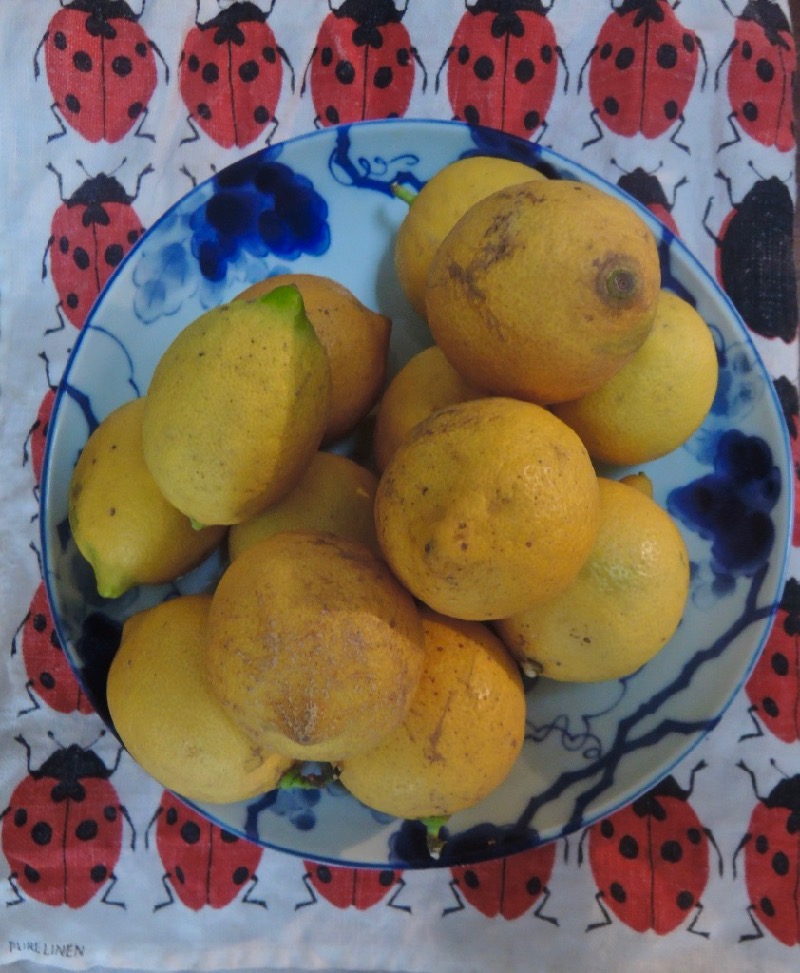
Big

Other people’s words about … sunsets

The sun was setting. There were plenty of natural phenomena that went unrecognised (snowflakes kissing a windowsill, fingernails dug into the skin of a tangerine), but Cameron could see why people made such a big deal of sunsets. The sunset at Pine Ridge Point always made Cameron feel so disastrously human, caged inside his own susceptible self.

From ‘Girl in Snow
by Danya Kukafka

I found Danya Kukafka’s words in the passage above very poignant — although when I watch the sun set, I feel, unlike her character Cameron, as though I am escaping the cage of my susceptible [human] self to join with the rest of the natural world.

For me, both the sense of bigness, and the sense of being a tiny part of that bigness, make me feel at once grounded and free. Perhaps some of the photos below, which I took on a number of evenings this past January and February, might give you that sense, too?