Chasing clouds

‘Some athletes love to talk about what a simple sport running is.
They say that all you need is a pair of sneakers.
That’s not true.
What you need is some freedom of movement
and the ability to see a clear path ahead of you.
It took me years to see that path and to find my pace.
When I finally got moving, I hoped I might be able to run forever.’

From ‘The Long Run’
by Catriona Menzies-Pike

Around about a year ago, I wrote a post on this blog in response to lawyer-turned-long-distance-runner Robyn Arzón’s book Shut Up and Run. In that post, I wrote, in angry contradiction to Arzón, about the virtues of taking things slowly, of living humbly, of letting things unfold gently, whether or not your life is unfolding as you wish it would, or as you think it should. (You can read the post — which, by the way, I still stand by — in its entirety here.)
Here’s the thing about running, though, as an activity, as a practice: it lends itself to metaphors. That’s why so many runners, like Arzón and Menzies-Pike, write about it. Speed, distance, endurance, cadence, rhythm, pace — all of those things can be metaphors for something else: for life. It took me years to see that path and to find my pace, Menzies-Pike writes, of her running. And: When I finally got moving, I hoped I might be able to run forever.

Don’t tell me she’s not talking in metaphors.
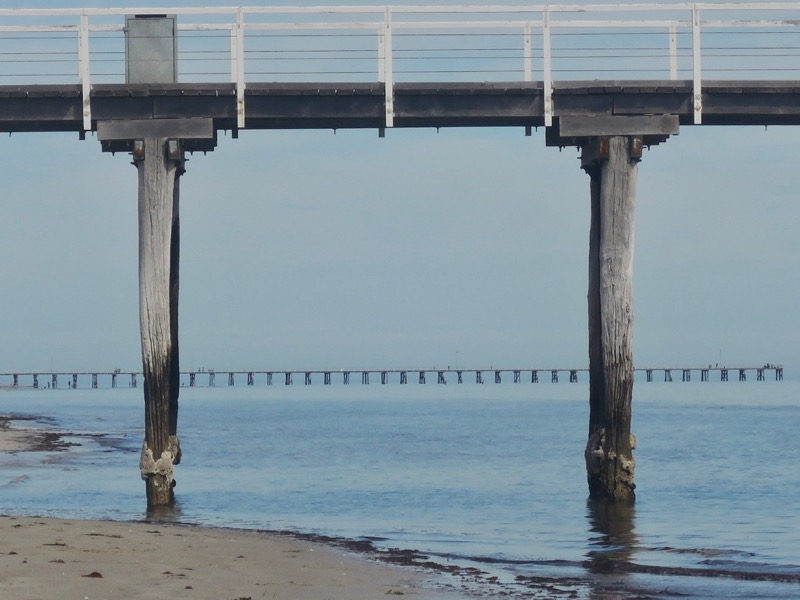
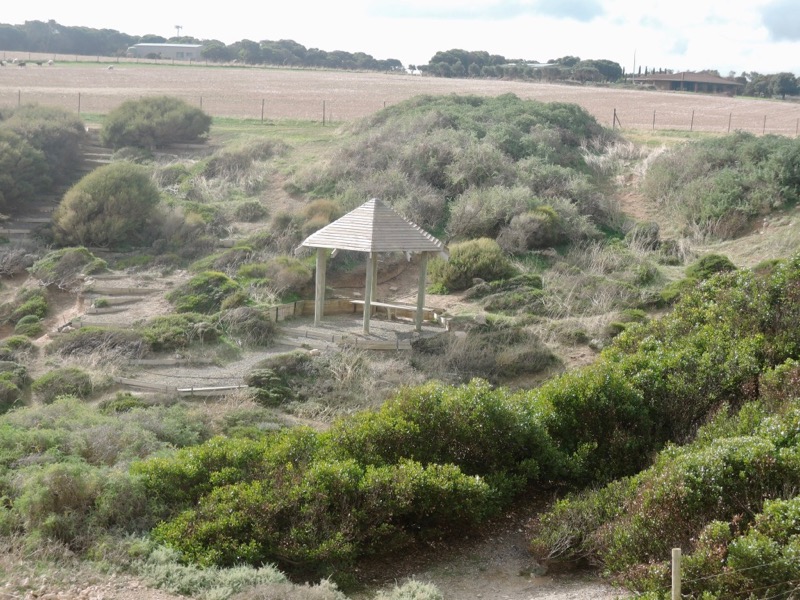
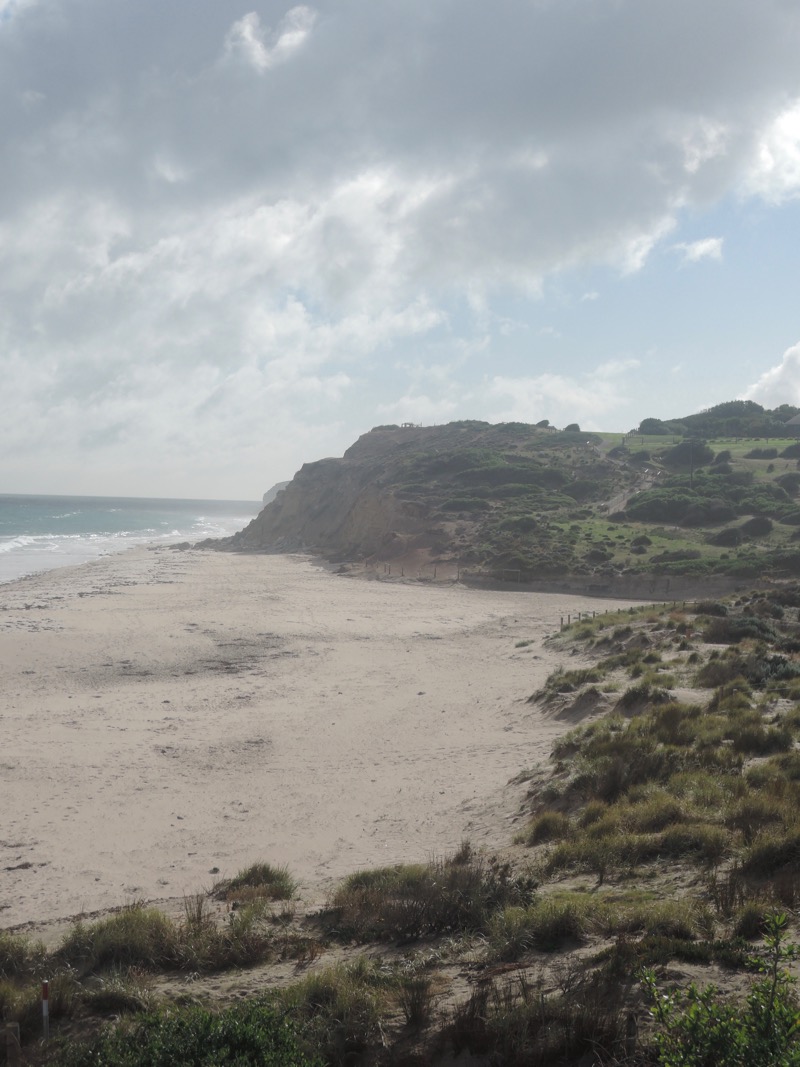
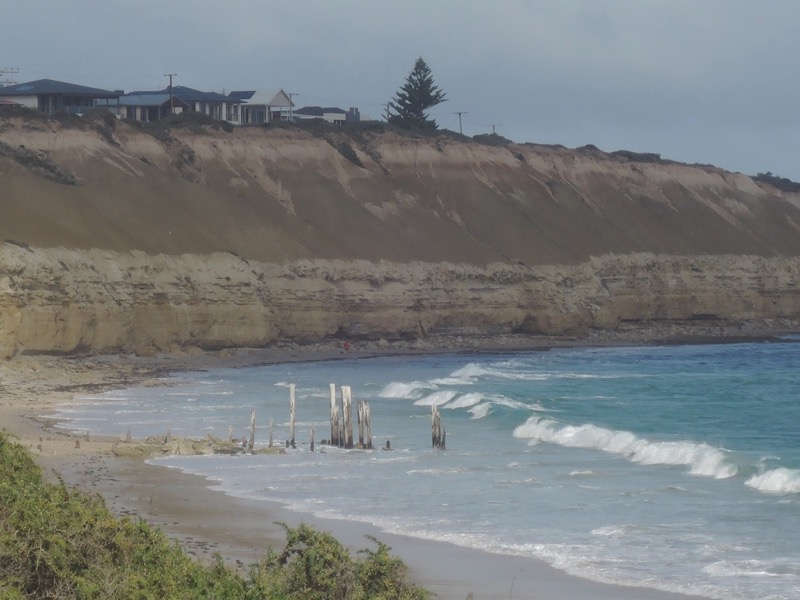
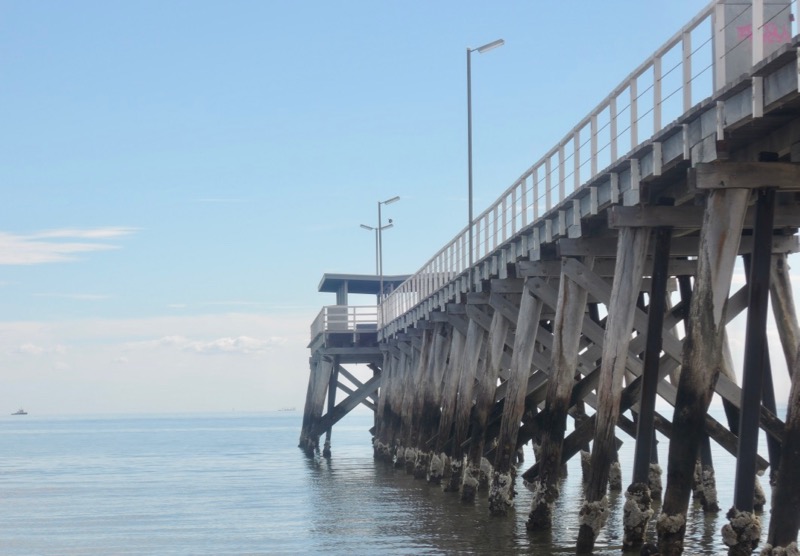
As for me, I stopped mid-run — on a gorgeous, warm, still day last week; a day when all of coastal Adelaide seemed to be bathed in soft sunshine — to take the photos you see in today’s post. Afterwards, I put my camera away and lingered at the shore a while, before wandering back from the beach to the foreshore path and setting off again, back home.
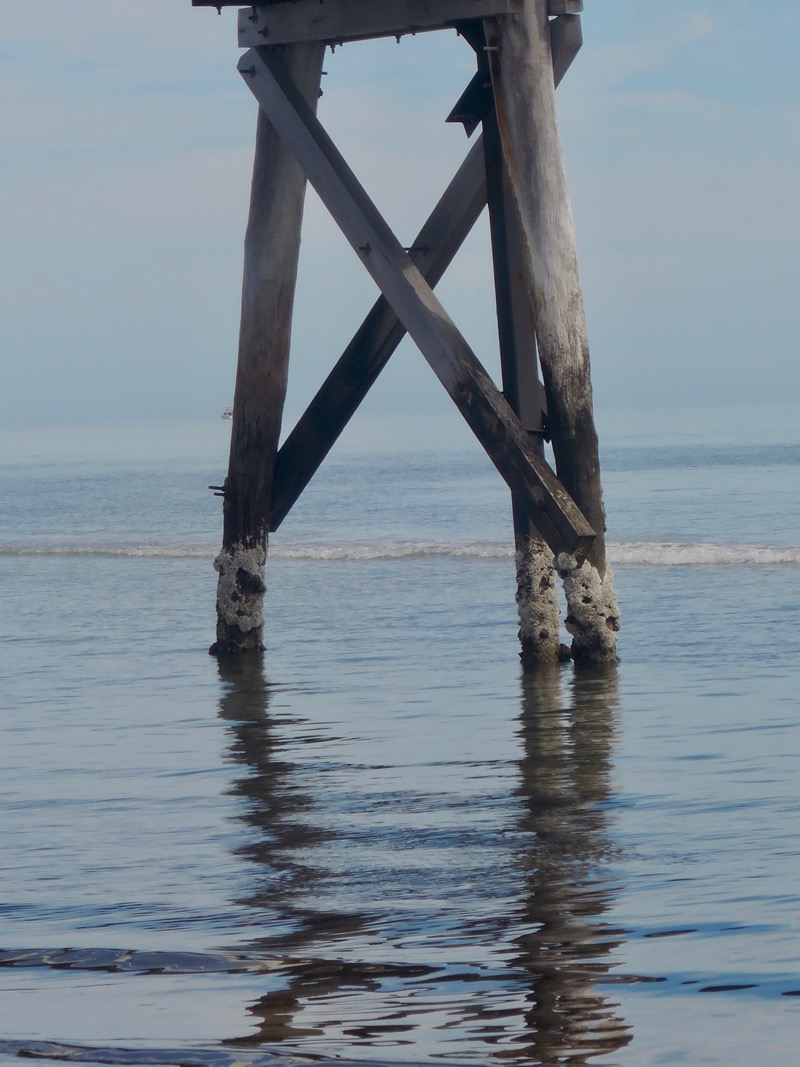
Days like that — days of running beneath a soft blue sky, beside a silken blue sea — are days, simply, to be grateful for, days that feel as though they are unfolding as they should, or at least as you wish they would.
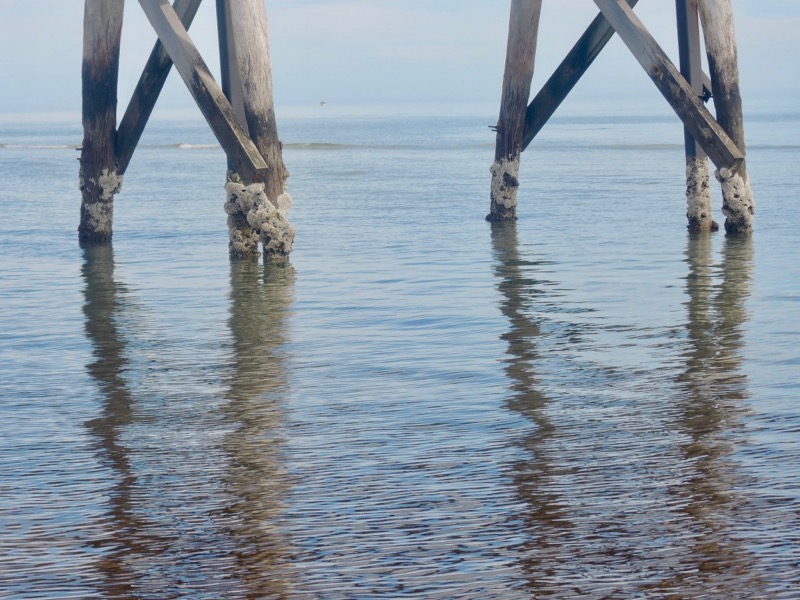
And so this post is the first in a new series on my blog entitled Chasing clouds. It is a companion series to my Out and about series, in essence. The theme in that series is walking; the theme in this one is running. Running, for me — like walking — is about wandering, about wondering. It is about chasing clouds.

Of course I’m using metaphors. Running, for me, is about hope.

Passage

Other people’s words about … sorrow

… I tried to keep busy. I haunted bookstores, sat in cafés, drinking coffee and smoking. As the weather got colder, I went often to the Gardner Museum — for the humidity, for the scent of jasmine in the courtyard.

But of course, the truth was that I was depressed, and that waiting for me the moment I stilled was a sorrow that filled my time amply with its emptiness, that kept me very busy even as I lay open-eyed on my bed or sat at my desk staring out at the houses across the street. I tried my hardest never to still.

From ‘While I was Gone’
by Sue Miller

You know the kind of depression Miller is describing here, right? It is not so much a clinical thing, requiring medical consultations and diagnosis and treatment, as it is a thing of sorrow, of emptiness, of lacklustre wakefulness. Of restlessness. Sudden, fleeting moments of despair.

I tried my hardest never to still, Miller says, simply. You’ve done that, too, right? — tried to match the sense of endless mental pacing with an equal sense of physical pacing.

Just as there are no diagnoses or treatments, I don’t think there’s any kind of cure. I find, as with so many difficult things, that it’s mostly a matter of waiting the thing out, giving it passage, allowing yourself to see it through.

And that, for me, is where I find the stillness that Miller’s narrator describes herself trying so hard to flee. The act of waiting, of riding something out, is itself paradoxically an act of stillness. Sometimes, just knowing this can be enough.

The world out there.

And then there’s always the matter of looking up, every once in a while. Of reminding yourself that there is a world out there, to which you will return. In a moment. In an hour. In a few weeks.

In time.

Miracle

Other people’s words about … running

Soon, he is at the base of the mountains, his heart rate is at least 140, and the peaks tower over him like wild, hungry beasts. It is this moment in which Russ understands himself best. In which he could easily say, my name is Russ Fletcher, I am a man living a certain sort of life, and I am happy.This gasping moment is free of obligation, of expectation and that bruised yellow past. It is only Russ and his beating man’s heart, Russ and the cloud of his breath as it unfurls white in the cold morning, Russ and the burn, burn of his legs. The needle-prick attention of his mind, as it focuses on blazing extremities. Running, Russ is okay. Running, he moves forward.

From ‘Girl in Snow
by Danya Kukafka

I have a chequered history with running, but recently, I’ve taken up the habit on my own terms. Here’s how it goes: every day, either before or after work, I make the effort to stroll down the road to the beach, and then, once I’m on the sand, a few metres from the shore, I break into a run for a few minutes. Often, honestly, I run for only five minutes or so before slowing down, turning around and heading back home. I guess it’s as much about getting fresh air into my lungs, moving my limbs a little before or after sitting at a desk all day, feeling sand crumble beneath the soles of my feet, as it is about anything you might want to call ‘fitness’ or ‘athleticism’.

Occasionally, though — once or twice a week, if I’m lucky — I run for a longer time, for twenty minutes or so, taking my camera with me (so that I can stop along the way to take photos like the ones in this post). No matter how slowly I run, or how heavy my legs seem to become, or how tired I was beforehand, or even, some days, how sub-par I felt before I set off, there is always a moment on these runs when I feel, like Russ in the passage above, that I understand [my]self best, a moment when I feel free of obligation, of expectation, of that bruised yellow past.

A couple of years ago, when I first took up running again after a lapse of twenty years, I hoped to run for much longer times, to run much further distances. That seemed to be what every other runner did, after all. And that’s what I wanted to be: a runner.

But running is like everything else in life: what works for other people isn’t necessarily what works for me. And over the last two or three years, I’ve learned — at first to my bitter (childish?) disappointment, and then, slowly, to my joy — that I can find a way to run on my own terms and still find pleasure in it. Still find release. Still find hope. And reason. And courage. And peace. And, like Russ, who runs when he’s both joyous (as in the first quote) and terribly sad (as in the next quote), freedom.

Russ runs. He takes off down the sterile … streets … All he can do now is push — move his body, sweat it out, keep inching forward. For now, he focuses on his own limbs and the miracle ways in which they serve him. The freedom of the open Colorado sky.

I thought at first, when I couldn’t run the distances I wanted to run, the distances I thought I should run, the way everyone else seemed to, that I was giving up. It took me a while to understand that finding a way to run that worked for me wasn’t so much about giving up as it was about learning to surrender.

Surrendering is not the same as giving up. I didn’t understand this before. I am glad that I am beginning to now.

Big

Other people’s words about … sunsets

The sun was setting. There were plenty of natural phenomena that went unrecognised (snowflakes kissing a windowsill, fingernails dug into the skin of a tangerine), but Cameron could see why people made such a big deal of sunsets. The sunset at Pine Ridge Point always made Cameron feel so disastrously human, caged inside his own susceptible self.

From ‘Girl in Snow
by Danya Kukafka

I found Danya Kukafka’s words in the passage above very poignant — although when I watch the sun set, I feel, unlike her character Cameron, as though I am escaping the cage of my susceptible [human] self to join with the rest of the natural world.

For me, both the sense of bigness, and the sense of being a tiny part of that bigness, make me feel at once grounded and free. Perhaps some of the photos below, which I took on a number of evenings this past January and February, might give you that sense, too?

Out and about: the last summer days

‘When you’re walking the view shifts and changes.
Walking’s a form of hope.’

from ‘The World Without Us
by Mireille Juchau


Here’s the thing I always forget as summer draws to a close and the annual grey-weather dread steals over me: there are moments, at this time of year, when the wind drops, and the sea becomes shining and silken and blue.

I took the photos in today’s post as I wandered the beach at Largs Bay one afternoon a few days ago, in the week before Easter. The day was so still, and the tide so low, that the pine trees along the Esplanade were reflected in small pools of seawater that had formed between the sandbar and the main ocean …

… and out on the water, ships hung suspended in blueness, somewhere between sea and sky:

It was an afternoon that reminded me that there’s joy and beauty in every season — yes, even in the seasons you’d rather not be heading into …

Snatched phrases on … (Christmas and) the sea

‘The sea is flat silver under a lapis sky.’

From ‘I am, I am, I am’
by Maggie O’Farrell

Christmas in my neck of the woods is all about summer, so what better way to celebrate it than by the sea?

That’s how I’ll be spending my Christmas season, anyway — how about you?

Meanwhile, I just wanted to wish a quick merry Christmas to everyone who reads this blog.

Thank you for your companionship once again this year … and here’s to more reading next year, as well as walking, wandering and (of course) time spent by the sea!

Rebecca xo

Out and about … but still reading!

I don’t have a quote for you today: just a link to a post by the lovely Sophie of Wholehearted Eats, whose healthy-cooking blog I often drop in and read. In her post, Sophie, someone who has experienced anxiety all her life, suggests creating an anxiety toolbox — a kit you can (metaphorically) carry around with you at all times, full of techniques and strategies you can use when and if you need to. I’ve often toyed with the idea of sharing some of the techniques that I’ve learned over the years to cope with anxiety, she writes, but never got around to it.

Till now, that is.

Vineyards

Head on over and see what you think. Perhaps you, like me, will find some of Sophie’s techniques helpful.

Meanwhile, as for me, I’ve been out and about a lot on my bike recently, exercise being one of the greatest feel-good strategies I know and keep in my own toolbox. The gorgeous sunny weather we’ve been having this autumn and winter has added to the joy I’ve felt getting on my bike.

Eucalypt and vines
The different shades of autumn

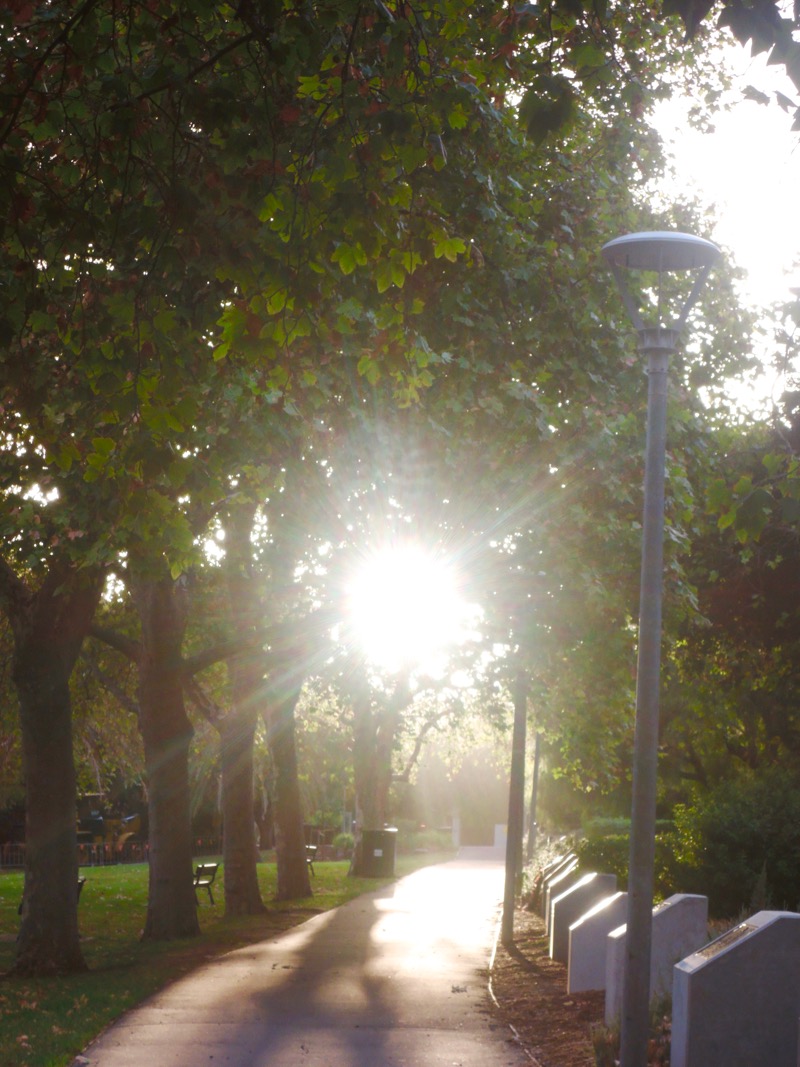
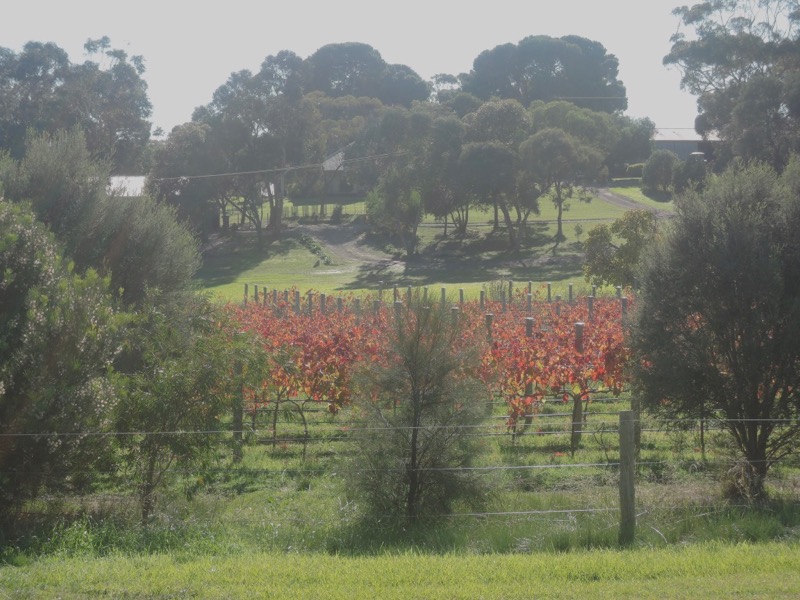
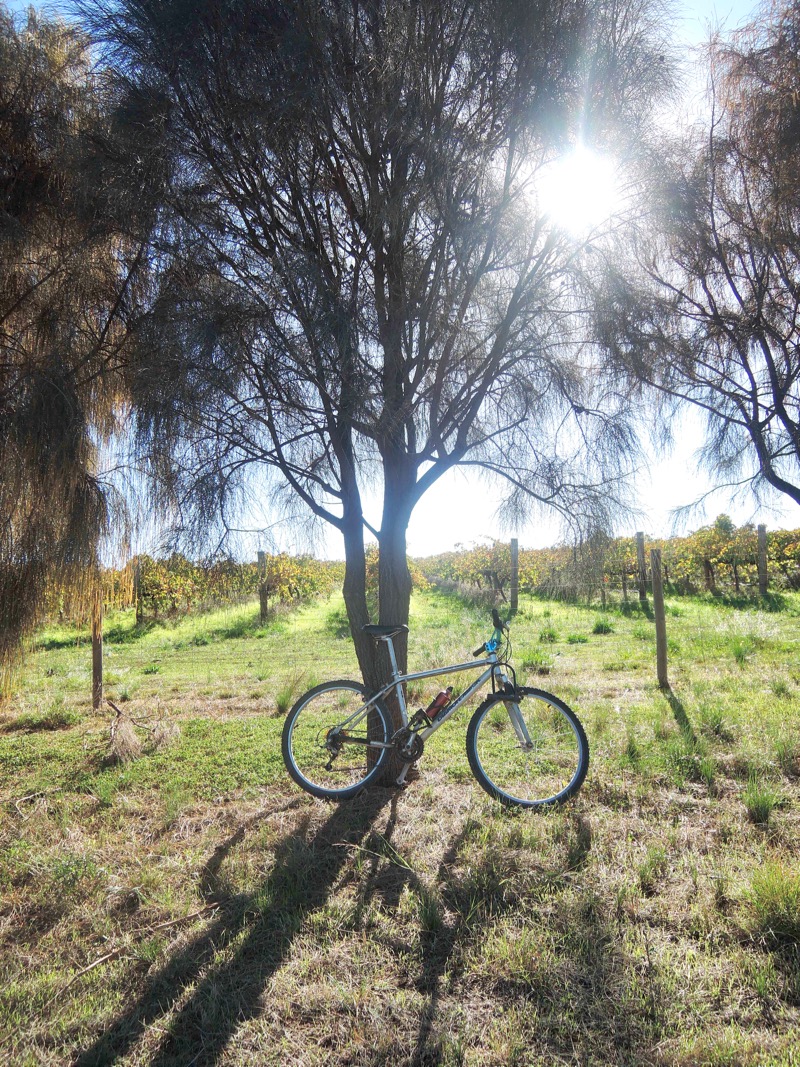
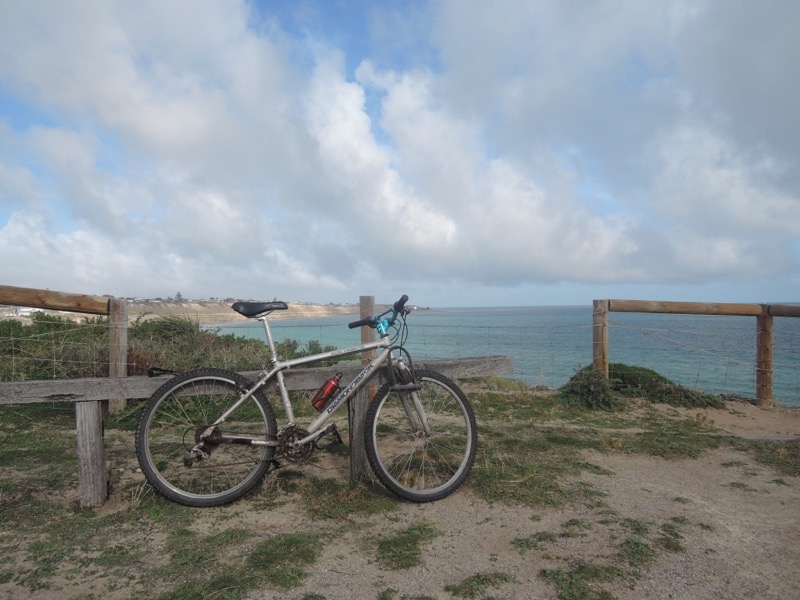
The photos in today’s post all come from one of my recent bike rides. It was a still, sunny day, and every moment of that ride was uplifting.

At the top of the hill
Sheoaks in golden bloom, vineyards and … my bike (of course)

I hope these photos leave you feeling uplifted, too.

A beautiful thing

Other people’s words about … appetite

To say that I ‘lost’ my appetite during those years would be a joke. On the contrary, I ate, slept, and breathed appetite. I thought about food constantly, pored over food magazines and restaurant reviews like a teenage boy with a pile of porn, copied down recipes on index cards: breads, cakes, chocolate desserts, pies with the richest fillings, things I longed for and wouldn’t let myself have. In truth, I had appetites the size of Mack trucks — driving and insistent longings for food and connection and bodily pleasure — but I found their very power too daunting and fearsome to contend with, and so I split the world into the most rigid place of black and white, yes and no.

from ‘Appetites
by Caroline Knapp

Appetite is a strange, fickle creature. I remember feeling, years ago, when I first read Caroline Knapp’s words in the passage I’ve quoted today, an overwhelming sense of recognition and kinship. I have always had a strong, keen appetite, and back then, when I read Knapp’s book, I felt ashamed of this fact; I fought my driving and insistent longings for food and connection and bodily pleasure.

I don’t feel that way now; my life is on a different keel. In fact, the periodic bouts of nausea I experience lead me to feel the very opposite. During these bouts of sickness, I would give anything — anything at all — to feel hungry.

Part of what I miss when my appetite is gone is the sense of anticipation that I, like all of us, experience with regards to food: the sense of looking forward to something I know will be pleasurable — whether we’re talking solitary pleasures here (sitting on the porch in the sunshine with a plate of cake on my knee and a pot of tea at my feet) or shared pleasures (a meal with family or friends). Anticipation, I realise now, is a pleasure in and of itself. Strip away anticipation and you strip away, with it, a great source of pleasure from your life.

Still, what I have learned is that there are other pleasures to anticipate, apart from food; other things to look forward to; other things, in a way, to hunger for, and then — finally — to savour. These days, the moment I start to feel a little better after a bout of sickness, the moment the nausea begins to fade, I make a big effort to stop languishing inside my house. I take a deep breath and then start seeking out, immediately, the things I know will bring me pleasure.

A while back, I quoted some words from Sarah Wilson about managing anxiety by (to paraphrase) simply doing it, leaving it, and moving on. Wilson’s words, I see, apply here, too. Anxiety, after all, is only one source of anguish: sickness is another. By not dwelling on our anguish, by actively making ourselves move on from it, we allow a sense of anticipation and pleasure to return to our lives.

We allow our appetite for life to flourish once again.

If I could go back in time and give my younger self advice now, I would counsel her to cherish her appetite rather than to be daunted by it (Knapp’s word). I would tell her that hunger and appetite are vital to life. I would tell her that hunger, like appetite, is a beautiful thing. And I would tell her to look up, out and around at the world. To savour the things she sees and experiences. To savour all the pleasures life has to offer.

I took the photos you see in today’s post on a recent trip to the Aldinga Beach/Port Willunga area. I had not been feeling particularly well in the days prior to this; I had slept poorly as a result; and though I’d planned a bike ride, I cycled slowly, feeling tired and not terribly fit.

Still, it was good to be out there. I had looked forward to that ride, and I enjoyed it. It felt good to be alive.

But no-one was awake

Other people’s words about … the sound of the sea

Sometime after midnight the rain and the wind stopped. The room filled with the sound and smell of the ocean, both amplified somehow, as if it were about to pour through the windows, full of storm debris — ground up shells, rotting wood, seaweed, the husks of marine animals, endless other fragments suspended in the salt water, all of it caught in the roar of the waves. But by then there was no one awake to hear.

from ‘The Restorer
by Michael Sala

Having lived in various houses by the sea ever since my early twenties, I’ve noticed how the smell that drifts towards my house from the beach differs not just from day to day, but from house to house. Where I live now, my house is pretty much at sea level, and though it stands several streets back from the beach, on days when the wind is westerly, blowing straight off the ocean, the air that drifts into my yard is rank with the smell of salt and damp sand and rotting seaweed.

The sea is shallow here, too; you can wade out for quite some distance from the shore, heading towards the horizon, without the water rising much above waist level. You can see this, I hope, in the photos illustrating this post, all of which I took a few weeks ago on one of my early-autumn strolls along the beach.

But it’s the sound of the sea I’m thinking of right now, rather than the scents or the sights. As I write, it’s three o’clock in the morning and — unlike in Michael Sala’s description, quoted above — I am awake to hear the roar of the waves.

I’ve always been a light sleeper. Sometimes the sounds of the house wake me in the middle of the night — the rattle of my window, the sway of an open door. Sometimes it’s my dog who wakes me, sleeping on his blanket in the laundry, sighing and licking his chops, letting out a little snore.

I don’t always get back to sleep easily once I’ve woken. On nights like this, it’s the sound of the sea through the window that comforts me in my sleeplessness, connecting me to something outside myself, outside my house, outside the long, dark, lonely night.

In the morning, the sea will sound different — more distant, somehow, less intimate. But we’re not there yet.

Not yet.

What, then, is this?

Other people’s words about … therapy

Sometimes I wonder why I come here [to see my psychoanalyst] when the coming is so iterative, so forced. Having to come here sometimes feels like the biggest problem I have. I feel like a lonely man visiting a brothel, the money changing hands, paying for understanding as some people pay for love. And just as that is not love, so this cannot be understanding. What, then, is it?

from ‘Aftermath
by Rachel Cusk

As I’ve mentioned here before, I spent several years in and out of therapy, being treated for anorexia and its aftermath. I will be forever grateful to the therapists I saw during those years. They treated me with respect, patience, warmth and compassion. And they listened. Oh, they listened.

But I stayed in therapy too long, I think. I believed at the time that I was seeking a cure for my constant sense of malaise. That cure seemed terribly elusive. Now I think it was elusive because, subconsciously, I knew there wasn’t one. What I was really reaching out for was understanding, and that is not something I found in therapy sessions.

Therapy is a strange process. It is, as Rachel Cusk says in the passage above, a transaction of sorts. When that transaction starts to make you feel worse rather than better, when you feel lonelier leaving the therapist’s office than you did on arriving, it’s time to stop. It really is as simple as that, though it took me some time to figure this out.

Post-therapy, am I still seeking understanding? Yes, of course — just like everyone else. Have I found it? Not really. Perhaps no-one ever does. What I have found, though, is solace. I find solace in pots of tea, and walks along the beach, and wanders through the bush. I find it in cakes I bake, and books I’m reading, and holidays I plan to go on. I find it in birdsong, and in leisurely bike rides, and in the company of friends and family and pets.

And I find solace in other people’s stories.

Tell me, then, where do you find solace?