The big ‘I’

Other people’s words about … the view

Sit. Quietly. Turn your awareness to your heart space.

Now imagine you’re sitting on a small wooden bench with yourself. Imagine you’re doing so in that space in the centre of your chest. There you are, sitting to your right, the little nattering humanoid that you are, berating yourself for eating too much at lunch and debating whether to hang the washing out or not. This little nattering self is your little ‘i’. You (the big ‘I’) can watch it all. Yep, there you are, sitting quietly, looking out at a view, over treetops down to an ocean. On your little bench. Together. You’re just hanging, nowhere to go, nothing to do. The two of you …

From ‘First, We Make the Beast Beautiful
by Sarah wilson

It was my friend and fellow blogger, Anne, who first alerted me to the appeal of benches — I mean, real benches, in real life. In her ‘Bench Series‘, she posts photos of benches that she’s snapped from all over the world. I’d never really looked at benches before, except as convenient things to sit on while I rested and took a moment to enjoy the view before me. Now I find myself noticing them (and photographing them) all the time.

The kind of bench Sarah Wilson describes in the passage I’ve quoted above, though, is a metaphorical bench, one that you can only find within yourself. It’s a place where you can sit while you encounter, and learn to accommodate, your two selves: the busy, superficial, language-oriented self that churns out thoughts night and day, and the deeper, quieter, wordless self that lies beneath all the nagging chatter.

The idea of the two selves isn’t unique to Wilson. It’s an idea common to many systems of thought, one we’ve all become more familiar with since the recent popularisation of mindfulness-based practices and therapies. But I particularly like the way she uses the image of sitting on a bench to explain it. It’s a simple, vivid, accessible reminder of how easy it is to get caught up in (and believe) your own thoughts.

A thought, after all, is only that: a thought. It may be true; it may not. Thoughts and the truth exist independently of each other. When I first came across this idea (here), it seemed both counterintuitive and revolutionary to me. I’m still grappling with it.

Wilson again:

And then it might occur to you that your little mate ‘i’ is just that — a little mate sitting next to you. And that this Big ‘I’ is who you really are. It feels deep and close and yet so vast.

Okay, I’ll admit I winced, at first, when I read these words. First, I’m not sure that the quieter self (the one Wilson calls the Big ‘I’) is deep or close or vast — or, indeed, in any way somehow ‘better’ than any other part of our self. I think that it just is.

Second, I was troubled by her use of the phrase little mate both to describe the thinking self, and to distinguish that self from the non-thinking self. I found the phrase overly colloquial, like some kind of condescending attempt to make a difficult concept more user-friendly to her less educated readers. But I have slowly come to feel the opposite way about her wording. The word mate implies friendship: it implies love, acceptance, forgiveness. Also fun. That’s helpful, I think. Why vilify a part of yourself, when you can instead smile and make friends with it?

Wilson uses meditation to find her bench. As you know, I don’t. But I don’t think that matters. What matters is that you know the bench exists — and that you know how to find it, however you get there.

And whether or not your prefer your benches real or whether you prefer them metaphorical, I wish you many sun-dappled, peaceful benches of your own in your life, wherever you happen to be.

Epic

Other people’s words about … sweat

‘Swagger’ might be common jargon now, but let’s not confuse the situation. Swagger is earned. It can be grimy or graceful. It can be innate, but it’s also finessed. It’s the feeling that makes you sit a little taller and reinforces your backbone. We sweat with swagger when we infuse a shameless confidence into movement. To sweat with swagger is to redefine what it means to be an athlete and create unapologetic greatness along the way. When we sweat with swagger, we test the limits of human potential. When our footsteps are powered by motivation and a strong community, the cadence is a drumbeat to doing something epic. Sweat is magic. Swagger is the glisten.

from ‘Shut up and Run
by Robyn Arzón

First, a story of my own, before I address the words I’ve quoted above.

The day before Easter, I woke with my stomach roiling. It was my first official day off work for a while, and when I pulled the curtains back from the window above my bed, I saw clear skies and sunshine through the glass. Lying there in bed, a little before seven o’clock, I felt every part of me rebel at the thought of languishing the day away inside, sprawled out on the sofa, feeling ill.

And so I got up, and I pulled on my oldest pair of trousers — the pair with the faint bike-chain stain on the left leg. I threw my camera and some spare coins into my backpack, and I got on my bike and rode away from the house.

The moment I started cycling, I could feel something inside of me begin to unfurl. I am a tense person, and mostly this tension is a mental thing, but it manifests itself in me physically, too: in my muscles. This is something I have only just begun to realise. I had been sore for days before this bike ride, my right hip aching from stooping over the computer in the office, the muscles in the hollow of my back raw from constantly bracing myself (against what? staying still?), my stomach queasy and unsettled.

So I pedalled slowly. Gently.

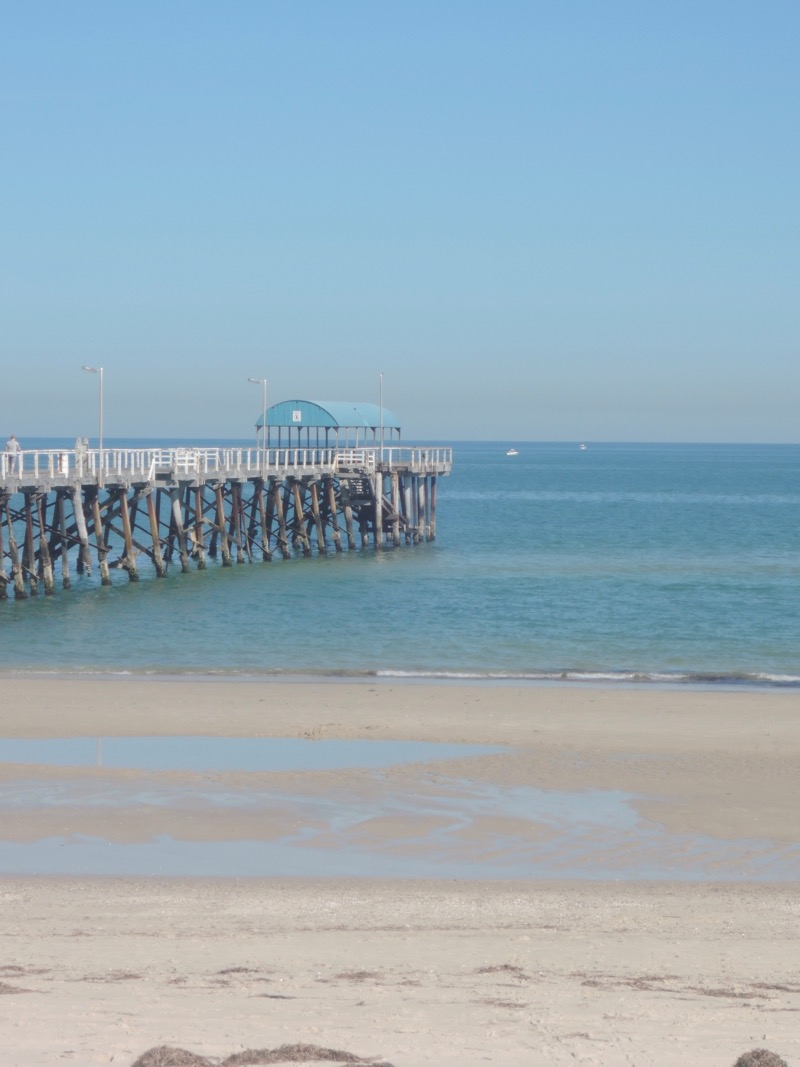
The route took me south-west — first along the coast, past two jetties; then south-east a little way,  where the coastal road came to a dead end. Then, when the coastal road started back up again, I turned back west and cycled alongside the sea once more, past the third jetty. I rode with my head up, glancing about me: at the wide, cloudless sky, and the opal-coloured sea, and the faint line dividing the two of them. Lycra-clad cyclists sped by me in a whoosh of tyres and sweat — mostly men, some women; most of them younger than me, but some older — and I said, ‘G’day’ to each one of them and gave them a little smile of greeting and acknowledgment, though I’m not sure that any of them heard me or noticed.

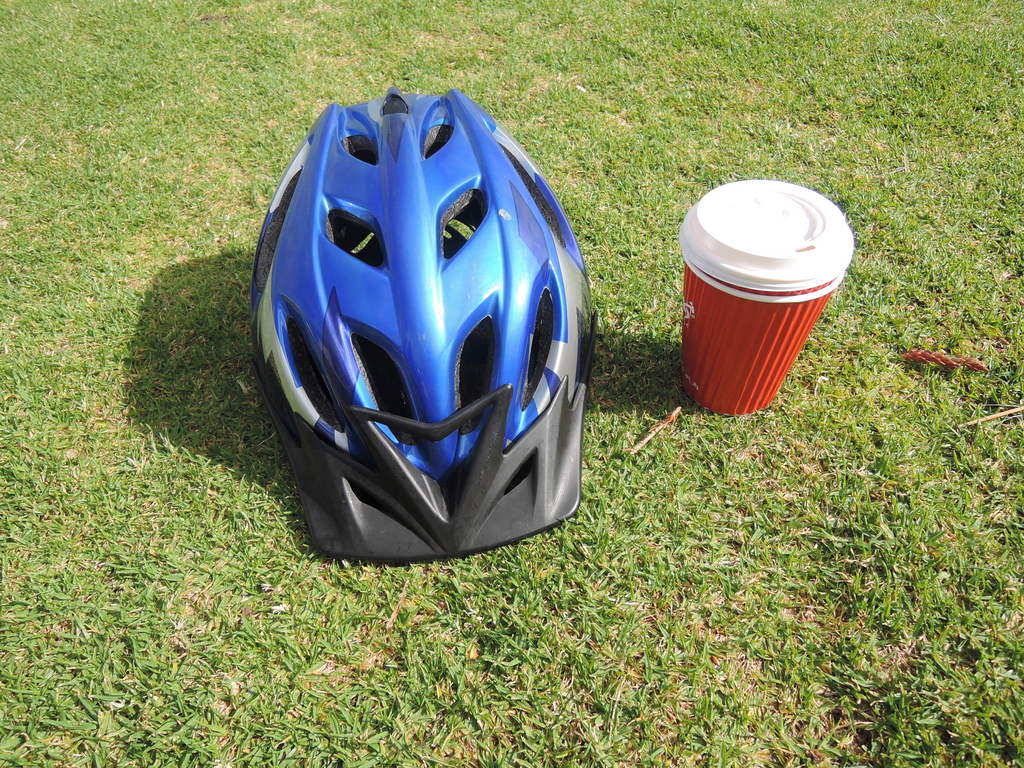
When I got to the fourth jetty (the one pictured in most of the photos in today’s post) I stopped and parked my bike. I wandered across the main road to the supermarket and bought some dried-fruit-and-nut mix, and then I dropped into my favourite café at that particular beach and ordered a take-away cup of tea. They’ve recently started selling tea made from leaf tea instead of teabags there, even for take-away drinks, which is a little thing, I know, but it makes me very happy. I carried my lidded red cardboard cup of too-milky leaf tea back across the road and plopped myself down in the middle of the foreshore square. And there I sat, cross-legged on the sun-warmed grass, nibbling my fruit and nuts, sipping my tea, looking (and looking) at the sea.

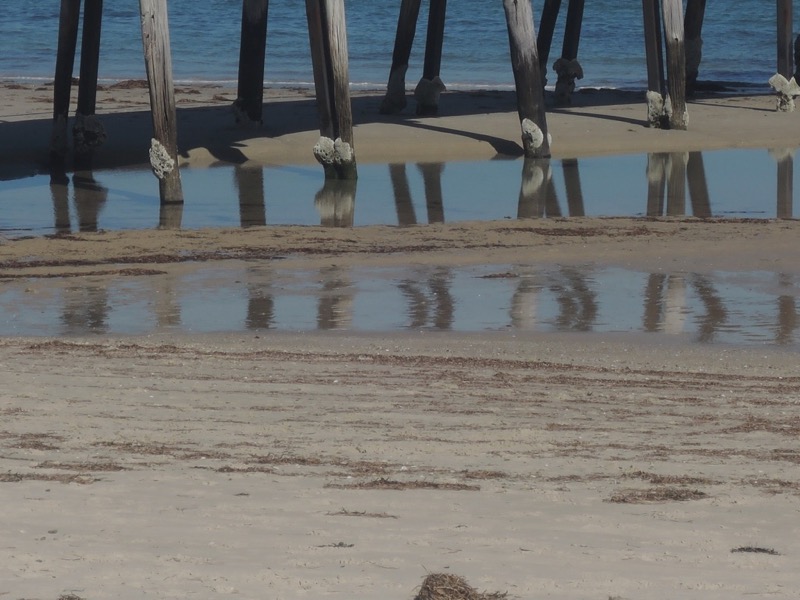
In a few weeks’ time, the grass in that foreshore square will be wet with rain, and a cold wind will whip between the lamp-posts up over the grey roof of the pavilion. I contemplated this a while, stretching my arms out behind me, resting my weight back, feeling the blades of grass tickle my palms. The beach was only a few steps away from where I sat on the grass, and I could see the jetty pylons reflected in the water, and I’ve said it once already in this post, but little things like that — they make me very happy indeed.

So what has this to do with the words I quoted at the beginning of this post? There was a bit of sweat involved in my bike ride, sure, but there was no swagger. I cannot say I moved with shameless confidence or unapologetic greatness. I was motivated, certainly, but I did nothing epic or magic. I am certain I did not glisten.

Thank goodness.

I do not wish this post to be unkind. I do not wish to say, as Arzón herself says many times throughout her book, I call bullshit on her words. But then there’s this:

Our inner monologue can turn can’t into can and dreams into realities. Extinguish doubt with action. Let’s write the story that says we are a little better than yesterday. We can push ourselves to where we want to be. It’s going to take a little sweat, though. Happy is something you do, baby, and only you are responsible for your happiness. Life is happening right now, so stop making up excuses and tell me, what do you want your story to be? Do you want to be a runner? Have you always dreamed of completing a marathon? Whatever it is, write it down, look back on it, and own it.

These sentences — sentences like this — worry me. Arzón’s thoughts are not unique; her words are a part of a general conversation, one that I hear around me almost every day. And it is a conversation I can’t help fretting about. I am alarmed when I hear someone confuse athletic prowess with personal greatness. Or when I hear someone link the idea of their becoming a better person, of their living a better life, with the act of slipping on a pair of running shoes. Or when I hear someone use words and phrases like ‘strive’ and ‘focus’ and ‘dedication’ and human potential (that last is Arzón again) to describe, not acts of goodness, let alone greatness, but essentially self-centred feats of fitness and strength, speed and endurance.

I decided to do one thing with my life — epic shit — and I want you to come along for the ride, Arzón writes, of her long-distance running. Maybe I’m wrong, but those words make me feel empty and sad.

Having said that, I also do not wish this post to turn into a lecture, or a rant. I do not wish to moralise. So I will just say this: I took my bike ride that morning slowly, because that was what the day asked of me, and what my life seems to be asking of me generally right now — regardless of my dreams, regardless of whatever kind of story I might prefer to write about myself. It was a gentle ride, and I felt gentler for it afterwards (though still somewhat unwell).

And that, I think, is how I want to live out my days: gently. Slowly. With kindness, both to myself and to others. With humility.

Tell me, am I alone in this? How do you want to live?

The beast

Snatched phrases (on being present)

Do the anxiety. Then leave it there. This is our challenge.

from ‘First, We Make the Beast Beautiful: A New Story about Anxiety
by Sarah Wilson

Simple words, huh? They apply to all manner of ills, I think — not just anxiety. They are about staying in the present: doing the hard stuff when it comes up, not questioning it or agonising over it … and then leaving it behind and moving on.

There are no solutions to anxiety out there, Wilson argues further on: no cures or fixes. So you just do it …

… and then you leave it.

This makes great sense to me.

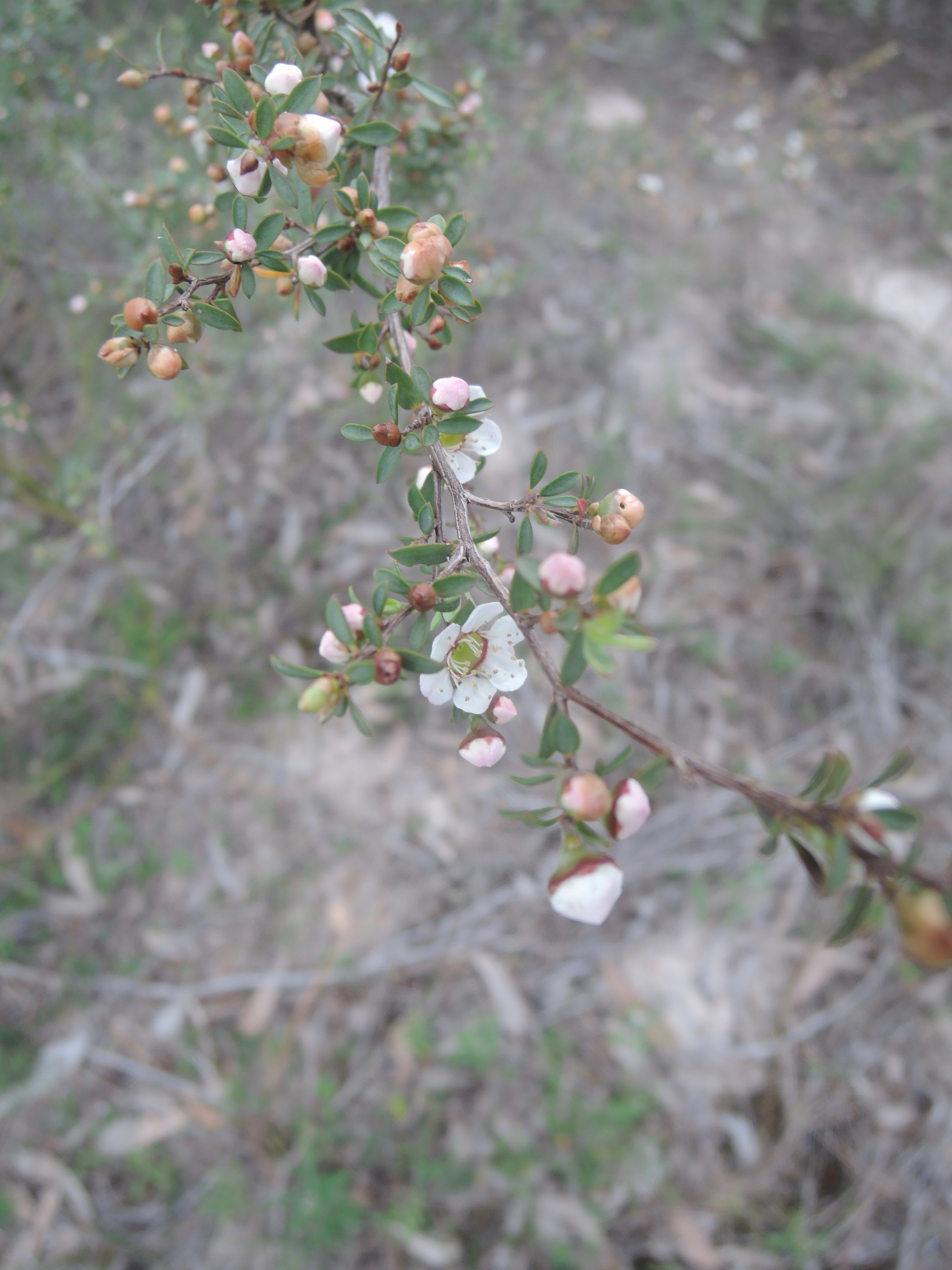
Today’s photos? They’re from one of my latest bushwalks, a couple of weeks ago: mid-March. It was a still, grey afternoon, and when I first began to walk, the colours seemed drab, and the birdsong was muted, and the air felt unkind and cold.

But as I wandered on, I began to see a few flowers despite the greyness, and I came upon a kangaroo, which stiffened at my bumbling approach and then bounded away. I heard the sea murmur somewhere through and beyond the thicket of trees, and a magpie began to carol, low and soft.

I had done my day, and I had left it there, and things were fine. Just fine.

When the wall comes down

Other people’s words about … the view

When I was about fourteen or so, I studied a poem in school by David Campbell, called ‘On the Birth of a Son‘. It was a sonnet, and I didn’t know much about sonnets, except that Shakespeare wrote a lot of them. It never occurred to me that a contemporary poet might write one.

This sonnet by David Campbell has stayed in my mind ever since. It remains one of my favourite poems. Here it is, in its entirety:

The day the boy was born, the wall fell down
That flanks our garden. There’s an espaliered pear,
And then the wall I laboured with such care,
Such sweat and foresight, locking stone with stone,
To build. Well, it’s just a wall, but it’s my own,
I built it. Sitting in a garden chair
With flowers against the wall, it’s good to stare
Inwards. But now some freak of wind has blown
and tumbled it across the lawn — a sign
Perhaps. Indeed, when first I saw the boy,
I thought, he’s humble now, but wait a few
Years and we’ll see! — out following a line
Not of our choice at all. And then with joy
I looked beyond the stones and saw the view.

On the face of it, this poem is about becoming a parent — the fears new parents have; the limitations parenthood imposes on their lives; the unexpected, unsettling joys it rewards them with. So it might seem strange that Campbell’s words have always resonated with me, though I have chosen, deliberately, never to become a parent.

But that’s the thing about great poems: they are universal. They manage to strike a chord in different people at different times for different reasons.

For myself, every time I read this poem I am moved by the contrast the poet makes between the act of looking inward — at his safe, pretty, cosy life — and the act of looking up, out, to glimpse a view of the world, and his life, beyond.

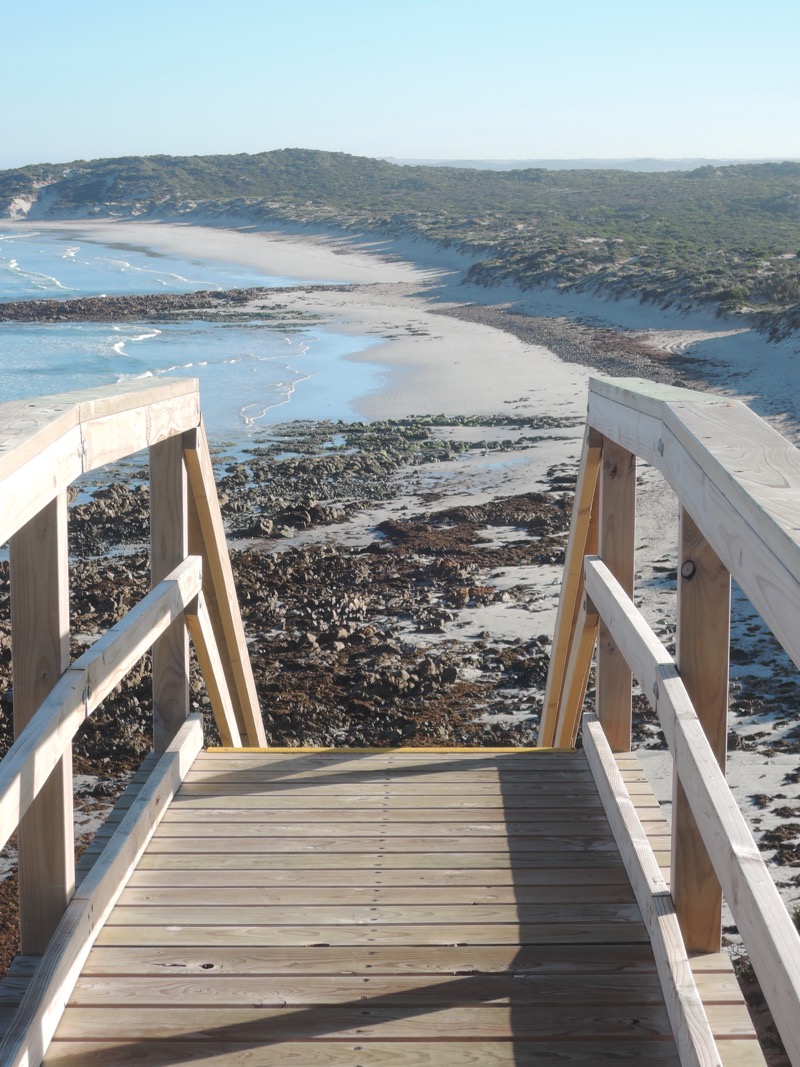
The view beyond. Recently, I went on a holiday in Yorke Peninsula. I returned to one of my favourite spots, following a long, undulating, unpaved road to get there — one that is corrugated and dotted with puddle-holes, dusty with sand stirred up by other passing vehicles, and lined with dense thickets of bush where brown snakes lie coiled, sleeping.

Each day I passed my time the way I always pass my time there. Each day I woke to the same view.

But it is a spectacular view: of open skies, of wide seas, of sprawling cliffs and rolling sand dunes. It is a view of a life beyond the life I normally lead. It is a view that sets me free.

I live a small life: small things give me pleasure. I consider myself, mostly, lucky to be able to live this way. And yet it’s good to escape from time to time: to look up and out and beyond.

And to see, again, the beautiful view.

Notes

You can find a link to this poem here and here.

Of love and tomatoes

Other people’s words about … tomato sandwiches

I’d asked [my disabled friend] Jessie when a doctor had last looked at her. She couldn’t remember, so [while Jessie was staying with me] I went to my doctor, still Jock Ledingham’s wife, Una, at her practice, which was in their home in Ladbroke Square.

Una listened to me kindly, and then asked if anyone was nursing her. ‘Only me.’ There was an awkward pause, and then I added, hardly audible, ‘And I’m afraid I’m very bad at it.’ Lack of food and sleep made me start crying again.

‘I’m going to make you a tomato sandwich,’ she said. ‘All my family can manage a tomato sandwich whatever they are feeling like.’ She did, and I ate it, and felt much better.

from ‘Slipstream: A Memoir
by Elizabeth Jane Howard (p. 147)

When I was a child, my mother would sometimes make my sister and me tomato rolls for dinner instead of our usual cooked meal. This was a summertime-only ritual — she saved it for those evenings when the air was thick and heavy with heat. My sister and I would have spent the day dipping in and out of the swimming pool, so that our skin and hair reeked of chlorine. We’d come inside and stretch out on the carpet in the living-room at the front of our house, next to an electric fan. We’d read, or watch the cricket on television, or play Lego, or colour in, while the fan blew warm air over us and our hair dripped down our backs, forming great wet circles on our t-shirts. And then, at last, it was dinnertime.

dscn3129

My mother made her tomato rolls with white bread — the kind that is crusty on the outside and fluffy on the inside. She cut the rolls lengthwise in thirds rather than in halves, and then spread each layer thickly with butter. Over the butter she laid slices of tomato. Then, as a last touch, she seasoned the tomato with salt. (Never pepper. Children hate pepper.)

These were the days before Australians of Anglosaxon heritage knew about things like basil or coriander, ricotta or feta. We had never eaten avocado or garlic or extra virgin olive oil. We didn’t know of the existence of focaccia bread or ciabatta or sourdough. Most people ate margarine in preference to butter, thinking it was a healthier option. And we ate salt with everything — we lived in a hot climate, after all; we needed to replace the salt we’d sweated out during the day. So a tomato roll was just what it sounded like: a tomato roll. Nothing more, nothing less.

dscn3131

dscn3135

It’s almost forty years since I ate one of my mother’s tomato rolls, and yet when I read Elizabeth Jane Howard’s words above about the curative powers of a tomato sandwich, I was instantly transported back to those simple summer meals my mother made us.

Bread. Butter. Tomatoes. Salt. I still think of this particular combination of food as the ultimate luxury, the greatest treat.

And as a symbol of my mother’s love.

dscn3132


From one year to the next

Other people’s words about … loneliness

She had told herself more than once not to call it loneliness, since it wasn’t any different from one year to the next, it was just how her body felt, like hungry or tired, except it was always there, always the same. Now and again she had distracted herself from it for a while. And it always came back and felt worse.

from ‘Lila
by Marilynne Robinson

A couple of years ago, I began to experience recurrent bouts of unexplained nausea. The waves of sickness came every three or four weeks, and left me feeling depleted and frustrated. My symptoms of illness were made more difficult by the fear that accompanied them: a fear that I’ve touched on here and here, and will no doubt touch on again.

In her memoir Slipstream, Elizabeth Jane Howard mentions in passing a phase in her life, when she was a young woman, during which she experienced something like this.

In those days, I had bouts of being unable to eat that sometimes lasted for weeks. This seemed to be one of them. I was very tired from my illness, but encouragement to build up my strength by these kindly people was of no avail. I’d sit before an immense juicy steak and delicious salad, trying to swallow the first pieces of meat, my stomach heaving, and wanting to cry from embarrassment. ‘I’m so sorry. I don’t eat much,’ I had to say.

It was my mother who, just recently, introduced me to Slipstream. When I read the passage above, I wished that Howard was still alive, so that I could write to her and thank her for these words. It helps, when you are going through difficult times, or when you are experiencing something troubling and bewildering for which you yourself have no words, to read someone else’s words on the same thing. Here is Howard again:

I had no energy for writing, I didn’t like living alone, and I could hardly drag myself to the office every other week to earn the six pounds that barely kept the wolf from the door … I remember the misery of sitting in restaurants faced with enormous menus and finally asking for something like a piece of cold chicken only some of which I managed to force down.

During the worst phase of my own bouts of nausea, I felt my life began to fold in on itself. Although I wasn’t ill all the time — although there were days and weeks when I felt well: days, even, when I felt as though I’d never feel sick again — those bouts took a toll on me. I called in sick at work frequently, and worried about the consequences. (Would I be put on a performance plan? Would I get sacked? What if I couldn’t hold my job down anymore? How would I live with myself if I couldn’t make a living?) I worried about my social life. (What if I lost all my friends because I kept cancelling on them at the last moment? What if they didn’t believe me when I told them I was sick? What if they thought I was just neurotic, or antisocial?) And I fretted about people in my family, whom I wanted to see more frequently than I did. (Did they know I still loved them? Did my absence hurt them? Were they, too, judging me?) I began to feel disabled on all fronts — by my symptoms of illness, by my fear of those symptoms, and by my shame about my fear.

The sickness happens less often now, I am glad to say, though it still comes, accompanied by symptoms that feel worse than they sound: fatigue, headaches, nausea, heavy eyes, weak limbs. I am as yet to find a cause. In the meantime, when I do experience bouts of illness like this, I try not to let myself feel the way I felt during that worst phase. Isolated is one word that comes to mind to describe the way I felt. Lonely is another.

And here is where reading helps. Reading Howard’s words I feel a sense of kinship. The kinship makes me reflect, as I so often do, that writing is an act of sharing, and that sometimes — sometimes — reading can feel like a defence against loneliness.

It wasn’t until I read Toni Bernhard’s How to Live Well with Chronic Pain and Illness that it finally became clear to me that illness — whether it’s serious or mild, whether it’s intermittent or constant, whether it’s accompanied by fear or not — is, inherently, lonely. Experienced long-term, it is all the more so. Bernhard, who lives with a fatigue-related chronic illness that keeps her largely bedridden, is illuminating on the theme. She writes:

In these moments when I accept that some of the people I know may never understand what life with chronic illness is like for me, I’m able to let go of the painful longing and fruitless desire for them to behave as I want them to. It’s like putting down a heavy load because I’m finally giving up a fight I cannot win. This gives rise to equanimity –- that calm sense of peace and well-being with my life as it is, whether others understand it or not.

Read those sentences again: Some of the people I know may never understand. Those words go to the heart of loneliness. So do these: painful longing. Fruitless desire. Illness should not entail any of these kinds of feelings, but it does. It is a very lonely experience. (If you are experiencing illness-related loneliness, I highly recommend Bernhard’s book. Her words are both wise and comforting. They may even impart a sense of kinship.)

The main character in Marilynne Robinson’s book, from which I quoted at the top of this post, is lonely in another way. Lila’s loneliness is the result of poverty and an extreme lack of love in her upbringing, and her experience of it is utterly embodied. I’ve never heard loneliness described this way before, but I find the interpretation as enlightening as Bernhard’s. Loneliness, Robinson is saying, is a physical — a visceral — thing. It is as much a part of living as hunger and fatigue; it is with us from our first breath to our last. Like illness, it is a part of the cycle of being alive in this world.

dscn3063

Perhaps the difficulty we have with loneliness, then, is not so much with its actual presence, nor with its cause — whatever that may be — as it is with the way we experience it and interpret it. I find this thought strangely consoling.

Is it possible to feel consolation and loneliness simultaneously? Probably — but it’s much harder.

Note:
There are a number of bloggers who write about their experience of living with serious or long-term illness. Here is where the blogging community comes into its own! Two bloggers whose frank, clear-sighted words on illness I particularly admire are Elana Amsterdam of Elana’s Pantry, who lives with Multiple Sclerosis and writes about managing her illness through a grain-free diet and a low-stress lifestyle, and Ali Feller from Ali on the Run, a passionate runner who blogs about living (and running) with Crohn’s Disease.

Snatched phrases (on hope)

‘It’s maybe why her mother took to walking, Tess thinks  as she clambers through thickets of ash, brown kurrajong, weeping fig.
When you’re walking the view shifts and changes.
Walking’s a form of hope.’

from ‘The World Without Us
by Mireille Juchau

When you're walking ...
When you’re walking …
... the view shifts and changes.
… the view shifts and changes.
Walking's a form of hope.
Walking’s a form of hope.

When you can’t eat anything

Other people’s words about … IBS*

We’ve all been there. There are some days when it seems like everything you eat triggers an IBS attack. This is not your imagination; when your IBS is raging, your gastrocolic reflex can be so sensitive that simply drinking water can trigger dysfunctional colon contractions and IBS symptoms.

When this happens, you need to give your body a rest and stick to the safest foods and drinks possible in order to break the cycle of IBS.

from Help for IBS
a website by Heather van Vorous

* IBS stands for Irritable Bowel Syndrome. Honestly? The acronym definitely sounds better than the full name!

A long time ago, I promised you that I would never publish a recipe on this blog. Today I’m breaking that promise.

I’ve talked often about how much I love to bake and eat cake. These days, I enjoy every part of the process — stirring, whisking and beating the mixture; smelling it cooking in the oven; eating it afterwards. Sharing it with someone. Setting aside slices for my parents when I next see them. Eating a sliver after dinner each night. I’ve come to believe that these things are, contrary to what one might think, healthy things to do.

dscn3005

The older I get, the more I believe in these rituals, at least for me. For most of my late teens and twenties, and even during my early thirties, I was stuck in a pattern of abstinent eating, though my abstinence varied in its severity and compulsion, and definitely waned as I moved beyond late adolescence. At various times, I have been low-fat, vegetarian, pescatarian, gluten-free, wheat-free, bread-free, red-meat-free, dairy-free.

In the early days, the reasons for my restrictions were purely about trying to keep myself at an artificially low weight, though I would never have admitted this then, either to others or to myself. Later, the reasons for restricting my diet were less about my weight and more about my health. When I was diagnosed with IBS some years ago — which was an explanation, at least, for some of the weird ways my digestive system behaves — I obediently tried the Low Fodmap diet, as my GP suggested. (It didn’t work. I felt worse.) When I had glandular fever with persistent fatigue some years later, I tried a grain-free diet, on the advice of various paleo enthusiasts on the internet. (Uugh. This was a disaster. Never again.)

I discovered Heather van Vorous’s website and book some years ago, and found it more helpful than anything I’ve ever come across. She is not a doctor or a dietitian or a scientist: she is someone who has suffered from severe IBS all her life. Her suggestions read a lot like the dietary advice we were all given in the 1980s and early 1990s, and so run counter to the current prevailing dietary guidelines for people with health issues. In essence (and I’m massively over-simplifying here), she advocates regular and frequent consumption of foods containing carbohydrates and soluble fibre — particularly simple, starchy foods like white rice, pasta and bread. Meanwhile, she suggests reducing or altering your pattern of consumption of foods high in fat, like avocados and coconut, along with foods high in insoluble fibre, like lettuce and prunes. She also recommends reducing or altogether omitting consumption of red meat, dairy products and alcohol. I don’t follow her guidelines all the time, particularly the omission of those last three things, but when I am experiencing a bad bout of IBS, I find her guidelines both effective and comforting.

In the end, we are all individuals: our bodies react individually to whatever we put in them, and to the environment around them. There is no one perfect diet for good health and longevity. Health is a complex beast, referring to our physical and mental wellbeing, genetically inherited tendencies, life events and personal belief systems. Doctors and dietitians — and internet health gurus, particularly — would do well to remember that.

dscn3007

What does all of this have to do with cake?

First, over the years, I have come to the conclusion that restriction and abstinence, in whatever form they appear, will never be healthy practices for me personally. They may make my body temporarily healthier, but my mind and my mental wellbeing suffer. And that’s no longer acceptable to me. It hasn’t been for years.

Second, when I’m sick, or experiencing a bad case of IBS, sometimes cake is the answer. That may sound counterintuitive, but, truly, there is a cake for every occasion. The recipe below is what I call my ‘comfort cake’. Even when my stomach is wobbly and uncertain — when cauliflower and bananas are no-go zones; when, as Heather van Vorous puts it, even a glass of water can trigger symptoms — I can eat this cake. Perhaps it’s the spices in it, most of which are carminative and some of which also have anti-emetic effects. Perhaps it’s the starch. Perhaps it’s purely psychological. Whatever the reason, this cake settles my stomach; it calms my system down; it’s safe. At the same time, it tastes good and it feels like a treat. I’d go so far as to say it’s my own particular everyday cake.

This may be the only recipe I ever post on my blog. I’m posting it here because it represents something that has become a core belief for me during the time I’ve been writing this blog — which is to say, the importance of finding, and sticking to, your own kind of wellness, no matter what anyone else says, even (especially?) the experts. I’m posting it, too, for those of my readers who have a wobbly stomach like me but haven’t found anything that eases it. (You never know — this might.)

Most of all, I’m posting this recipe because I hate that saying ‘have your cake and eat it’. Why would you have a cake and not eat it?

Chocolate comfort cake

Note:
This recipe is based on an original recipe by Heather van Vorous, although I have altered it, over the years, almost beyond recognition. If you make substitutions to it, please know that it may not turn out as you expected or as I have suggested. In particular, this cake does not work well if you make it with solely gluten-free flours, due to its lack of eggs and its low fat content.

Ingredients:

1 x 410 g can pears in natural fruit juice
2 cups spelt flour
2 small teaspoons bicarb soda/baking soda
1 tablespoon of almond flour or coconut flour
1 teaspoon cinnamon
1 teaspoon nutmeg
1 teaspoon ground cloves
1 teaspoon ground cardamom
1 cup sugar
1/3 cup cocoa, sifted
1/4 cup oil

Instructions:

  1. Blitz the pears in their juice in a blender or a nutribullet until they form a smooth puree. Set aside.
  2. In a large bowl, whisk together the dry ingredients until they are well combined and lump-free. Either almond flour or coconut flour works well in this recipe, depending on which flavour you prefer. The coconut flour will make for a slightly lighter but also a slightly drier cake.
  3. Add the pear puree and oil and stir well to form a smooth batter. Don’t overmix, as spelt flour has some gluten in it and over-stirring here will develop the gluten, making the cake tougher.
  4. Spoon into a greased and lined loaf tin and bake at 170 degrees Celsius for one hour or so, or until a skewer inserted into the centre of the loaf comes out clean or with just a few crumbs clinging to it.
  5. Leave to cool in the tin for at least 20 minutes or until completely cool, as this cake, due to its lack of eggs and fat, is crumbly when still warm.
  6. Enjoy a slice or two with a cup of tea. If it is a sunny day and you have a balcony or a garden, go and sit out there and bathe yourself in sunshine while you eat!
  7. When your stomach is feeling stronger, this cake is good spread with a little coconut butter, butter or tahini. It is particularly nice shared with a friend.

First person

Other people’s words about … writing

Back in my room, I put down my bags, undressed, wrapped myself in blankets, put on Christmas music, and watched the snow fall outside my window, a picture-perfect postcard winter scene, wide lawns of white, thin black arms of trees holding up the white sky. I thought of writing. But what would I have said? I’d long since stopped writing, real writing, my own writing. No words ever came anymore. I’d lost the sense of first-person, the sense of being in the world that writing requires. I guess I had nothing to say for myself. I turned my face into the pillow and slept.

from ‘Wasted’
by Marya Hornbacher

It is a strange thing, but the words above — which form part of Hornbacher’s memoir about anorexia — speak to me as much about writing as they do about starving.

(Let me pause here to say, in passing, that Hornbacher writes about anorexia better than anyone else I have ever read. She writes with a vividness and intensity that is rare and moving and unforgettable. At the time she is describing in the passage above, she was at her lowest weight, close to death. She could not work, or eat, or read, or sleep. Of course she could not write.)

dscn2894

I don’t know if you could call what Hornbacher is describing here ‘writer’s block’, although certainly she is describing an inability to write. I don’t even know if writer’s block exists. I do know that, like many writers, I have experienced times when I have been unable to write anything I deemed meaningful or worthwhile. For me, like Hornbacher, that feeling is powerfully tied up with a sense of despair, of loss. The despair comes first, and then the inability to write — not the other way around.

We like to tell ourselves that there is a link between depression and genius, between suffering and artistic ability. (Mozart, anyone? Van Gogh? Plath?) But most writers who have been through a period of depression will tell you that they write despite their depression, not because of it; and that they write their best material after a period of depression, not during it. Even those writers who choose to write specifically about their depression — like William Styron in ‘Darkness Visible‘, and Andrew Solomon in his particularly fine book ‘The Noonday Demon‘ — do so after the fact.

Is despair a different thing from depression? In the clinical sense, I guess, it is. Whatever its cause or pathology, it can certainly affect a writer’s ability to write. It can certainly keep her quiet. I’d lost the sense of first-person, Hornbacher says, of her own encounter with illness and despair: the sense of being in the world that writing requires. And that is how it feels.

The corollary of this, for me at least, is that when I write — when I can, when I do — it comes from a good place. Because here’s the thing: to have a sense of being in the world is to have a sense of belonging, of groundedness, of being alive. It is to have a sense of joy.

dscn2889

I will leave it to Matt Haig, another writer who has chosen depression as the theme of one of his books, to close this post:

I want life. I want to read it and write it and feel it and live it. I want, for as much of the time as possible in this blink-of-an-eye existence we have, to feel all that can be felt.

from ‘Reasons to Stay Alive
by Matt Haig

Those are words that can keep you alive, if you let them, though they will not keep you quiet. I want. I want. I want.

Quietness, anyway, in my opinion, is overrated.