Take note

Other people’s words about … gratitude

I am so glad to still be here. Every day, I do my best to see the colours. I take note. I breathe them in.

From ‘How it Feels to Float’
by Helena Fox

It’s been a while since I’ve posted, I know. I want you all to know that I have been thinking of you, and I have been thinking of posting. There just hasn’t been room inside my head to get to it.

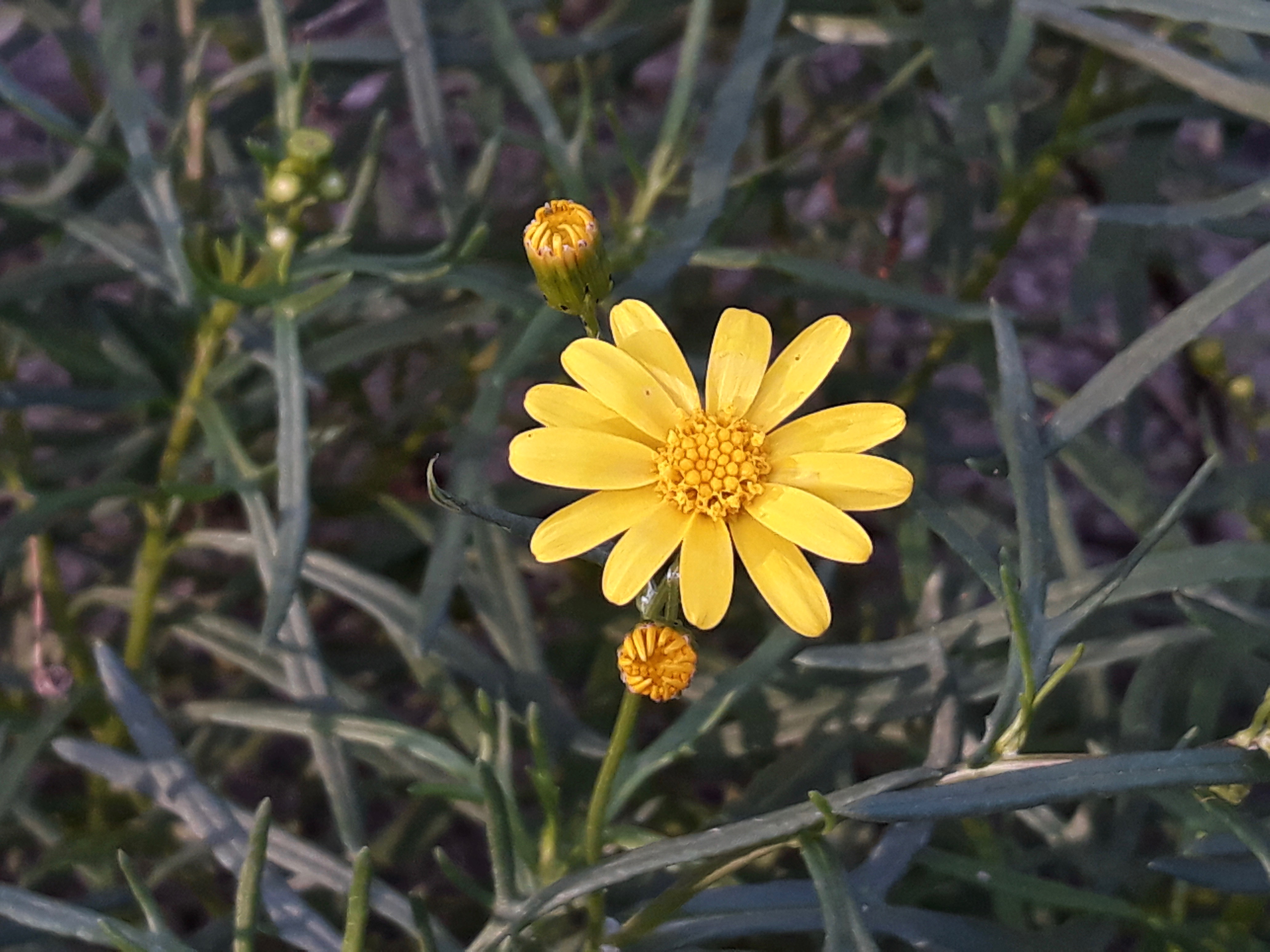
The first groundsel flowers of the season
(Spring is coming)

But when I read Helena Fox’s words in the Acknowledgments section at the back of her wonderful novel for young adults, How it Feels to Float, I wanted to pass them on. Because no matter how crammed my head — my brain, my mind — feels at the moment, I, too, do my best to see the colours, to breathe them in.

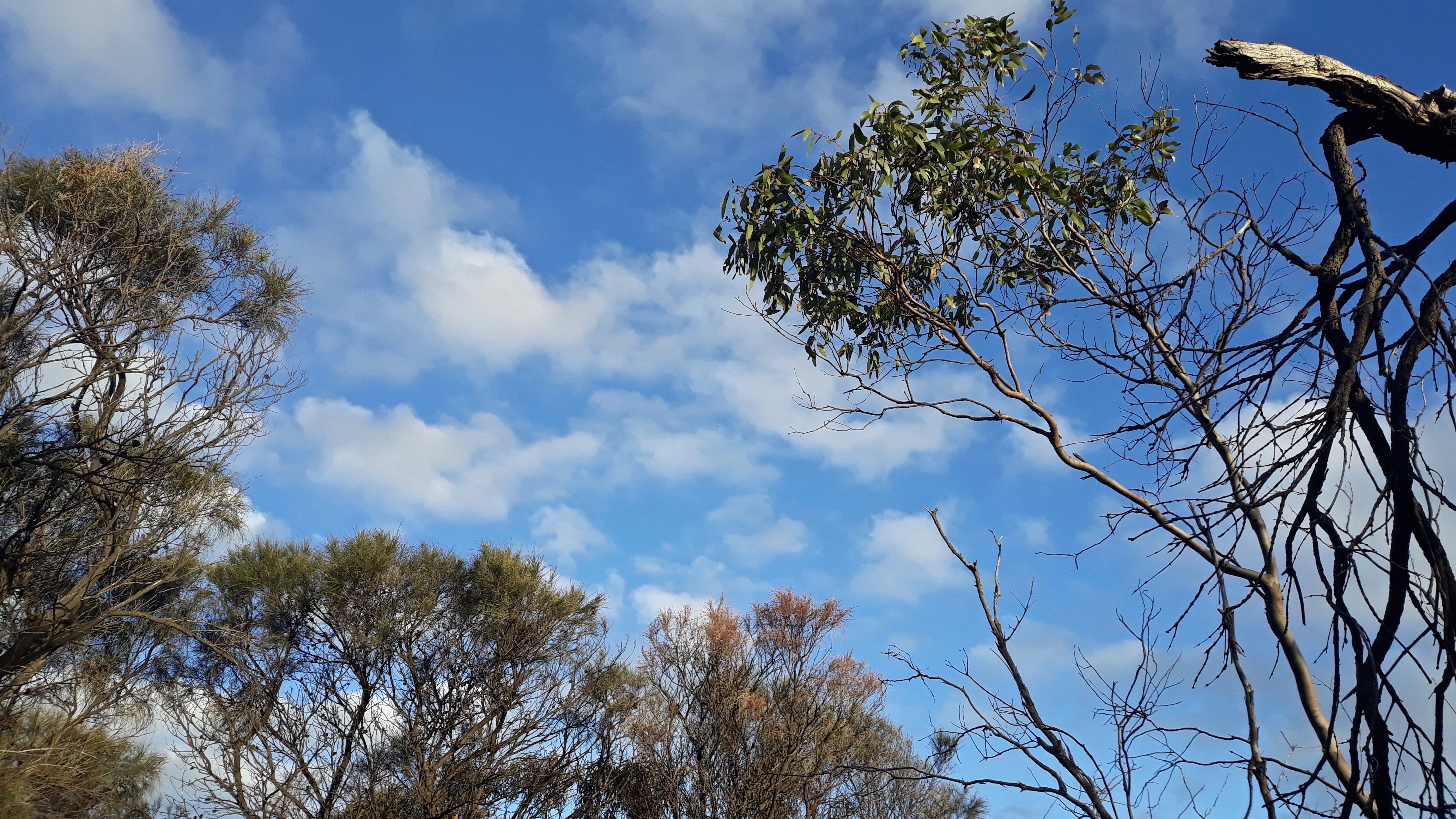
Blue winter sky

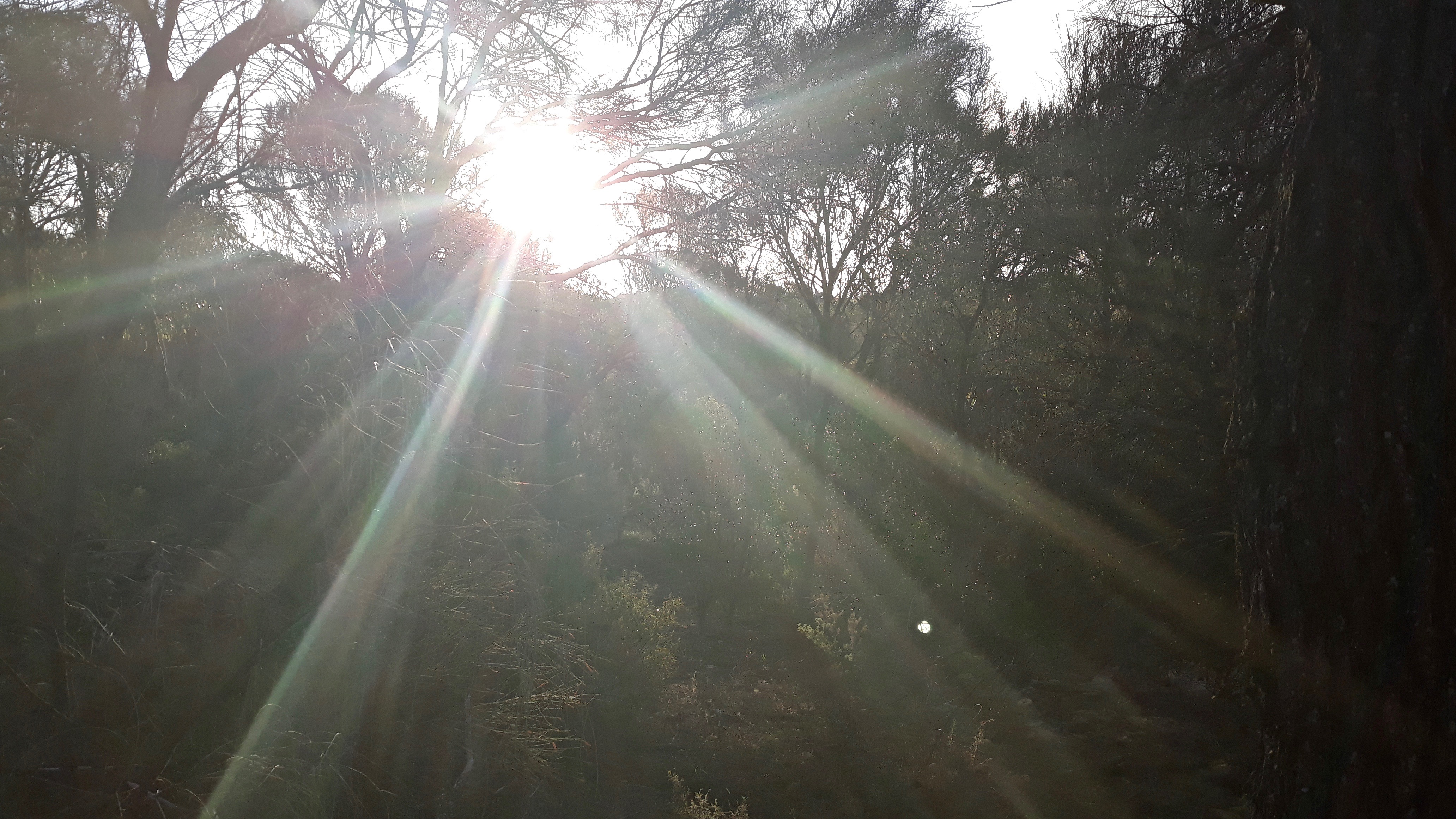
The photographs in today’s post come from a walk I took a few weeks back. I hadn’t walked that path for a while, and I haven’t walked it since, but those moments were precious. I am still breathing them in.

Last rays

If only I’d known

Other people’s words about … what’s important (or not)

I found a studio where I could practise a particular kind of semi-cultish yoga; I sweated on my purple mat for ninety minutes to pounding trance beats, drank smoothies in the vegan cafe, relished the feeling of freezing sweat on my cheeks when I threw my coat on over my leggings and walked in the snow to the Q train.

Maybe this will be the year I’ll learn to stand on my head, I thought, maybe a headstand is the thing I will accomplish in 2014. I thought about it a lot, like a headstand was a thing that was important.

From ‘This Really isn’t About You’
by Jean Hannah Edelstein

If only I’d known. That’s the feeling Jean Hannah Edelstein is describing in the passage above. In her case, these words applied to a period in her life when she didn’t yet know that she had Lynch syndrome, a hereditary condition that predisposes her to developing cancer later in her life.

If only. If only. Who hasn’t said that to themselves, at some point in their lives? If only I’d known, I’d have focused on other things. If only I’d known, I’d have made different plans. I’d have done more; I’d have said more; I’d have tried more. I’d have been more.

Don’t tell me you haven’t ever thought that.

*

It’s been a quiet couple of weeks over here in my nook of the world, as I continue to try to find my way in the freelance world. I don’t know whether I’ll manage to make a living from freelance editing, in the end. But on tough days, uncertain days, I remind myself that at least I’ll always know that I tried.

Which makes for one less if only in my life.

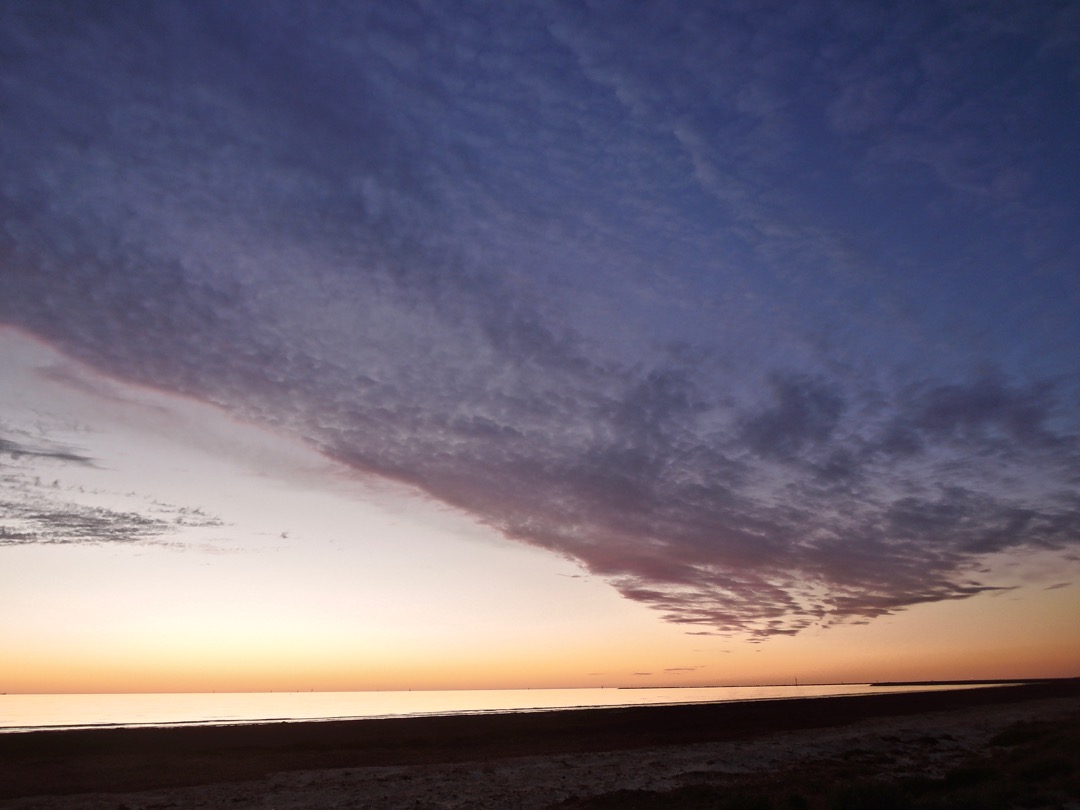
Grey skies

And meanwhile, in my spare time, I’ve gone wandering beneath grey skies, and blue skies, and cloudy skies, and clear skies. Because there’s no hint of an if only whenever I’m out wandering.

Blue(-ish) skies

Lately I’ve been reading about …

Rescue

Other people’s words about … giving up

A few years ago I was living in a loft with a man and two cats and it started to happen again. In the morning, in the split second between sleep and waking, I would almost accidentally start to pray. I’d feel sunlight through the slits in the blinds, register that the alarm on my iPhone was going off, start hitting the bed and the windowsill and digging under myself to find it and tap its little snooze ‘button.’ There were cats on either side of my head, and my human husband, to the right, was snoring hairily on his back, his hands curling and uncurling on his chest like the paws of a tickled kitten. But despite how many of us there were in the bed, I felt alone and too small to survive, too permeable, too disorganized, and trapped in something I didn’t have the words to describe. And something in me stretched up in a physical way toward the place where God used to be. I’d wake up and remember: there is no God. But I wanted to give up anyway, as if in doing so I could be rescued.

From ‘Letter from Williamsburg’
by Kristin Dombek
in The Best American Essays 2014, edited by John Sullivan and Robert Atman

I grew up in a non-religious family, but I was christened and baptised, and from primary school onwards I went to a Church of England (now Anglican) school. At school, we sang hymns and said prayers in the Assembly Hall every morning; and we had weekly lessons in Christian Education; and we went to special services in the church affiliated with the school at Easter and Christmas; and we had a special school hymn, which we sang (off by heart) at Speech Day at the end of each school year. I can still recite the Lord’s Prayer all the way through.

All of which is to say, I was instructed as a child in the habit of faith. Maybe that’s why I remember talking to God and making bargains with God all the way through my childhood and on into adolescence.

Dear God, I would say inside my head, if you give me this, I will do that. And: Dear God, let me get through this. And: Dear Lord, make things get better. Please make things get better.

That kind of thing.

Stretching up (1)

The kind of prayer I was taught at school, the non-bargaining kind of prayer we practised there, is an art: it’s a ritual, a discipline. An act of community, too. But the other kind of prayer, the bargaining kind of prayer, the chatty kind of prayer — the kind Kristin Dombek describes when she writes, I would almost accidentally start to pray (my emphasis) — is instinctive. And solitary. It comes, I think, from something deep inside of us: a yearning to feel better. Or to do better. Or to be better. A yearning to be heard.

Because who doesn’t want to stretch up — in an almost physical way, as Dombek puts it — to something outside oneself, something bigger than oneself? Who doesn’t want to be answered?

Who doesn’t want to be heard?

Stretching up (2)

Lately I’ve been reading about …

The stories we tell

Lately I’ve been reading about … river red gums

I didn’t just notice the river red gums, but also the cracked mud of receding water, rotting gum leaves, greater eastern egrets, kingfisher, heron, ibis, ducks, emus, kangaroos, wild horses, wasps and flies. I even saw (threatened) Murray cod foraging in the shallow water along the lake’s bank, and quickly learnt to look for them at the centre of the ripples of golden tannin their fins sent out. It was the first time I’d seen them surface, amphibian-like, in this manner. The effect was prehistoric. A single galah feather caught in a spider web stretched, strong as rope, between two river gums, waved gently in the corner of my vision.

From ‘Biyala Stories
by Sophie Cunningham

This year I’m taking regular walks through one of my favourite parts of the world, the Aldinga Scrub — the same walk each time, along the Coral Lichen Circuit, which follows a gentle, undulating loop, with spots that overlook both the coast (to the west) and the hills (to the east) — to watch the seasons ring their changes on the landscape. On previous walks through the Scrub I’ve taken pictures of the trees and the flowers, listened to the birdsong and the sound of the waves in the distance, to the wind moving through the trees. But I want to know the Scrub better, to know it intimately, to witness it. I want to know its intricacies — the kinds of intricacies that Sophie Cunningham describes so beautifully in the passage I’ve quoted above.

Cunningham’s essay is about the river red gums that grow in the part of the world where she lives: Melbourne (mostly), Victoria. It’s a thoughtful, erudite, poetic essay, at least in part about the stories these trees can tell us, the stories they might add to our own (human) narrative if we were able to listen. (You can read it here.)
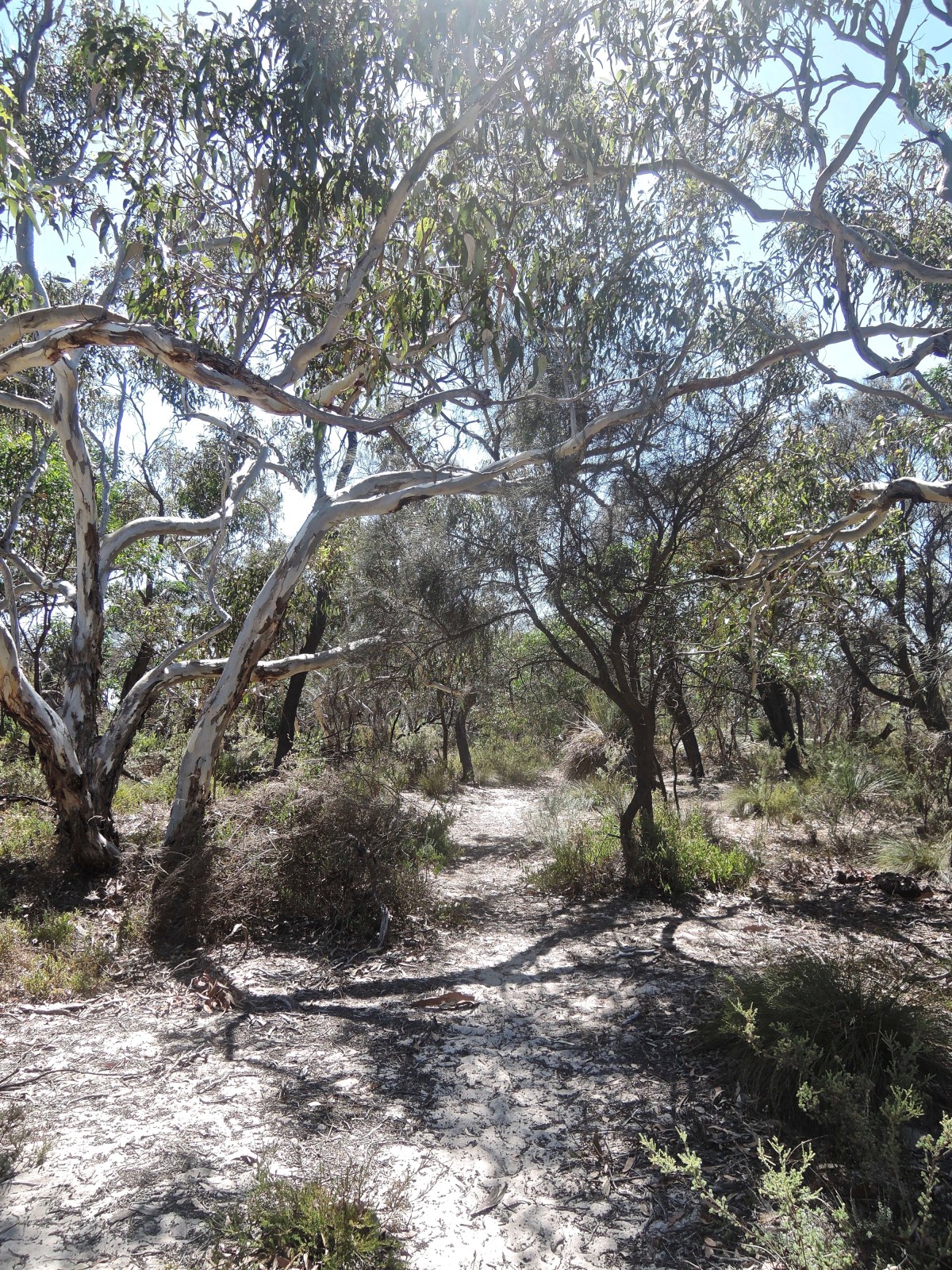
From what I have read, the trees of the Aldinga Scrub, like the river red gums in Cunningham’s essay, are struggling to survive. So are the plants of the Scrub, the birds and the animals. Their survival is threatened by many things, including encroaching housing developments; farming practices that have, since World War II, diverted the natural water flow away from the Scrub to nearby crops; pollution; climate change; islandisation; the spread of weeds from people’s carefully curated gardens and lawns.

I’m neither a scientist nor an ecologist; I can’t use any particular knowledge or training to save the trees or the plants or the birds on a large scale. But I can keep wandering and and witnessing, and sharing, in the process, the things I see and learn, the passage of the seasons, the stories I discover.

I can ensure those stories don’t go untold. That, at least, is a start.

Out & about: spring flowers

‘When you’re walking the view shifts and changes.
Walking’s a form of hope.’

from ‘The World Without Us
by Mireille Juchau


I’ve just spent a week on holiday, during which I did a lot of walking.

Common (variegated) groundsel

I had planned to go running as much as I could, but due to illness, in the end I had to opt for a gentler form of movement.
Vanilla lily

And that turned out to be not such a bad thing.

Red parrot pea

The sun was gentle and soft most days, though the wind felt distinctly chilly. On a walk through Aldinga Scrub, I saw native flowers blossoming everywhere, in every colour: yellow, purple, orange, white, pink, blue.

Rice flowers

Paper flowers

Blue Grass Lily (Caesia calliantha)

Even the parts of plants that weren’t flowering seemed exotic and gorgeously coloured.

Twining vines (devil’s twine)

Crimson branches

Bees darted about, drinking nectar.

Bee on a coast beard heath plant (or a rice flower?)
with curling shoot

And though they’re not pictured here, roos observed me as I walked the sandy trail, while whistlers burbled hidden in the trees and a frogmouth boomed in the distance.

Yellow bush peas
(that’s what I call them, but apparently they’re called common eutaxia)

Spring has truly arrived.

Out & about: enough

‘When you’re walking the view shifts and changes.
Walking’s a form of hope.’

from ‘The World Without Us
by Mireille Juchau


Some days, after work, I don’t have time to go for the kind of walk that the passage above, which I quote on this blog so often, describes: a long walk, a wandering walk, a wondering walk. Some days there just aren’t enough hours of daylight left — not for that kind of walk.

There might be a few moments, though — just enough moments to dash down the road and glimpse a dark swathe of clouds in the sky —

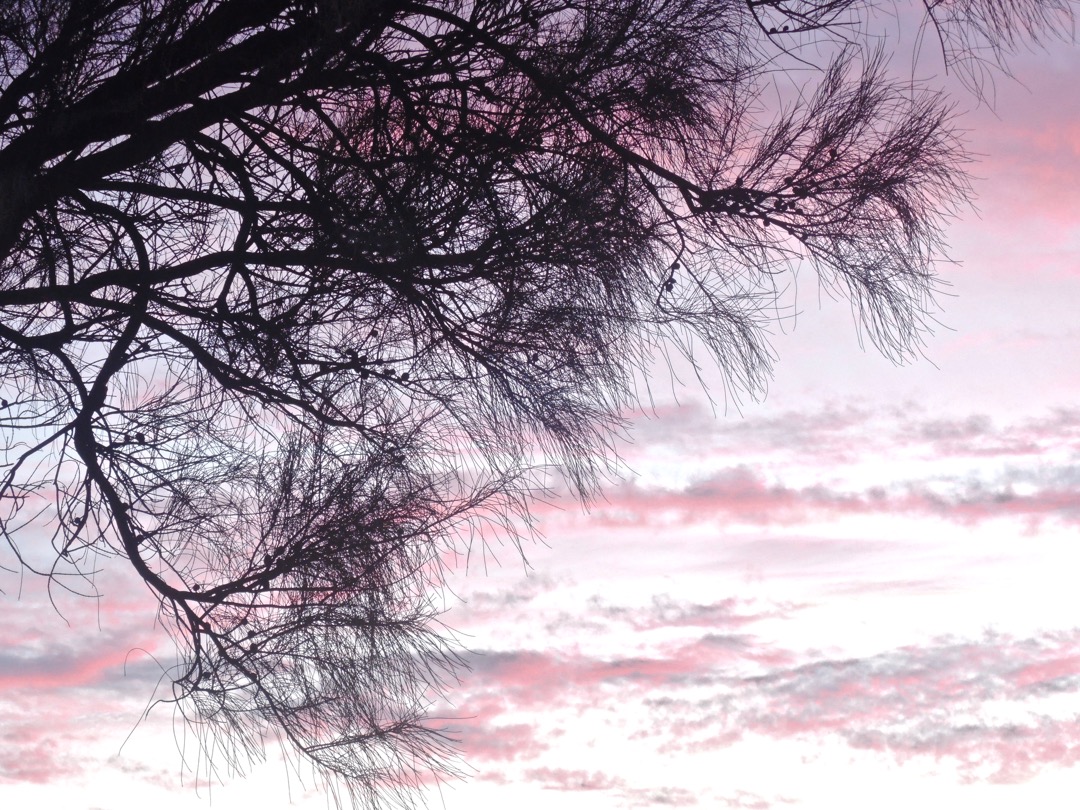
— or the branches of a sheoak tree silhouetted against cotton-pink clouds —

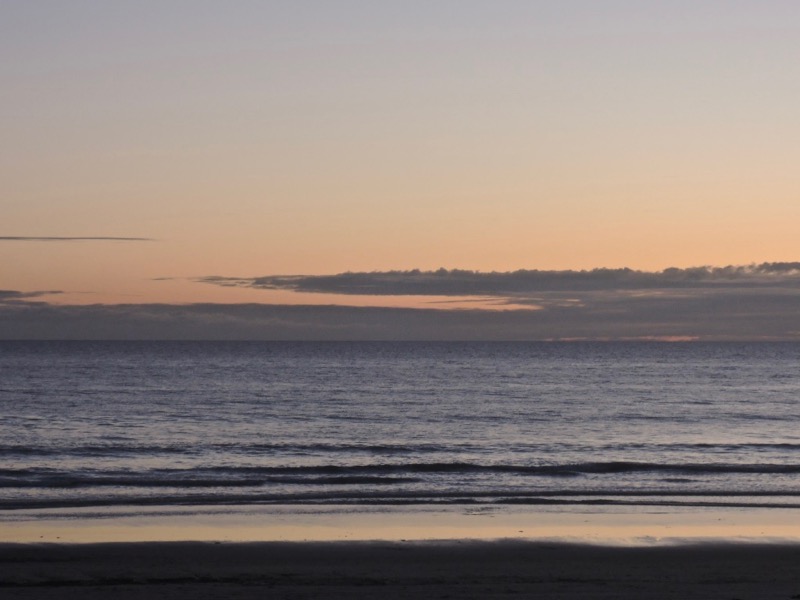
— or a sea turned opal.

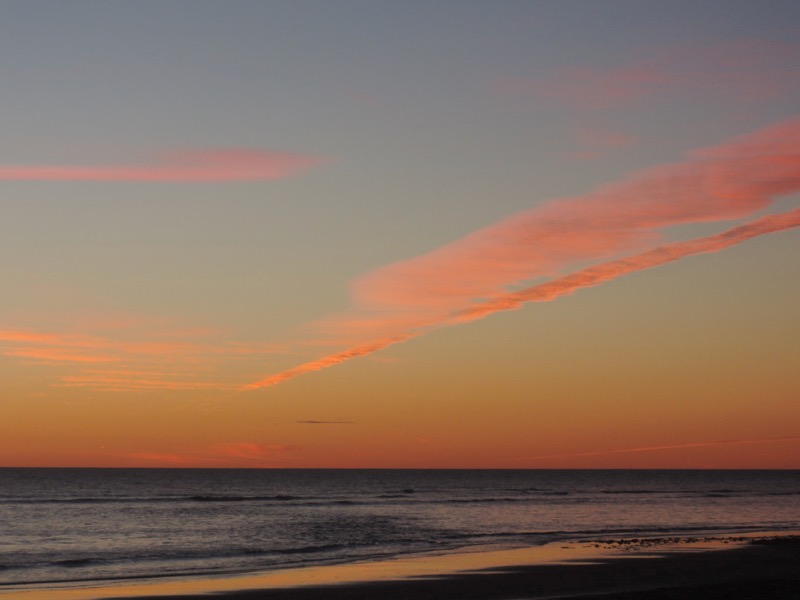
Beacons to guide the ships home

The day I took the photos in this post was one of those days. All I had left of that day were those few moments — the last few moments of the day. So I told myself that they were enough, those few moments.

And for a few moments they were. They really were.

Out & about: messages

‘When you’re walking the view shifts and changes.
Walking’s a form of hope.’

from ‘The World Without Us
by Mireille Juchau


I often wax eloquent about the value of stopping and taking the time to look up, but the other day, on a bushwalk, I happened to look down at the ground I was walking on, and this is what I saw:

My friend Anne tells me that these words are quotes from the movie The Best Exotic Marigold Hotel, a movie I’ve never seen because it’s never appealed to me.

I do like these words, though.

I went back to the same spot a few days later, retracing my steps, but the pebbles had gone, or someone had moved them, or (at least, this is what I thought, till I remembered I had photographed them) they had never been there in the first place, except in my imagination.

But I kind of like the fact that they disappeared. Though I’d hate to be accused of solipsism, or indeed of fatalism, somehow it feels as though I was meant to see those words that day.

And as though, perhaps, I was meant to pass them on to you.

Out & about: winter solstice

‘When you’re walking the view shifts and changes.
Walking’s a form of hope.’

from ‘The World Without Us
by Mireille Juchau


I spent the week of the winter solstice on holiday. I had planned to go camping to Yorke Peninsula, but various things conspired against these plans. In the end, it didn’t matter. I live by the beach. That’s holiday enough in itself.

Winter solstice sunset (1)

The weather that week was unusually dry, cold and sunny for June in Adelaide, with overnight temperatures getting down to as low as 2 degrees Celsius. That made for beautiful weather in which to go walking.

Winter solstice sunset (2): dying light

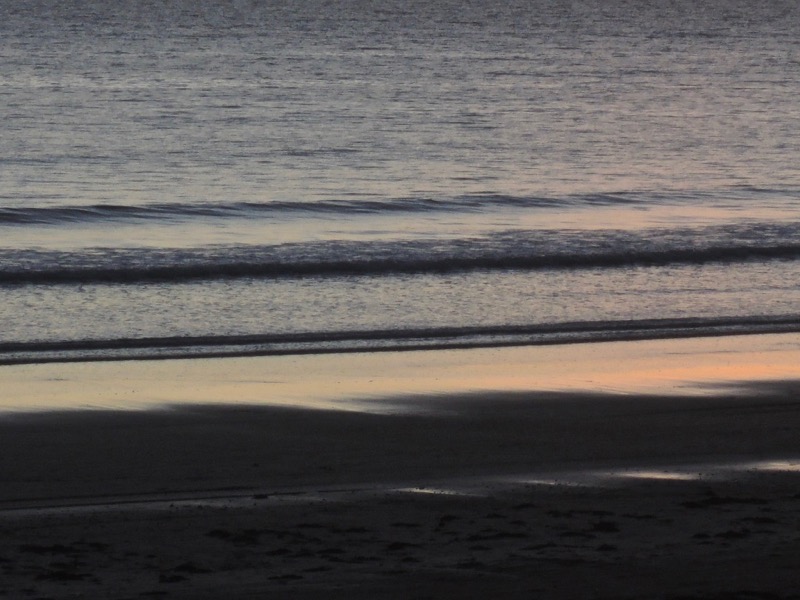
The sunset on the evening of the winter solstice was cold, clear and beautiful. Though the time of the year when the days are at their shortest often leaves me feeling light-starved and sunshine-deprived, that evening was still worth celebrating.

Winter solstice sunset (3): last glow of light

An additional note: I took these photos between about 5.15 pm and 5.30 pm. The sunsets from hereonin will be later every day … and that’s another thing worth celebrating!

Small

Other people’s words about … the passage of time

‘ … We can be like sisters,’ she says. And then she freezes.

I smooth my hair behind my ear. I look at the snow.

‘I didn’t … ‘ She leans forward, cradles her head in her hands.

And I think of how time passes so differently for different people. Mabel and Jacob, their months in Los Angeles, months full of doing and seeing and going. Road trips, the ocean. So much living crammed into every day. And then me in my room. Watering my plant. Making ramen. Cleaning my yellow bowls night after night after night.

‘It’s okay,’ I say. But it isn’t.

from ‘We are Not Alone
by Nina La Cour

Some people in the Western world — most people, perhaps, if you take at face value the world we see portrayed on social media, and on TV, and in the ads — live big, busy, crammed lives, like Mabel and Jacob in the passage above. They go overseas on holiday. Borrow money to buy houses and cars. Renovate and redecorate. Eat out at restaurants. Drink lattes with their friends. Bungee jump. Skydive. Buy new clothes each season, colour their hair so it doesn’t go grey, replace their smartphones with the latest model. The words vibrant and noisy come to mind. They are not the same things, and yet it can be hard to tell the difference, sometimes.

Me, I live a quiet life. A small life.

Partly, this is of my choosing, and partly it isn’t. Partly, it’s because a small life, a simple life, has always appealed to me; partly, it’s because that small life found its way to me a long while ago, and foisted itself upon me. And partly, too, the simple truth is that it’s difficult, when you’ve started down a small, narrow track, to turn around and retrace your steps. To find yourself out in the open. To start again.

Most of the time, I’m okay with this. But sometimes, like Marin, the eighteen-year-old narrator in the passage above, there are moments when it isn’t okay, after all.

Those moments pass. They do. But I think they’re worth acknowledging, every now and then.

Correa flower in blossom in Aldinga Scrub
May 2018
Small but beautiful, after all.

Out and about: autumn

‘When you’re walking the view shifts and changes.
Walking’s a form of hope.’

from ‘The World Without Us
by Mireille Juchau


Autumn arrived in the vineyards in mid-May. One weekend in the last week of May or so, I spent some time walking near the Aldinga Scrub, on a track that skirts the wetlands, the Scrub, the vineyards and the farms.

It was one of those autumn days when the sky changes every moment that you look up at it, and with it the light. One moment the sky was blue and the grass shone bright and green; the next, the sun disappeared behind clouds, and the sky darkened, and the grass turned a pale, sombre green.

As I took the photos you see in this post, I became aware of stinging sensations at my ankles and wrists. There had been had rain overnight, and the ground was damp, though the temperature was mild. Mosquitoes were everywhere, biting, biting. I kept stopping to scratch: my ankles, my wrists, my hands. Still, it was peaceful and green.

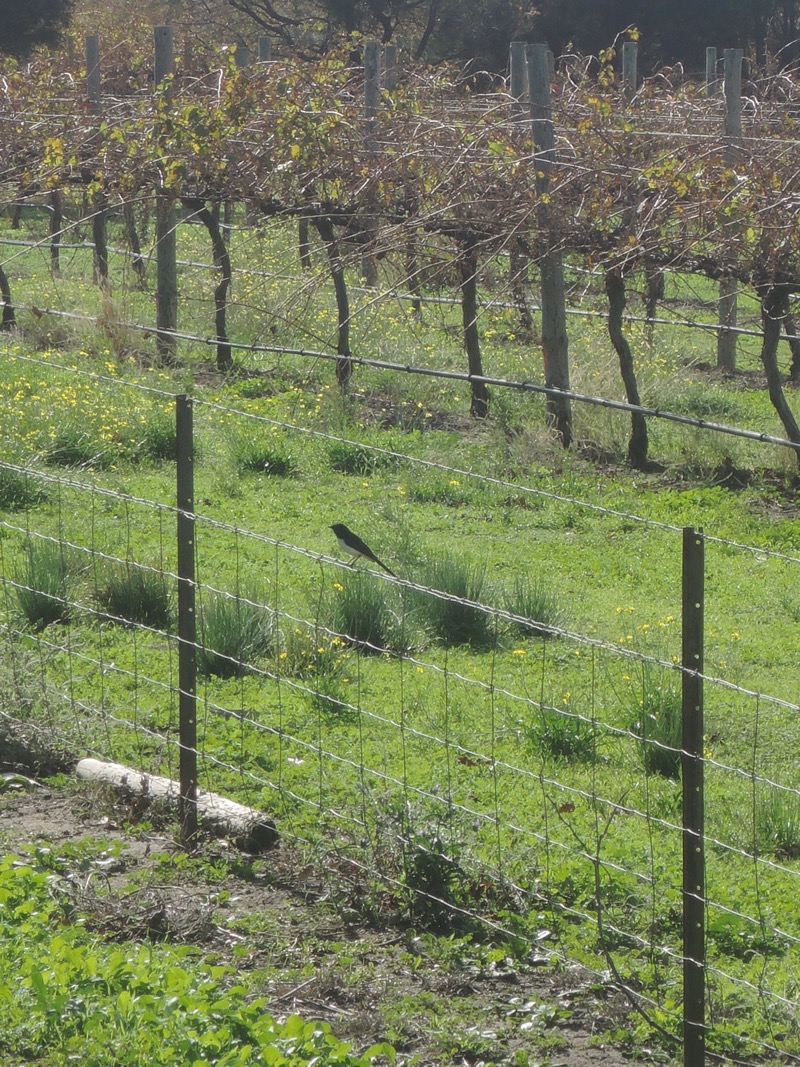
Can you see the willy wagtail perched on the wire fencing in the photograph above? It darted about as I wandered the track, zigzagging and dipping and feinting, the way willy wagtails do. There were fairy wrens on the path, too, but I didn’t manage to capture them.

Next time, maybe … ?