I see you

Other people’s words about … love

The bright lights had been switched off and the place was lit only by small windows. Then there she was — Stella — the top of her head highlighted as she looked down, reading. It never ceased to amaze him the thrill he got at seeing her. Catching her unawares.

From ‘Midwinter Break
by Bernard MacLaverty

Every time I read these words by Bernard MacLaverty, I feel my breath catch. They describe so perfectly those tiny, stolen glimpses we get of the people we love.

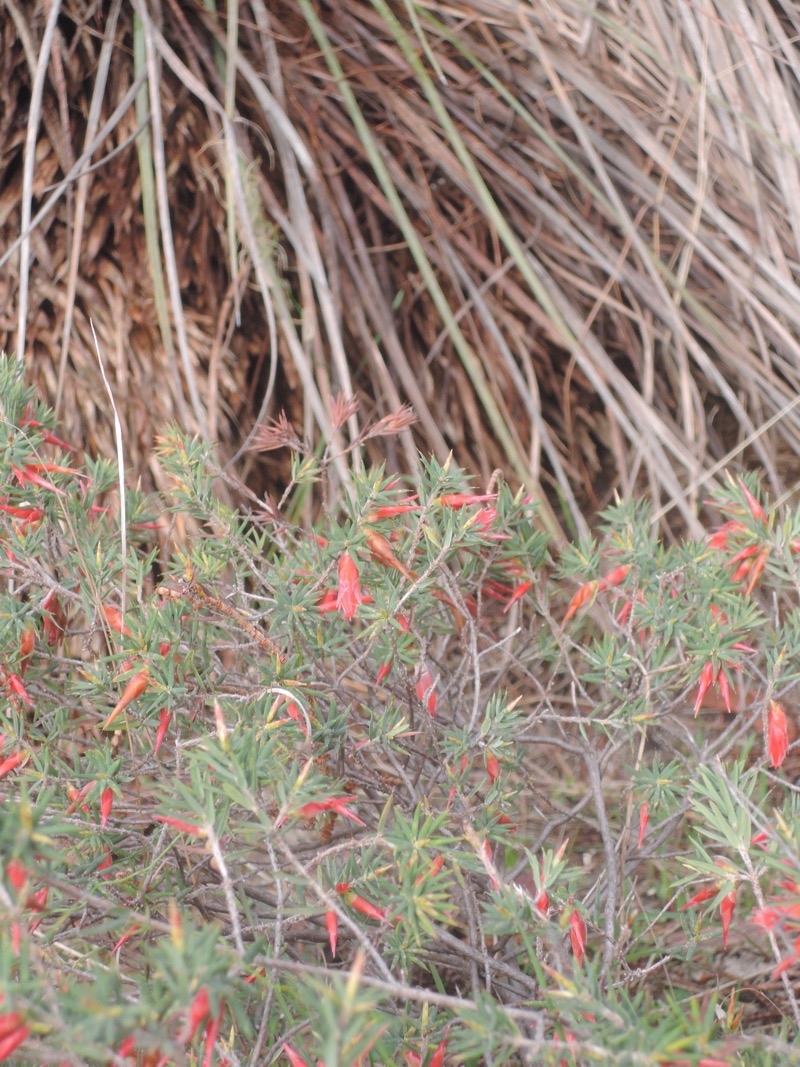
The photo accompanying this post is one I took while I was in Yorke Peninsula recently. It was very early summer: fan flower season. One evening just after sunset, as I wandered along the top of the cliffs, I came to a fork in the path where there were fan flower bushes growing at every corner.

And there, in the dim glow of the early-evening sky, the petals of the fan flowers — which in the warm, bright light of the middle of the day are a strong, cheery blue — seemed to shine for a few moments: pale, spectral, luminescent.

Perhaps my talk of fan flowers seems an odd match for the words I began this post with. But this was another one of those tiny, stolen moments we’re given in life from time to time, and it seems to me a good way to honour Bernard MacLaverty’s lovely words …

PS One other thing: a quick shout-out to my mother, who celebrates her birthday today, and who is a person responsible for many lovely moments in my life .

Ubiquitous

Other people’s words about … fatigue

My legs, when I got up to go to the toilet or kitchen, felt light and shaky, far away from the rest of me …

Even speaking was too much. My words seemed pinned to the bottom of my jaw, and came out compressed and monosyllabic. I don’t remember crying much, but there was a dampness, as if moisture were constantly seeping through my skin, and sinking. As if everything inside me had become viscous, liquid, beholden to gravity and I was draining always to the lowest point; the soles of my feet, my buttocks, my back.

from ‘Anaesthesia’
by Kate Cole-Adams

The year I turned forty, I caught glandular fever (known by my North American readers as mononucleosis). It was a pretty typical case, I think: for the next year or so, I caught colds and viruses and coughs at the drop of a hat, and meanwhile I experienced a tiredness that — like the tiredness Kate Cole-Adams describes in the passage above, in a depiction of her own experience of adult-onset glandular fever — was beyond any kind of tiredness I had ever experienced before. It wasn’t tiredness at all, really: it was lethargy, lassitude, limpness, listlessness, languor — all those ‘L’ words, combined with a clammy, vaguely feverish kind of exhaustion. My limbs felt heavy and my head felt swirly and the floor seemed spongy beneath my feet.

Though the fatigue and exhaustion eventually, two or so years down the track, dissipated, I have found that even now, years later, I still get the occasional, sudden bout of glandular-fever-type fatigue. It always happens when I’m least expecting it and lasts for a few days, sometimes a week or more. If I think about it deeply enough, I am usually able to explain it by pointing to a higher than normal level of stress in my life.

I had one of those bouts again just recently. Serendipitously, I had a few days off between shifts at work, and so I decided to spend some time away in that place I love, Aldinga. I was sapped of energy and appetite: too tired to walk on the beach or catch up with family and friends as I’d hoped; too tired, even, to write or to bake. Instead, I lay on a sofa in a pool of sun, and read, and dozed, and waited for the fatigue to pass. I knew that it would. I just didn’t know when. (Actually, I still don’t know. As I write this post, a couple of weeks down the track, I’m still experiencing fatigue and unwellness. But it will pass, as all things do.)

The first day that I felt even vaguely up to it, I went for a wander in the Aldinga Scrub. I was still very tired, and so I took the walk slowly, following the path marked out by signposts for tourists, which takes you on a small loop: first south, parallel with the coast, then east towards the hills, then back northwards and west to the starting point. (Its official name is the Coral Lichen Circuit, and you can find more out about it here.)

It was late spring: whistlers burbled (mostly) unseen in the branches. The yellow months had passed, and now it was the time for blues and purples and pinks and whites. And everywhere that I walked there were twining fringe lilies growing. As the photos in this post illustrate, I found them peeking through the leaves and branches and stalks and branches of sea box bushes, and rock ferns, and mallee pea-bushes, and muntries, and sheoaks, and grass trees, just to name a few.

They are common native flowers in South Australia, I gather — neither delicate nor rare. And yet each time I saw one on my walk that day, I felt a little thrust of joy at their very ubiquity. It was partly to do with the fact that I was able to identify them; partly to do with the fact that I’d reached a point in the ebb and flow of my own exhaustion where I felt I had enough stamina to go on another of those wanders, however gentle that wander was; and partly, simply, to do with the lovely prettiness of the lilies themselves.

Perhaps the fringe lilies were a symbol for me that day, growing and twining — despite their appearance of delicate fragility — in amongst all the other greenery. Thriving, despite everything.

Or perhaps symbols are unnecessary here. Perhaps it was enough just to see them and enjoy them exactly for what they were.

Note:
I recently found a wonderful resource for anyone who is interested in learning more about the Aldinga Scrub. It is the Flickr account of the Friends of the Aldinga Scrub, which has hundreds of wonderful photos taken in the scrub, not only capturing but also identifying the native flora, fauna and fungi. Check it out here.

Yellow

Other people’s words about … spring


After Matthew left I lost the knack of sleeping. Brighton seemed unsettled and at night it was very bright … At periodic intervals throughout the day I felt that I was drowning, and it was all I could do not to fling myself to the ground and wail like a child. These feelings of panic, which in more sober moments I knew were temporary and would soon pass, were somehow intensified by the loveliness of that April. The trees were flaring into life: first the chestnut with its upraised candles and then the elm and beech. Amid this wash of green the cherry began to flower and within days the streets were filled with a flush of blossom that clogged the drains and papered the windscreens of parked cars.

from ‘To the River
by Olivia Laing


I continue to be fascinated with the notion of seasons, and how the idea of a season is as much a cultural and traditional one as it is a quantifiable or temporal one. Here in my part of South Australia, if you were to measure the year out using temperature and climate as your basic season markers, you might say that we begin the year in January and February with dry, glaring, windy heat. In March and April the weather is often warm and dry but the wind drops off; in May and June the days grow cold, though they remain frequently sunny and still. Somewhere around July and August, the serious clouds and rain begin; in September and October there may be both storms and patchy sun; in November and December the weather is dry and warm but variable.

That, at least, would be one way to mark out the seasons where I live.

But temperature and weather are only half the picture. Plant life and animal life have their own seasons, too. In the northern hemisphere, spring is often celebrated as a season of growth and birth, much as Laing describes it so vividly in the passage above, but here in South Australia, that season of growth is far more staggered and gradual. In late July, when the temperatures are still winter-cold, the native plants begin to flower, and the birds begin to build their nests. By November, that cycle of birth and growth has already begun to slow and drop off.

And then there are the different seasonal colours. Myself, I tend to think of July and August, in my own world, as the yellow months. So many of the native plants that flower at this time of the year have yellow blossoms: acacias, guinea flowers, groundsel flowers, punty bushes, bush peas, goodenias.

Many of the plants I’ve just named were in flower on one of my latest bushwalks, as you can see in the pictures accompanying this post. Everywhere I looked, from the tops of the trees right down to the ground, there were sprinklings of yellow.

So it was a yellow walk through a yellow world. Perhaps we should call this time of year the yellow season?

Out and about: after the rain

‘When you’re walking the view shifts and changes.
Walking’s a form of hope.’

from ‘The World Without Us
by Mireille Juchau


This year, July was exceptionally dry in South Australia. Then August blew in and it has been bitterly cold, windy and rainy ever since.

There is a manic wind whipping through the treetops today … the sort of wind that’s somewhat unsettling and leaves me feeling a bit scratchy, Belinda Jeffery writes in her August 5 entry in her wonderful cookbook-cum-nature diary The Country Coobook. And I know what she means. In the middle week of August, I spent a week on holiday near the coast down south, and much of the time the squalls of rain were so frequent and unpredictable, there wasn’t much of a chance for me to get out.

Rain in the vineyards

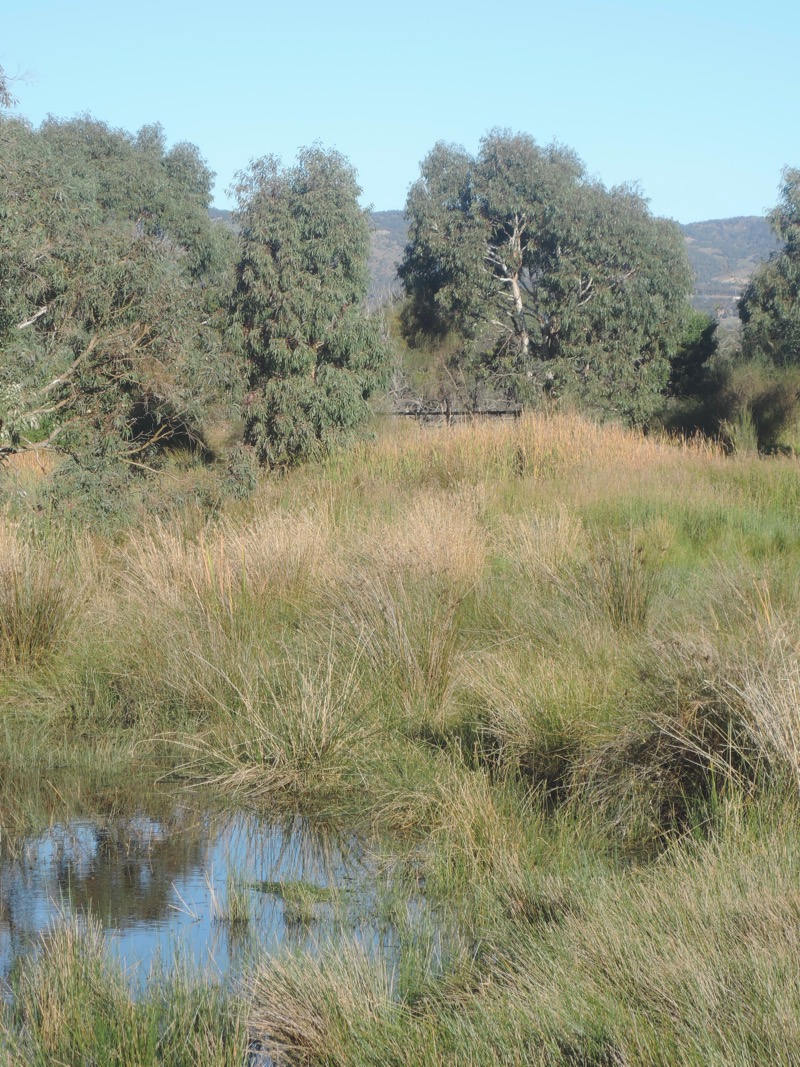
Still, one morning mid-week the sun shone between showers and I risked a walk. I headed down a path that skirted wetlands and vineyards (on one side) and bush (on the other side) and then turned south to follow the path back into the bush.

Flooded bush

The low-lying parts of the land along the trail had flooded. Beyond the reeds that bordered the flooded land, I saw trees with their trunks submerged, and waterbirds diving and swooping from branch to branch.

Submerged trunks

There was even a family of ducks.

If I crouched down to peek through the reeds, I could just see the green grassy banks rising above the flooded land, further within, beyond the path.

Is the grass always greener on the other side?

Once I’d walked far enough south, I turned west, deep into the bush, where there were no more floods, and where yellow blossom dotted the landscape (more about which in an upcoming post). But even as I walked, the sky darkened and the temperature dropped.

I made it home just before the next burst of rain …

Out and about: a new series

‘When you’re walking the view shifts and changes.
Walking’s a form of hope.’

from ‘The World Without Us
by Mireille Juchau


As I’ve mentioned before, I have two part-time jobs, which I move between each week. One of my jobs involves editing manuscripts for an academic press, while the other involves call centre work.

The job at the call centre doesn’t involve sales work; I work for a not-for-profit community health organisation. My calls are mostly from clients wondering what time their nurse is coming or needing an unscheduled visit from a nurse due to an unexpected health crisis, or from members of the public wanting to find out how to go about becoming a client. Around me, as I take call after call, my colleagues do the same. We work in a bubble of chatter and noise: phones ringing; people laughing or raising their voices for a client who’s hard of hearing; people taking complaints; the lunch lady ringing her bell as she pushes her trolley between desks to sell food to anyone who didn’t bring their own lunch with them.

During each shift, I am allotted a thirty-minute lunch break at a stipulated time (which varies depending on what time my shift starts). There is a lunch room at the end of the corridor, with a toaster and a microwave and a dishwasher, but I rarely eat my lunch there. Though I’m proud to work for the organisation — though I enjoy the work and value what we all do there — I think of those thirty minutes as my chance to escape.
And so I wander outside the office with my lunch. Our office is on the fringes of the city, and just down the road from our building is a stretch of park land that runs between the main road and the railway track. I walk there each day, and despite the hum of traffic and the rattle of trains passing, it’s a peaceful time. Swallows dive in front of me; parrots chirp; magpies sing; mynah birds chortle.

You can’t go far in thirty minutes, and I walk briskly along the path on a designated route. Still, despite my hurry, there are moments enough in which I have the chance to notice the passing of the seasons. In the cold months of the year, the grass is long and wet and the trees sway in wild, wet winds, their branches silhouetted against the grey sky. In the hot months, the grass dies off and the sun beats down between the branches, and the birds murmur amongst themselves.

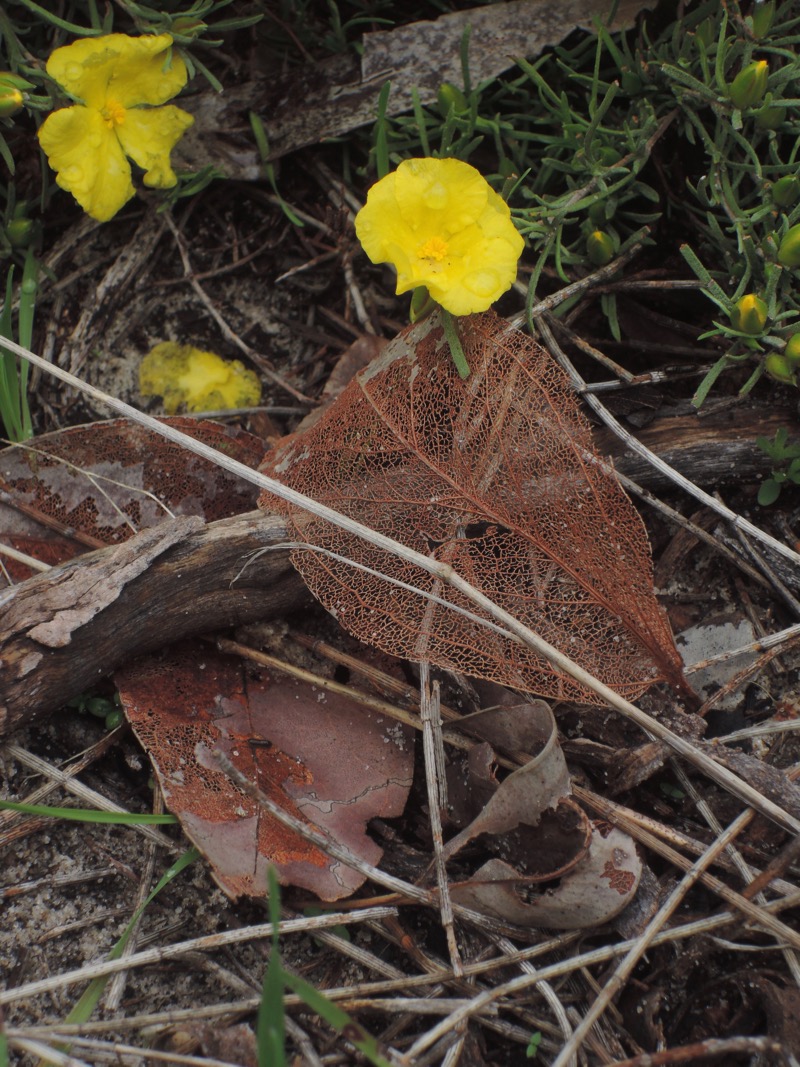
Today’s pictures come from one of those lunch breaks a couple of weeks ago: late July, early August. Officially, these months are still classified as winter, at least according to the Western calendar. I’ve heard, though, that Indigenous Australians traditionally mark the time differently, recognising more than four seasons each year — and on this walk I saw why. Despite the cold, blustery wind, and the wet grass, and the leaden clouds above me threatening squalls of rain, the native bushes along the path had begun to flower. Acacia trees were heavy with musty yellow blossom (as pictured in the top photo), and I came upon a couple of hardenbergia vines in full bloom, their vines resplendent with purple flowers (as pictured in the remaining photos).

Perhaps you recognise the words I’ve quoted at the top of this passage: I’ve quoted them before. I think the words bear repeating, here and elsewhere, which is why this is the first post in a new series on my blog — a series I’m entitling ‘Out and About’. In these posts, you’ll find pictures and thoughts that I’ve collected together after one of my frequent wanders. It’s not a new topic for my blog, really — just a new way of gathering these kinds of post together: a recognition of how much this part of my life means to me.
Walking is a form of hope. It’s also a form of joy. That’s how those lunchtime walks seem to me.

Tentacles

Other people’s words about … urbanisation

Here, town finished, and countryside began. You crossed over, from pavements and shops, towards copses and streams, and meadows full of grazing cows. The streets and the fields seemed to push at each other, the city trying to sprawl further out and the fields resisting. The planners and architects and merchants would obviously win. What force had buttercups and earthworms and cabbages against the need of human beings for dwelling places, against developers’ chances to make money? Alive as a strange creature in an aquarium, the city stretched out its tentacles, grew and swelled, gobbling the pastures and hedgerows that lay in its path. Fields were bought, and new rows of houses built, and then the process repeated.

from ‘The Walworth Beauty
by Michèle Roberts

I first started visiting and spending time in Aldinga Beach almost twenty years ago, when it was still — just, almost — a country town. Ever since then, the city has been creeping up on it. Sometimes I think the encroaching suburbs are like an oil spill, seeping down the slopes of the hills from the north, all the way into the Scrub. And so, though the rural world at Aldinga Beach is very different from the nineteenth-century English one Michèle Roberts describes in the passage above, still her words seem apposite.

But the Scrub is still alive and I still make time to go there on days off, and whenever I’m wandering there, I feel hope. I took the pictures in today’s post one morning in late July. Though the sky was grey and the temperature was chilly, the first breath of spring had wafted over the Scrub, as I hope you’ll see below.

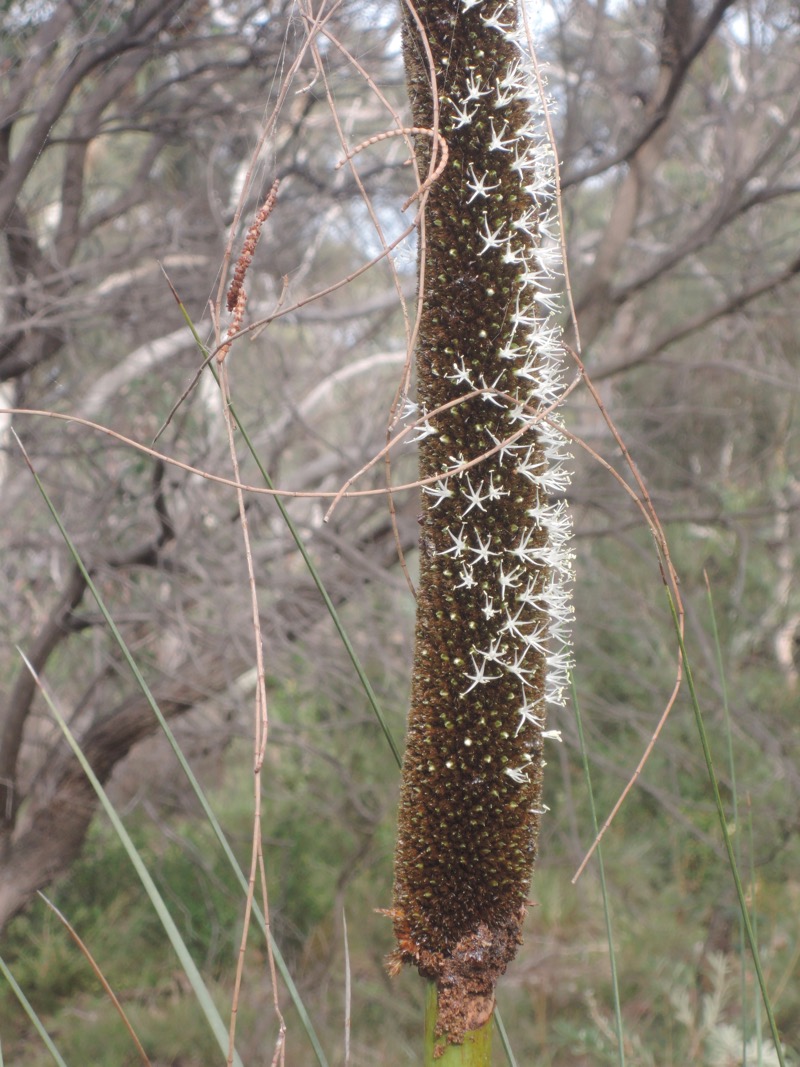
In flower that morning were flame heath bushes …

… and …

… grass trees.

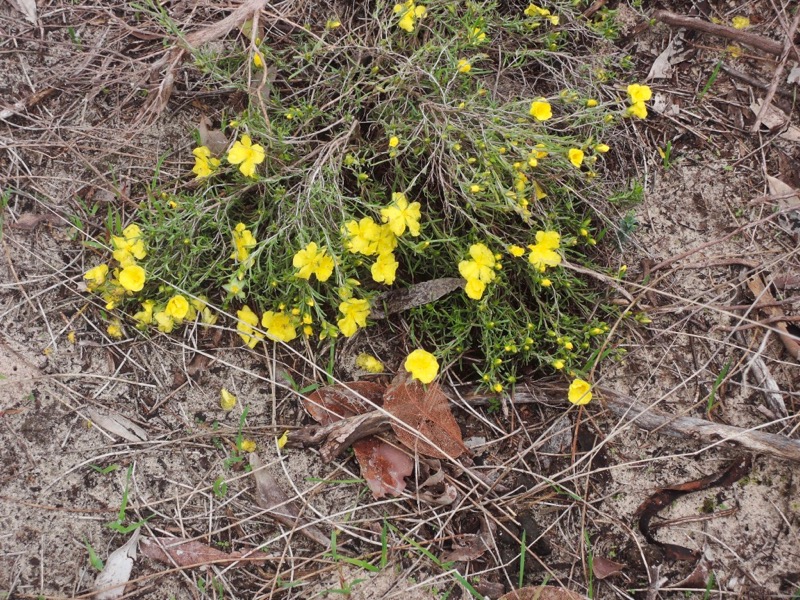
I saw the first shy showing …

… of guinea flowers:

There were green shoots everywhere …

… after the recent rains.

And there were other plants budding, too. Like this:

And this:

And this:

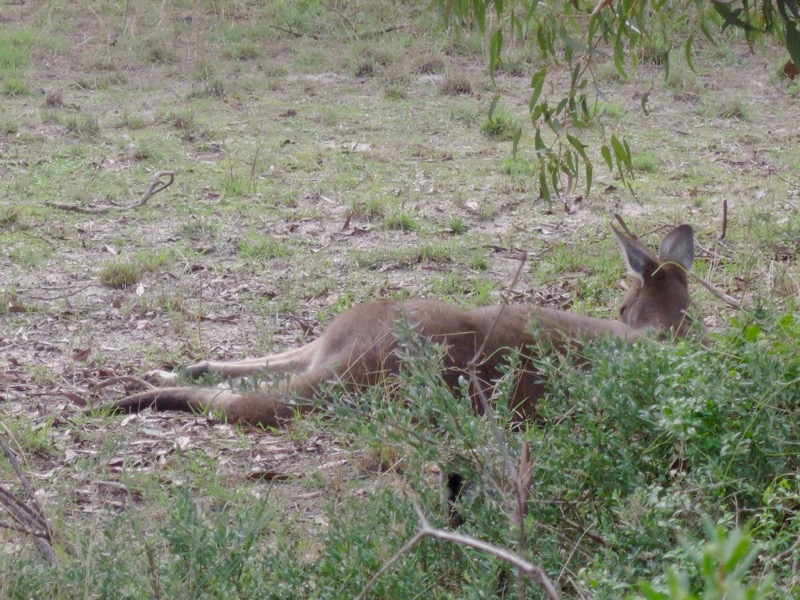
In the southwest corner of the Scrub, where the land slopes down towards the coast, the kangaroos were snoozing …

… although they weren’t best pleased when I disturbed them:

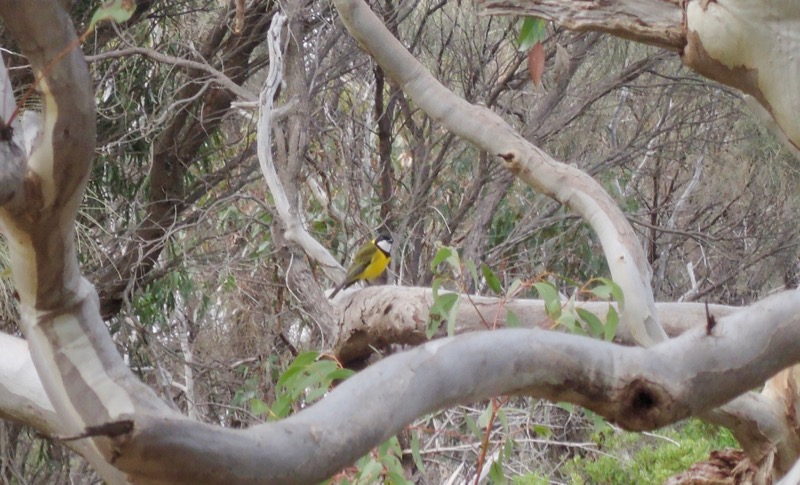
Further on, I caught a flash of gold from the corner of my eye. It was a golden whistler darting about the branches of a tree beside the sandy path.

Whistlers don’t sing at this time of the year, but their plumage is as glorious as ever (though unfortunately faintly blurred in my photos):

So, yes, the tentacles of the city are reaching out in South Australia.

But still, the last remnants of the pre-urbanised world like Aldinga Scrub live on.

Snatched phrases on … the bush

‘The bush flex[ed] its great, porous hide as we moved,
tiny and blissfully unimportant,
between its bristles.’

From ‘Hope Farm
by Peggy Frew

I’ve been out and about a lot again recently, on foot and on my bike. The photos in today’s post are from a stroll down south a few weeks ago, on one of the last days of June, before the winter rains began — finally, belatedly — to fall.

On this particular walk, I passed through an area where the bushland borders some new housing developments. Before those houses were built, the land had already been denuded of its natural vegetation: it was farmland for years, and then, when the land was sold off, it grew into bare, grassy paddocks.

And yet.

Despite the impact that humans have had on that land, still, as I walked over it, I swear I got a hint of Peggy Frew’s great, porous hide beneath my feet …

Leafless

Other people’s words about … winter light

The sun was like a moon in this country, and in its light I felt as if I was looking at everything through a pearl. It was cold and the trees had no leaves. I had never seen a leafless tree before.

from ‘Sleeping on Jupiter
by Anuradha Roy

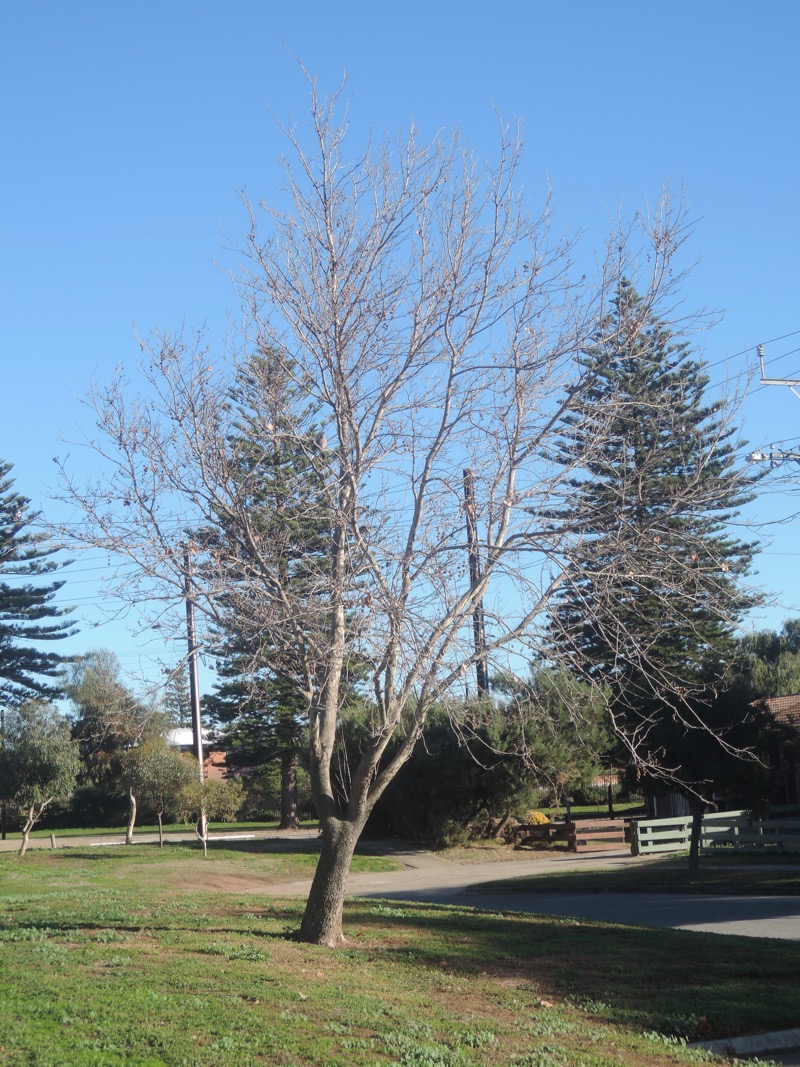
I love this description by Anuradha Roy of a Northern Hemisphere winter, as seen through the eyes of a young Indian woman accustomed to living in the tropics. I remember feeling the same way myself when I left Australia in my twenties to travel through Britain, Europe and North America (and, later, elsewhere). For a year I lived and worked in Germany, as I’ve mentioned once before, in a small industrial town in Nordrhein-Westfalen, not far from Dortmund and Dusseldorf. To begin with, from November through to April, before my German was fluent enough for me to find another job, I worked in a factory.

Leafless tree on Gedville Street,
between the coast and the railway station

During those winter months in Germany, I rose each day just before six o’clock and walked through the dark streets of town to the station, where I caught a train and then a bus to the factory district. My shift started at around seven-thirty, but daylight didn’t filter through the glass panels of the workshop ceiling until well after nine-thirty. I left work at four o’clock — first back on the bus and then onto the train; then back on foot through the streets towards the fourth-floor apartment I shared with a German friend. By the time I reached the door that led from the street of our apartment building into the stairwell, the sky had darkened again.

I thought, as I shuttled from home to railway station to bus to factory and then back in reverse, that I might never see broad daylight again.

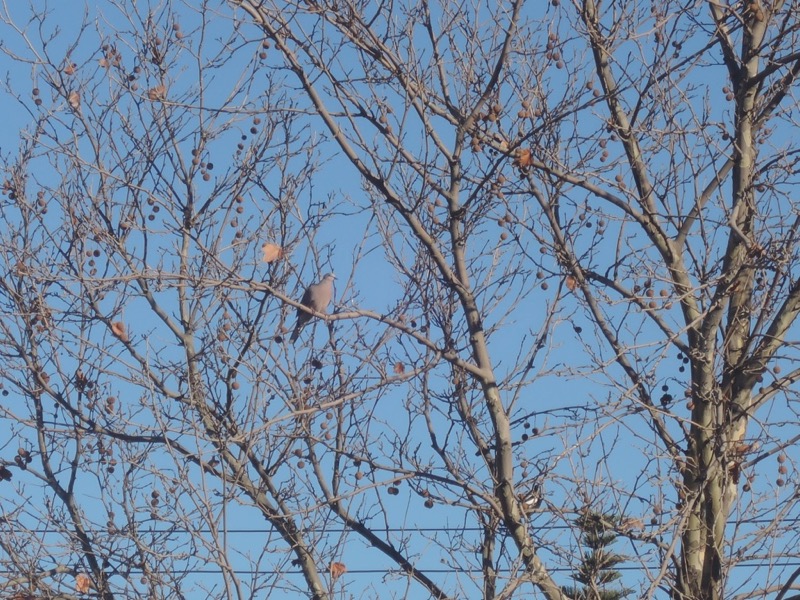
Dove in leafless tree

The trees that lined the street on which I lived during those months were European trees, native to the area, and so they were deciduous. Their leafless, bare branches formed stark silhouettes against the grey apartment buildings and the grey, clouded sky. It didn’t snow, but even in the few hours of daylight we were granted, the sun stayed hidden, a faded white ball in that streak of grey sky. Everything seemed cold and grey. I, too, felt cold and grey.

Leafless tree leaning into a house near Largs Bay School

Though Australia does have a few native deciduous trees, most native vegetation is evergreen. And so, even though the winters here in South Australia can at times feel very grey, most leafless trees — like the ones I photographed to accompany today’s post, all of which grow in the neighbourhood where I live — are imports from countries like Germany: cousins of those trees that lined the streets of the town where I worked all those years ago.

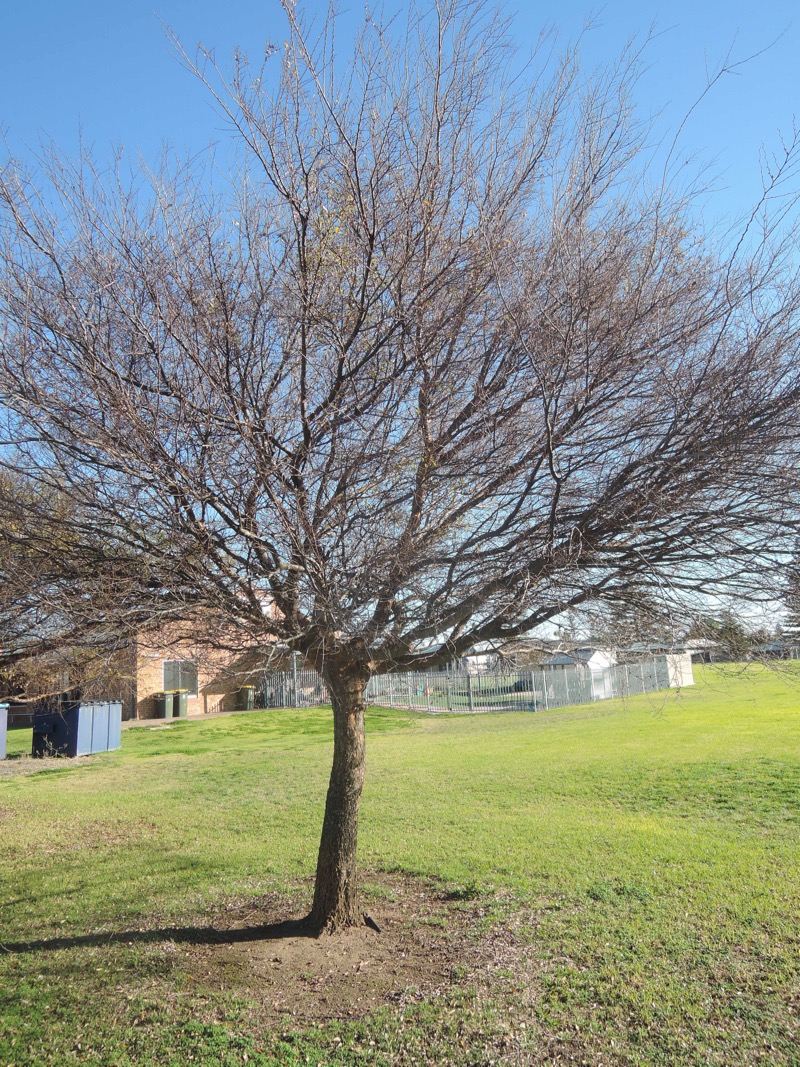
Leafless tree on the school oval
on Gedville Street

I’m a home-body these days. I love the Australian sun. I love the wide arch of sky and the shifting, glittering, restless ocean. I love the grey-green leaves of eucalypts, the drooping pods of acacia trees, the red bristles of bottlebrush flowers, the golden needles of the sheoaks. I couldn’t live anywhere else now. This is home to me.

Travelling brought me a lot of joy, though, and it taught me things I could never have learned if I’d stayed at home. My love for this place is a part of what my travels taught me, I think. Those bare-branched trees were a gift. They led me back home.

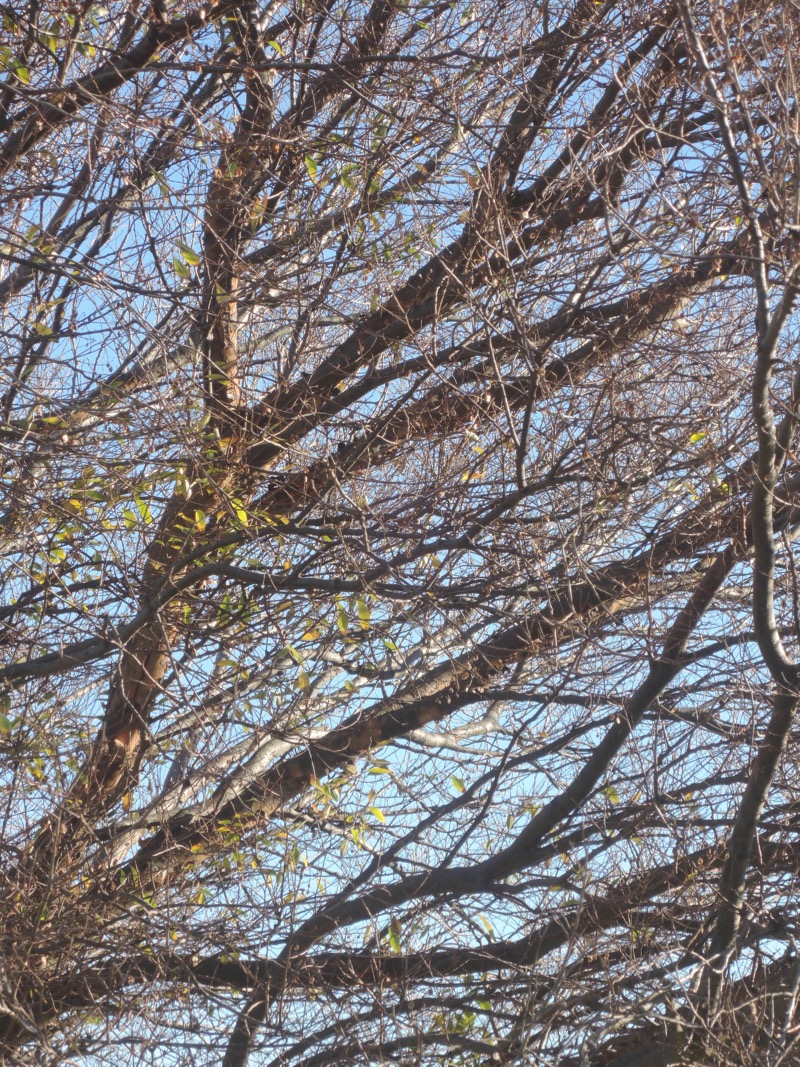
Even leafless trees don’t seem leafless here
when you look at them closely!

Snatched phrases on … the weather

‘Someone once told me it was bad blogging and boring writing
to wax lyrical about the weather but I can’t help it.
And I am not sorry.’

from Ruby and Cake blog,
this
post

Well, as you may have guessed by now, I’m with Ruby on this. I love waxing lyrical about the weather, and have been doing so, on and off, ever since I began writing this blog, back in April 2014.

And when I’m not waxing lyrical about the weather, I’m taking photographs in celebration of it instead. So, to continue the weather celebrations, here are some photos from one of my latest saunters out and about.

This particular jaunt took place in early June, a time of year when we expect rain and clouds and wind here in South Australia. But, as I’ve mentioned several times before recently, in my usual waxing-lyrical-about-the-weather mode, that’s not the weather we’ve had at all this June. This day was just one of a number lately that began cold, crisp and clear, and progressed into soft, still sunniness.

If I were to say anything more here about how clear and true the sun shone as I wandered through the wetlands that day, or about how the sunshine filled me with joy, I’d be venturing into waxing-purple territory. (That, I believe, is the stage that follows the waxing-lyrical stage.) So I’ll leave you to enjoy these photos without further ado.

Although PS Like Ruby, as far as talking about the weather goes, I’m. Just. Not. Sorry.

Out and about … but still reading!

I don’t have a quote for you today: just a link to a post by the lovely Sophie of Wholehearted Eats, whose healthy-cooking blog I often drop in and read. In her post, Sophie, someone who has experienced anxiety all her life, suggests creating an anxiety toolbox — a kit you can (metaphorically) carry around with you at all times, full of techniques and strategies you can use when and if you need to. I’ve often toyed with the idea of sharing some of the techniques that I’ve learned over the years to cope with anxiety, she writes, but never got around to it.

Till now, that is.

Vineyards

Head on over and see what you think. Perhaps you, like me, will find some of Sophie’s techniques helpful.

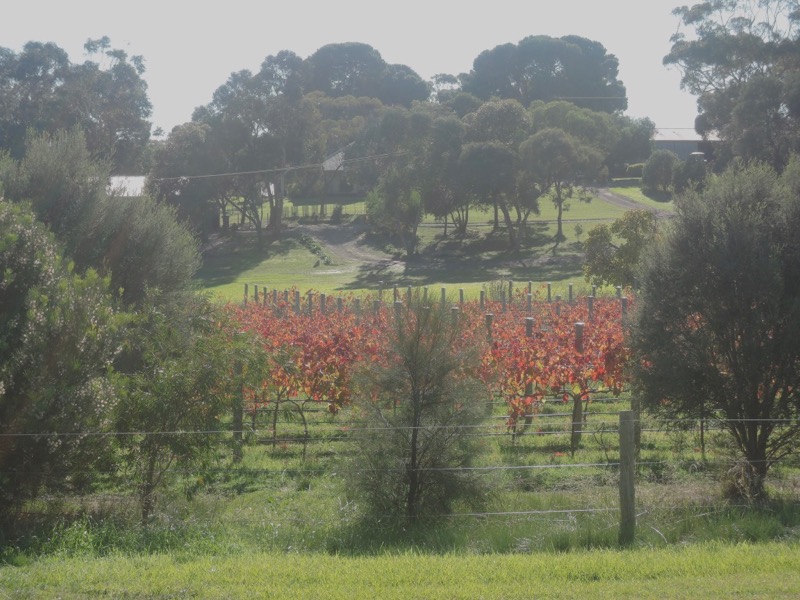
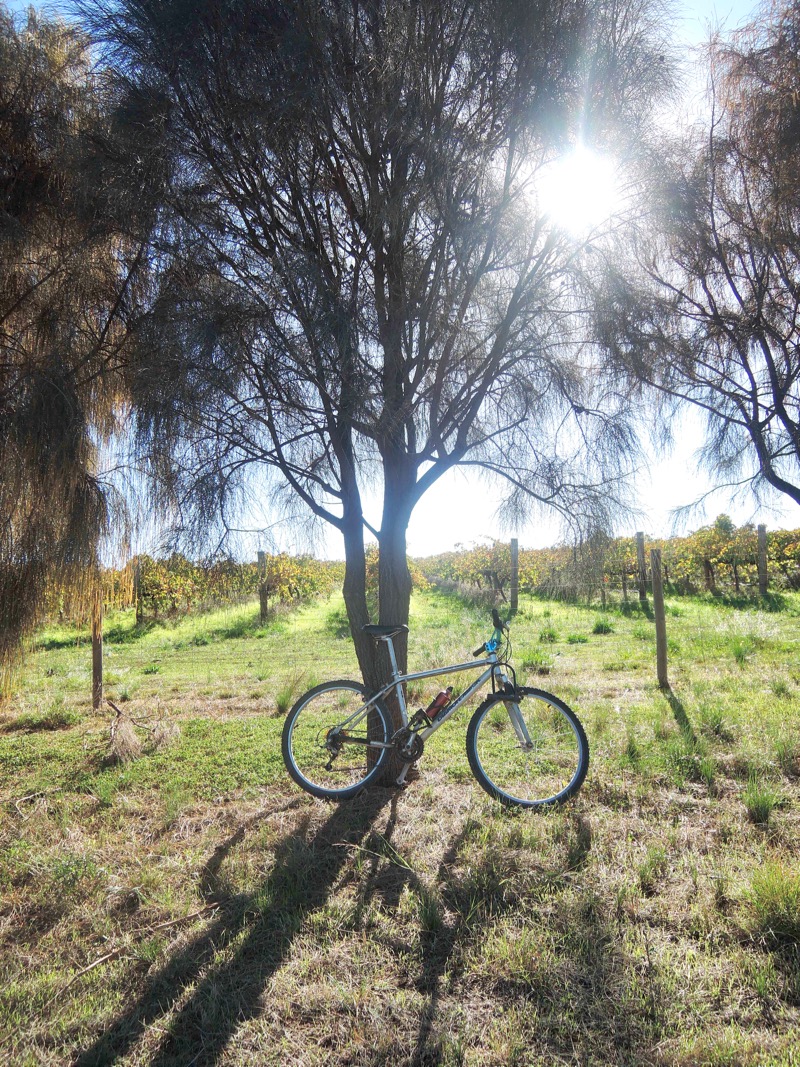
Meanwhile, as for me, I’ve been out and about a lot on my bike recently, exercise being one of the greatest feel-good strategies I know and keep in my own toolbox. The gorgeous sunny weather we’ve been having this autumn and winter has added to the joy I’ve felt getting on my bike.

Eucalypt and vines
The different shades of autumn

The photos in today’s post all come from one of my recent bike rides. It was a still, sunny day, and every moment of that ride was uplifting.

At the top of the hill
Sheoaks in golden bloom, vineyards and … my bike (of course)

I hope these photos leave you feeling uplifted, too.