The big ‘I’

Other people’s words about … the view

Sit. Quietly. Turn your awareness to your heart space.

Now imagine you’re sitting on a small wooden bench with yourself. Imagine you’re doing so in that space in the centre of your chest. There you are, sitting to your right, the little nattering humanoid that you are, berating yourself for eating too much at lunch and debating whether to hang the washing out or not. This little nattering self is your little ‘i’. You (the big ‘I’) can watch it all. Yep, there you are, sitting quietly, looking out at a view, over treetops down to an ocean. On your little bench. Together. You’re just hanging, nowhere to go, nothing to do. The two of you …

From ‘First, We Make the Beast Beautiful
by Sarah wilson

It was my friend and fellow blogger, Anne, who first alerted me to the appeal of benches — I mean, real benches, in real life. In her ‘Bench Series‘, she posts photos of benches that she’s snapped from all over the world. I’d never really looked at benches before, except as convenient things to sit on while I rested and took a moment to enjoy the view before me. Now I find myself noticing them (and photographing them) all the time.

The kind of bench Sarah Wilson describes in the passage I’ve quoted above, though, is a metaphorical bench, one that you can only find within yourself. It’s a place where you can sit while you encounter, and learn to accommodate, your two selves: the busy, superficial, language-oriented self that churns out thoughts night and day, and the deeper, quieter, wordless self that lies beneath all the nagging chatter.

The idea of the two selves isn’t unique to Wilson. It’s an idea common to many systems of thought, one we’ve all become more familiar with since the recent popularisation of mindfulness-based practices and therapies. But I particularly like the way she uses the image of sitting on a bench to explain it. It’s a simple, vivid, accessible reminder of how easy it is to get caught up in (and believe) your own thoughts.

A thought, after all, is only that: a thought. It may be true; it may not. Thoughts and the truth exist independently of each other. When I first came across this idea (here), it seemed both counterintuitive and revolutionary to me. I’m still grappling with it.

Wilson again:

And then it might occur to you that your little mate ‘i’ is just that — a little mate sitting next to you. And that this Big ‘I’ is who you really are. It feels deep and close and yet so vast.

Okay, I’ll admit I winced, at first, when I read these words. First, I’m not sure that the quieter self (the one Wilson calls the Big ‘I’) is deep or close or vast — or, indeed, in any way somehow ‘better’ than any other part of our self. I think that it just is.

Second, I was troubled by her use of the phrase little mate both to describe the thinking self, and to distinguish that self from the non-thinking self. I found the phrase overly colloquial, like some kind of condescending attempt to make a difficult concept more user-friendly to her less educated readers. But I have slowly come to feel the opposite way about her wording. The word mate implies friendship: it implies love, acceptance, forgiveness. Also fun. That’s helpful, I think. Why vilify a part of yourself, when you can instead smile and make friends with it?

Wilson uses meditation to find her bench. As you know, I don’t. But I don’t think that matters. What matters is that you know the bench exists — and that you know how to find it, however you get there.

And whether or not your prefer your benches real or whether you prefer them metaphorical, I wish you many sun-dappled, peaceful benches of your own in your life, wherever you happen to be.

Of love and tomatoes

Other people’s words about … tomato sandwiches

I’d asked [my disabled friend] Jessie when a doctor had last looked at her. She couldn’t remember, so [while Jessie was staying with me] I went to my doctor, still Jock Ledingham’s wife, Una, at her practice, which was in their home in Ladbroke Square.

Una listened to me kindly, and then asked if anyone was nursing her. ‘Only me.’ There was an awkward pause, and then I added, hardly audible, ‘And I’m afraid I’m very bad at it.’ Lack of food and sleep made me start crying again.

‘I’m going to make you a tomato sandwich,’ she said. ‘All my family can manage a tomato sandwich whatever they are feeling like.’ She did, and I ate it, and felt much better.

from ‘Slipstream: A Memoir
by Elizabeth Jane Howard (p. 147)

When I was a child, my mother would sometimes make my sister and me tomato rolls for dinner instead of our usual cooked meal. This was a summertime-only ritual — she saved it for those evenings when the air was thick and heavy with heat. My sister and I would have spent the day dipping in and out of the swimming pool, so that our skin and hair reeked of chlorine. We’d come inside and stretch out on the carpet in the living-room at the front of our house, next to an electric fan. We’d read, or watch the cricket on television, or play Lego, or colour in, while the fan blew warm air over us and our hair dripped down our backs, forming great wet circles on our t-shirts. And then, at last, it was dinnertime.

dscn3129

My mother made her tomato rolls with white bread — the kind that is crusty on the outside and fluffy on the inside. She cut the rolls lengthwise in thirds rather than in halves, and then spread each layer thickly with butter. Over the butter she laid slices of tomato. Then, as a last touch, she seasoned the tomato with salt. (Never pepper. Children hate pepper.)

These were the days before Australians of Anglosaxon heritage knew about things like basil or coriander, ricotta or feta. We had never eaten avocado or garlic or extra virgin olive oil. We didn’t know of the existence of focaccia bread or ciabatta or sourdough. Most people ate margarine in preference to butter, thinking it was a healthier option. And we ate salt with everything — we lived in a hot climate, after all; we needed to replace the salt we’d sweated out during the day. So a tomato roll was just what it sounded like: a tomato roll. Nothing more, nothing less.

dscn3131

dscn3135

It’s almost forty years since I ate one of my mother’s tomato rolls, and yet when I read Elizabeth Jane Howard’s words above about the curative powers of a tomato sandwich, I was instantly transported back to those simple summer meals my mother made us.

Bread. Butter. Tomatoes. Salt. I still think of this particular combination of food as the ultimate luxury, the greatest treat.

And as a symbol of my mother’s love.

dscn3132


Snatched phrases (on the sea)

‘[I] stare at the water.
It’s shot with moon, silver leaking all over the surface.’

from ‘Words in Deep Blue
by Cath Crowley

Okay, so I don’t have any photos of the sea in moonlight, because I have as yet to figure out night-time photography.

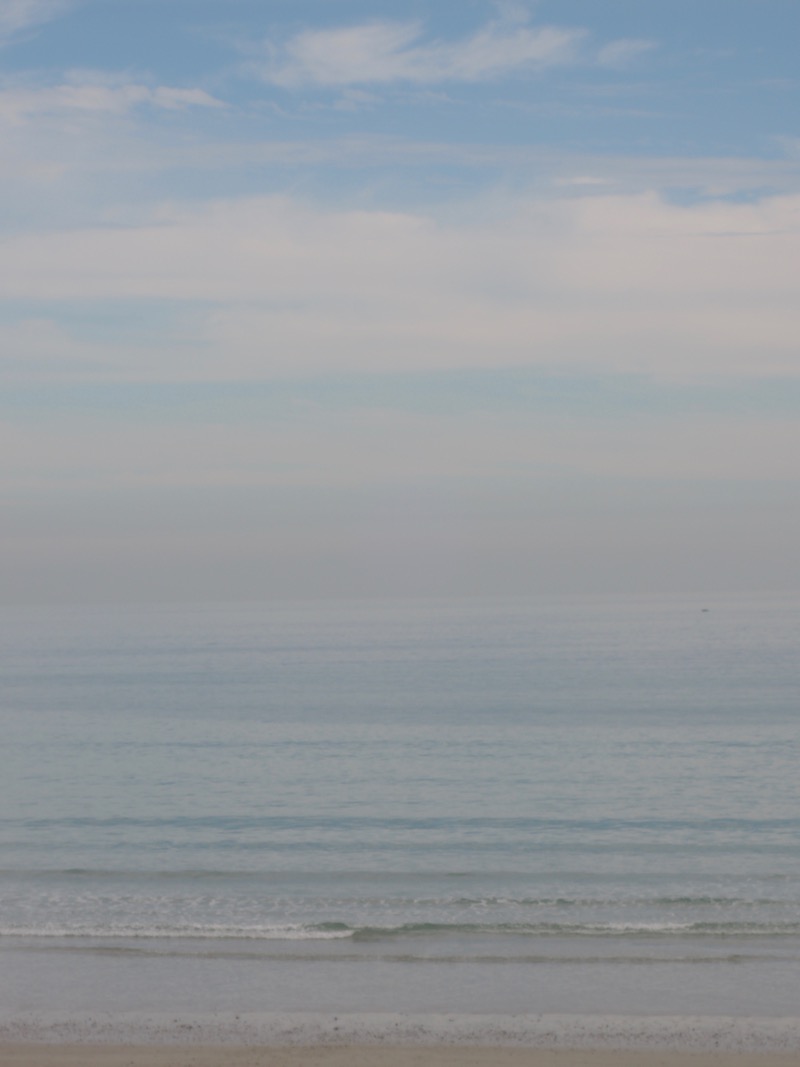
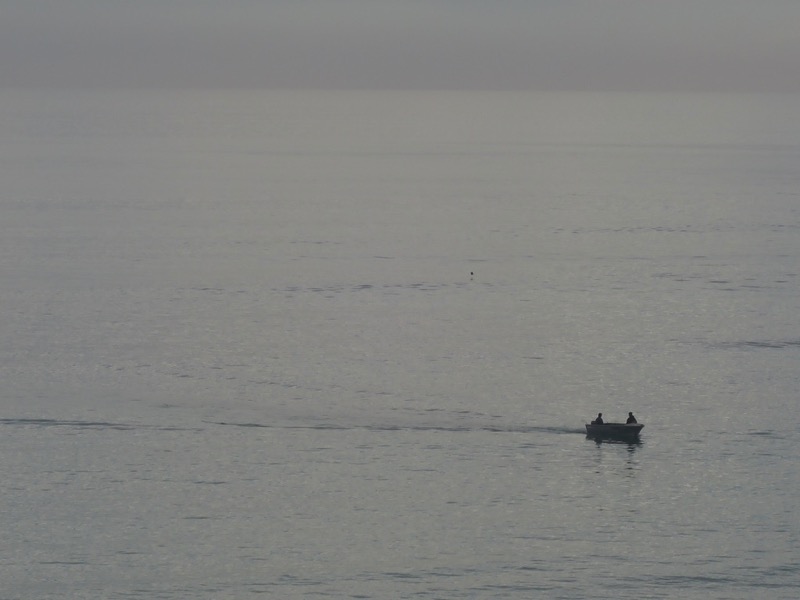
But the words above reminded me of one of the things I love about the sea, and one of the reasons I so frequently post other people’s words about it, accompanied by my own photos: I love how the sea changes colour, depending on the season, the temperature, the weather, the time of day, the tide. The colours you see below — blue, green, pewter, turquoise, gold, silver — are just some of the many colours of the sea.

You may recognise some of these photos from earlier posts on this blog. Forgive the repetitiveness. That is one of the things about the ocean, I think: the wonder it instils in you, each time you see it, each time you visit it. It repeats itself, over and over.

Snatched phrases (on hope)

‘It’s maybe why her mother took to walking, Tess thinks  as she clambers through thickets of ash, brown kurrajong, weeping fig.
When you’re walking the view shifts and changes.
Walking’s a form of hope.’

from ‘The World Without Us
by Mireille Juchau

When you're walking ...
When you’re walking …
... the view shifts and changes.
… the view shifts and changes.
Walking's a form of hope.
Walking’s a form of hope.

The list maker

Other people’s words about … wildflowers

It was the top of the morning, the very cream, and I skimmed it off and crouched in the cornfield, gulping it down … The field ended in a double ditch, and from it grew a mass of flowers in a profusion of colours and forms, such as is seen trimming the edges of medieval manuscripts. Black medick, I counted, buttercup, horsetail, ribwort plantain, hedge woundwort, must mallow and curled dock, the clustered seeds a rusty brown. Wild rose, dandelion, the red and white dead nettle, blackberry, smooth hawksbeard and purple-crowned knapweed. Interspersed with these were smaller, more delicate flowers: cut-leaved cranesbill, birdsfoot trefoil, slender speedwell, St John’s wort, heath bedstraw, tufted vetch and, weaving in and out of the rest, field bindweed, its flowers striped cups of sherbet-pink and white. The stem of the knapweed was covered in black fly, and a spider trap shaped like a dodecahedron had annexed a few pale purple flowers of vetch inside swathes of tight-woven web.

from ‘To the River
by Olivia Laing

I have quoted from Olivia Laing before, I know. Still, one day a week or so ago as I went for a bushwalk, I couldn’t help thinking again of To the River. In particular, my thoughts kept returning to the passage I’ve quoted above. We’ve had an extraordinarily wet, windy spring here in South Australia this year — a spring that’s left me craving our usual harsh, dry, crackling heat. But the ‘up’ side to the lower temperatures and higher rainfall has been the abundance of wildflowers.

That day, as I strolled along the path, it felt to me as though I was walking on a carpet of flowers. Whistlers burbled in the trees above me — I spied both golden whistlers and rufous whistlers — and wattlebirds clucked, and magpies warbled, and I am sure I heard the call of a curlew or a godwit, though I really don’t know whether that’s possible in the part of the world through which I was walking.

Meanwhile, the rug of flowers went on spreading out before me.


As I walked, I found myself doing exactly what Laing does in the passage above: counting the flowers. I saw each flower; I named it; I knew it. I made my list as Laing made hers, and though we live in different hemispheres, and our lists are very different, I suspect that the joy I felt in making my list was somewhat akin to hers.


If I was an artist or a calligrapher — if I was a mediaeval scribe — I would decorate the edges of this post with the flowers I saw that day, in reference to the illuminated manuscripts Laing mentions above. But I am none of those things, so my photos will have to suffice. (As usual, hover your cursor over the photos to see the name of each flower — or my attempt, at least, to identify and name each one. Part of the pleasure in list-making is the knowledge that some of the names on the list might be wrong. I learn as I go.)

Perhaps you might like to think of these photos as a kind of pictorial version of the list I made that day, or as evidence of the carpeted path I trod, or as a simple expression of my joy.

They’re all of those things to me.

A shock of pleasure

Other people’s words about … the sea

The narrow trail I had been following came to an end as it rose to meet the old grey asphalt road that runs up to the missile guidance station. Stepping from path to road means stepping up to see the whole expanse of the ocean, spreading uninterrupted to Japan. The same shock of pleasure comes every time I cross this boundary to discover the ocean again, an ocean shining like beaten silver on the brightest days, green on the overcast ones, brown with the muddy runoff of the streams and rivers washing far out to sea during winter floods, an opalescent mottling of blues on days of scattered clouds, only invisible on the foggiest of days, when the salt smell alone announces the change. This day the sea was a solid blue running toward an indistinct horizon where white mist blurred the transition to cloudless sky.

from ‘Wanderlust
by Rebecca Solnit

Rebecca Solnit’s words remind me of my own jaunts to and from the sea. So, no more words from me today — just a gallery of pictures I’ve taken over my own years of oceanside ramblings. You’ll recognise many of these pictures from earlier posts, no doubt, but collected here they convey, I hope, the many moods of the sea.

(Hover over the pictures to see their connection to the words above.)


Snatched phrases (on books)

‘A book is a heart that only beats in the chest of another.’

from ‘The Faraway Nearby
by Rebecca Solnit

Sometimes, when I’m reading, a small phrase or a sentence will catch my eye, hidden away in the middle of the paragraph, or at the bottom of a page. Perhaps the words in that phrase snag my attention because they are beautiful; or perhaps the thought behind the phrase is beautiful — complex and lingering — despite the simplicity of the actual words.

I write these phrases down in a notebook and treasure them, as you might a necklace your mother gave you when you were a young woman, or a china teacup that once belonged to your grandmother. Sometimes, when I’m writing them down, the word ‘stolen’ creeps into my mind: there is something about the act of recording them which makes me feel I have snatched them from their creator and reappropriated them as mine, storing them inside my heart.

Snatched phrases: today’s post, quoting Rebecca Solnit’s beautiful words about books, is the first in an occasional series here with this theme. However you think of these words, whatever your definition of the word ‘stolen’, they are yours now, too. Writers write for others, after all; writing is about the transmission of words and ideas from a writer to his or her readers — readers like you and me.

And they are not really stolen at all, these words. It feels that way at first, because they are so precious and so beautiful. But in fact, it is the other way around: the words have stolen our hearts. To read is to be captured, over and over again. I can think of no better form of thievery.