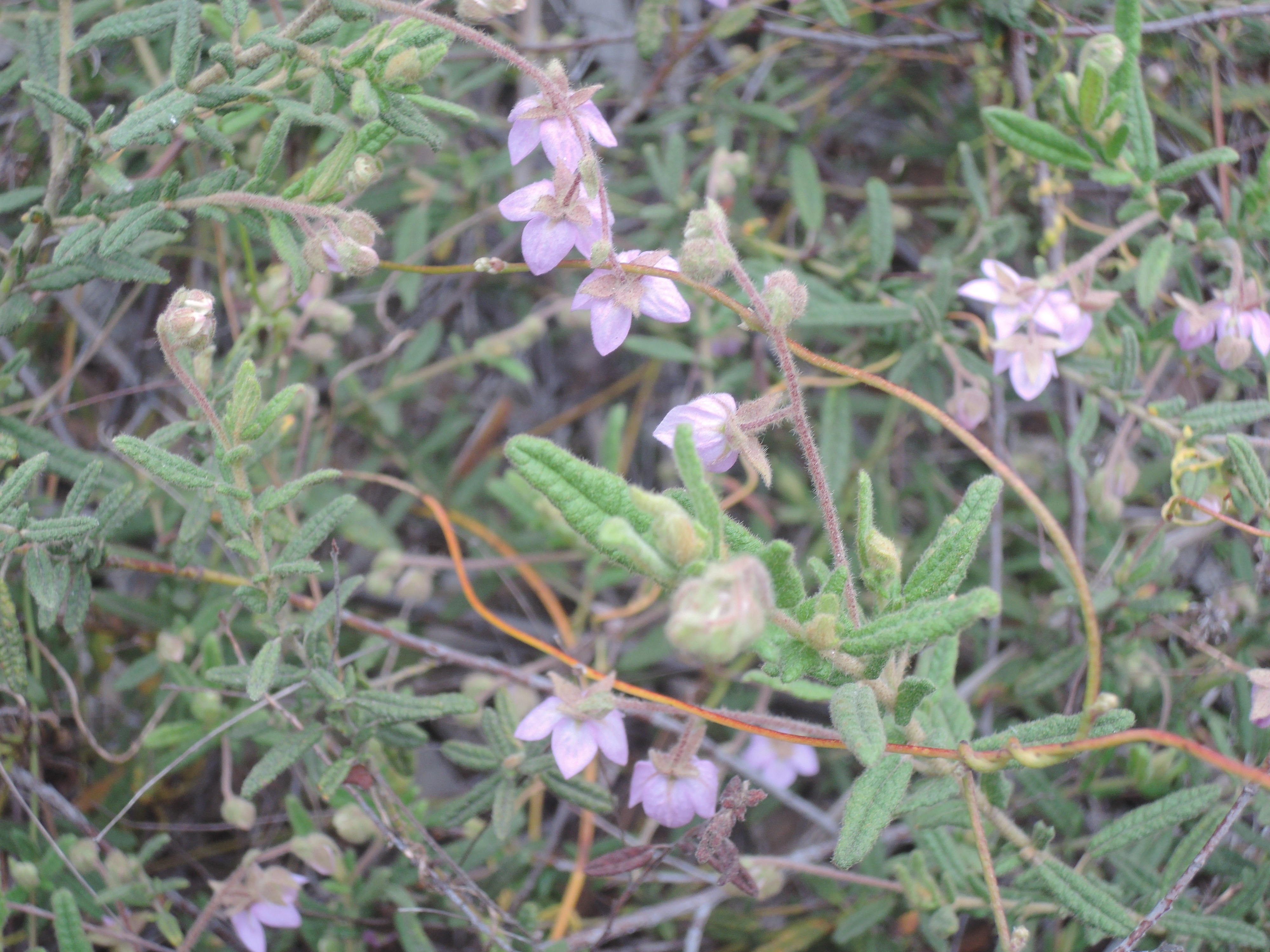
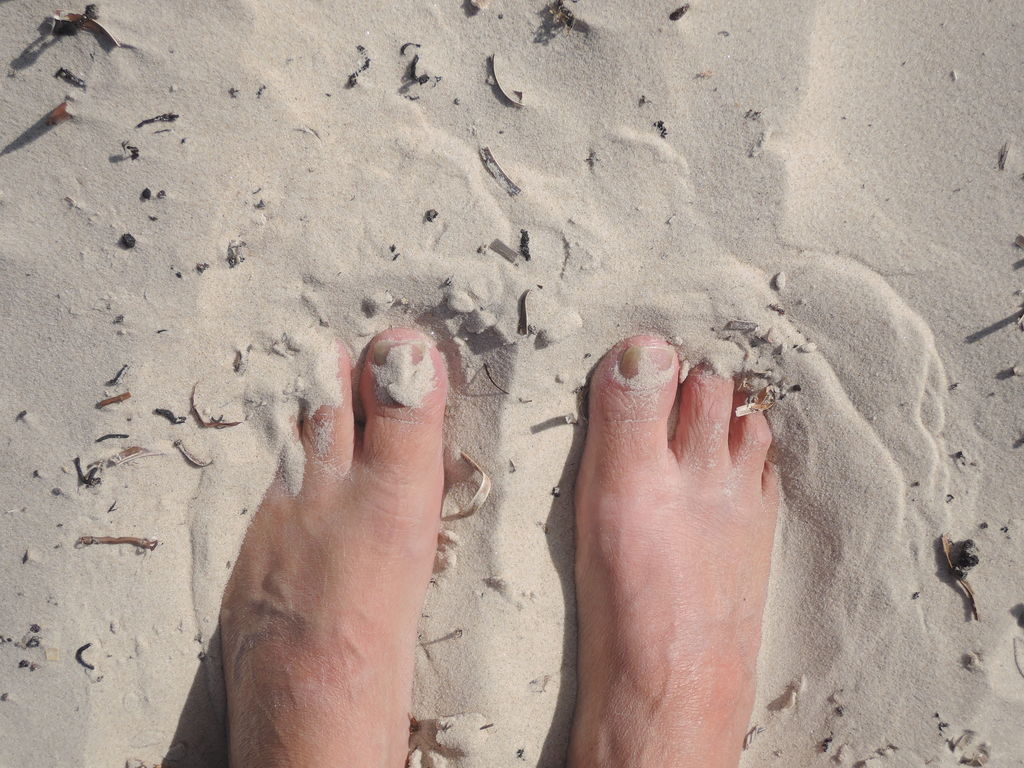
Meadowlands

Other people’s words on … wandering

Musing takes place in a kind of meadowlands of the imagination, a part of the imagination that has not yet been plowed, developed, or put to any immediately practical use. Environmentalists are always arguing that those butterflies, those grasslands, those watershed woodlands, have an utterly necessary function in the grand scheme of things, even if they don’t produce a market crop. The same is true of the meadowlands of imagination; time spent there is not work time, yet without that time the mind becomes sterile, dull, domesticated. The fight for free space — for wilderness and public space — must be accompanied by a fight for free time to spend wandering in that space. Otherwise the individual imagination will be bulldozed over for the chain-store outlets of consumer appetite, true-crime titillations, and celebrity crises.

from ‘Wanderlust
by Rebecca Solnit

Most of you would know by now that one of the greatest pleasures in my life is wandering: along the beach, through the bush. We read a great deal these days about the value of high-intensity exercise (the dreaded HIIT), and though I understand the principle — short bursts of intense exercise, in order to get your heart going — I find the practice intimidating and somewhat soulless. I’m not interested in exercising purely to become ‘fit’, or to ‘get healthy’, or to try to do something epic.

What I’m interested in is wellbeing — a concept that includes mental, emotional and spiritual aspects as well as the more obvious physical ones.

That’s why I like to wander. Wandering, for me, can be a slow stroll through the bush, or it can be a steady march along the shore. Hopping on my bike and riding places — that’s a form of wandering, too. It’s about breathing in fresh air, moving through beautiful surroundings, looking around, and — yes — musing. As Solnit points out, it’s about being unfettered in time as well as space. Musing takes place in a kind of meadowlands of the imagination, she says.

Oh, yes.

So today’s round-up of photos comes from another one of my recent wanders in the bush, back at the end of April. It was a dull, still day, and not many of the plants along the trail were in flower. The bush seemed stripped of bright colour: it was all earthy greens and sandy browns. The birdsong was muted, too — the whistlers don’t call much at this time of year in South Australia; the shrike thrush songs are shorter and softer than in the warmer months. A crow croaked and muttered in the distance, and I heard snatches of broken magpie song.

But then I noticed the banksia trees, which were all in flower. I hadn’t seen them at first because I’d stepped in from a louder, brighter world beyond the trail, a world of fences and bitumen streets and painted houses. Banksia leaves are a dark, khaki green, and the flowers blend in with the surrounding vegetation, varying in colour from pale yellow, through light green, to drab brown. Their beauty is as muted as the birdsong I described above, and in order not to miss it — in order to appreciate it — you have to be willing to slow down. To stop. To muse.
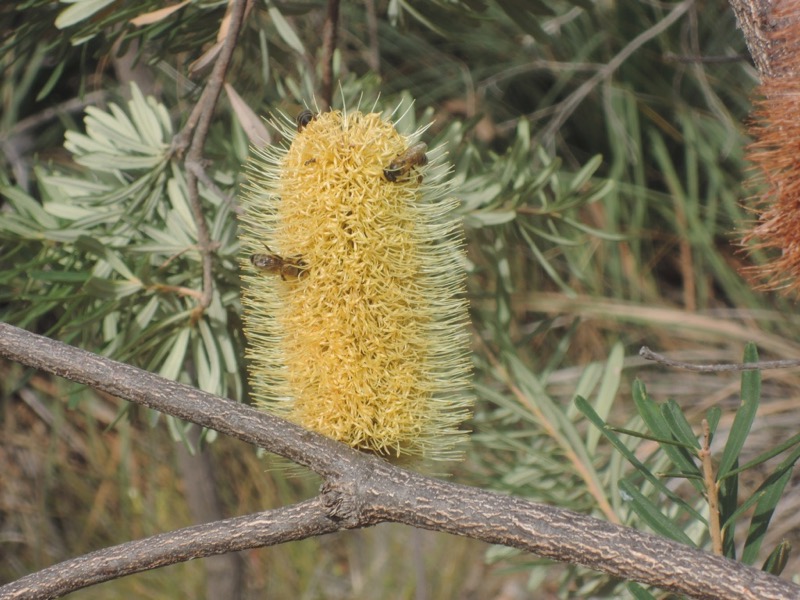
And that is what I did.

The beast

Snatched phrases (on being present)

Do the anxiety. Then leave it there. This is our challenge.

from ‘First, We Make the Beast Beautiful: A New Story about Anxiety
by Sarah Wilson

Simple words, huh? They apply to all manner of ills, I think — not just anxiety. They are about staying in the present: doing the hard stuff when it comes up, not questioning it or agonising over it … and then leaving it behind and moving on.

There are no solutions to anxiety out there, Wilson argues further on: no cures or fixes. So you just do it …

… and then you leave it.

This makes great sense to me.

Today’s photos? They’re from one of my latest bushwalks, a couple of weeks ago: mid-March. It was a still, grey afternoon, and when I first began to walk, the colours seemed drab, and the birdsong was muted, and the air felt unkind and cold.

But as I wandered on, I began to see a few flowers despite the greyness, and I came upon a kangaroo, which stiffened at my bumbling approach and then bounded away. I heard the sea murmur somewhere through and beyond the thicket of trees, and a magpie began to carol, low and soft.

I had done my day, and I had left it there, and things were fine. Just fine.

When summer came

Other people’s words about … summer

Summer came, clanging days of glaring sunshine in the seaside town where I live, the gulls screaming in the early dawn, a glittering agitation everywhere, the water a vista of smashed light.

From ‘Aftermath
by Rachel Cusk

I live in a seaside suburb like Rachel Cusk. Gulls scream outside my window most mornings, flapping over the roof, perching on the top of the stobie poles. I find great solace in their shrieks. Like the call of a wattlebird, there is nothing elegant or beautiful in a gull’s cry. It is gloriously unapologetic, and harsh, and guttural, and wild.

There is a particular kind of summer day at the beach: the sand is so hot along the path from the road across the dunes that if you are making your way barefoot — or if you are a dog — you have to run over it towards the shore to prevent the soles of your feet (or paws!) from burning. The sky throbs; the air is windless, hot, salt-scented; and gulls stand in the shallows, waggling their legs as they stare down into the clear water, searching (I think) for fish. It’s so quiet in the hot stillness that you can hear the little lapping, bubbling noises the water makes as the gulls’ legs move about in it.

A vista of smashed light.
A vista of smashed light

I haven’t swum in the sea much this summer. Due to the storms in December and early January, the water is muddied and polluted. But I love the beach at this time of the year, regardless. I feel no glittering agitation, as Cusk does: only joy.

It’s the heat. And the light. And the gull-shriek-rent air.

The list maker

Other people’s words about … wildflowers

It was the top of the morning, the very cream, and I skimmed it off and crouched in the cornfield, gulping it down … The field ended in a double ditch, and from it grew a mass of flowers in a profusion of colours and forms, such as is seen trimming the edges of medieval manuscripts. Black medick, I counted, buttercup, horsetail, ribwort plantain, hedge woundwort, must mallow and curled dock, the clustered seeds a rusty brown. Wild rose, dandelion, the red and white dead nettle, blackberry, smooth hawksbeard and purple-crowned knapweed. Interspersed with these were smaller, more delicate flowers: cut-leaved cranesbill, birdsfoot trefoil, slender speedwell, St John’s wort, heath bedstraw, tufted vetch and, weaving in and out of the rest, field bindweed, its flowers striped cups of sherbet-pink and white. The stem of the knapweed was covered in black fly, and a spider trap shaped like a dodecahedron had annexed a few pale purple flowers of vetch inside swathes of tight-woven web.

from ‘To the River
by Olivia Laing

I have quoted from Olivia Laing before, I know. Still, one day a week or so ago as I went for a bushwalk, I couldn’t help thinking again of To the River. In particular, my thoughts kept returning to the passage I’ve quoted above. We’ve had an extraordinarily wet, windy spring here in South Australia this year — a spring that’s left me craving our usual harsh, dry, crackling heat. But the ‘up’ side to the lower temperatures and higher rainfall has been the abundance of wildflowers.

That day, as I strolled along the path, it felt to me as though I was walking on a carpet of flowers. Whistlers burbled in the trees above me — I spied both golden whistlers and rufous whistlers — and wattlebirds clucked, and magpies warbled, and I am sure I heard the call of a curlew or a godwit, though I really don’t know whether that’s possible in the part of the world through which I was walking.

Meanwhile, the rug of flowers went on spreading out before me.


As I walked, I found myself doing exactly what Laing does in the passage above: counting the flowers. I saw each flower; I named it; I knew it. I made my list as Laing made hers, and though we live in different hemispheres, and our lists are very different, I suspect that the joy I felt in making my list was somewhat akin to hers.


If I was an artist or a calligrapher — if I was a mediaeval scribe — I would decorate the edges of this post with the flowers I saw that day, in reference to the illuminated manuscripts Laing mentions above. But I am none of those things, so my photos will have to suffice. (As usual, hover your cursor over the photos to see the name of each flower — or my attempt, at least, to identify and name each one. Part of the pleasure in list-making is the knowledge that some of the names on the list might be wrong. I learn as I go.)

Perhaps you might like to think of these photos as a kind of pictorial version of the list I made that day, or as evidence of the carpeted path I trod, or as a simple expression of my joy.

They’re all of those things to me.

Where song begins

Other people’s words about … birdcalls

A bird calls with a sound like a pot being scraped,
and the moist air is cool on our skin.

from ‘The Collaborator
by Margaret Leroy

I love the way that worlds sometimes collide in the space of a few words. What kind of bird is Margaret Leroy describing here? I’m not sure: the characters in her book live on the Channel Islands during the Occupation in World War II — which is a long way from Australia.

And yet when I read her phrase, I thought instantly of our native red wattlebirds.

Wattlebirds (from a photo of a sheet of Earth Greetings wrapping paper: https://www.earthgreetings.com.au)
Wattlebirds
(from a photo of a sheet of Earth Greetings wrapping paper: https://www.earthgreetings.com.au)

Australian birds are known for their startlingly loud calls. In fact, biologist Tim Low has devoted a whole book to this theme. In Where Song Began, he proposes that Australian plants produce such an abundance of nectar that some birds — honeyeaters in particular, including wattlebirds — have evolved with strong aggressive tendencies, which enable them to fight over and defend their sources of nectar. Their loud, harsh calls are a part of that aggression. (You can find a brief summary of this argument here.)

I have struggled for years to come up with words to describe the calls that red wattlebirds make. They are a mixture of chuckles, coughs, clicks, screeches, rattles, squawks and whistles: you can hear a sample on the website Birds in Backyards, whichprovides a link to a recording on this factsheet. (Click on ‘Top 40 Bird Songs’ at the top of the factsheet, and then click on the ‘Soundfile’ for the red wattlebird, which is the fourteenth bird on the list. But turn your volume up first. Wattlebirds are very noisy.)

Wattlebird on a wire

The recording misses something, though, as do my words. Neither effort really conveys the sound of the wattlebird’s call accurately: somehow, Margaret Leroy’s words come closer.

Serendipity, perhaps? Now, whenever I hear a wattlebird call, I will think of these words.


Because

Other people’s words about … settlement

It is no wonder that most Adelaide inhabitants have little idea of what the pre-European vegetation of the Adelaide Plains looked like, because over vast swathes of suburbia, unless one knows exactly where to look, it is basically all gone and has been for over a hundred years. Add to this the interest in recent decades in planting Australian natives that may have been sourced from regions over a thousand kilometres away and there is little wonder that confusion exists about the identity of the truly indigenous plants of the Adelaide Plains.

from ‘The Native Plants of Adelaide
by Phil Bagust and Lynda Tout-Smith

One of my favourite places to spend time in is Aldinga, south of Adelaide, though I didn’t grow familiar with it until I was well into adulthood. When I was a child, Aldinga was still a little coastal country town within driving distance of Adelaide. City people spent their summer holidays there each year. That was all I knew about it.

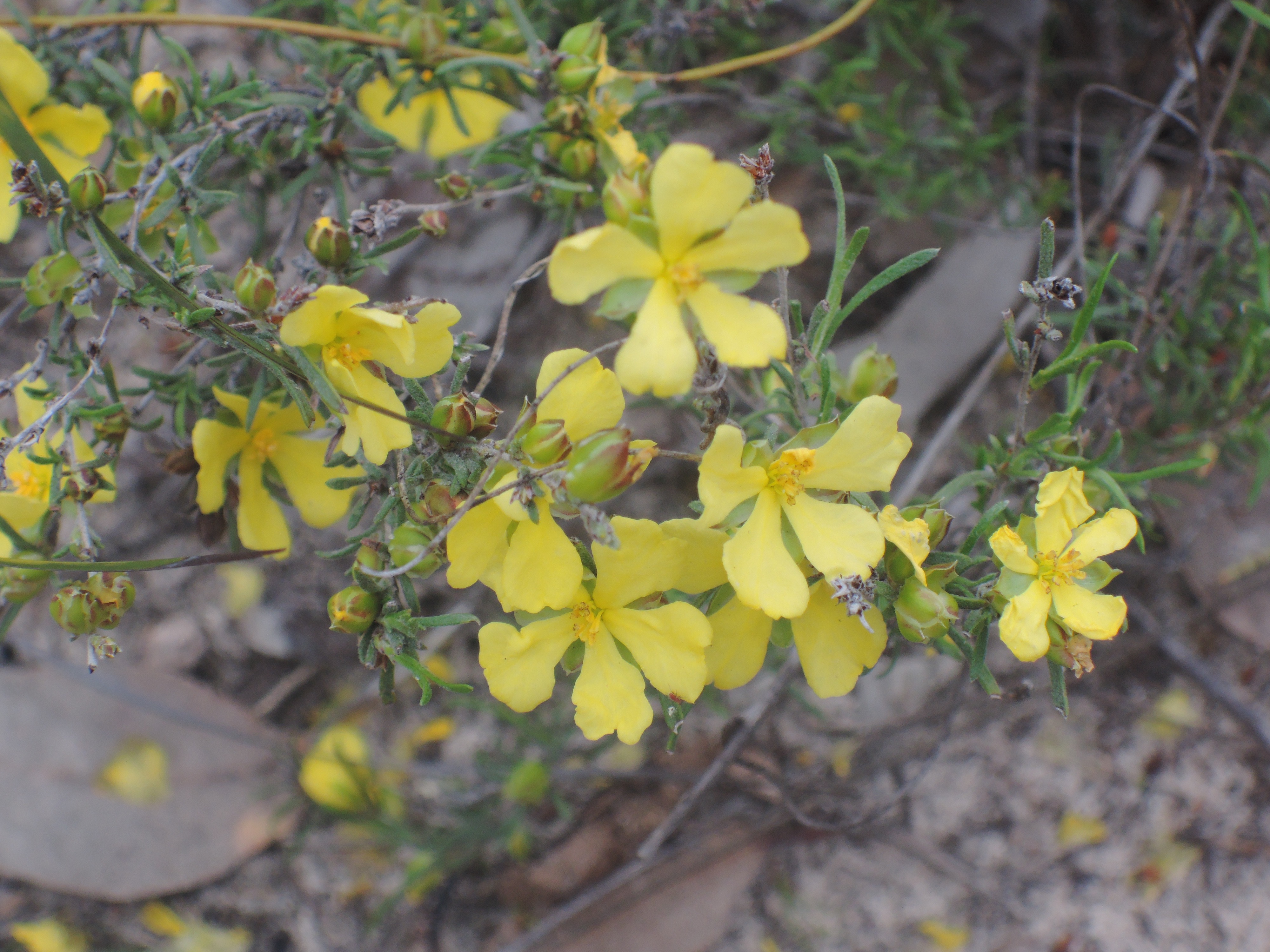
Guinea flower (hibbertia)
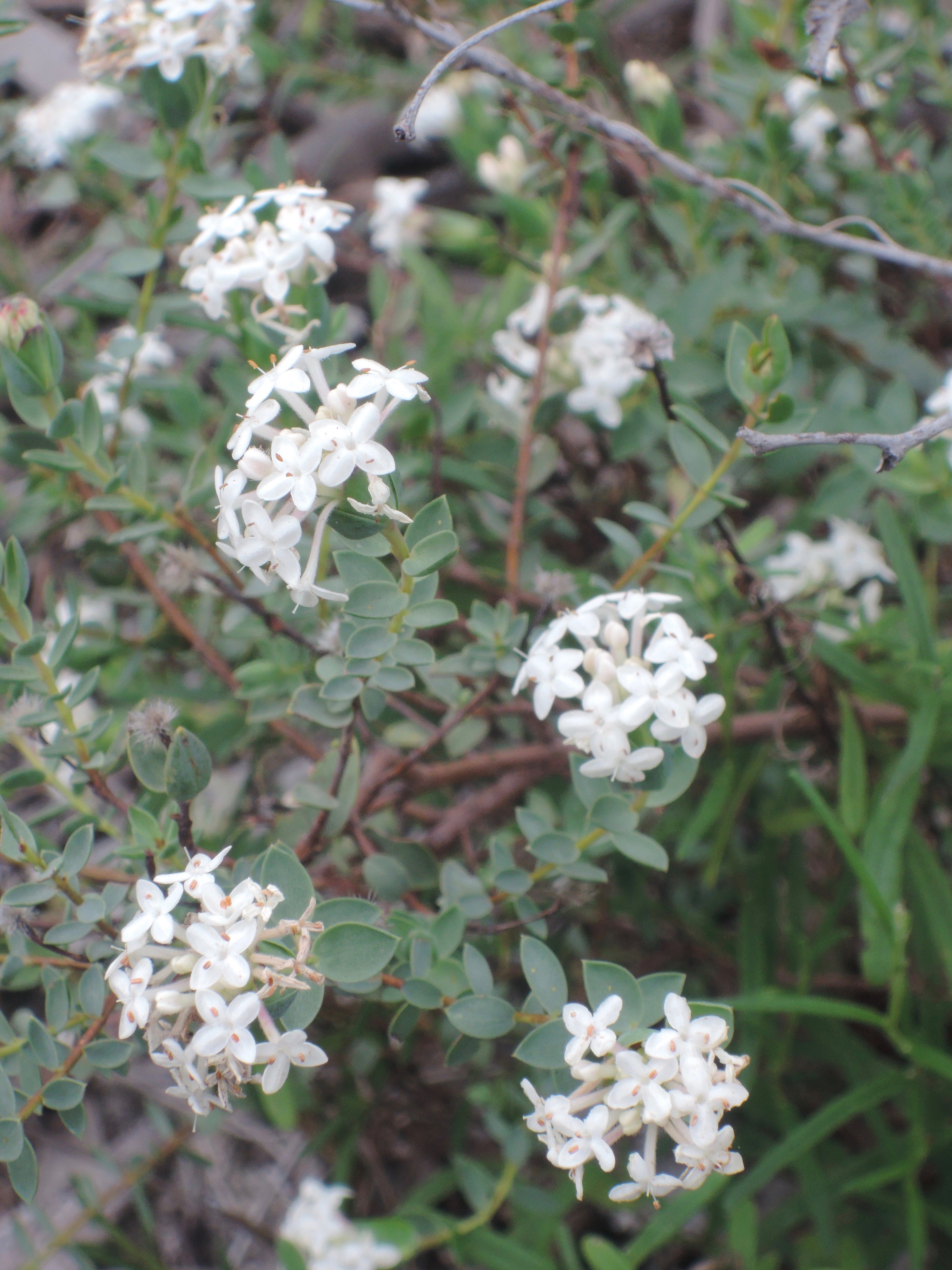
Smooth riceflower (pimelea glauca)

Aldinga isn’t a small country town anymore: over the years, it’s been swallowed up in the growing suburban sprawl — those vast swathes of suburbia — along the coast north and south of Adelaide. It’s no longer a holiday town, either. People travel farther afield these days for their holidays, mostly overseas. Many of the beach shacks have been knocked down, but some still stand.

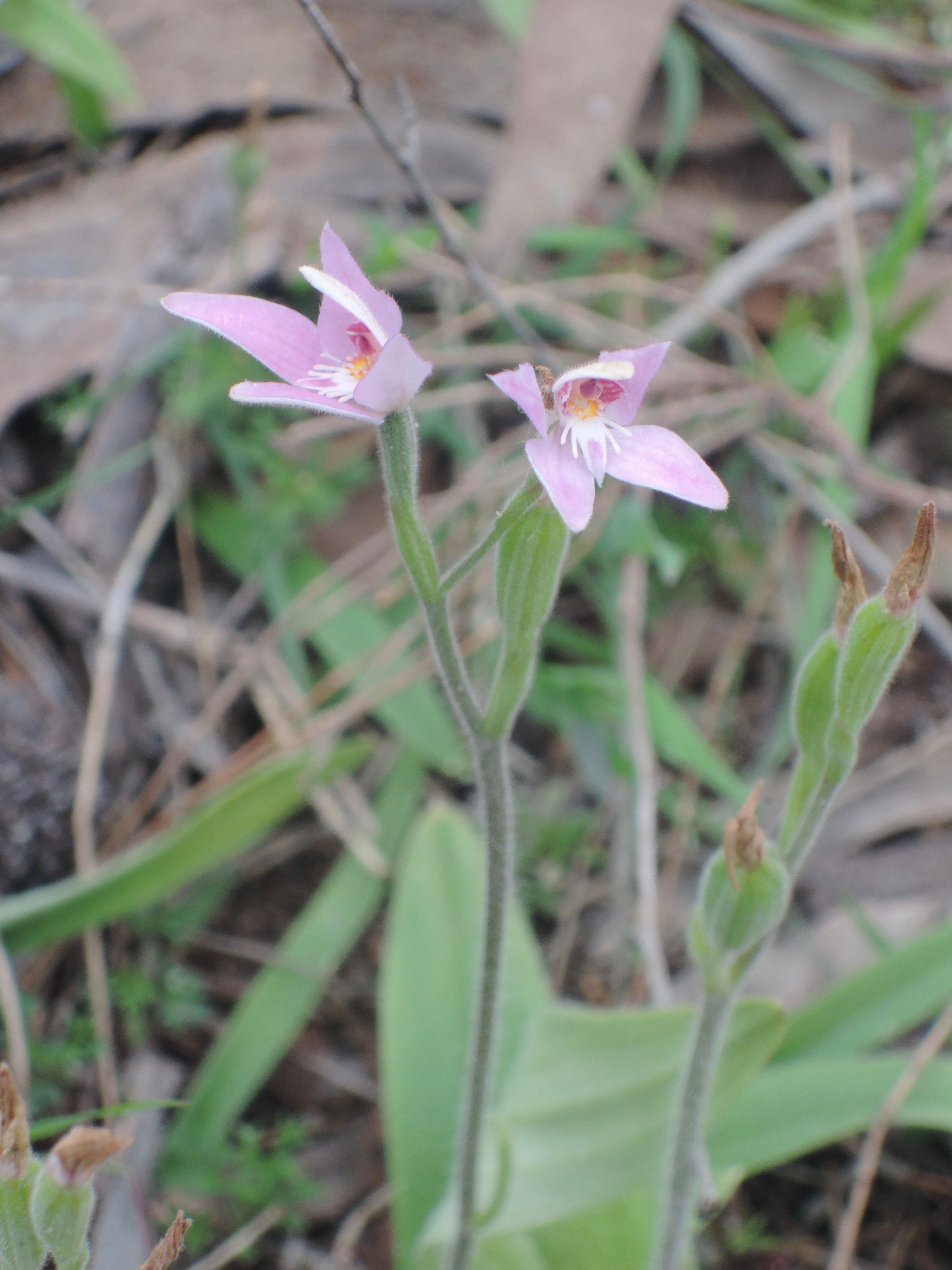
Pink fairy, a spider orchid (caladenia latifolia)
Old man's beard (clematis microphylla)
Old man’s beard (clematis microphylla)
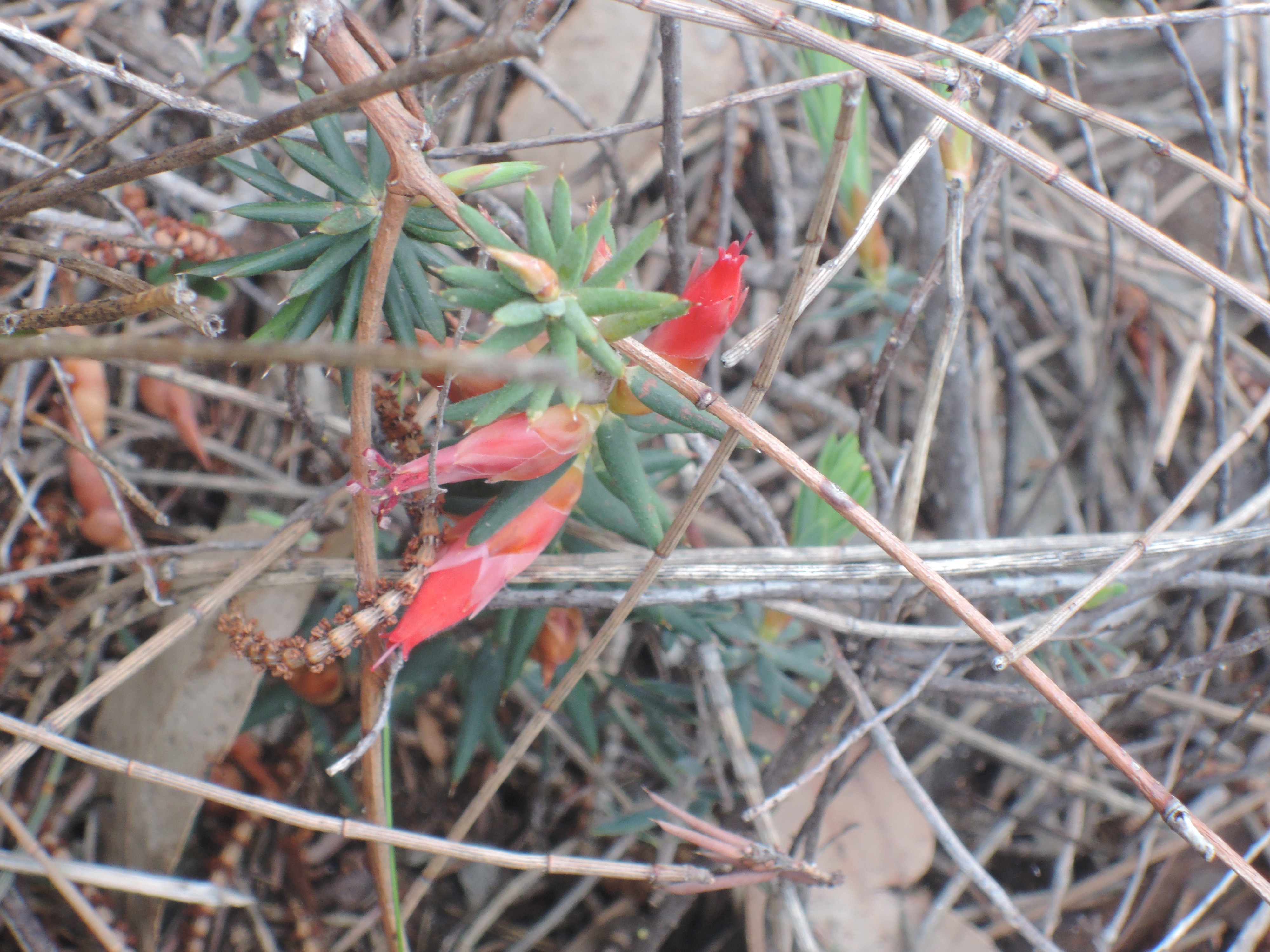
Flame heath (astraloma conostephioides)

Aldinga Scrub is a patch of native coastal vegetation growing just inland of the beach: an environment of dense, bushy vegetation growing on low sandy dunes. As a child, I didn’t even know of its existence, though now I try to make the effort to visit it as often as I can. It is, in fact, the only patch of remnant (pre-European) coastal vegetation left in South Australia. It’s not pristine — there are many weeds growing in it. The climate within the Scrub itself has changed, too, due to the diversion of natural stormwater by farmers onto encroaching farmland.

And yet, wandering through on a precious day off work — listening to the songs of the shrike-thrushes and whistlers and magpies and fantails; stumbling across a lone echidna trundling through the undergrowth; standing back to allow a kangaroo with a joey in her pouch bound past — I feel as though I get a hint of what the place was like before European settlement. Hence the photographs on today’s post, which I took on a visit in mid-September, as spring took hold of the Scrub.

Paper-flower (thomasia petalocalyx)
Variable groundsel (senecio lotus)

I’ve never named the Scrub explicitly on my blog before, though I’ve posted many photographs from my visits to it. I feel fiercely protective of the place — because of its unique status; because I discovered it late in life; because I know that the more that humans like me encroach upon it, the more it disappears. Because, because, because.

Meanwhile, whenever I visit the Scrub, I continue to teach myself the names of the native birds and animals and plants and insects who inhabit it. I wander about, learning and wondering. I may never really know its original nature, but I plan to go on teaching myself about it until the day I die.

Gladness

On a windless, clouded afternoon at the end of May,
I go for another bushwalk.
I’m greeted at the start of my walk by one of my favourite native birds,
the kookaburra:

Its laughter echoes through the scrub for the first ten minutes of my walk.
Then comes magpie song:

A kangaroo regards me intently from afar.

The only bush in flower is one whose name I don’t know.
Its flowers grow in tiny, white clusters and smell sweet and rich, like honey.

It’s quiet in the bush,
and I, too, am quietly gladdened for my time there.

Daylight robbery

On Saturday afternoon, I went for a quick stroll on the beach,
shoring the sights up in my memory — and the warmth on my skin — of the last hours of Daylight Saving.

DSCN2658

It was a typical mid-Autumn day.
Windy.
Half-sunny.
Half-dull.

DSCN2661

The sand was wind- and water-rippled.
The gulls’ footprints seemed to blow away as I watched.

DSCN2663

Soon, when I walk on the beach, I’ll wear shoes, socks, a coat, a beanie.
I’ll call the wind ‘bracing’.
DSCN2657
I’ll think of this last long day of light with yearning.
Summer nostalgia — is there a cure?
There should be!

Note:
Okay, a confession: autumn makes me crotchety. I’ll get over it soon, I swear!