On purpose

Other people’s words about … meaning

Some people … believe they have to find their purpose to live fully … [But] it is perfectly fine — and in fact recommended — to simply live each of your moments fully and marvel at it all. What if that is your purpose?

From ‘The Energy Guide
by Dr Libby Weaver

I am not much one for self-help books, these days, especially ones that focus on how to find happiness or health. I don’t think — as I did when I was younger, as young people so often do — that health and happiness are things you can seek out or earn, or that they are things you can, or should, feel entitled to.

But I do like Libby Weaver’s words here, even though her book falls squarely into that category of books I’ve just derided. I like her words because what else does it make sense to do other than to simply live each of your moments fully, no matter what each of those moments is like, or what is happening during it? What better thing can we do as we live out our days than marvel at it all?

Weaver goes on to say:

Consider that the real purpose of anyone’s life is to be fully involved in living. Be present for the journey. Act on what you care about.

You could call the attitude Weaver is advocating mindful, if you so chose. Or you could call it sensible. Or humble. Or grateful. Whatever you call it, I think it’s an attitude worth cultivating.

Winter sunrise: be present.

Because unlike health and happiness, unlike riches and freedom, unlike love and success, unlike youth and beauty, unlike wisdom and intelligence, being fully involved in living is achievable. It’s not always easy, but it’s possible.

And that, I think, is a good place to start.

Chasing clouds

Running affords the freedom of distance, coupled with the literary appeal of solitude. There’s a meditative cadence to the union of measured breaths and metered strides. Writers and runners both operate on linear planes,
and the running writer soon realises [that] the relationship between art and sport is a mutually beneficial one.’

From ‘Why Writers Run’
by Nick Ripatrazone
in The Atlantic

I’d heard about the connection between writing and running before — or at least about certain writers, like Joyce Carol Oates and Haruki Murakami, who run as well as write, and who believe that their running helps their writing. And I’d always understood the connection instinctively, though I don’t think I could have put it into words as Ripatrazone does (fairly baldly and glibly in some spots, it must be said) in his piece for The Atlantic, which I’ve quoted throughout this post.
Running, the argument goes, clears the mind. Writers stuck on a sentence should lace their sneakers and go for a jog, knowing that when they return, they will be a bit sweatier, more tired, but often more charged to run with their words. This is Ripatrazone’s advice, at any rate.

While I would quibble with any shoulds when it comes to either running or writing — what works for some people won’t work for others; and one person’s meditative jog is another person’s sweaty, heart-pounding, back-spasming nightmare — Ripatrazone also has this to say, which I love:

Writing exists in that odd mental space between imagination and intellect, between the organic and the planned. Runners must learn to accept the same paradoxes, to realise that each individual run has its own narrative,
with twists and turns and strains.’
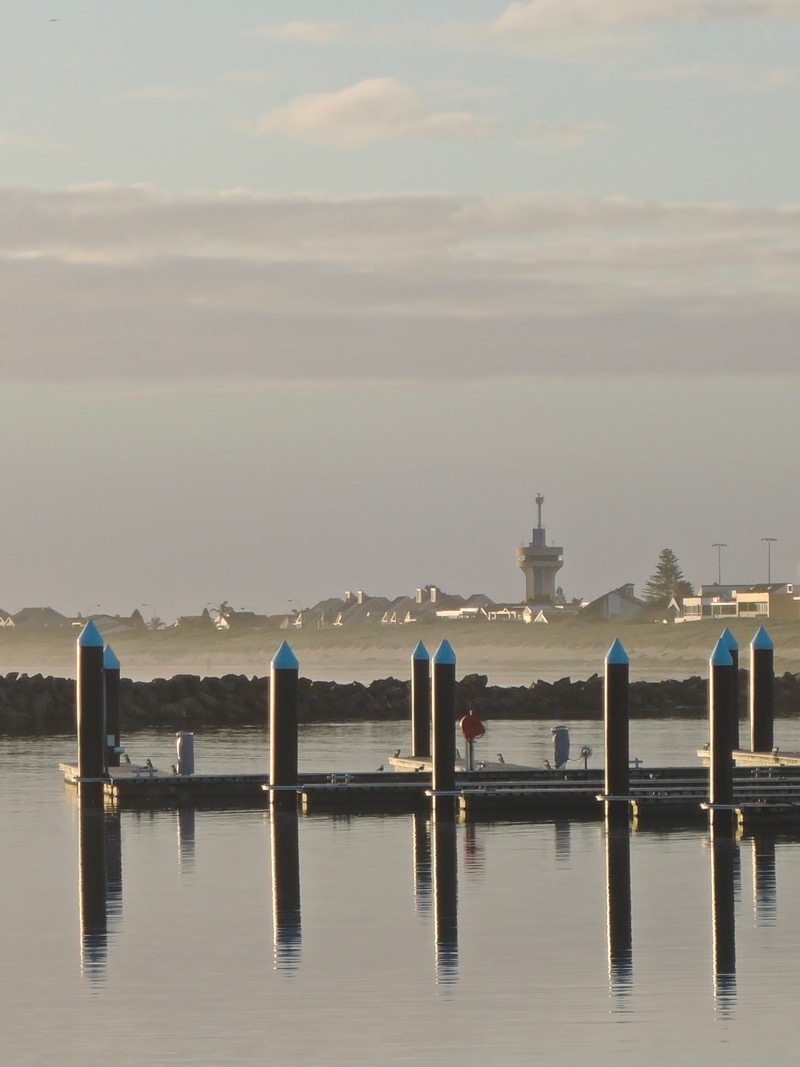
I’ve been struggling for some time to articulate why writing became such a tortured process for me over the last couple of years, and, equally, why I turned to running around this time with such joy. I knew that when I ran I felt a sense of clarity that I don’t otherwise feel; but still, I didn’t think the two things were connected — especially since, not long after I began to run again regularly, I made the decision to stop writing altogether, at least for now.

Now, though, reading Ripatrazone’s words, I wonder if it was that odd mental space … between the organic and the planned that running creates in me that allowed me to stop writing.

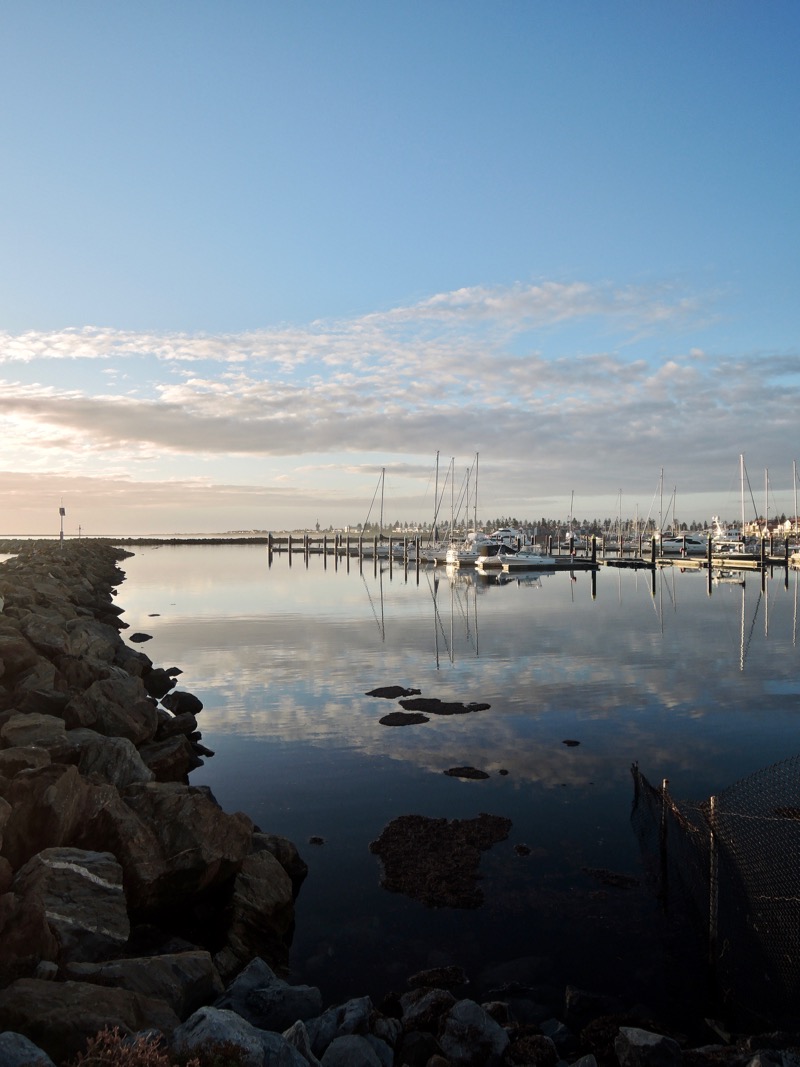
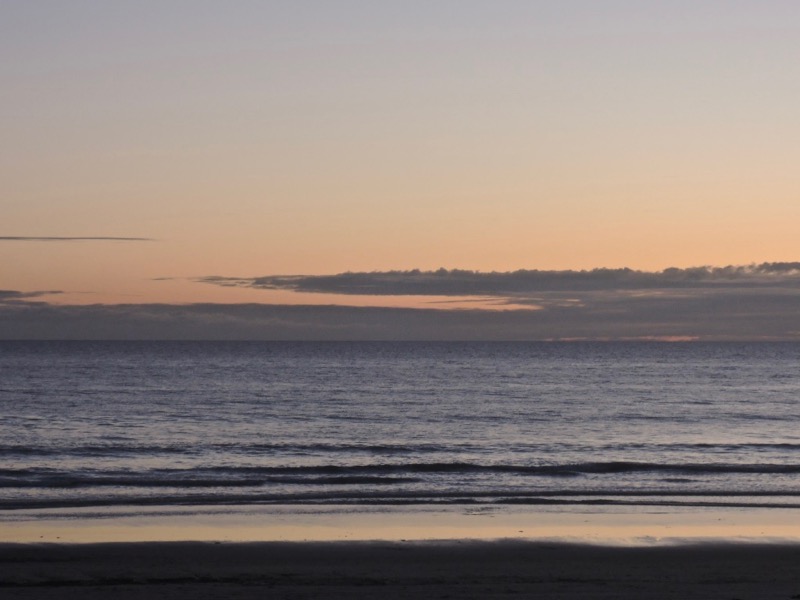
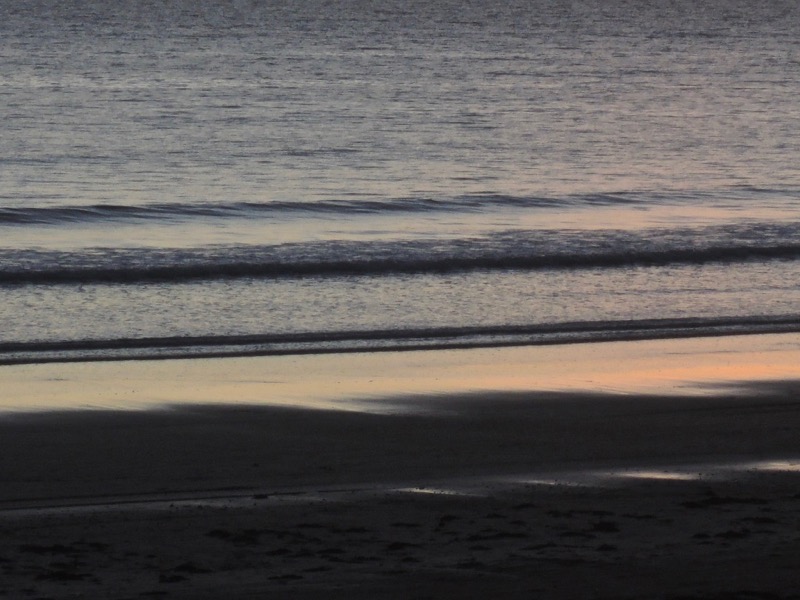
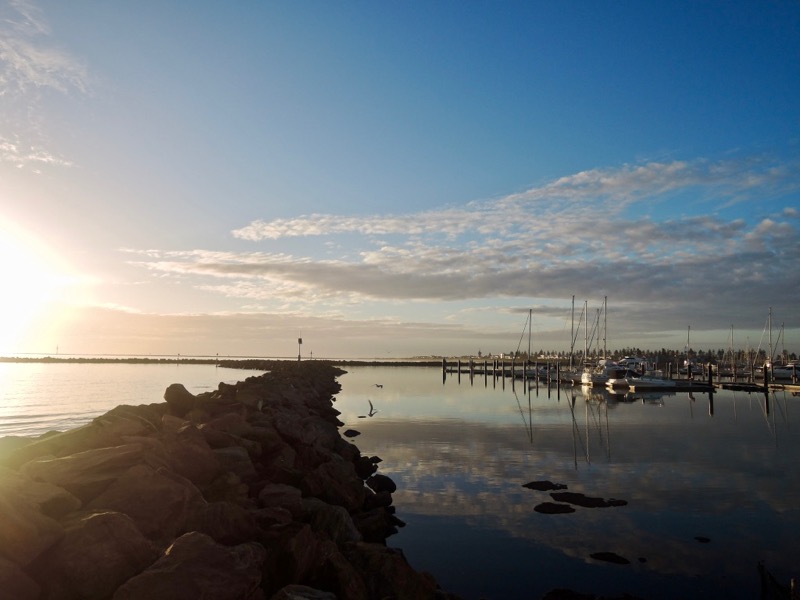
The only way I can explain this is to tell the story behind the pictures in today’s post, which I took on a short, gentle run in late July, after a particularly torrid day at work. I made it onto the beach before the sun set. Once there, I ran with the sun ahead of me rather than at my back. And at the halfway point, at the breakwater, I stopped.

I stopped.

I stopped.

I took these photos, and I breathed in, and I felt the lowering sun on my skin, and I felt everything inside of me, finally, stop.
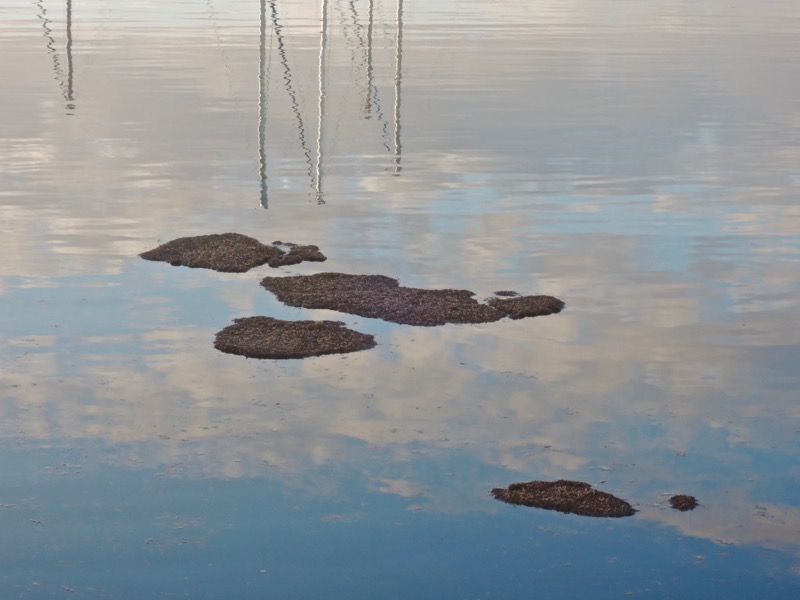
This, I think, is what running does for me: it allows me to stop. It brings me into a kind of stillness I don’t feel at any other time. Running, stopping, finding stillness: to say that these things are intimately connected with each other seems a contradiction in terms. But perhaps it’s not, because something shifted inside of me when I took up running again last year: I felt it almost immediately. That shift was what allowed me to stop writing, which was something — I see now — I had to do, in order to move forward in my life: and to move forward, also, in my writing (again, that contradiction in terms).

Perhaps, in the end, Ripatrazone puts it better than me — not in his clichéd injunction to writers to run in order to improve their writing, but in his description of the paradoxes that both writers and runners must face.

In any case, on the day that I’m speaking of, the day that I took these photos, once I had stopped for a while to breathe in, and to look about, and to rest, I knew that I was ready to move again. And so I turned and ran homewards, with the sun sinking into the sea behind me and the air gradually chilling, and a sense of stillness all about me, and also inside of me.

Deep, deep inside.

Chasing clouds

‘It took me years to see that path and to find my pace.
When I finally got moving, I hoped I might be able to run forever.’

From ‘The Long Run’
by Catriona Menzies-Pike

We’ve had an unusually dry, cold winter in South Australia this year — the driest, I heard recently, since the mid-1960s — and so the days in the last few weeks have been mostly clear and crisp. Global warming and environmental concerns aside, I love this weather.

And here’s a first — I have even grown to love the short days this year!

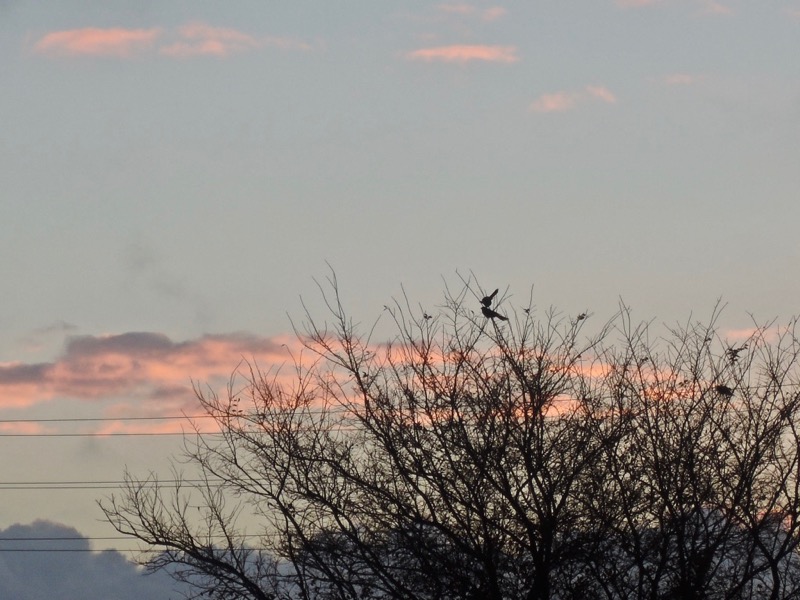
Sunrise, bird, tree.

Some mornings, I get up around 6 am, and go for a run before work, as the sun rises. Running before breakfast, I’ve discovered, is a completely different beast from running later in the day: sleepy and not yet well-fed, I run more slowly (which may not seem possible, but apparently is) but also somehow more smoothly. It is as though the calm of the night, the deep, rhythmic breathing of sleep, still hang over me. I feel light, buoyant, in my body and in my mind, as though I’m still moving through my dreams. My joints are loose and easy, and the exertion of the run seems somehow separate from me, not part of the dream I’m in.

Meanwhile, as I run along the esplanade path or by the shore, the sky grows rosy to the landward east; and the sea turns from silver, to grey, to blue, to the west; and the scent of the sand drifts up to me, filled with chill and damp; and sometimes a sliver of moon hangs above the tops of the pine trees lining the coast.

And I know that I’m awake. Alive. Grateful to be here.

Snatched words: beginning

‘It is terrible to desire the end of something,
the absence of something;
desire should belong to life, to presence and not absence.’

From ‘Aftermath’
by Rachel Cusk

We’re supposed to think about the pot of gold when we look at rainbows, right? But when I stepped outdoors after waking the other morning, the sun had just risen and a storm was about to hit, and in that moment between — in that moment as I stood there — the light in the sky grew lurid, and a rainbow appeared.

It is terrible, as Cusk says, to desire the end of something, the absence of something. The rainbow seemed to me, in that moment before fat raindrops began to fall, a symbol of the opposite of that kind of desire. It seemed to me to be the start of everything: of the rain, yes, of course. Of my day. Of the rest of my life.

Beginning.

Out & about: winter solstice

‘When you’re walking the view shifts and changes.
Walking’s a form of hope.’

from ‘The World Without Us
by Mireille Juchau


I spent the week of the winter solstice on holiday. I had planned to go camping to Yorke Peninsula, but various things conspired against these plans. In the end, it didn’t matter. I live by the beach. That’s holiday enough in itself.

Winter solstice sunset (1)

The weather that week was unusually dry, cold and sunny for June in Adelaide, with overnight temperatures getting down to as low as 2 degrees Celsius. That made for beautiful weather in which to go walking.

Winter solstice sunset (2): dying light

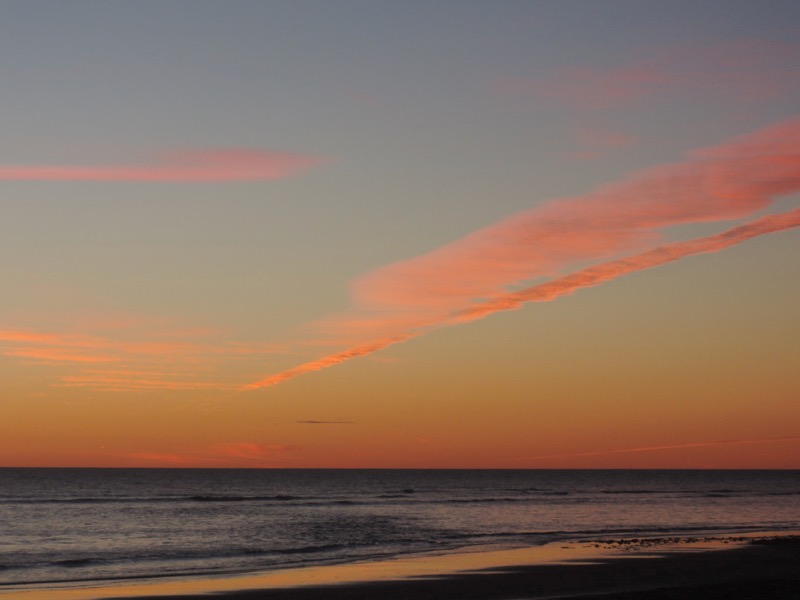
The sunset on the evening of the winter solstice was cold, clear and beautiful. Though the time of the year when the days are at their shortest often leaves me feeling light-starved and sunshine-deprived, that evening was still worth celebrating.

Winter solstice sunset (3): last glow of light

An additional note: I took these photos between about 5.15 pm and 5.30 pm. The sunsets from hereonin will be later every day … and that’s another thing worth celebrating!

The silent sea

Other people’s words about … the sea

I thought about the kind of people who come to the sea to look at it: how they put themselves down on whatever rock or bench is around and gaze for hours into the distance as though something out there makes life seem meaningful, or at least less incomprehensible. What are they looking at? I asked myself. What do they see when they see the sea? Most people seemed to find the sea deeply interesting but it held no particular depth or virtue for me. The most profound effect the sea had on me was that sometimes, from the living-room window, it quite literally made me want to throw up. I’d always thought that people who liked the sea were people who didn’t like society, that it was people who’d failed in their relationships who turned to the sea. There was something in their glazed faces — leaning on harbour railings, walking along the crumbling promenade, staring over the tops of their newspapers — which disturbed me. It seemed they wanted to be immersed in it, that as they looked out at the sea they entered into a special relationship with it which, to a certain extent, entitled them to speak to it. Because people who spent too much time looking at the sea did start to commune with it, as if nature held the answer to all of life’s important questions, their expressions suggesting that they were not so much watching the sea as conversing with it. I could tell from the way they sat, dead still, that the sea spoke to them and that they, for their part, were receptive to its communication. But what was the sea saying to them? The sea didn’t speak to me. What do you say to them that you won’t say to me? I asked the sea, but the sea was silent and had no communication to make.

from ‘Somehow
by Danielle Dutton (in the Paris Review, #224)

This passage made me laugh (which I think — although I’m not entirely sure — was the writer’s mischievous intention). So I had to include it in my collection of passages about the sea, didn’t I?

Anyone who even glances at my blog will know that I fall into that category of people to whom the narrator in the passage above, Mr Field, refers as people who spen[d] too much time looking at the sea

And I suspect I always will!

Something out there …

Out and about: autumn

‘When you’re walking the view shifts and changes.
Walking’s a form of hope.’

from ‘The World Without Us
by Mireille Juchau


Autumn arrived in the vineyards in mid-May. One weekend in the last week of May or so, I spent some time walking near the Aldinga Scrub, on a track that skirts the wetlands, the Scrub, the vineyards and the farms.

It was one of those autumn days when the sky changes every moment that you look up at it, and with it the light. One moment the sky was blue and the grass shone bright and green; the next, the sun disappeared behind clouds, and the sky darkened, and the grass turned a pale, sombre green.

As I took the photos you see in this post, I became aware of stinging sensations at my ankles and wrists. There had been had rain overnight, and the ground was damp, though the temperature was mild. Mosquitoes were everywhere, biting, biting. I kept stopping to scratch: my ankles, my wrists, my hands. Still, it was peaceful and green.

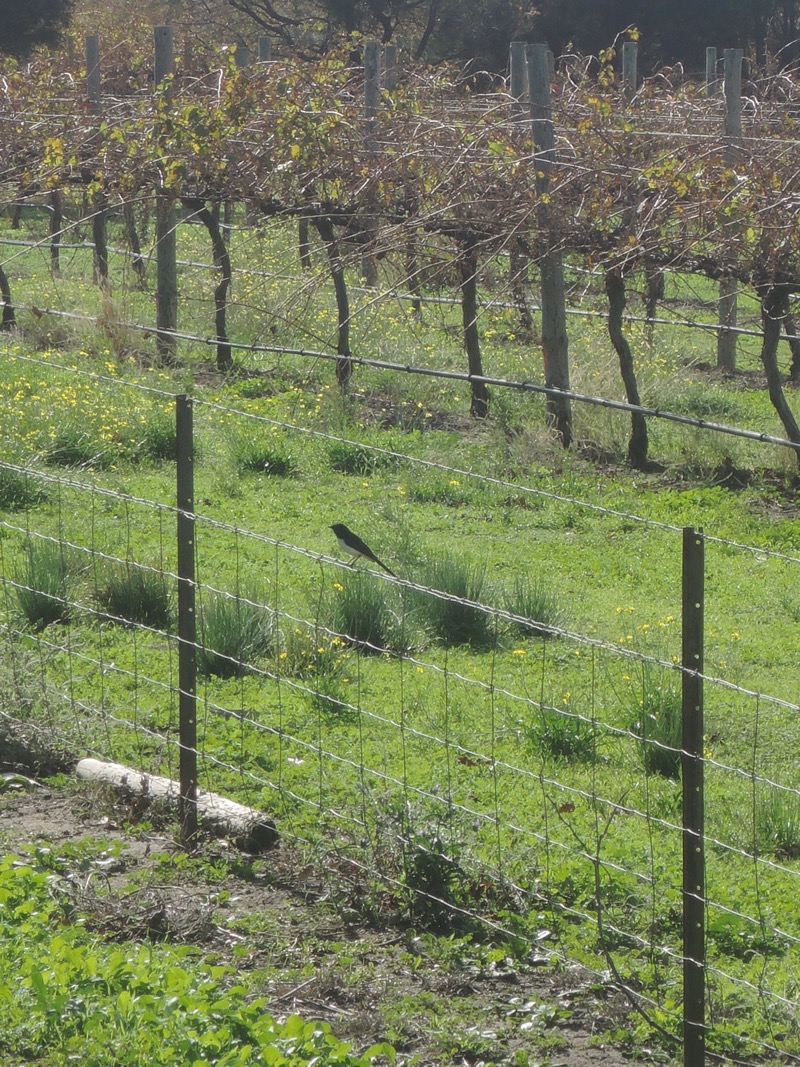
Can you see the willy wagtail perched on the wire fencing in the photograph above? It darted about as I wandered the track, zigzagging and dipping and feinting, the way willy wagtails do. There were fairy wrens on the path, too, but I didn’t manage to capture them.

Next time, maybe … ?

One day

Other people’s words about … the sea

After lunch, as a reward for their fine behaviour, Nurse allowed them to bundle into coats and hats and bolt from a back door along a path that ran behind Mr Styles’s house to a private beach. A long arc of snow-dusted sand tilted down to the sea. Anna had been to the docks in winter, many times, but never to a beach. Miniature waves shrugged up under skins of ice that crackled when she stomped them. Seagulls screamed and dove in the riotous wind, their bellies stark white. The twins had brought along Buck Rogers ray guns, but the wind turned their shots and death throes into pantomime.

From ‘Manhattan Beach’
by Jennifer Egan

I have never been to a beach in the kind of winter that Jennifer Egan describes in the passage above. Many years ago, in Michigan, I walked across a frozen lake (and thereby learnt the meaning of the term ‘wind chill factor’), but that was a lake, not the ocean. I’d like to experience that wild, violent chill, just once in my life.

The beaches along the South Australian coast have their own seasons of peace and restlessness. Often, the early months of Autumn are times of softness and stillness, and this past April there were several days when the sea lay like blue, shining silk on a bed of sand.

As you can see from the photos in today’s post, which I took at the beach in the first week of April, the South Australian coastal world is utterly unlike Egan’s, but there is wildness at its essence, all the same.

Downpour

Other people’s words about … having sad thoughts

Understand, for instance, that having a sad thought, even having a continual succession of sad thoughts, is not the same as being a sad person. You can walk through a storm and feel the wind but you know you are not the wind.

That is how we must be with our minds. We must allow ourselves to feel their gales and downpours, but all the time knowing this is just necessary weather.

From ‘Reasons to Stay Alive’
by Matt Haig

It was Toni Bernhard who first introduced me, in her book How to Live Well with Chronic Pain and Illness, to the idea that moods are like the weather: impermanent, changeable. She writes elsewhere:

In ‘How to be Sick’, I call it Weather Practice. I like to think of emotions and moods as being as changeable and unpredictable as the weather. They blow in; they blow out. Working with this weather metaphor allows me to hold emotions and moods more lightly, knowing that, like the weather pattern of the moment, they’ll be changing soon. One moment, life looks grey and foreboding; the next moment, a bit of brightness — maybe even a rainbow — begins to break through.

Both Bernhard and Haig are covering the same theme here, a theme that is one of the basic tenets of any kind of mindfulness practice. But while I like Bernhard’s clear, practical prose, there is something about Haig’s phrasing (despite his erratic sense of grammar) that particularly speaks to me.


Necessary weather. Those two words, paired together, feel to me immensely comforting, and true. I murmur them to myself on days when my mind and my mood feel clouded and grey like the clouds pictured in today’s post.

Call these words a mantra, if you like. They bear repeating.