Sigh

Other people’s words about … living by the sea

We walk back to our car, the morning seeming eerily quiet. I’m used to living close enough to the shore that occasionally we can hear the gulls in the distance, crying. Here, there’s nothing. With the cold, there’s no insect noise, no bird noise. Just the wind moving the leaves, the branches swaying, the world, faintly sighing.

From ‘Fragments of the Lost’
by Megan Miranda

Once, years ago, when I was in my mid-twenties, I left the house by the sea in which I was living to stay for a couple of weeks with a man with whom I thought I was in love. He lived interstate, in a suburb miles from the coast: a suburb of twisting cul-de-sacs lined with neat brick houses and small, grassy parks, each of which had a set of swings, and a see-saw, and a coin-operated barbecue.

With the passing of each day in that man’s house, I felt a terrible, growing sense of fatigue and disenchantment. At first, I thought that I must be ill. I felt tired, so tired: my limbs seemed stiff and leaden, and each night, as I lay in my bed in his guest room, sleep blanketed me so rapidly, so heavily, that I felt as though it was smothering me.

Then I thought that, rather than becoming ill, I was falling out of love. This was, in fact, partly the case: from the moment I first walked through his back door, I felt myself growing angrier and angrier with this man, whose life was nothing like I had thought it would be, and who (transported from the town where I had met him, my home town) seemed a different man, a different beast altogether, from the man I had been drawn to just a few weeks earlier.

But finally, as my days in his house passed, I came to realise that my strongest feeling of all, beyond the bewildering exhaustion, beyond the unjustifiable anger, was that I was lost. I mean the word in its literal sense: not as a metaphor for some kind of emotional loss (although that was undoubtedly a part of what I was feeling; I was, after all, very young), but as a geographical descriptor. I could not locate myself in the twisting, winding, circling streets of his suburb. I could not tell north from south, east from west. I felt as though I was in a maze. I knew that it was a maze of my own making, and I knew that I had to find a way out.

And it seemed to me that if only I could hear the sea the way I could hear it when I was at home (its sighs, its mutters, its roars), if only I could hear the gulls crying in the skies above me, the way Megan Miranda describes in the passage I’ve quoted above, I would know where I was, and I would no longer be lost.

Eventually, I found my way out of that maze, and I got myself safely back home. Still, I’ve never forgotten the weeks I spent in that man’s house. I came to understand, during that time, that the sea, for me, had become a kind of compass in my life, both literal and metaphorical. That the sea gives me a sense of place. A sense of direction. A sense of home.

Here, there’s nothing, Miranda’s narrator writes, describing her visit to a place far from the sea. Perhaps that’s what the sea gives most of all to those of us who live beside it: a sense of something outside of ourselves. A sense of presence.

Sea and sand

Lately I’ve been reading about …

Quiet days

Other people’s words about … reading

For me, reading was never an antisocial activity. It was deeply social. It was the most profound kind of socialising there was. A deep connection to the imagination of another human being. A way to connect without the many filters society normally demands.

So often, reading is seen as important because of its social value. It is tied to education and the economy and so on. But that misses the whole point of reading.

Reading isn’t important because it helps to get you a job. It’s important because it gives you room to exist beyond the reality you’re given. It is how humans merge. How minds connect. Dreams. Empathy. Understanding. Escape.

Reading is love in action.

From ‘Notes on a Nervous Planet’
by Matt Haig

I love these words by Matt Haig. Reading gives me, too, the sense that my mind is merging with another person’s mind. Sometimes, a good book will make me cry; sometimes it will make me laugh. Always, a good book gives me a sense of connection, and a sense of escape.

I mentioned in a recent post that I was going through a quiet phase in my life, feeling my way through it. That hasn’t changed: I’m still there, still in that quiet phase. I’m spending my days learning the ropes as a freelance editor: working out the things I like about freelancing, along with the things I don’t; working out the things I can change, along with the things I can’t. Sometimes I feel as though my journey away from salaried employment towards freelance work — a journey that I was forced into, but that I have chosen to continue on, at least for now — is a hopeful, purposeful one, and sometimes I feel as though it’s a short-lived, doomed one.

Whichever it is, I’m still here. I’m still on my journey.

Still travelling.

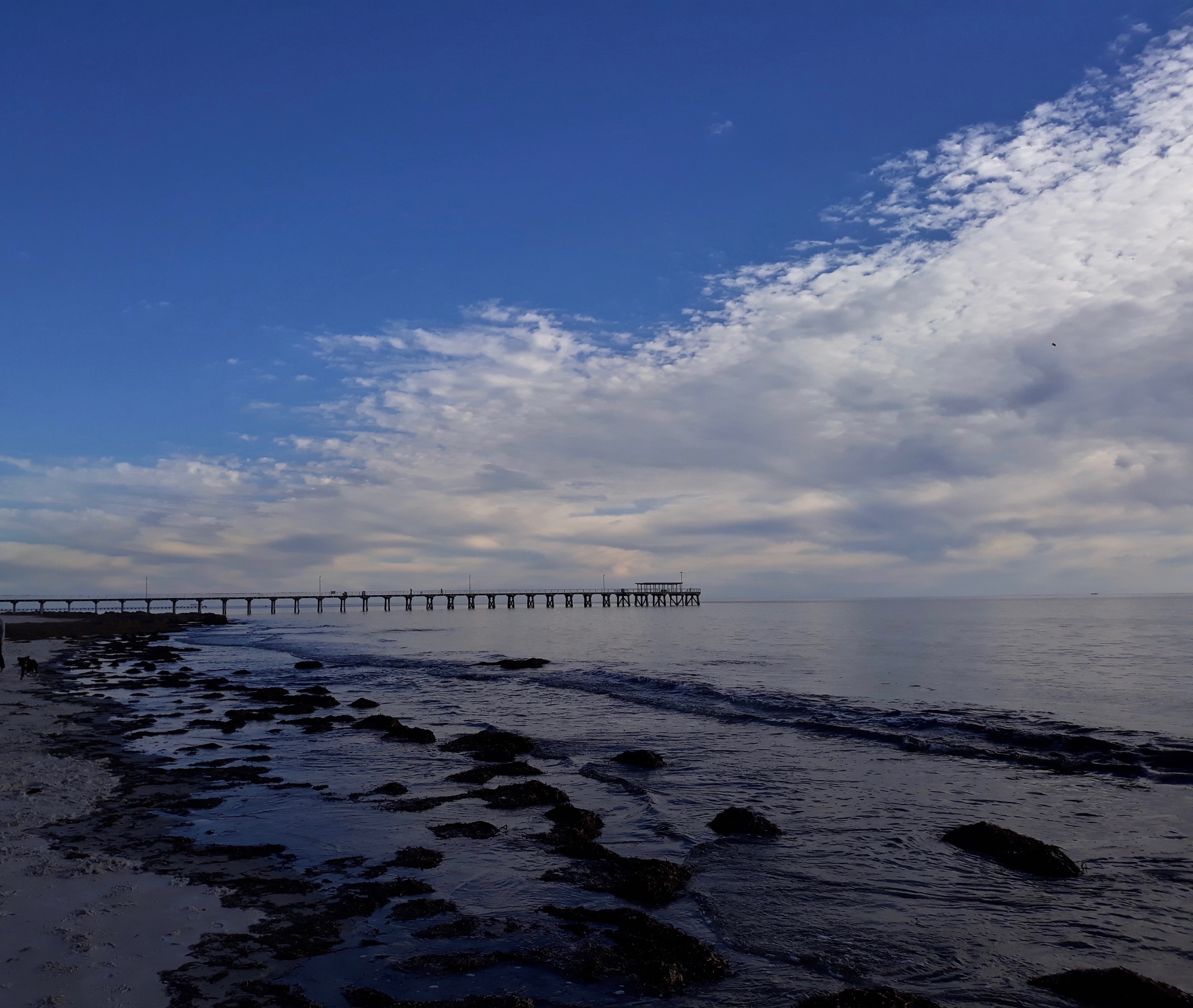
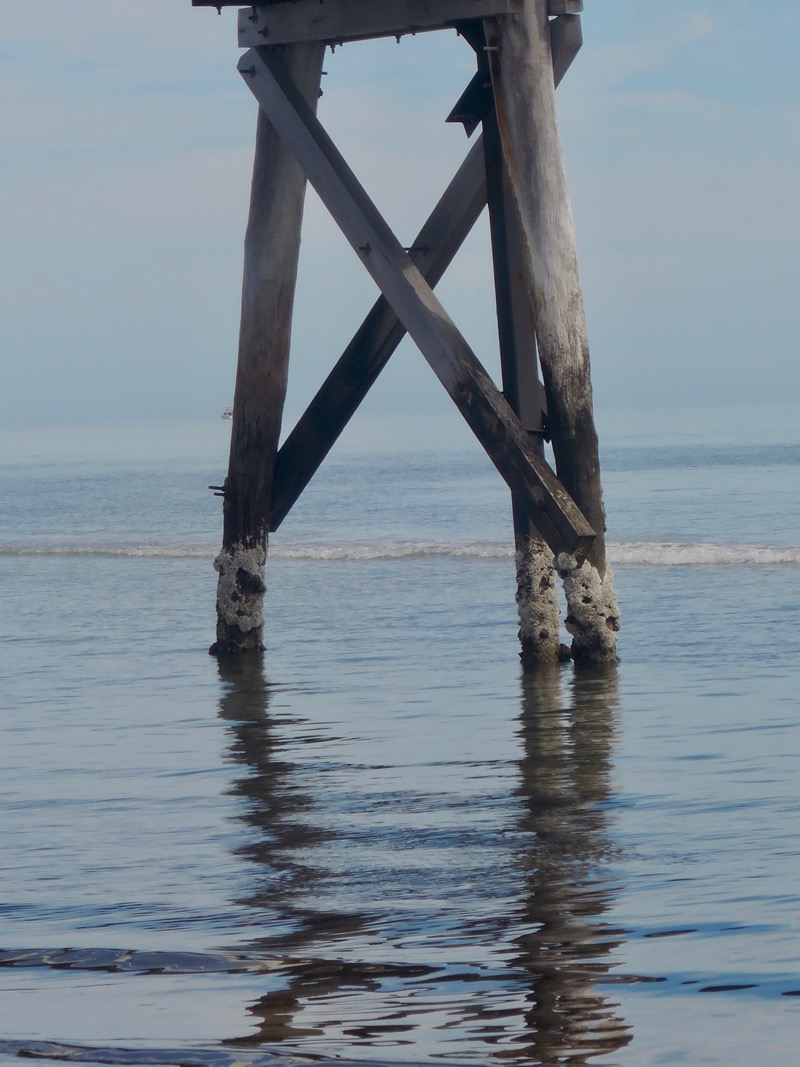
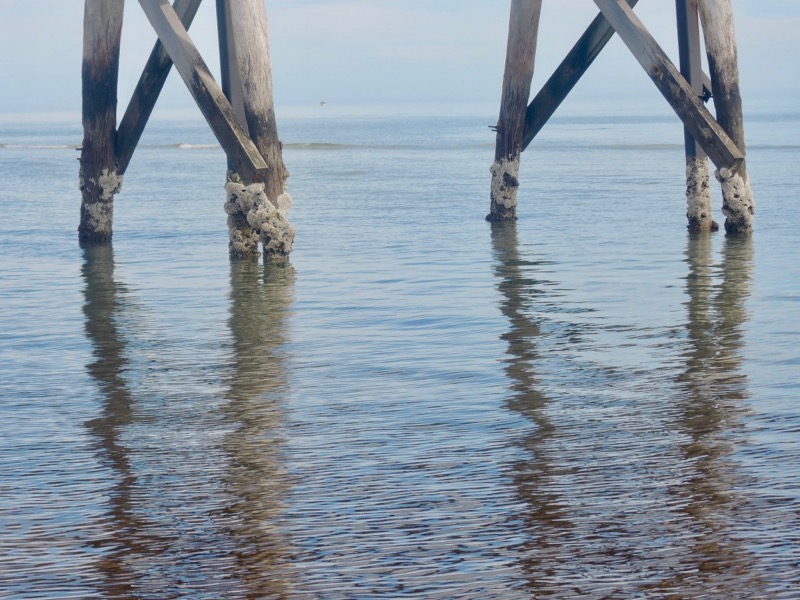
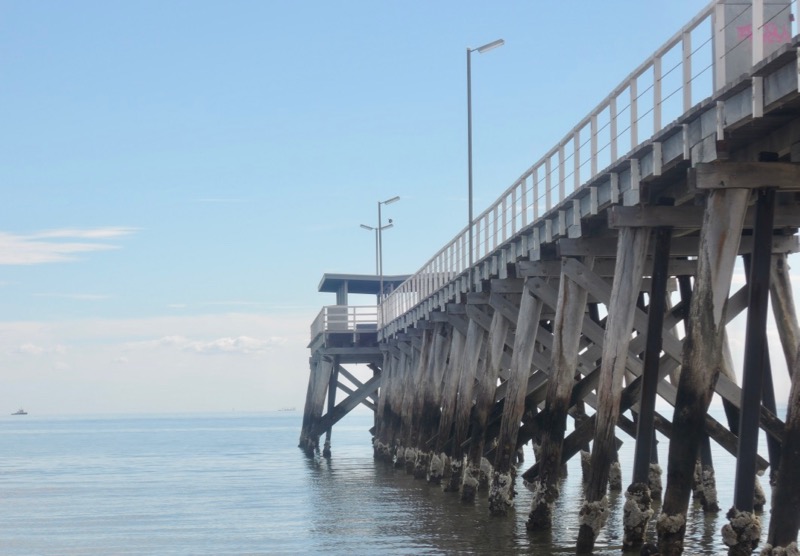
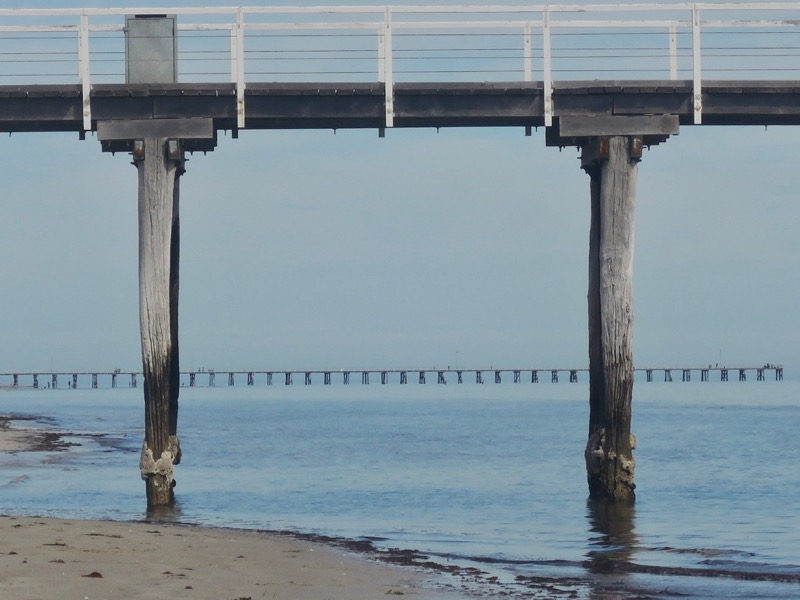
A quiet day at the jetty

Most of all, I’m still reading. Reading helps me through these quiet days. It helps me make sense of them. It helps me feel connected.

It helps me, simply.

A quiet end to a quiet day

Lately I’ve been reading about …

If only I’d known

Other people’s words about … what’s important (or not)

I found a studio where I could practise a particular kind of semi-cultish yoga; I sweated on my purple mat for ninety minutes to pounding trance beats, drank smoothies in the vegan cafe, relished the feeling of freezing sweat on my cheeks when I threw my coat on over my leggings and walked in the snow to the Q train.

Maybe this will be the year I’ll learn to stand on my head, I thought, maybe a headstand is the thing I will accomplish in 2014. I thought about it a lot, like a headstand was a thing that was important.

From ‘This Really isn’t About You’
by Jean Hannah Edelstein

If only I’d known. That’s the feeling Jean Hannah Edelstein is describing in the passage above. In her case, these words applied to a period in her life when she didn’t yet know that she had Lynch syndrome, a hereditary condition that predisposes her to developing cancer later in her life.

If only. If only. Who hasn’t said that to themselves, at some point in their lives? If only I’d known, I’d have focused on other things. If only I’d known, I’d have made different plans. I’d have done more; I’d have said more; I’d have tried more. I’d have been more.

Don’t tell me you haven’t ever thought that.

*

It’s been a quiet couple of weeks over here in my nook of the world, as I continue to try to find my way in the freelance world. I don’t know whether I’ll manage to make a living from freelance editing, in the end. But on tough days, uncertain days, I remind myself that at least I’ll always know that I tried.

Which makes for one less if only in my life.

Grey skies

And meanwhile, in my spare time, I’ve gone wandering beneath grey skies, and blue skies, and cloudy skies, and clear skies. Because there’s no hint of an if only whenever I’m out wandering.

Blue(-ish) skies

Lately I’ve been reading about …

The stories we tell

Lately I’ve been reading about … river red gums

I didn’t just notice the river red gums, but also the cracked mud of receding water, rotting gum leaves, greater eastern egrets, kingfisher, heron, ibis, ducks, emus, kangaroos, wild horses, wasps and flies. I even saw (threatened) Murray cod foraging in the shallow water along the lake’s bank, and quickly learnt to look for them at the centre of the ripples of golden tannin their fins sent out. It was the first time I’d seen them surface, amphibian-like, in this manner. The effect was prehistoric. A single galah feather caught in a spider web stretched, strong as rope, between two river gums, waved gently in the corner of my vision.

From ‘Biyala Stories
by Sophie Cunningham

This year I’m taking regular walks through one of my favourite parts of the world, the Aldinga Scrub — the same walk each time, along the Coral Lichen Circuit, which follows a gentle, undulating loop, with spots that overlook both the coast (to the west) and the hills (to the east) — to watch the seasons ring their changes on the landscape. On previous walks through the Scrub I’ve taken pictures of the trees and the flowers, listened to the birdsong and the sound of the waves in the distance, to the wind moving through the trees. But I want to know the Scrub better, to know it intimately, to witness it. I want to know its intricacies — the kinds of intricacies that Sophie Cunningham describes so beautifully in the passage I’ve quoted above.

Cunningham’s essay is about the river red gums that grow in the part of the world where she lives: Melbourne (mostly), Victoria. It’s a thoughtful, erudite, poetic essay, at least in part about the stories these trees can tell us, the stories they might add to our own (human) narrative if we were able to listen. (You can read it here.)

From what I have read, the trees of the Aldinga Scrub, like the river red gums in Cunningham’s essay, are struggling to survive. So are the plants of the Scrub, the birds and the animals. Their survival is threatened by many things, including encroaching housing developments; farming practices that have, since World War II, diverted the natural water flow away from the Scrub to nearby crops; pollution; climate change; islandisation; the spread of weeds from people’s carefully curated gardens and lawns.

I’m neither a scientist nor an ecologist; I can’t use any particular knowledge or training to save the trees or the plants or the birds on a large scale. But I can keep wandering and and witnessing, and sharing, in the process, the things I see and learn, the passage of the seasons, the stories I discover.

I can ensure those stories don’t go untold. That, at least, is a start.

Out & about: spring flowers

‘When you’re walking the view shifts and changes.
Walking’s a form of hope.’

from ‘The World Without Us
by Mireille Juchau


I’ve just spent a week on holiday, during which I did a lot of walking.

Common (variegated) groundsel

I had planned to go running as much as I could, but due to illness, in the end I had to opt for a gentler form of movement.

Vanilla lily

And that turned out to be not such a bad thing.

Red parrot pea

The sun was gentle and soft most days, though the wind felt distinctly chilly. On a walk through Aldinga Scrub, I saw native flowers blossoming everywhere, in every colour: yellow, purple, orange, white, pink, blue.

Rice flowers

Paper flowers

Blue Grass Lily (Caesia calliantha)

Even the parts of plants that weren’t flowering seemed exotic and gorgeously coloured.

Twining vines (devil’s twine)

Crimson branches

Bees darted about, drinking nectar.

Bee on a coast beard heath plant (or a rice flower?)
with curling shoot

And though they’re not pictured here, roos observed me as I walked the sandy trail, while whistlers burbled hidden in the trees and a frogmouth boomed in the distance.

Yellow bush peas
(that’s what I call them, but apparently they’re called common eutaxia)

Spring has truly arrived.

Out & about: winter solstice

‘When you’re walking the view shifts and changes.
Walking’s a form of hope.’

from ‘The World Without Us
by Mireille Juchau


I spent the week of the winter solstice on holiday. I had planned to go camping to Yorke Peninsula, but various things conspired against these plans. In the end, it didn’t matter. I live by the beach. That’s holiday enough in itself.

Winter solstice sunset (1)

The weather that week was unusually dry, cold and sunny for June in Adelaide, with overnight temperatures getting down to as low as 2 degrees Celsius. That made for beautiful weather in which to go walking.

Winter solstice sunset (2): dying light

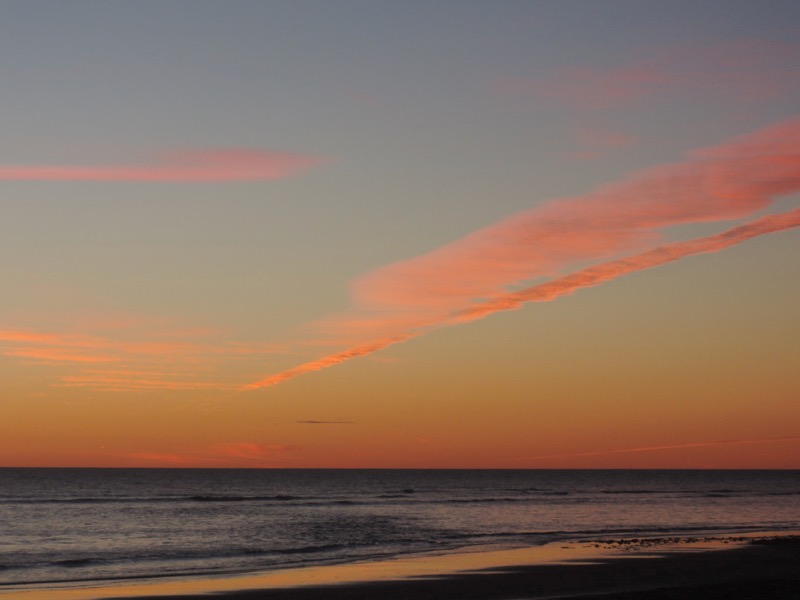
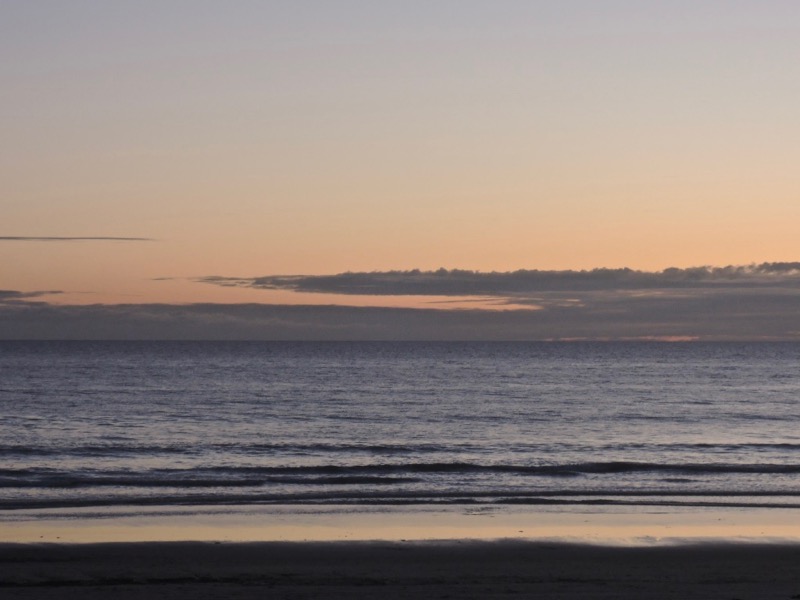
The sunset on the evening of the winter solstice was cold, clear and beautiful. Though the time of the year when the days are at their shortest often leaves me feeling light-starved and sunshine-deprived, that evening was still worth celebrating.

Winter solstice sunset (3): last glow of light

An additional note: I took these photos between about 5.15 pm and 5.30 pm. The sunsets from hereonin will be later every day … and that’s another thing worth celebrating!

One day

Other people’s words about … the sea

After lunch, as a reward for their fine behaviour, Nurse allowed them to bundle into coats and hats and bolt from a back door along a path that ran behind Mr Styles’s house to a private beach. A long arc of snow-dusted sand tilted down to the sea. Anna had been to the docks in winter, many times, but never to a beach. Miniature waves shrugged up under skins of ice that crackled when she stomped them. Seagulls screamed and dove in the riotous wind, their bellies stark white. The twins had brought along Buck Rogers ray guns, but the wind turned their shots and death throes into pantomime.

From ‘Manhattan Beach’
by Jennifer Egan

I have never been to a beach in the kind of winter that Jennifer Egan describes in the passage above. Many years ago, in Michigan, I walked across a frozen lake (and thereby learnt the meaning of the term ‘wind chill factor’), but that was a lake, not the ocean. I’d like to experience that wild, violent chill, just once in my life.

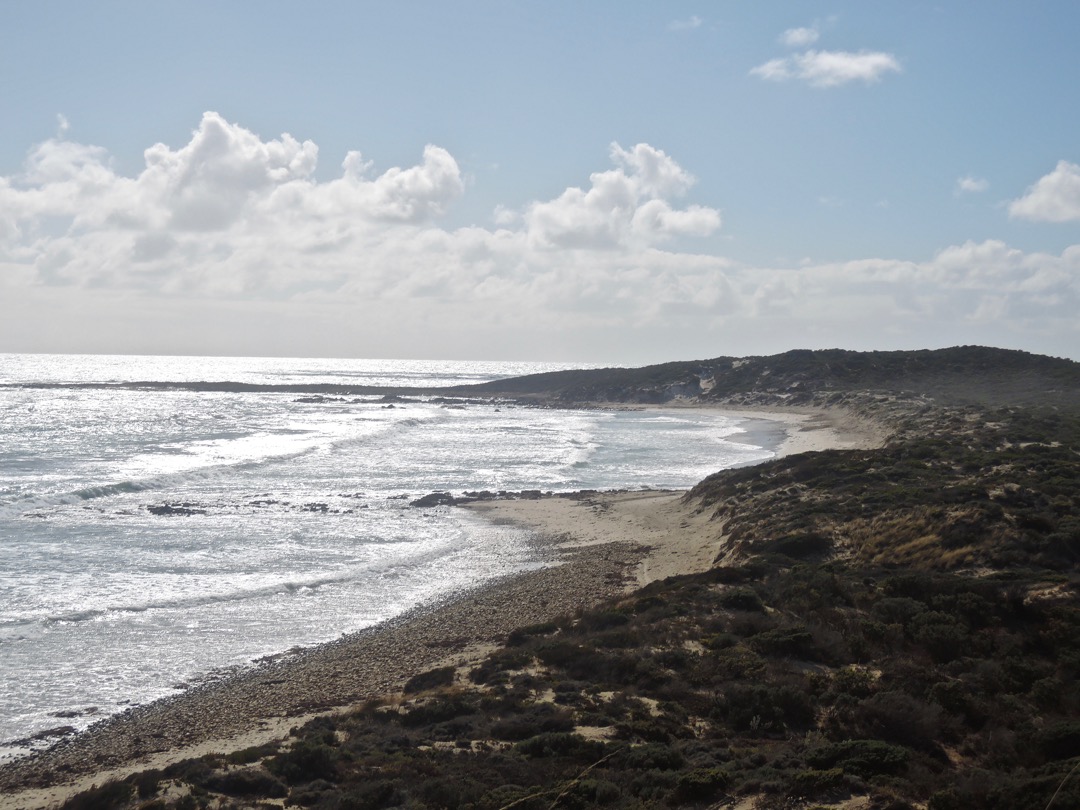
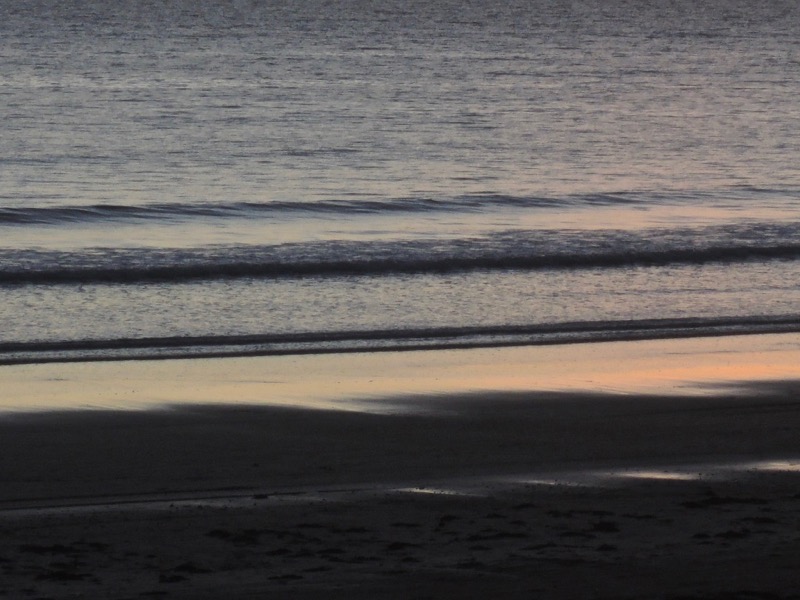
The beaches along the South Australian coast have their own seasons of peace and restlessness. Often, the early months of Autumn are times of softness and stillness, and this past April there were several days when the sea lay like blue, shining silk on a bed of sand.

As you can see from the photos in today’s post, which I took at the beach in the first week of April, the South Australian coastal world is utterly unlike Egan’s, but there is wildness at its essence, all the same.

Chasing clouds

‘Some athletes love to talk about what a simple sport running is.
They say that all you need is a pair of sneakers.
That’s not true.
What you need is some freedom of movement
and the ability to see a clear path ahead of you.
It took me years to see that path and to find my pace.
When I finally got moving, I hoped I might be able to run forever.’

From ‘The Long Run’
by Catriona Menzies-Pike

Around about a year ago, I wrote a post on this blog in response to lawyer-turned-long-distance-runner Robyn Arzón’s book Shut Up and Run. In that post, I wrote, in angry contradiction to Arzón, about the virtues of taking things slowly, of living humbly, of letting things unfold gently, whether or not your life is unfolding as you wish it would, or as you think it should. (You can read the post — which, by the way, I still stand by — in its entirety here.)

Here’s the thing about running, though, as an activity, as a practice: it lends itself to metaphors. That’s why so many runners, like Arzón and Menzies-Pike, write about it. Speed, distance, endurance, cadence, rhythm, pace — all of those things can be metaphors for something else: for life. It took me years to see that path and to find my pace, Menzies-Pike writes, of her running. And: When I finally got moving, I hoped I might be able to run forever.

Don’t tell me she’s not talking in metaphors.

As for me, I stopped mid-run — on a gorgeous, warm, still day last week; a day when all of coastal Adelaide seemed to be bathed in soft sunshine — to take the photos you see in today’s post. Afterwards, I put my camera away and lingered at the shore a while, before wandering back from the beach to the foreshore path and setting off again, back home.

Days like that — days of running beneath a soft blue sky, beside a silken blue sea — are days, simply, to be grateful for, days that feel as though they are unfolding as they should, or at least as you wish they would.

And so this post is the first in a new series on my blog entitled Chasing clouds. It is a companion series to my Out and about series, in essence. The theme in that series is walking; the theme in this one is running. Running, for me — like walking — is about wandering, about wondering. It is about chasing clouds.

Of course I’m using metaphors. Running, for me, is about hope.

Another world

Other people’s words about … Cairo

Sunlight was streaming through the shutters. I peered down into the street where a cat was sunbathing on a parked car. Friday morning was always the most peaceful time of the week in Istanbul Street. The doorman’s wife sat on the kerb watching her ragged child play in the clouds of pollen and dust. [My weekend away from Cairo] seemed a world away, a movie I watched last year. Cairo is so encompassing that when you are there all other realities seem to fade away. I thought of Hatton Garden and it seemed surreal that at that very moment crowds of London commuters were heading to work in the rain. It felt impossible that the two places could exist at the same time.

From ‘Playing Cards in Cairo: Mint Tea, Tarneeb and Tales of the City
by Hugh Miles

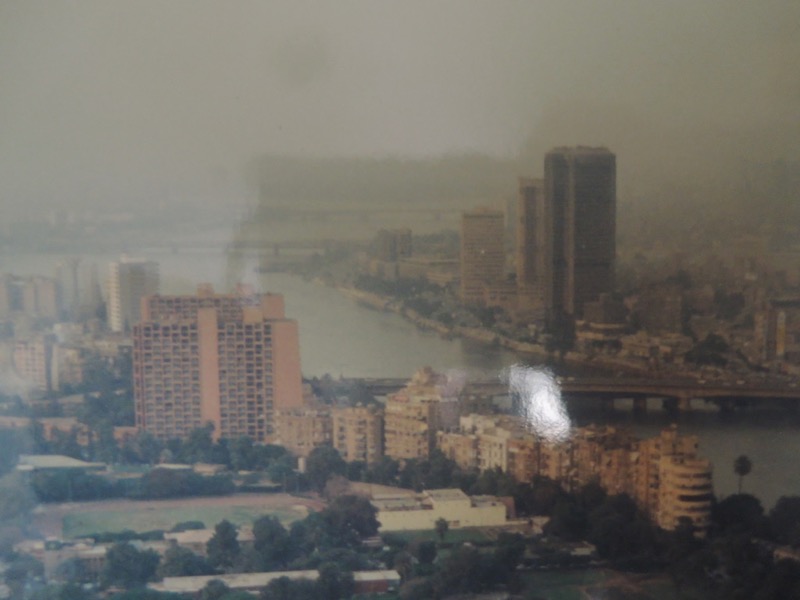
Many years ago, in another life, I spent about six months living in Cairo. I had happened there by chance, at the suggestion of my boyfriend at the time, who spoke a smattering of Arabic. We lived in the centre of the city, away from the ex-pat community, in a dusty fourth-floor apartment with faded red velvet sofas that gave off great puffs of dust whenever one of us sat down on them. At night, when we switched on the lights in the darkened bedroom, there was the sound of a thousand cockroaches scuttling out of view. The view from the rickety balcony was of life on the street below: the storekeeper of the small general store where we bought bottled water, washing down his front doorstep with water and a broom; the ta’ameya man at his food stand, stirring his big metal spoon through a great dented tin bowl of smoking hot oil.

I left Cairo as I came to it — by chance, at someone else’s bidding. I knew even then that I would never go back. For those few months in Cairo, I had not lived as a tourist, as most Westerner visitors do. Not exactly. Not quite. Cairo was in me, and on me, in a very physical, a very literal, sense: its grime lay in thick strips of black beneath my fingernails; its dust coated my skin. The city had, for those few months, as Hugh Miles so succinctly puts it, encompassed me.
And so I left, and I did not go back.

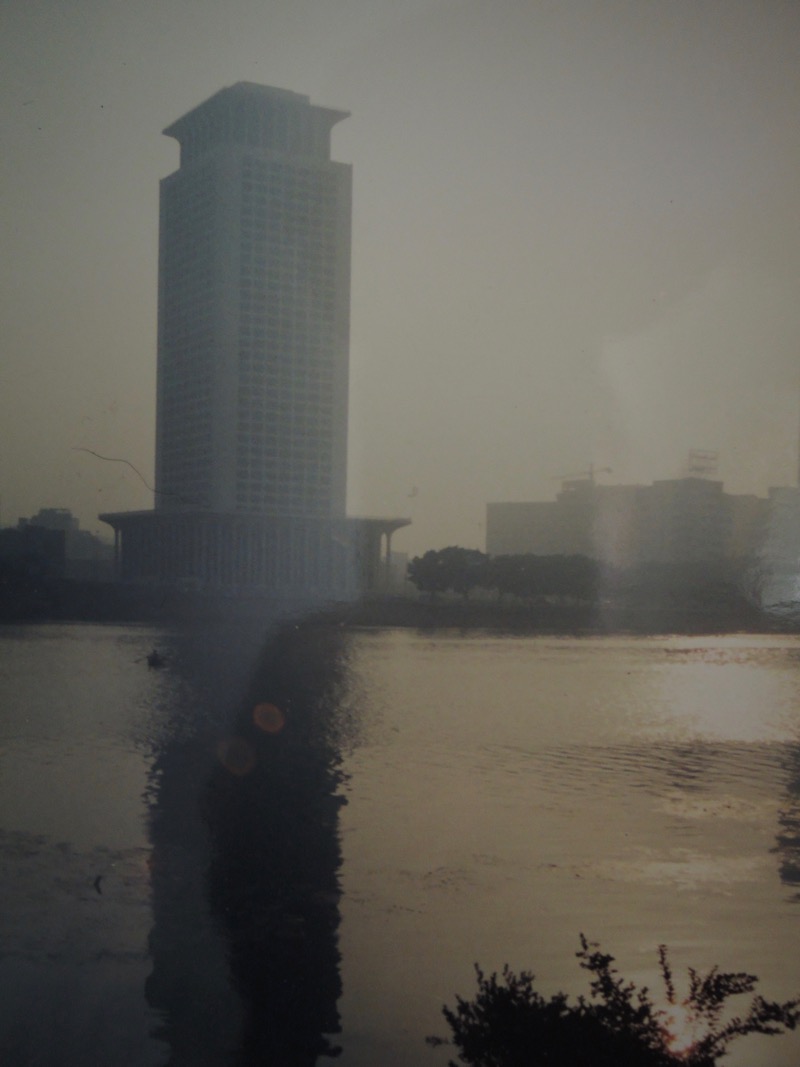
I found some old photos from that time recently, ones I took with an old camera, in those pre-digital years. I don’t have a scanner and so in order to reproduce them here, I actually used my camera to rephotograph those photographs. This accounts for their odd, slightly removed, unreal aspect — for, as well as Cairo in these pictures, you can see the glare from my window right here in Australia, the bend in the photographic paper.

I was going to apologise for this, originally. And then it occurred to me that in fact, this aspect of distance and remove is exactly right. In this context, it is right.

And so, no apologies today — just a glimpse into another world, a very long way away from here and from now.