He wasn’t a big man anymore. He wouldn’t be famous, like he’d dreamed as a kid, teaching himself to sign his name in all curved letters so he would be prepared to autograph a football. He would live a small life, and instead of depressing him, the thought became comforting. For the first time, he no longer felt trapped. Instead, he felt safe.
from ‘The Mothers‘ by Brit Bennett
Each year, as the number of years I’ve lived on this planet grows, I feel my own life shrink in the scheme of things. And to my own surprise, I have come to find this process, in the words of the protagonist in the passage I’ve quoted above, comforting and safe rather than depressing.
Call it ageing …
Small …
… or perspective …
Smaller …
… or necessity.
Smaller still …
Whatever it is — this passage to smallness, this losing yourself within the bigness of the world — can feel downright joyful, you know?
Note: I’m not the only blogger who likes to reflect on their birthdays. I loved this post from Nicole from Eat this Poem , who reads Elizabeth Bishop’s poem ‘The Bight’ each year on her birthday. I had not come across this poem before and am so grateful Nicole has drawn my attention to it. It’s a beautiful poem, definitely worth reading each year (if not more often)!
Here, town finished, and countryside began. You crossed over, from pavements and shops, towards copses and streams, and meadows full of grazing cows. The streets and the fields seemed to push at each other, the city trying to sprawl further out and the fields resisting. The planners and architects and merchants would obviously win. What force had buttercups and earthworms and cabbages against the need of human beings for dwelling places, against developers’ chances to make money? Alive as a strange creature in an aquarium, the city stretched out its tentacles, grew and swelled, gobbling the pastures and hedgerows that lay in its path. Fields were bought, and new rows of houses built, and then the process repeated.
from ‘The Walworth Beauty‘ by Michèle Roberts
I first started visiting and spending time in Aldinga Beach almost twenty years ago, when it was still — just, almost — a country town. Ever since then, the city has been creeping up on it. Sometimes I think the encroaching suburbs are like an oil spill, seeping down the slopes of the hills from the north, all the way into the Scrub. And so, though the rural world at Aldinga Beach is very different from the nineteenth-century English one Michèle Roberts describes in the passage above, still her words seem apposite.
But the Scrub is still alive and I still make time to go there on days off, and whenever I’m wandering there, I feel hope. I took the pictures in today’s post one morning in late July. Though the sky was grey and the temperature was chilly, the first breath of spring had wafted over the Scrub, as I hope you’ll see below.
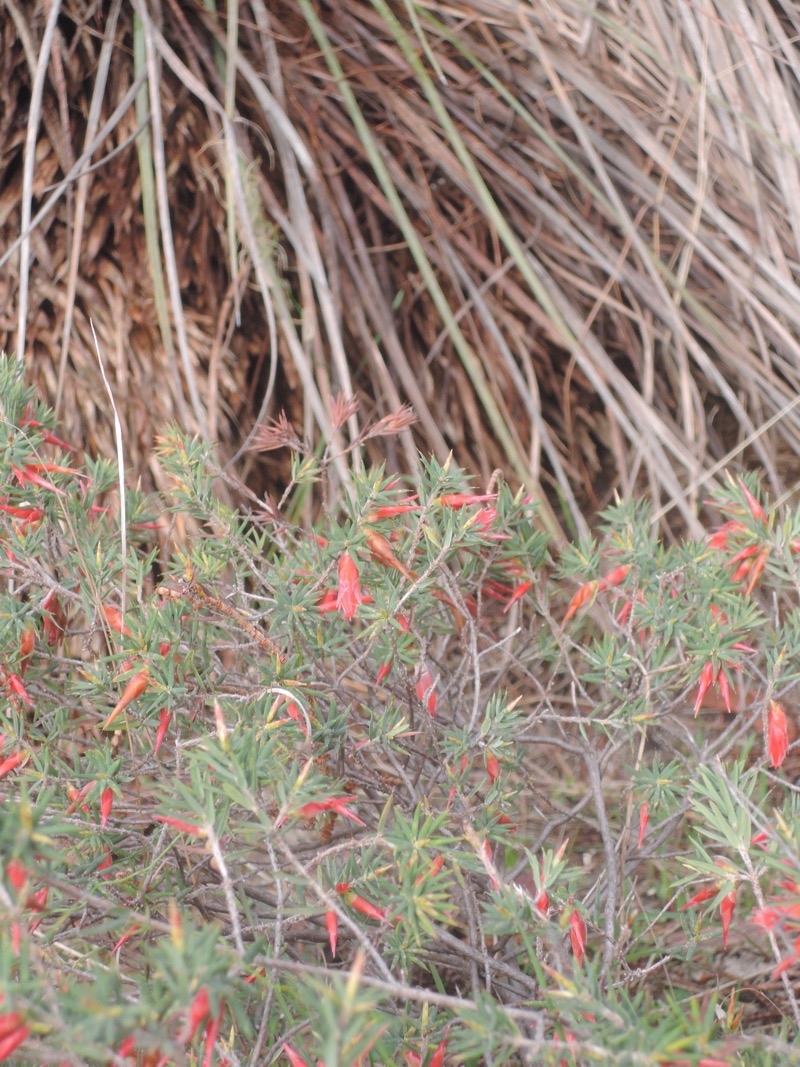
In flower that morning were flame heath bushes …
… and …
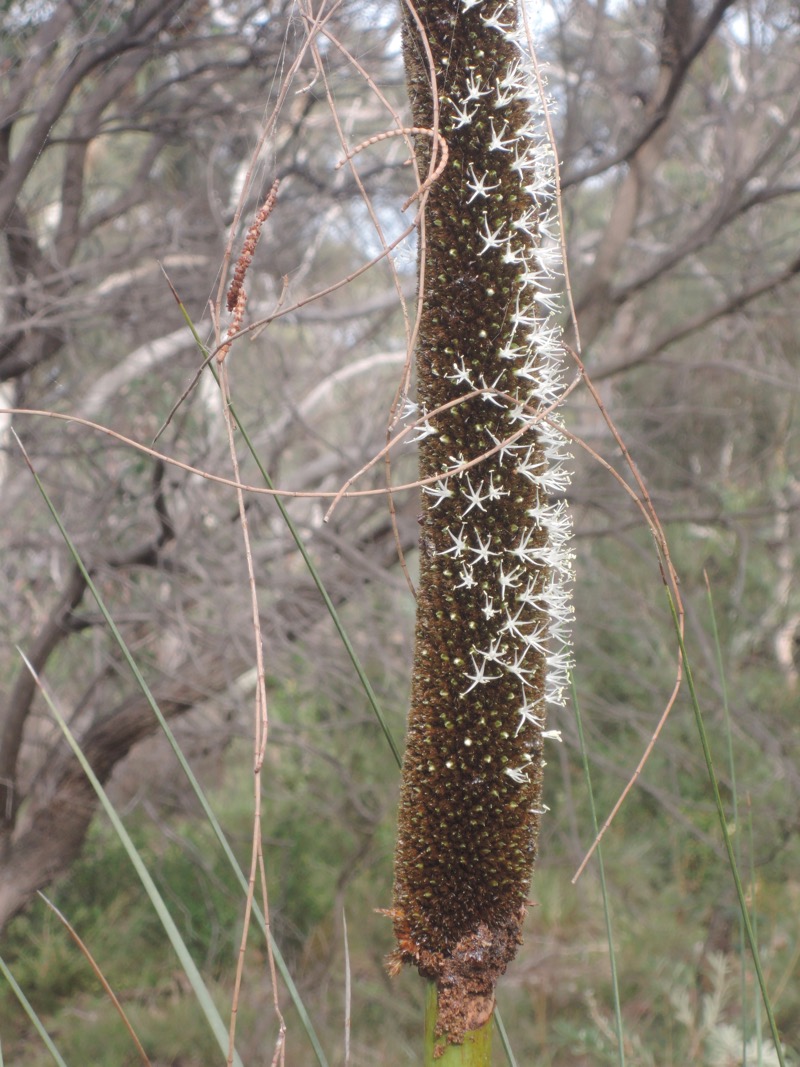
… grass trees.
I saw the first shy showing …
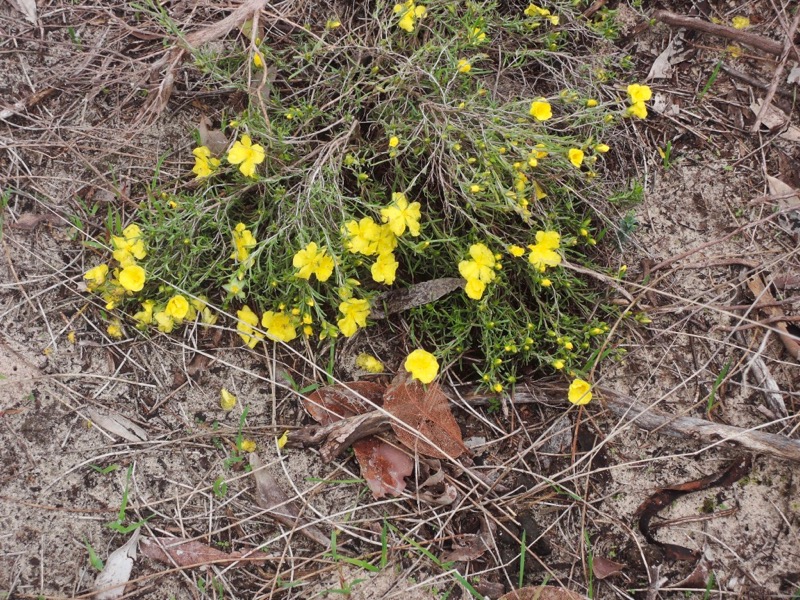
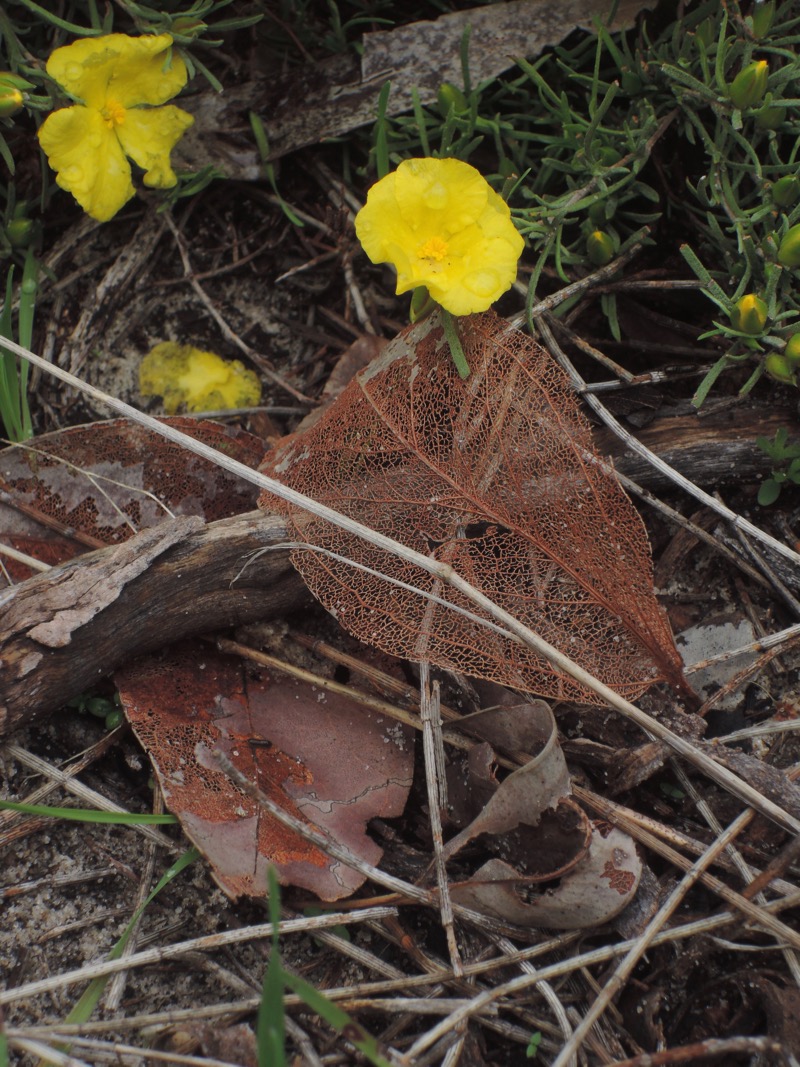
… of guinea flowers:
There were green shoots everywhere …
… after the recent rains.
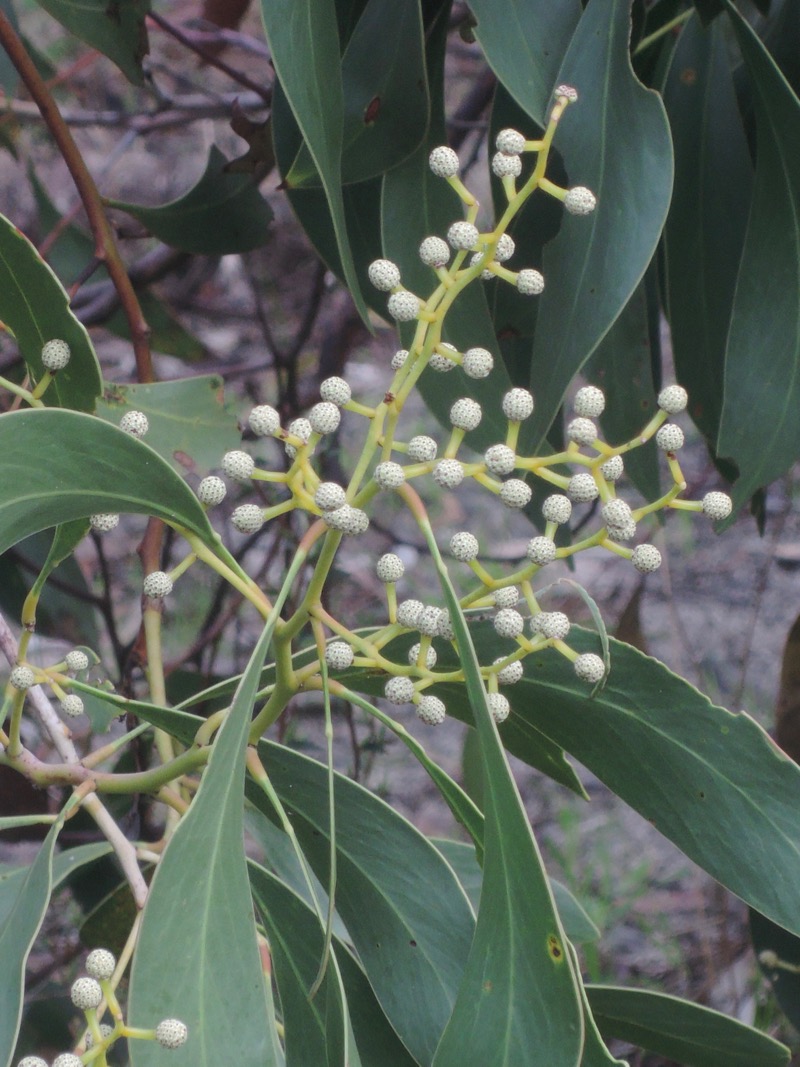
And there were other plants budding, too. Like this:
And this:
And this:
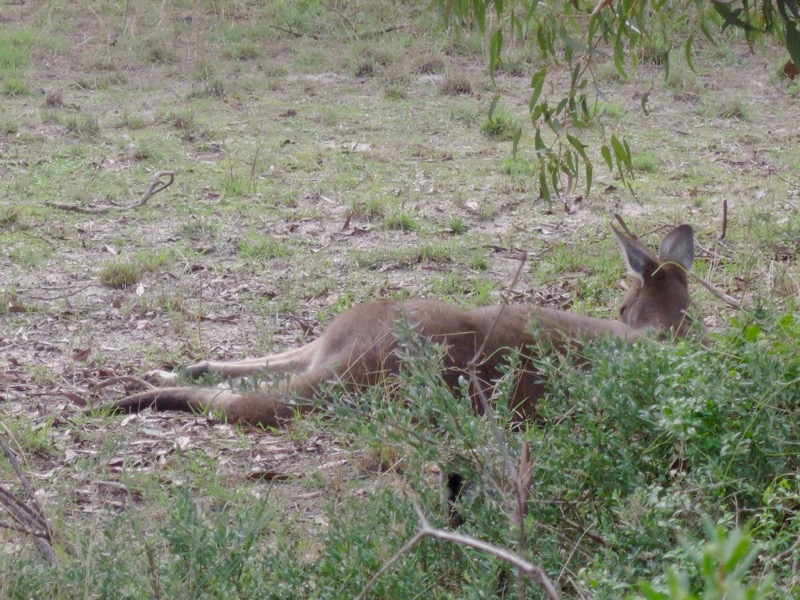
In the southwest corner of the Scrub, where the land slopes down towards the coast, the kangaroos were snoozing …
… although they weren’t best pleased when I disturbed them:
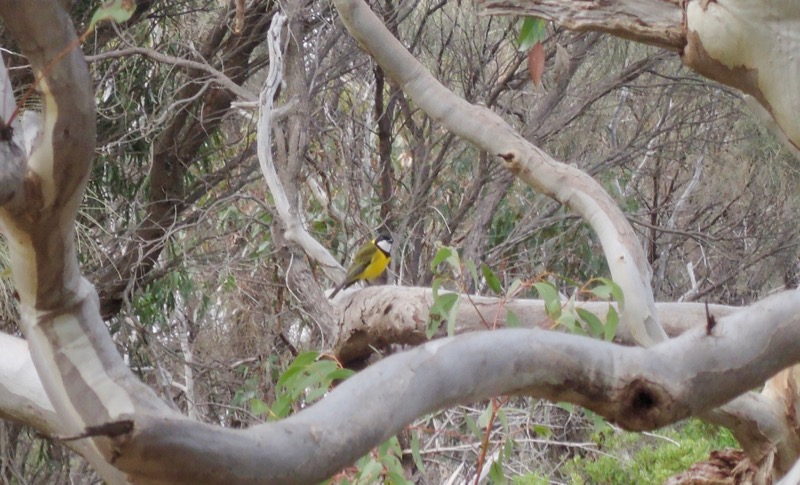
Further on, I caught a flash of gold from the corner of my eye. It was a golden whistler darting about the branches of a tree beside the sandy path.
Whistlers don’t sing at this time of the year, but their plumage is as glorious as ever (though unfortunately faintly blurred in my photos):
So, yes, the tentacles of the city are reaching out in South Australia.
But still, the last remnants of the pre-urbanised world like Aldinga Scrub live on.
I don’t have a quote for you today: just a link to a post by the lovely Sophie of Wholehearted Eats, whose healthy-cooking blog I often drop in and read. In her post, Sophie, someone who has experienced anxiety all her life, suggests creating an anxiety toolbox — a kit you can (metaphorically) carry around with you at all times, full of techniques and strategies you can use when and if you need to. I’ve often toyed with the idea of sharing some of the techniques that I’ve learned over the years to cope with anxiety, she writes, but never got around to it.
Till now, that is.
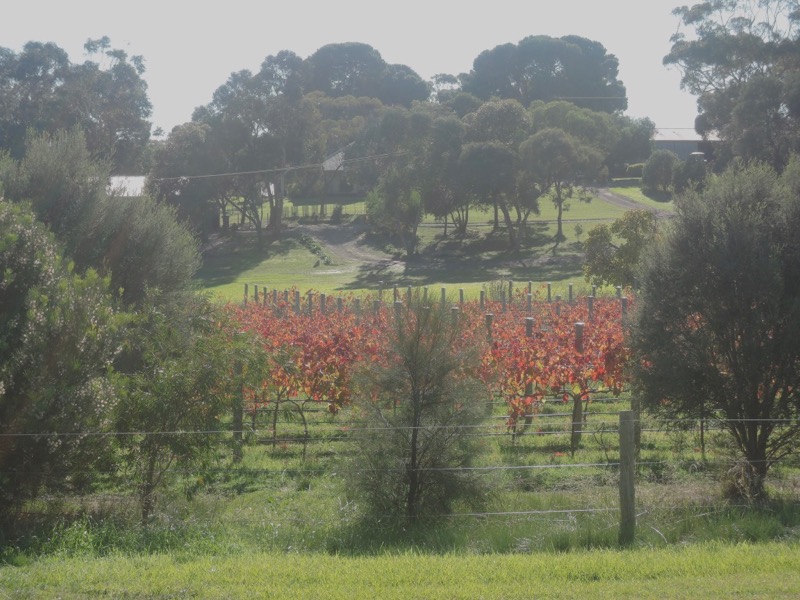
Vineyards
Head on over and see what you think. Perhaps you, like me, will find some of Sophie’s techniques helpful.
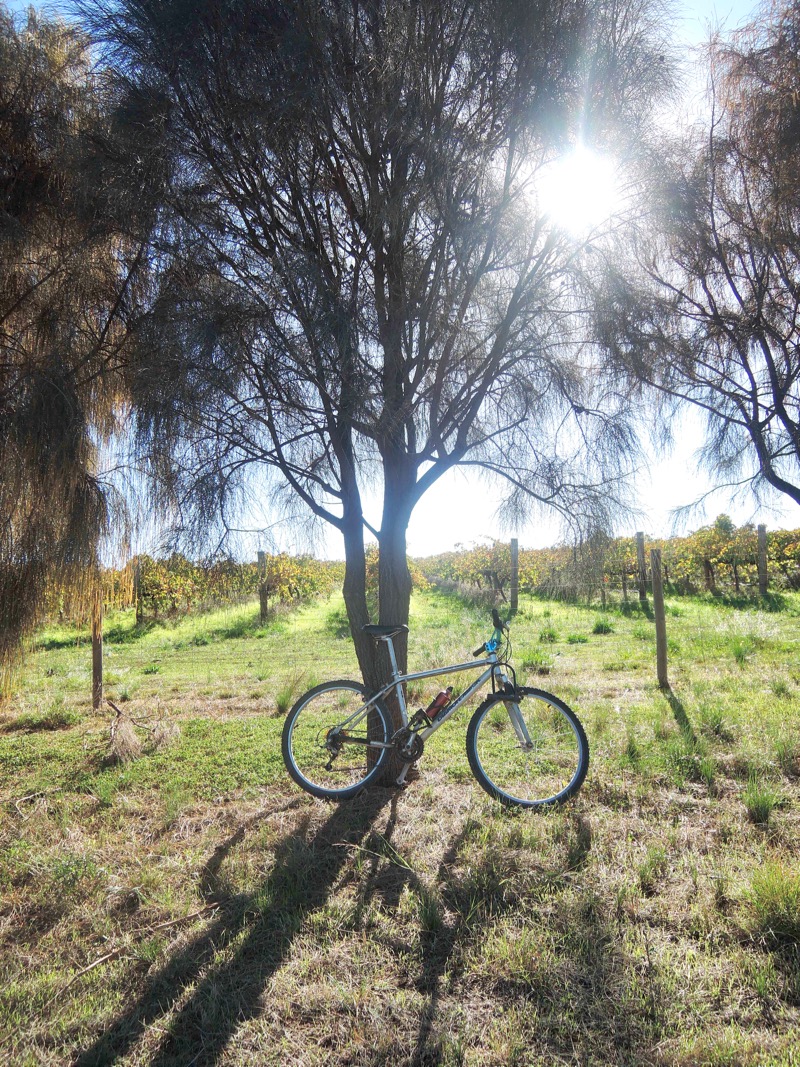
Meanwhile, as for me, I’ve been out and about a lot on my bike recently, exercise being one of the greatest feel-good strategies I know and keep in my own toolbox. The gorgeous sunny weather we’ve been having this autumn and winter has added to the joy I’ve felt getting on my bike.
Eucalypt and vinesThe different shades of autumn
The photos in today’s post all come from one of my recent bike rides. It was a still, sunny day, and every moment of that ride was uplifting.
At the top of the hillSheoaks in golden bloom, vineyards and … my bike (of course)
I hope these photos leave you feeling uplifted, too.
Sometimes I wonder why I come here [to see my psychoanalyst] when the coming is so iterative, so forced. Having to come here sometimes feels like the biggest problem I have. I feel like a lonely man visiting a brothel, the money changing hands, paying for understanding as some people pay for love. And just as that is not love, so this cannot be understanding. What, then, is it?
from ‘Aftermath‘ by Rachel Cusk
As I’ve mentioned here before, I spent several years in and out of therapy, being treated for anorexia and its aftermath. I will be forever grateful to the therapists I saw during those years. They treated me with respect, patience, warmth and compassion. And they listened. Oh, they listened.
But I stayed in therapy too long, I think. I believed at the time that I was seeking a cure for my constant sense of malaise. That cure seemed terribly elusive. Now I think it was elusive because, subconsciously, I knew there wasn’t one. What I was really reaching out for was understanding, and that is not something I found in therapy sessions.
Therapy is a strange process. It is, as Rachel Cusk says in the passage above, a transaction of sorts. When that transaction starts to make you feel worse rather than better, when you feel lonelier leaving the therapist’s office than you did on arriving, it’s time to stop. It really is as simple as that, though it took me some time to figure this out.
Post-therapy, am I still seeking understanding? Yes, of course — just like everyone else. Have I found it? Not really. Perhaps no-one ever does. What I have found, though, is solace. I find solace in pots of tea, and walks along the beach, and wanders through the bush. I find it in cakes I bake, and books I’m reading, and holidays I plan to go on. I find it in birdsong, and in leisurely bike rides, and in the company of friends and family and pets.
Musing takes place in a kind of meadowlands of the imagination, a part of the imagination that has not yet been plowed, developed, or put to any immediately practical use. Environmentalists are always arguing that those butterflies, those grasslands, those watershed woodlands, have an utterly necessary function in the grand scheme of things, even if they don’t produce a market crop. The same is true of the meadowlands of imagination; time spent there is not work time, yet without that time the mind becomes sterile, dull, domesticated. The fight for free space — for wilderness and public space — must be accompanied by a fight for free time to spend wandering in that space. Otherwise the individual imagination will be bulldozed over for the chain-store outlets of consumer appetite, true-crime titillations, and celebrity crises.
from ‘Wanderlust‘ by Rebecca Solnit
Most of you would know by now that one of the greatest pleasures in my life is wandering: along the beach, through the bush. We read a great deal these days about the value of high-intensity exercise (the dreaded HIIT), and though I understand the principle — short bursts of intense exercise, in order to get your heart going — I find the practice intimidating and somewhat soulless. I’m not interested in exercising purely to become ‘fit’, or to ‘get healthy’, or to try to do something epic.
What I’m interested in is wellbeing — a concept that includes mental, emotional and spiritual aspects as well as the more obvious physical ones.
That’s why I like to wander. Wandering, for me, can be a slow stroll through the bush, or it can be a steady march along the shore. Hopping on my bike and riding places — that’s a form of wandering, too. It’s about breathing in fresh air, moving through beautiful surroundings, looking around, and — yes — musing. As Solnit points out, it’s about being unfettered in time as well as space. Musing takes place in a kind of meadowlands of the imagination, she says.
Oh, yes.
So today’s round-up of photos comes from another one of my recent wanders in the bush, back at the end of April. It was a dull, still day, and not many of the plants along the trail were in flower. The bush seemed stripped of bright colour: it was all earthy greens and sandy browns. The birdsong was muted, too — the whistlers don’t call much at this time of year in South Australia; the shrike thrush songs are shorter and softer than in the warmer months. A crow croaked and muttered in the distance, and I heard snatches of broken magpie song.
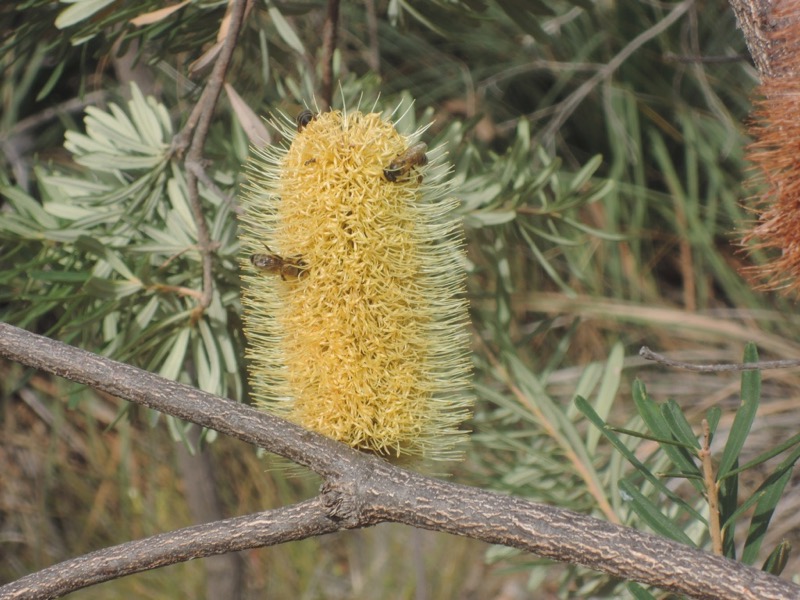
But then I noticed the banksia trees, which were all in flower. I hadn’t seen them at first because I’d stepped in from a louder, brighter world beyond the trail, a world of fences and bitumen streets and painted houses. Banksia leaves are a dark, khaki green, and the flowers blend in with the surrounding vegetation, varying in colour from pale yellow, through light green, to drab brown. Their beauty is as muted as the birdsong I described above, and in order not to miss it — in order to appreciate it — you have to be willing to slow down. To stop. To muse.
At the back of the hotel was a garden. Along its edge ran an earthen pathway pillared by palms. it ended in a low iron gate. They had not noticed the gate before, but now they saw it opened directly onto the beach. Stepping through the gate, they were confronted by the white and blue of ocean and beach in limpid morning light. Bare-chested fishermen were pushing wooden boats into the surf, chanting prayers together for luck. Women in fluorescent knee-high saris walked past in pairs and threes, with fish-baskets on their heads.
From ‘Sleeping on Jupiter‘ by Anurahda Roy
First, an update: I didn’t go to Yorke Peninsula during my fortnight of annual leave as I’d planned, after all. For a variety of reasons, it was impossible to get there. Instead, I spent some time holidaying along the coast down south. So the view from the steps down to the beach was different from the one I’d anticipated, though it was still a view to revel in.
A view to revel in
I complained recently about my dread of autumn and winter, those months of the year I always think of as the grey months. But my complaints this year were premature. Sometimes in South Australia, in the early weeks of autumn, the wind dies off, giving way to still, sunny days; endless blue skies; cold, clear nights. That’s how it’s been here for the last four weeks. I could not have picked better weather for a holiday by the sea, despite my last-minute change in location.
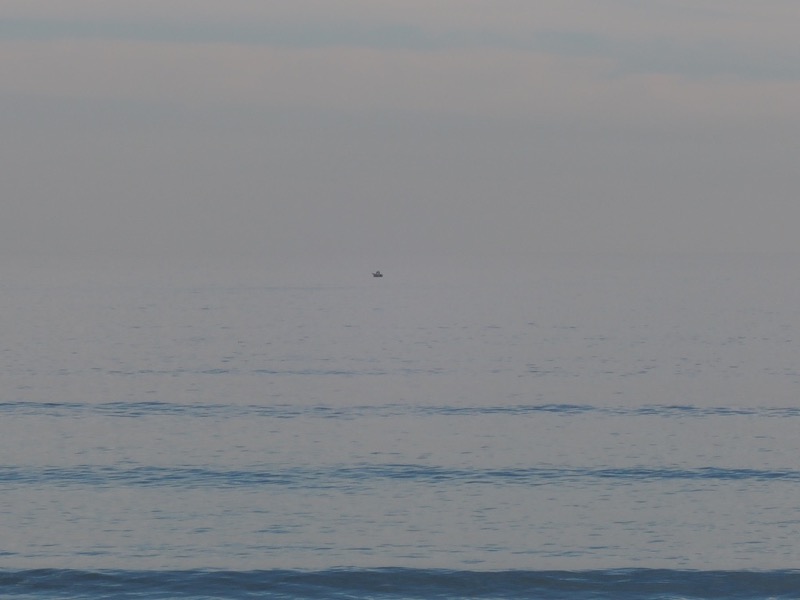
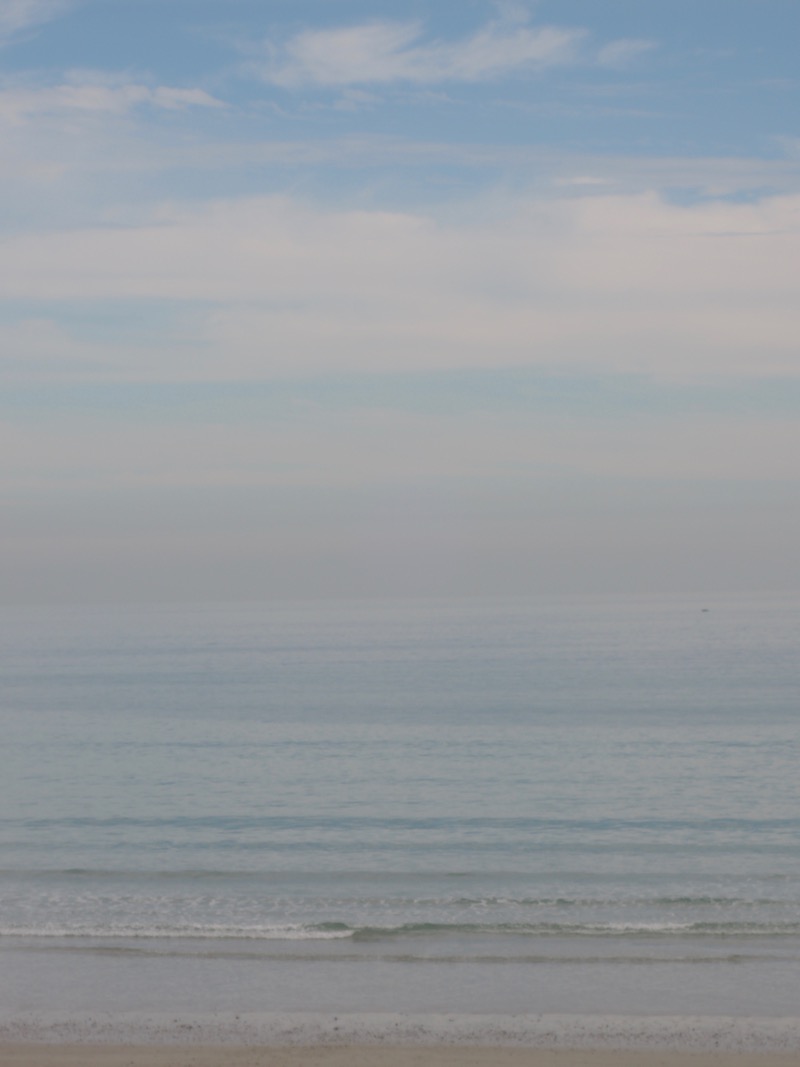
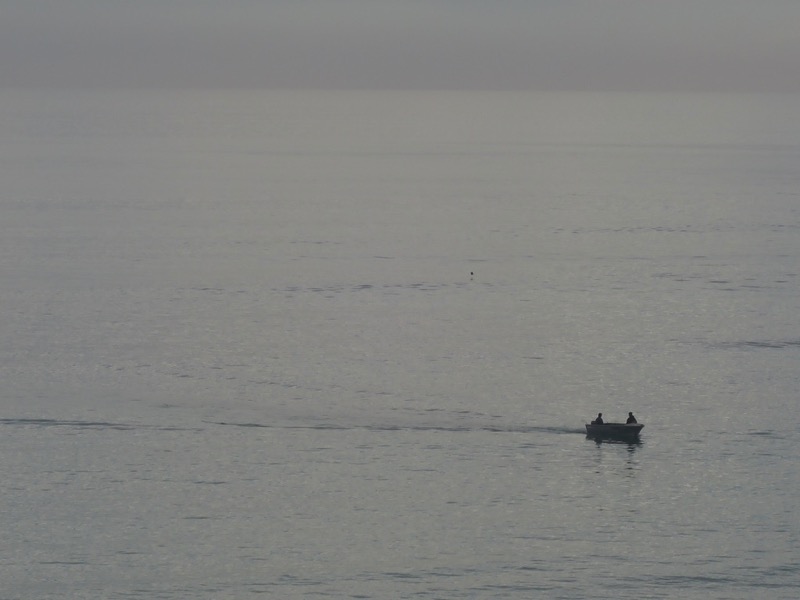
One afternoon I took a walk heading south along Aldinga Beach, beyond the spot where cars are permitted to drive onto the beach to launch fishing boats. It was one of those days where the horizon — that mysterious line between the sky and the sea — seems almost invisible. A boat glided over the surface, somehow suspended between the two, and the headland in the distance was shrouded in a mist of sea spray. The sea changed colour as I walked, from opaque blue, to glassy blue, and then to silver.
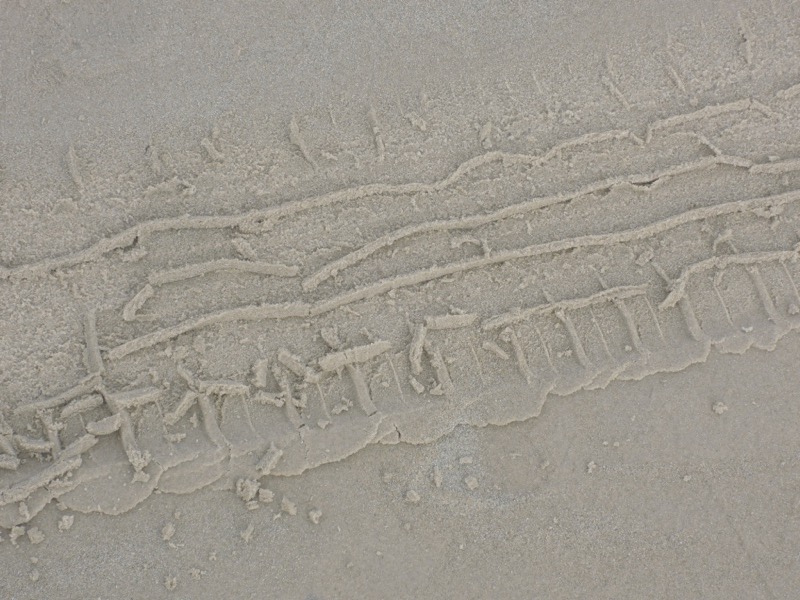
Tyre tracks in the sandInvisible horizonGliding boatSea spray shrouding the headlandOpaque blueGlassy blueSilver and shining
As I walked, I thought about the words I’ve quoted right at the top of this post. I write about the beach here on my blog as a place, always, of beauty and wonder: a place where I swim and stroll, wander and wonder. But that’s a very Western, privileged, twenty-first-century way of viewing it, isn’t it? The beach in the world Anurahda Roy describes — modern-day India — is another place entirely; and her sea is a different entity. In her world, the sea provides the means for people to strive to make a living, and the making of that living obscures the beautiful view.
I am lucky enough, mostly, not to feel the need to chant a morning prayer for luck, as the fishermen in Roy’s passage do. But if I were the praying type, I would utter a prayer of thanks for the view of the beach I had that day, and for every moment I got to spend by it.
Chocolate at breakfast has always seemed wrong to me somehow. It seemed too decadent and lusty, entirely out of place, like watching a sex scene on television when your parents are in the room. But I have now spent eight mornings eating chocolate granola for breakfast, and I have concluded –- with all due gratitude to [my husband] Brandon, my personal granola pusher –- that chocolate is, once and for all, perfectly acceptable at any time of day. I had been a doubter for so many years, but now, good lord, I get it. And I think this revelation might, quite possibly, be the cosmic purpose of our marriage.
I came to Molly Wizenberg’s blog only recently, many years behind most people. There are so many cooking blogs out there in the internet-world now, and so many of them are so beautiful, that it is easy to feel overwhelmed, or bored, or cynical. Moreover, the idea of using a recipe to introduce a post that discusses a theme entirely unrelated to food — in other words, to discuss life — has become such a common approach amongst food bloggers that it seems to me to be verging on the clichéd. But Molly was one of the early bloggers to take this approach, and she writes well, which makes all the difference. I will be reading her blog again, I’m sure.
As for chocolate at breakfast — well, why not? A therapist I used to see once said to me, as I agonised over how to live my life better (or rather, how not to live it so very, very badly): Life is short. Do what works. Though I’ve left much of his counsel far behind, I think about these particular words of his from time to time. Life is short, indeed. If chocolate works, then eat it. Please.
(Alternatively, you could try cake. Cake never fails for me.)
Meanwhile, today is my first day of two weeks’ annual leave. I currently have two part-time jobs, so time away from both of them simultaneously can be hard to pull off. The next fortnight feels incredibly precious to me.
For some of that time, I plan to go to Yorke Peninsula again. Autumn is in full swing now: my holiday there will be different from my last trip to Yorkes, back in February. There will be clouds; there will be rain; there will be wind. It will be too cold to swim, so I’ll walk miles down the beach and along the clifftops. I’ll sleep late into the morning and go to bed early at night. And I will read.
I’ll read.
I’ll read.
Afterwards, I’ll come home grateful for heaters and hot showers, and ready — already — for the next trip, whenever that happens to be.
I don’t know if, like Molly, I’ll be eating chocolate for breakfast while I’m away. It doesn’t matter. Life is short, and these are the things that work for me. That’s why I do them.
While I was [at Maharishi’s meditation course in the Alps] I managed to meditate for up to four hours a day, but back home it all seemed difficult again. And then, gradually, as I listened to the lectures it dawned on me that meditation was for recluses or people inclined that way. Prolonged practice could only result in a detachment from life that, although it might be better, I didn’t want. I didn’t want to become indifferent to anything, and as I watched those closest to Maharishi it seemed to me that they had this desire, gift, need — however you want to put it. I wanted to be in the middle of ordinary life trying to make the best of it even if — I could see more clearly now — it entailed my making the same mistakes many times. I didn’t want to give my life to anyone, I wanted to have it and use it and be an ordinary householder. So gradually I stopped. I think of Maharishi with great respect and affection, and I am sure that there is a spiritual hierarchy in which I am merely on the lower rungs. That was it.
from ‘Slipstream‘ by Elizabeth Jane Howard
I’ve written before about how I tried meditation recently (again), before deciding, finally, that it didn’t work for me. I don’t want to bore you by repeating myself endlessly on this blog; please feel free to read my older posts about the topic if you’re interested. Most particularly, what has worked for me, post-meditation, has been learning to spend my days looking outward rather than inward.
I do particularly like Elizabeth Jane Howard’s spin on the theme, though. That’s why I’m revisiting it today. Perhaps, when she wrote the words above, meditation wasn’t considered to be the cure-all that it often is now; perhaps, for that reason, her words were less transgressive than they seem to me as I read them today. Still, I find her words wise and humble and filled with gratitude. Ironic, isn’t it? Those three things — wisdom, humility, gratitude — are all things we are often told we may develop through practising meditation.
Tea for one — an ordinary pleasure, all the more worth treasuring for its ordinariness
Like Howard, the older I get, the more I realise how attached I am to life — and how much I want to stay attached. My days are filled with petty, mucky angst, and I like them that way. Yes, I have bad days — days when my head aches, and my stomach churns, and my throat crawls with a hot kind of sickness and I can’t figure out why; days when my thoughts seem fevered and panicked and tumbling and disconnected; days when it takes all my effort to get dressed for work, and go in, and sit at my desk, and stay seated there, and stay still, oh, just stay still.
Still, even as I wait the bad days out, not knowing how else to get through them, I find myself wanting, in my strange, fierce way, to hold onto them. Because, like Howard, I want to be in the middle of ordinary life trying to make the best of it.
It’s about honouring life, really, isn’t it? That’s what I want to strive for. That’s all. That’s really all.
As Paul and I were cresting the last hill, as I was squinting into the darkening woods to make out the path, a couple of deer lifted their heads at once and differentiated themselves from the trees.
We stared at them, and they at us, for a full thirty seconds without moving. They multiplied as we looked at them. There were three at first, then there were four, then there were five. They were the exact color of the bark and leaves –- gray brown –- but the skin around their eyes was red. I felt the breeze on their backs lift the braid from my chest and set it down over my shoulder.
‘They’re going to get us,’ Paul whispered. He reached for my hand.
‘They’re a herd,’ I reminded him. ‘They’re afraid of us.’
Two more appeared. Paul shivered.
From ‘History of Wolves‘ by Emily Fridlund
There are many places I like to go bushwalking in, but one of my favourites is the Aldinga Scrub. When I walk there, particularly at certain times of the day, I am always conscious that I might encounter a roo or too. There are traces of them throughout the Scrub.
Kangaroo footprint
Kangaroo path through the scrub
Sometimes a kangaroo appears before me in plain sight — in a clearing in a patch of sunlight, enjoying the last rays of the sun, joey in pouch.
But sometimes there are roos in front of me all the time, without my even realising it. I don’t know what alerts me to them then. It might be the faintest rustle in the leaves around me, or a slight movement — an ear-twitch, perhaps. Sometimes a sense comes over me, simply: a dawning awareness that I am not alone any more, that I am being watched, and regarded, and assessed.
Kangaroos are not naturally aggressive towards humans, as far as I know, or not during encounters like this. But still, like all wild animals, they are protective of each other and of their young. And so, when I come across a roo or two (or more) in this way — when they differentiate themselves from the bushes around them, as Linda, the narrator in the passage above, beautifully puts it — I make sure to stop and take one or two steps back. I let the kangaroos know I’m not a threat. We regard each other a while, creature to creature, acknowledging each other. It’s not fear I feel then, like Paul, the little boy in the quote above: it’s respect.
And then I move on, leaving them to their world, re-entering my own.



















 twenty-one words