My body, my self

Other people’s words about … other people’s writing

I think this is one of the best critiques I’ve read about the written world today. How do we escape the aesthetic smallness of scope and affective numbness? I don’t know, but I think Eisenberg is onto something here.

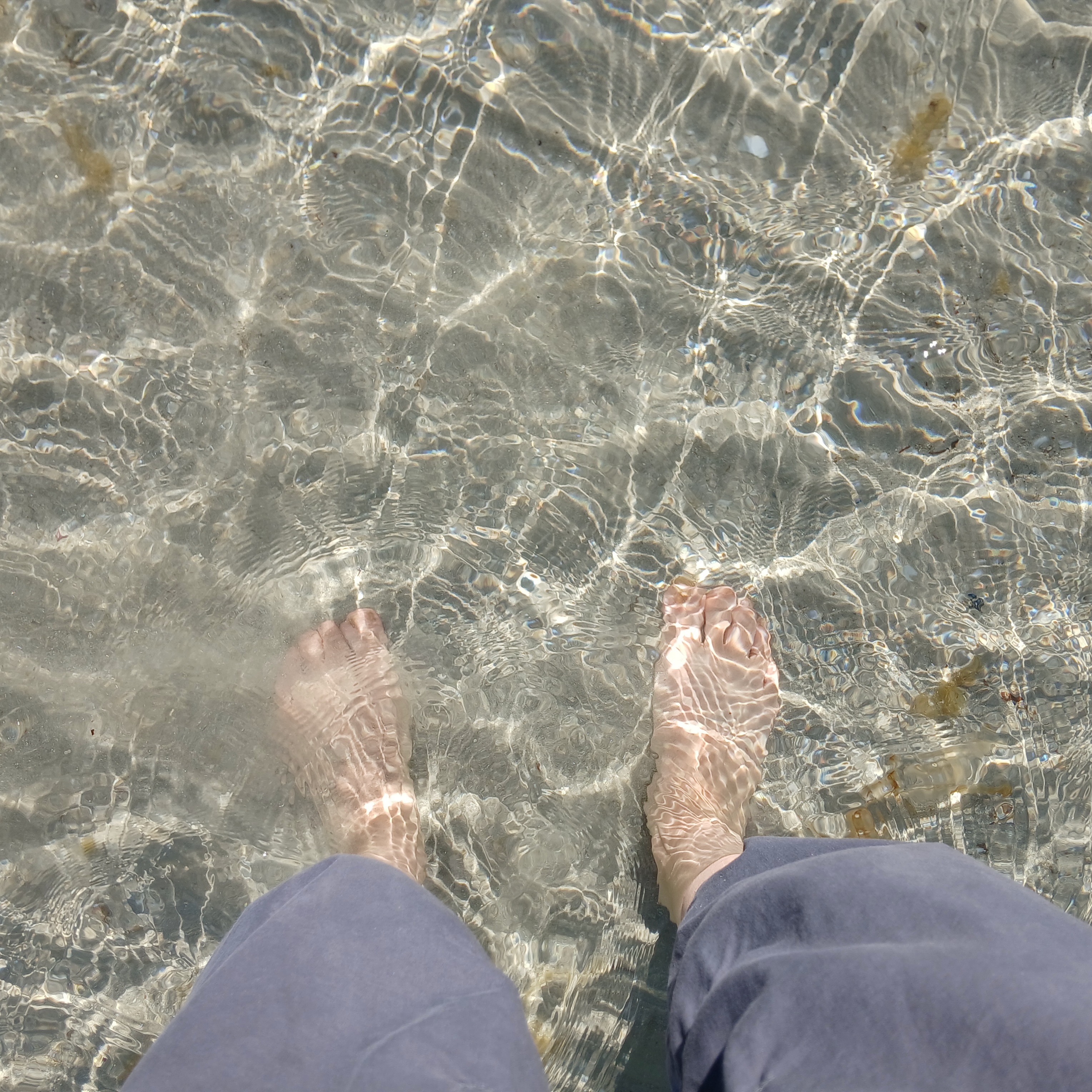
Taperoo Beach, March 2025.

Leah, one of the two main protagonists of Housemates, is fat and queer and in love with her housemate Bernie, who is attracted to Leah but not driven to pursue the attraction, or at least not initially. And here again Eisenberg questions our social mores, the platitudes we repeat to ourselves and to others, this time about the discourse of sexuality. Was she more or less comfortable among queers than she was among everyone else? Bernie asks herself. About the same, came the answer. But if she really listened, really paused, there was another answer, which was: less. The style. The discordance, the mismatching, the pride, the attracting of attention and the comfort in that attention, the physicality to dance, to fuck, to march. The physical in Bernie felt meant for other uses.

Leah and Bernie move in a world where people pride themselves for being other, for not living according to the usual socially accepted order. And yet their world, too, demands acceptance and conformity to certain philosophical and sexual tenets. I love how Bernie has the courage to question the over-sexualised expectations that she perceives the people around her to have of themselves and others. The physical in Bernie felt meant for other uses. Now that’s a celebratory sentence if there ever was one.

Taperoo Beach, March 2025.

Lately I’ve been reading …

Mirror

Other people’s words about … hunger

The narrator in the passage I’ve quoted above from Katherine Brabon’s novel Body Friend isn’t anorexic — her illness is of another kind, some kind of autoimmune illness that Brabon leaves unnamed throughout the novel. Still, I’m fascinated by the way the narrator’s thinking in this passage aligns itself with a kind of anorexic thinking pattern, a pattern that Brabon identifies instead as a cliché of gender. The thoughts the narrator expresses here, the murky shame she feels, remind me of the way I used to think about my body, my hunger, my appetites, my eating patterns when I was still experiencing the symptoms of anorexia (both before and after treatment — indeed, for years after treatment).

My first boyfriend, when I was in my early twenties, was a tall, naturally thin guy (very thin) whose appetite waxed and waned; he would eat nothing for hours, opting to smoke cigarettes instead, and then he’d suddenly become ravenous and eat his way through what seemed to me vast quantities of food, the equivalent of several meals at once. He didn’t exercise much, perhaps because he wasn’t a natural athlete.

My second boyfriend, meanwhile, whom I met in my late twenties, was a slow eater, someone who put his fork down between bites, to talk, to smoke, to drink. He didn’t always finish what was on his plate; if he’d had enough, he stopped eating, which seemed miraculous to me, evidence that he felt a freedom from compulsion around food and eating that I couldn’t imagine ever feeling myself. He loved exercising — he had been a runner in his twenties, until injury forced him to stop, and he shaped his days instead around surfing and cycling and swimming.

With both of them, doubting my own hunger, suspicious of my own greed, I would, like Brabon’s narrator, mirror their eating patterns. I would skip breakfast, even though doing so made me feel faint within a couple of hours. I would try to leave some food on my plate, even if I wanted to eat it all. I would try to slow down the speed at which I ate. When I was with my first boyfriend, I didn’t exercise much at all. Moving in with my second boyfriend, though, I took up cycling and swimming. I did these things because I knew instinctively that they, my boyfriends — the habits they had formed that determined the way they lived their lives — were right, whereas I was inherently wrong.

Native pelargoniums on the beach path, Taperoo, January 2025.

What drives this kind of thinking — or what drove it for me, anyway — is self-hatred and fear. I had believed for years that my appetites were out of proportion, that they needed curbing, taming; it was this belief that had led me into an eating disorder in the first place. I didn’t yet understand that appetite is a tricky word (a signifier, to borrow Brabon’s word), and that it can refer to things beyond food, things like desire and longing and hope, so that in trying to tame my appetite for food, I was also trying to tame those other appetites, the ones that truly frightened me.

Brabon’s narrator is experiencing other fears than the fears I experienced, and yet I think her fear has a similar source to the fear that I felt — fear of her own body, of what it can do if left to itself. Fear of its inherent faultiness. Its inherent gluttony. Fear that, if left to our own resources, we are like the cat that eats until it vomits, no better than that, equally repulsive.

Even today, I still feel those same fears sometimes (perhaps, after all, that’s where the gender cliché comes in), but I no longer feel the compulsion to mirror myself in someone else’s habits. And I am deeply grateful for this.

Lately I’ve been reading …

Disappear

Other people’s words about … identity

I grew up as a member of a generation that didn’t recognise people who have the kinds of feelings that Ed expresses in the passage I’ve quoted above, a generation that didn’t have the words that a person like Ed — a person who feels that the body they were born into doesn’t reflect their true gender — might need to reach for. That is to say, the vocabulary that Ed and his friends use in Oisin McKenna’s novel, Evenings and Weekends, isn’t a vocabulary that I or my contemporaries used or even had access to. As a corollary of this, the space that Ed and his friends occupy in the world isn’t a space that many people knew how to occupy when I was in my teens and early twenties.

This isn’t to say that people didn’t question their gender identity in those years, only that the conversation around gender identity barely existed. As a consequence, many people — many, many people — didn’t recognise that it might be a conversation they wanted to have, either with themselves or with others.

And yet when I read the passage above, I am moved less by Ed’s uncertainty about his gender than by his unwillingness to be labelled. In theory, the language of gender identification that’s available to him, which wasn’t available to people of previous generations, should free him to articulate his identity, but in practice he finds the labels as constraining as they are freeing.

For better or for worse, this is the power of language. It gives us the tools to express ourselves, but in doing so it determines the way we experience the world. I’m no discourse analyst but this, I think, is what Ed is struggling most deeply with. Kudos to McKenna for finding a way to put it so succinctly and movingly in fiction.

Still, for me the most devastating thing about this passage is that even though Ed has the language to express the way he feels, he remains ultimately so unhappy, so desperate, that his deepest, truest, most instinctive response is to wish to be obliterated. 

The language may have changed, but the sadness, the desperation, hasn’t. What Ed wants is to be invisible. Indeed. I don’t have any answers, but I’m glad that novelists like McKenna are brave enough to explore these ideas, because they matter. As language changes, so does the world, and if fiction can help us to explore the consequences, then fiction, too, matters.

Lizzie, January 2025. (Okay, so, unlike Ed, she may not have words or language to express herself … but she is still a very effective communicator!)

Lately I’ve been reading …

Only connect: Reunion

Other people’s words about connection

Maude cranes around to look and Cormac looks too, close enough to see them, all quite young and glacially made up with one man of height and handsomeness towering over the rest and another, a man to the tall one’s left, cocking his head and nodding in Cormac’s direction meaningfully.
It is Senan. Cormac waves …
He hasn’t seen Senan in person for months and yet his vision still telescopes in, urgent and unreconstructed, so that Cormac sees and knows again he loves him with a scratchy passion that returns as reliably as a rash. It is not a nostalgic feeling and casts no shadow, existing always in a self-sustaining now.
How acute it is: immediate deja vu.

From ‘We Were Young

by Niamh Campbell

I love this passage from Niahm Campbell about a man reuniting with someone he loves after the two of them have spent some time apart. Cormack, the character in Campbell’s novel, seems unable to commit to one person, whether man or woman; he moves from one relationship or liaison to another. But as a backdrop to all his attempts to remain unfettered there is his love for Senan, a man who is smart enough, perhaps, to keep himself unavailable and therefore always desirable and lovable.


Sunlight and trees, April 2022.


Who hasn’t at some time in their life loved someone who was unavailable? Or, moving beyond relationships and intimacy, who hasn’t wanted something that was eternally just out of reach?


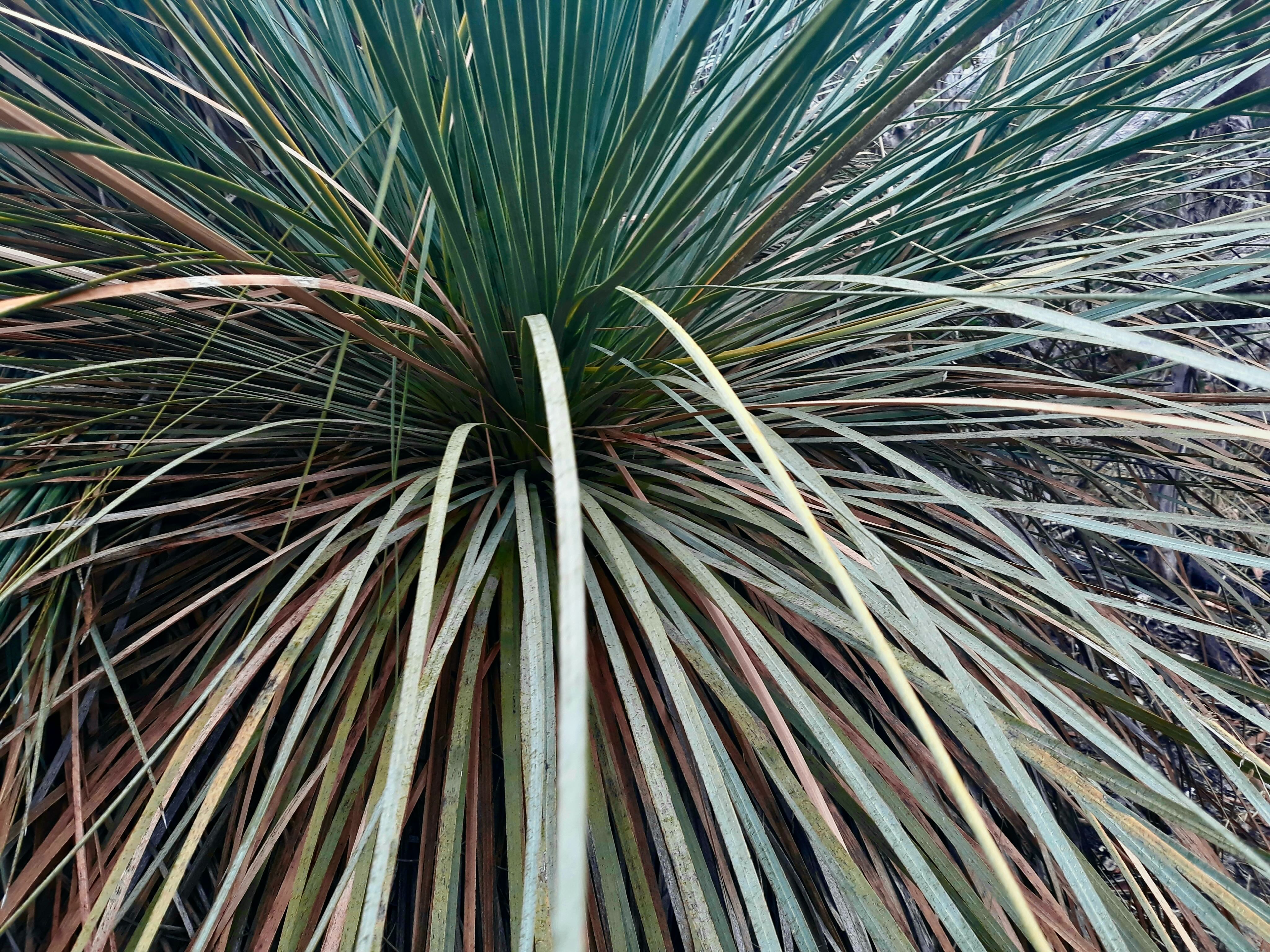
Grasstree, May 2022.

Lately I’ve been reading …

Absolution

Other people’s words about … being loved

We were sitting on a cushioned bench [in the pub]. Eddie had one thick thigh crossed over the other, and he was wagging his right foot gently. He was wearing beautiful Italian brogues and talking to the man next to him, laughing at something a little too loudly, and then suddenly he turned to me, rested his hand on my leg and asked softly was I okay.
‘You okay there, pet? Can I get you something?’
It was there in the tone. I knew that I was loved as I had never been before. I don’t mean that Eddie loved me with remarkable passion or insight. I don’t mean that I felt most fully myself with him. I mean that, in the strangest way, I felt forgiven. For as long as I could remember there’d been a vague disquiet in me, as if I lived in the shadow of some humiliation whose particulars I could not recall. Until Eddie, until he absolved me, I hadn’t known there was any other way to feel.

From ‘When Light is Like Water

by Molly McCloskey

In the last few years I’ve noticed that when I’m reading a book or watching a movie the two kinds of scenes that most move me are those where two people connect for the first time (mostly, though not always, through falling in love) and those where someone forgives someone else.

Both kinds of scenes make me cry. I’m still not sure whether my tears come from a place of catharsis or from a place of yearning.


Port Adelaide, early April 2022.

I particularly love how Molly McCloskey’s narrator, Rachel, elucidates her experience of falling in love with her first husband in the passage above: how she moves away from romance to something gentler, and kinder, and deeper.

Like Rachel, I can’t remember a time when I didn’t live with a sense that I was inherently wrong, flawed, in need of forgiveness. I sense that my experience is a relatively common one, but I also sense that in me the feeling is perhaps particularly strong.


Aldinga wetlands, April 2022.

How to manage anxiety: Be kind. Be curious. I read these words somewhere once. I remind myself of them from time to time. In their simplicity and compassion, they are helpful. What McCloskey’s narrator Rachel understands in the passage above is that kindness is inherent in true love. I think that’s why her words move me so much.

Lately I’ve been reading …

Chasing clouds

Other people’s words about … getting lost

I said earlier that I have no special running talents. In fact, I have one: getting lost.

No-one gets lost like I do. It’s not just a running thing. It’s a getting lost thing.

I’ve been lost when running, walking, driving, cycling, sailing, using public transport, even (once) taking a taxi, on at least three continents, since I first ventured out into the world as an unaccompanied teenager. I’ve temporarily abandoned a car in Milton Keynes, and once phoned [my wife] Clare from the outskirts of Northampton to warn her that I might not find my way home for days. I’ve never been lost on a running track (yet), but I have been lost indoors — not just temporarily disoriented, but properly, sit-down-and-cry-and-wait-to-die lost — on a disastrous visit to the Birmingham branch of Ikea.

From ‘Running Free’
by Richard Askwith

I am someone who gets lost as easily as Richard Askwith. I live in Australia, not England, so I’ve never got lost in Milton Keynes or Northampton, but I have certainly been to the Adelaide branch of Ikea and experienced that sense of utter lostness that he so delightfully describes as sit-down-and-cry-and-wait-to-die lost. (Though, actually, I would call that particular kind of ‘lost’ an Ikea thing rather than a getting lost thing. Just saying … )


Dune’s counterpane:
How can you ever feel lost when these are the things you see along your way?

I don’t just get lost physically, either. I frequently feel lost in a metaphorical sense, too. I admire anyone who seems to know (or who feels as though they know) where they are going in life. I don’t. I never have. The older I get, the more strongly I become aware of my inner sense of lostness.

Often, this innate sense of lostness feels like a burden. But not always. Because the thing about setting off towards one place and ending up somewhere else entirely, somewhere you hadn’t planned on and don’t recognise at all, is that you get the chance to explore.


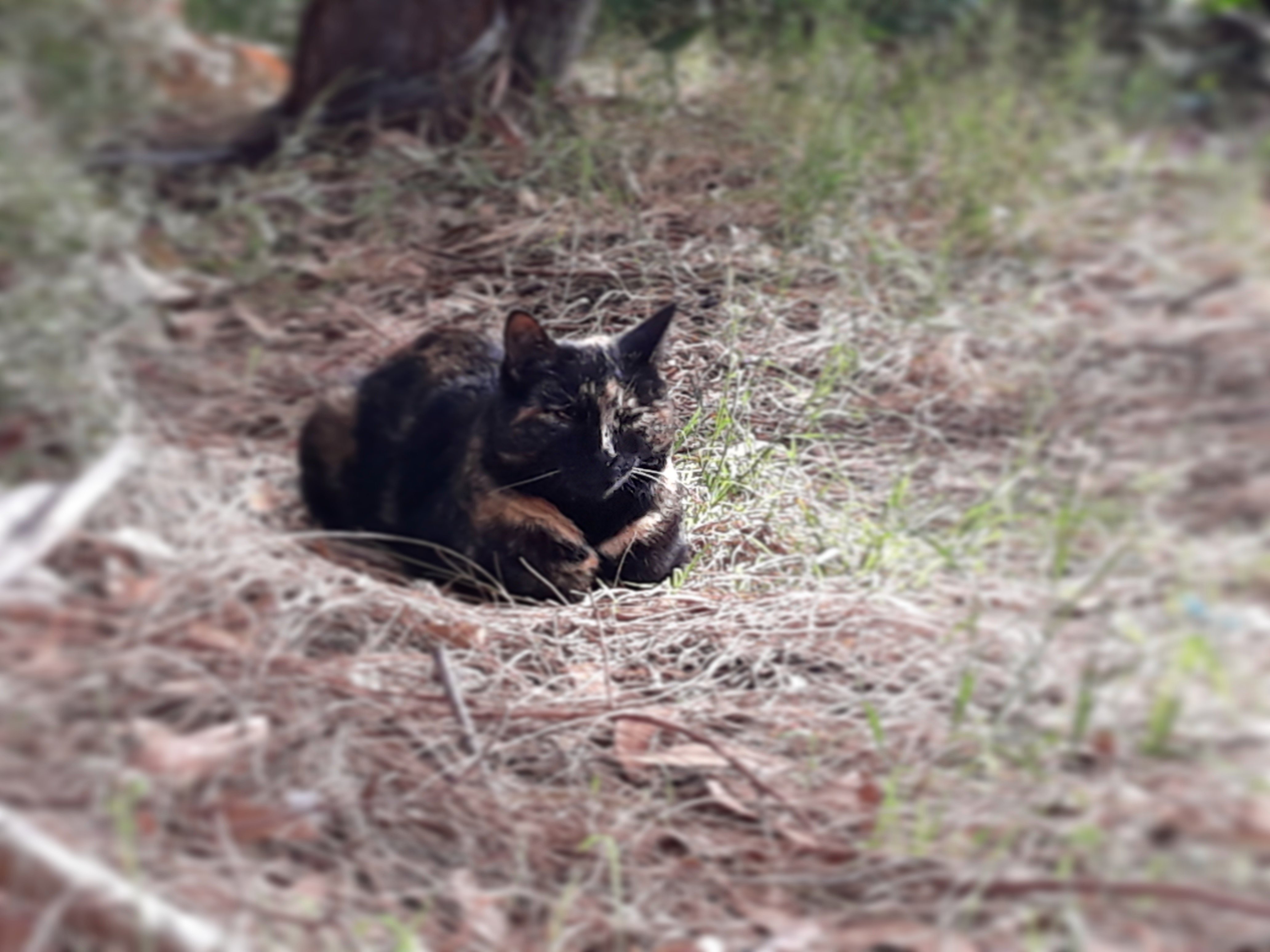
Lizzie the garden cat:
A lost cat, but also a found one.

I’m talking metaphorically here again, of course. But the older I get, the more strongly I also come to understand the importance of being willing to explore, willing to wander, willing to wonder. And sometimes, in hopeful moments, I see many years of exploring and wandering and wondering ahead of me.

I like that thought.

Lately I’ve been reading …

That dark ocean

Other people’s words about … rescue

A look of doubt came across my mother’s face. It was all there in her expression. The knowledge that a person can become lost in their life, how you might swim in the waters and reach for the lifebuoys but never be rescued, might drown out there in the dark ocean of your choices.

From ‘The Inland Sea’
by Madeleine Watts

When I was a young woman receiving treatment for my eating disorder, I used to agonise over every decision I made, whether the decision was a tiny one (like what percentage of fat the yoghurt I ate should contain) or whether the decision was a life-affecting one (like what career path I should follow, or whether I should follow a career path at all). For a year or so I saw a community mental health nurse who would say to me over and over, whenever I ruminated over my decision-making processes, ‘Rebecca, there are no wrong or right decisions, no good or bad choices. There are just better ones.’

At the time, I found this woman’s words comforting. Certainly, her counsel helped me to dither less — and dithering less, for someone who had spent all her life dithering and equivocating and stalling, could only be a good thing.


Path to the horizon.

But now that I am an older woman, I wince slightly when I remember the words of that community nurse. First, like the mother of Madeleine Watts’s narrator in the passage I’ve quoted above, I am only too aware that the decisions we make in our lives can lead us down paths with destinations that are not at all what we thought they would be when we set out on them. And sometimes those paths we follow are paths with no return — paths we can only keep on walking down, no matter how lost we may feel while we walk down them.


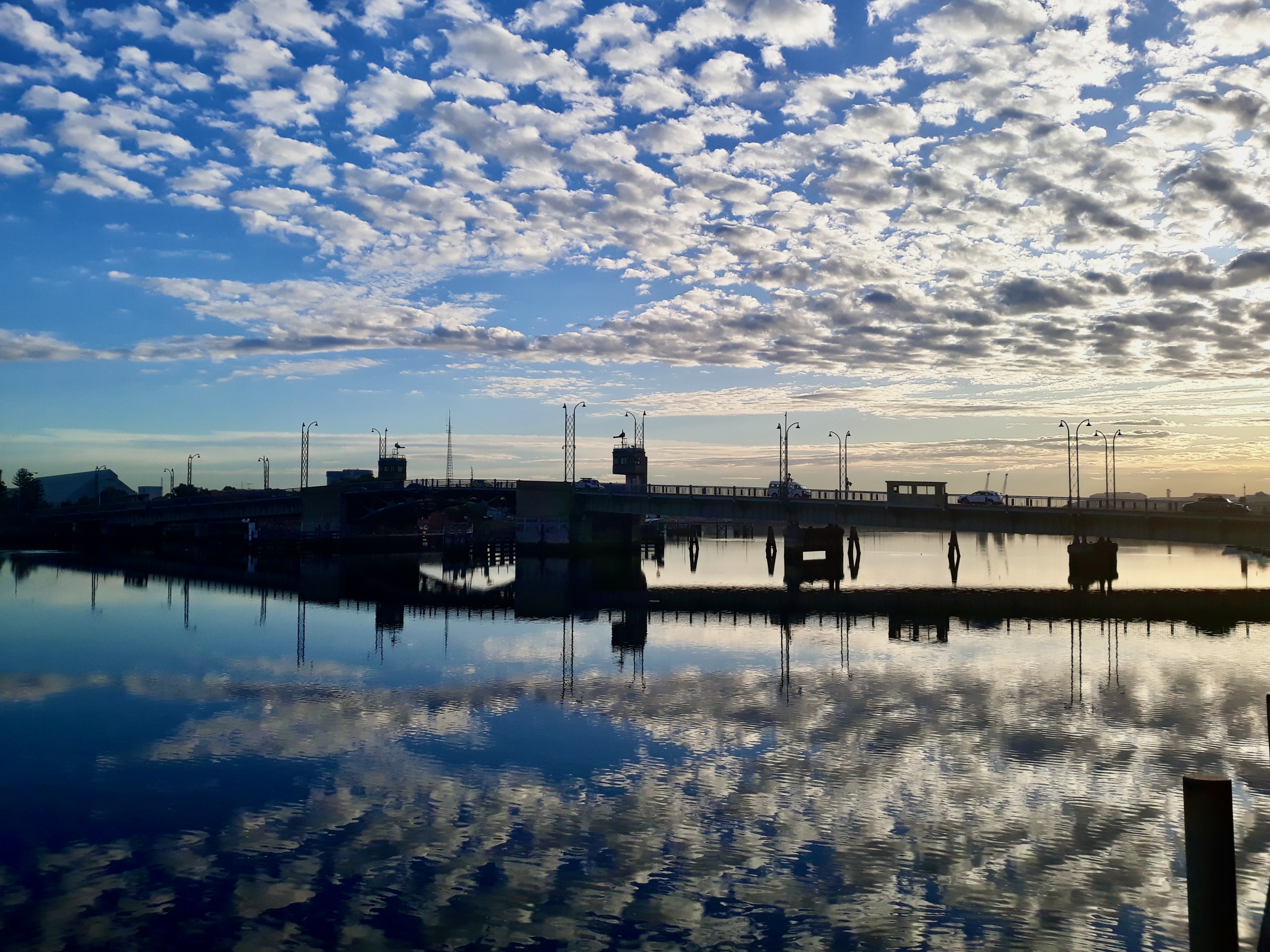
Path through the clouds. (Look closely!)


Second, I’m even more aware that the concept of choice itself may be illusory. For a variety of reasons, those of us living in Western societies are sold the idea that we can choose how to lead our lives, choose the outcomes that lie ahead of us.* But the older I become — the older I am lucky enough to become, I should say — the more I find myself acknowledging that there are many things over which we have no control at all. You can make as many decisions and choices as deliberately or spontaneously as you like, but life often happens anyway — in its own way.

I’m conscious of talking in clichés here. Still, it’s clear to me, at the ripe old age of fifty-one, that in the end the most important decisions we make in our lives are not about what we will do but about how we will choose to respond to the cards that life has dealt us.

* I use the word ‘sold’ deliberately.

Lately I’ve been reading …

Chasing clouds

Other people’s words about … running

Once he warmed up, once the tension was gone, once the sweat had properly broken and his breathing was rhythmically heavy and every twinge of stiffness and pain from previous workouts had been obliterated by adrenaline and endorphins, when all of that had happened, there was almost nowhere on earth he’d rather be, even on up-and-down back roads with no shoulder or, as now, on the old railroad path too crowded with entitled cyclists or groups of power-walking mums in their pastel tops and self-crimped hair.

For forty-five minutes, or an hour, or an hour and a half, the world was his, and he was alone in it. Blissfully, wonderfully, almost sacredly alone.

From ‘Release’
by Patrick Ness

One of the things I think I most love about running is that the act itself is so full of mysterious contradictions. For example, it’s hard work, and yet I look forward to it as a luxurious treat, in much the same way I look forward to eating an oversized piece of decadent chocolate cake. Similarly, when I’m running I feel as though I’m moving purposefully forward, following a path to something new. And yet it’s obvious that, unless your plan when you set out is to run away and never return, any run is circular, ending right back where it began.

Even the sense that I am on my own when I run — blissfully, wonderfully, almost sacredly alone, as Patrick Ness puts it in the excerpt above — is unreliable. I am never alone when I run. I run on roads, on shared paths, on trails, on beaches. There are always others inhabiting the space with me, running or walking or cycling or just sitting on a bench enjoying the view (like the views you see in the photographs I took for this post). Running, even for a lone runner like me, is an entirely communal activity.

Another contradiction: sometimes, when I feel unwell — headachey, perhaps, or queasy or tired or sleep-deprived — I know that from the moment I step outside those symptoms will leave me for the duration of my run. Probably, I’ll feel unwell again afterwards; running isn’t ever, in my experience, a cure. But for those fifteen or thirty or forty-five minutes when my feet are drumming the ground in the old, familiar rhythm, I know I’ll be symptom-free.

I have no explanation for this. It’s just part and parcel of this beloved thing I know as running.

Maybe that’s why running appeals to so many different kinds of people — because the concept itself, what it involves, what it means, is so flexible, so all-encompassing. Some of us run to lose weight; some of us run to get fit; some of us run to break records; some of us run to find joy. Whatever the reason, those of us who are physically lucky enough to be able to consider running for the long term, in whatever fashion we can manage, have one thing in common.

We know it makes us feel like a better version of ourselves.

Lately I’ve been reading …

Perspective

Other people’s words about … the way we look at things

In the sky [above the garden] a plane glints, tiny as a metal cracker toy, and draws a roar reduced to a whisper after it, as it follows the flight path over Bexford Hill towards distant Heathrow. There’s always a plane up there if you look, near or far, visible or only betrayed by a line of vapour, but always moving westwards … It’s as if the aeroplanes were part of the mechanism of the garden; a necessary part. As if this tidy patch of lawn surrounded by its fence, with its brilliant blossoms too many to count and its coiled yellow hose, together formed the bottom half of a machine of bliss, which required for its complete working the dome of sky above, and for the furthest component of its clockwork the timekeeping planes on their celestial track. Patiently they tick from east to west. Or perhaps they are joined to the sky, and it is the sky that is moving, a blue sphere studded with occasional silver that cranks around, and around, and around.

From ‘Light Perpetual’
by Francis Spufford

I love the way Francis Spufford, in the passage above, turns on its head the way we usually look at a place that is deeply familiar to us to create a whole new way of looking at it.

Sometimes maybe that’s all we need, right? A new perspective.

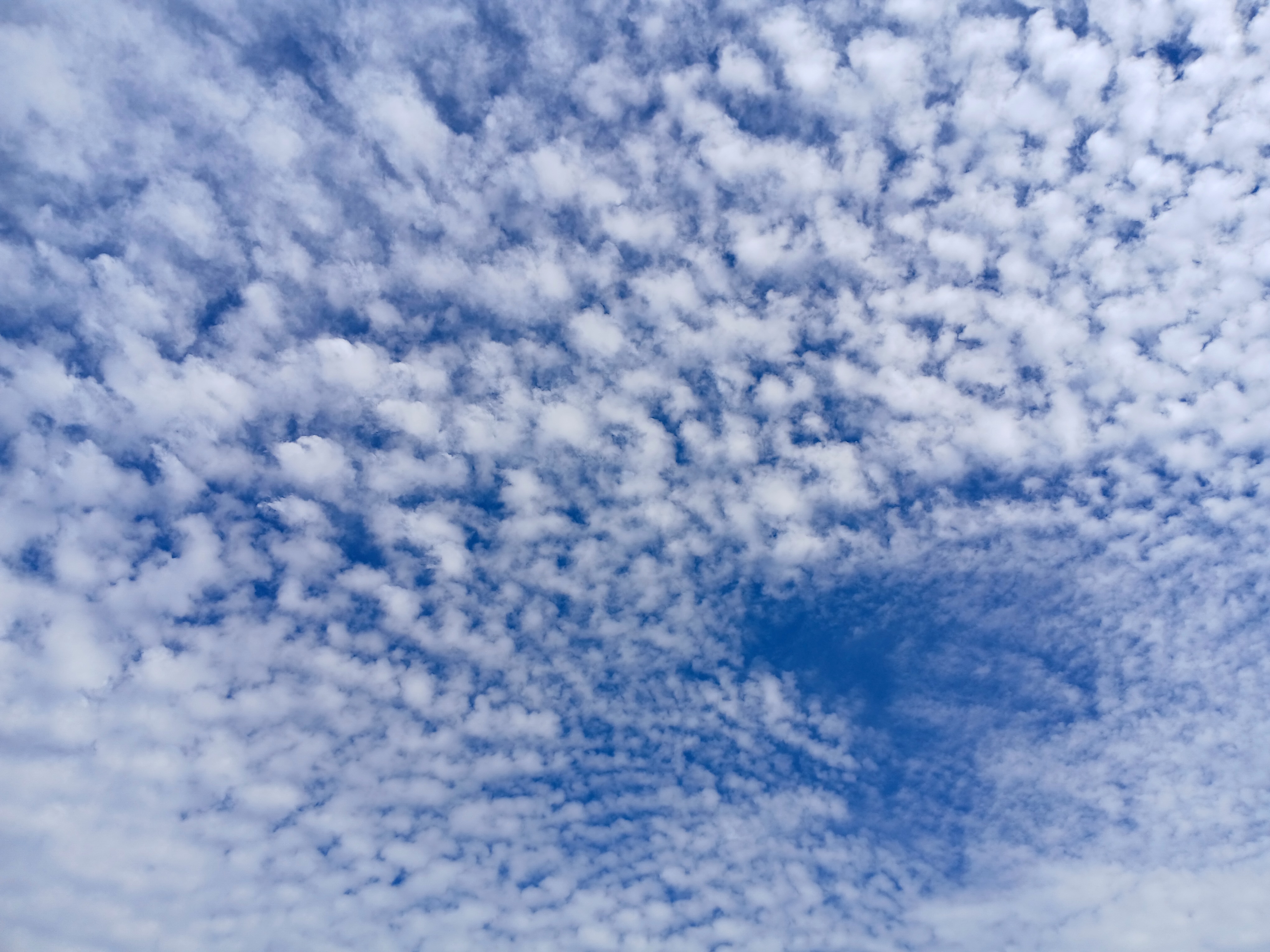
One day this week: A blue world.

In the past few weeks, I’ve been busy editing and working and making, meanwhile, small decisions about the way I plan to work from now on. I say they were small decisions and they were, really, but in some ways — the best ways — they have transformed the way I feel about how I live my daily life.

Over the years I’ve read a great deal about the benefits of cognitive behavioural therapy, which in essence is a therapy that aims to help a person change the way they think so that they can overcome their own particular mental obstacles.


Another day the same week: A grey world.

But I’ve never found much resonance in cognitive therapy. For me, it’s less about changing the way I think about things than it is about changing the way I see things.

Semantics, you think? Maybe. But it works for me.

Lately I’ve been reading …

How you receive the world

Other people’s words about … being vulnerable

But still she couldn’t sleep. The window was open and bare. The curtain had fallen down and no-one had bothered to put it back up because it always fell down again when you tried to pull it across. Ada was afraid that something bad was in the garden. The trees creaked. The night swam through the window and came into the room like a river.

From ‘The Last Summer of Ada Bloom’
by Martine Murray

Sometimes things are not as they seem. Sometimes the world outside seems dark and threatening, as Ada perceives it to be in Martine Murray’s gorgeous words quoted above — even when it is not.

In my last blog post, I wrote about some bad feedback that I thought I’d been given about a project I’ve been working on for a very long time. It turns out that that feedback wasn’t what it seemed at first to me, and that I’d been wrong in my interpretation of it. It turns out that there is hope for that project, after all.

Sometimes it depends on how you look at things, and on how you receive the world.

How you look at it: Darkness or light?

The project I was referring to was one I’d worked on for a long time, although over the years my commitment to it had wavered and waxed and waned. Sometimes I’d tried to run away from it, but every time I did, I would find myself returning to it, unable to abandon it until I knew that I had seen it through, no matter what the outcome would be. Towards the end I lost all sense of joy in my work on that project. It became a self-imposed duty, something I had to do regardless of the outcome, regardless of how I myself felt about it, regardless of how much time or energy or wellbeing it demanded of me. That’s why, when I thought that the feedback I’d received on it implied that I might have to do some more work in order to get it across the line, I wrote: And I do not (yet) know if I have the energy or the moral courage to do that work. I truly do not know.

In the days after I received that feedback, as I tried to work through my response, a kind friend asked me if I had ever listened to Brene Brown’s TED talk on the power of vulnerability. I had heard of Brene Brown but I had never listened to her talk, nor I had I ever read any of her material. Without knowing anything about her, I had written her off as some kind of New Age guru or self-help profiteer. But I respect this friend a great deal, and in addition I was feeling so vulnerable that I figured listening to someone else talk about vulnerability might not be such a bad thing. So I sat down and listened to the talk, and within the first two minutes I found myself weeping.

Have you listened to it? If you haven’t, I can only recommend that you do. It is a humble speech, filled with common sense and humorous insight. It is a talk about how we long to connect with each other, and how important it is for us not to be afraid to connect, and what it takes to do so. For me, listening to Brown was a lightning moment. I wish a lot of things, but in relation to this project one of the things I most wish is that I had reached out earlier while I was working on it. I wish I had been unafraid to ask for feedback or advice right back in the early stages. I wish I had been willing to say to someone: This is what I’m working on, and it’s not working, and I don’t know why.

I didn’t, because I was seeking perfection. I didn’t, because I felt too vulnerable. But there is no such thing as perfection. And sometimes you have to be willing to feel vulnerable to move on.

This is Brene Brown’s TED talk, if you want to listen to it.

How you look at it: cute or wild?

In the aftermath of all of this, I feel exhausted and fragile. I still don’t know what will happen now that my project is out in the world (although I promise that I’ll tell you when I find out). At the same time, I feel as though I’ve learned something that I needed to know — not just about that project, but about myself. That’s another reason that it’s important to allow ourselves to be vulnerable. It’s the only way we can learn.

Lately I’ve been reading …