How to live well

Other people’s words about … health and wellbeing

My Top 10 Tips for Health and Wellbeing

  • Listen to your body
  • Keep moving
  • Get plenty of sleep
  • Read the small print
  • Eat out less; cook at home more
  • Reconnect with nature
  • Reduce your stress
  • Appreciate the simple things
  • Share the love
  • Be grateful

from ‘Feel Good Good
by Valli Little

I am fascinated by other people’s tips for living well. I like Valli Little’s suggestions above, which are simple and practical, and come from years of experience.

My own strategies for living well vary, depending on my mood, but here are my current top ten:

1. Eat plenty of fruit and vegetables. And some cake.

2. Move — however you can, whatever your physical limitations.

3. Step outside.

4. Read books.

5. Spend time with people you love. Let them know you love them.

6. Know that happiness and sadness are like the clouds and the wind. They blow in. They blow out.

7. Practise gratitude for how things are. Don’t fret about how they could be.

8. Enjoy solitude. Know that you can survive loneliness.

9. Cultivate humility.

10. Find things …

… that make your heart sing.

A certain light

Other people’s words about … vanity (etc.)

Matt’s mother had the bluest of eyes and still wore her hair long, adding henna to soften the appearance of white strands in the black. One of her friends trimmed it for her. ‘Now that you’re forty, maybe you should think of cutting it short.’

His mother looked stricken. ‘I will one day. But not yet. Not yet.’

Her hair was her only vanity. She wore no make-up, and dressed always in shorts or jeans and men’s shirts she bought at op-shops. Even at work she got away with a tidy variation of her uniform, as she called it.

She said that lipstick rotted your brain.

from ‘Mahalia
by Joanne Horniman

Like Matt’s mother in the passage above, I don’t wear any kind of make-up, a habit that stems partly from choice and principle, and partly — honestly? — from laziness and ineptitude. (Which came first — not knowing how to wear make-up, or not wanting to be bothered with it? I can’t say for sure.) I don’t colour or style my hair, either, though I did recently re-introduce myself to a hairdryer after decades of simply washing my hair and letting it dry naturally (or just tying it up, still wet, in a ponytail or a straggly bun in an effort to forget about it).

‘I think you are a rebel, Rebecca,’ an Italian hairdresser said to me wryly, years ago, when I insisted he just wash my hair and trim it and — shock, horror — just leave it at that.

And I thought — I truly thought, with the arrogance of youth — that he meant it as a compliment, though now I’m not so sure.

You used to tell yourself that your hair, with its grey, sometimes made you look blond in certain light or from a distance, but now it really looks as grey as a sad cloudy day, as bleak as crows calling in a fallow field on a sad cloudy day, as miserable as cold rain beginning to fall on that sad cloudy day in that fallow field with the crows wheeling overhead, calling their faraway call that reaches into your heart and splays it open.

from ‘This is the Water
by Yannick Murphy

There is a joy in Horniman’s mother, a joy in the way she views her own appearance, that is entirely absent in the middle-aged narrator in Murphy’s novel: that woman with the fallow, splayed-open heart. Still, depending on my mood, I can feel affinity with either of them at any particular given time. And I wonder, how can that be, when the two women seem so far apart?

The truth is, like Horniman and Murphy, I’m not really talking about vanity here anymore. There’s a fine line between being proud of yourself just the way you are, ‘naturally’, and being filled with futile despair about the havoc that the ageing process and life in general have begun to wreak on you, inside and out. I find myself treading back and forth over that line all the time. Is that a part of ageing? Or of being a woman? Or of something else entirely? I don’t know.

What I do know is this: sometimes the sky is sad and bleak and cloudy, as Murphy describes it, and sometimes it is clear, but it is always wide and high and open. And what keeps it that way is the light that shines behind and through …

Epic

Other people’s words about … sweat

‘Swagger’ might be common jargon now, but let’s not confuse the situation. Swagger is earned. It can be grimy or graceful. It can be innate, but it’s also finessed. It’s the feeling that makes you sit a little taller and reinforces your backbone. We sweat with swagger when we infuse a shameless confidence into movement. To sweat with swagger is to redefine what it means to be an athlete and create unapologetic greatness along the way. When we sweat with swagger, we test the limits of human potential. When our footsteps are powered by motivation and a strong community, the cadence is a drumbeat to doing something epic. Sweat is magic. Swagger is the glisten.

from ‘Shut up and Run
by Robyn Arzón

First, a story of my own, before I address the words I’ve quoted above.

The day before Easter, I woke with my stomach roiling. It was my first official day off work for a while, and when I pulled the curtains back from the window above my bed, I saw clear skies and sunshine through the glass. Lying there in bed, a little before seven o’clock, I felt every part of me rebel at the thought of languishing the day away inside, sprawled out on the sofa, feeling ill.

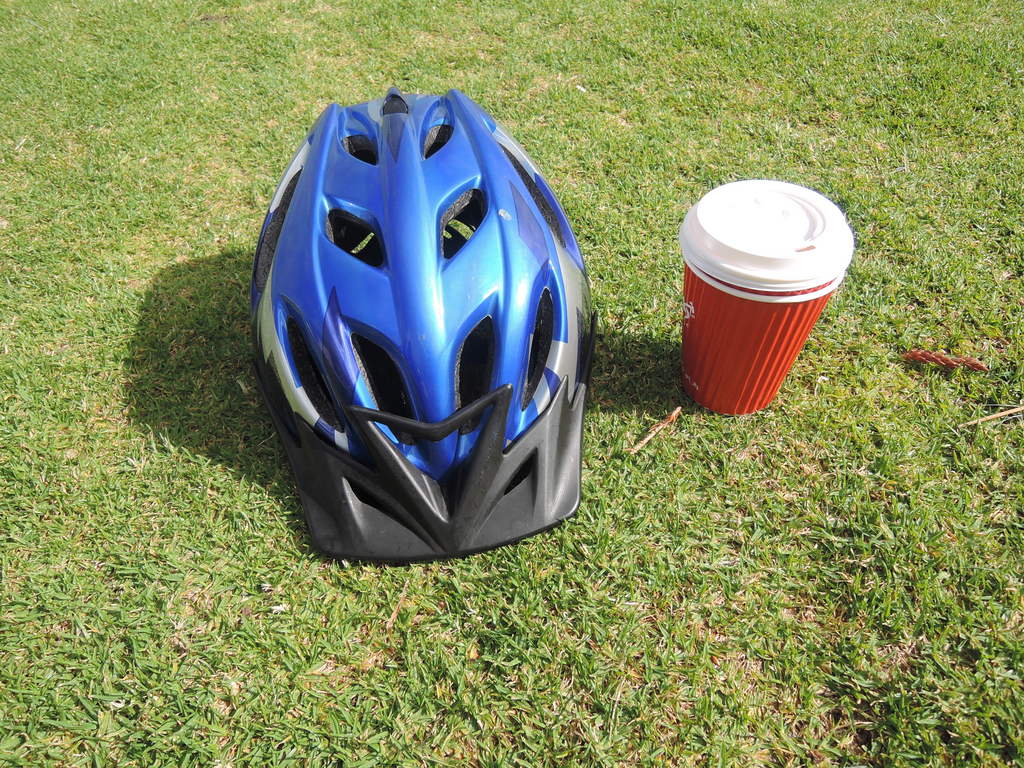
And so I got up, and I pulled on my oldest pair of trousers — the pair with the faint bike-chain stain on the left leg. I threw my camera and some spare coins into my backpack, and I got on my bike and rode away from the house.

The moment I started cycling, I could feel something inside of me begin to unfurl. I am a tense person, and mostly this tension is a mental thing, but it manifests itself in me physically, too: in my muscles. This is something I have only just begun to realise. I had been sore for days before this bike ride, my right hip aching from stooping over the computer in the office, the muscles in the hollow of my back raw from constantly bracing myself (against what? staying still?), my stomach queasy and unsettled.

So I pedalled slowly. Gently.

The route took me south-west — first along the coast, past two jetties; then south-east a little way,  where the coastal road came to a dead end. Then, when the coastal road started back up again, I turned back west and cycled alongside the sea once more, past the third jetty. I rode with my head up, glancing about me: at the wide, cloudless sky, and the opal-coloured sea, and the faint line dividing the two of them. Lycra-clad cyclists sped by me in a whoosh of tyres and sweat — mostly men, some women; most of them younger than me, but some older — and I said, ‘G’day’ to each one of them and gave them a little smile of greeting and acknowledgment, though I’m not sure that any of them heard me or noticed.

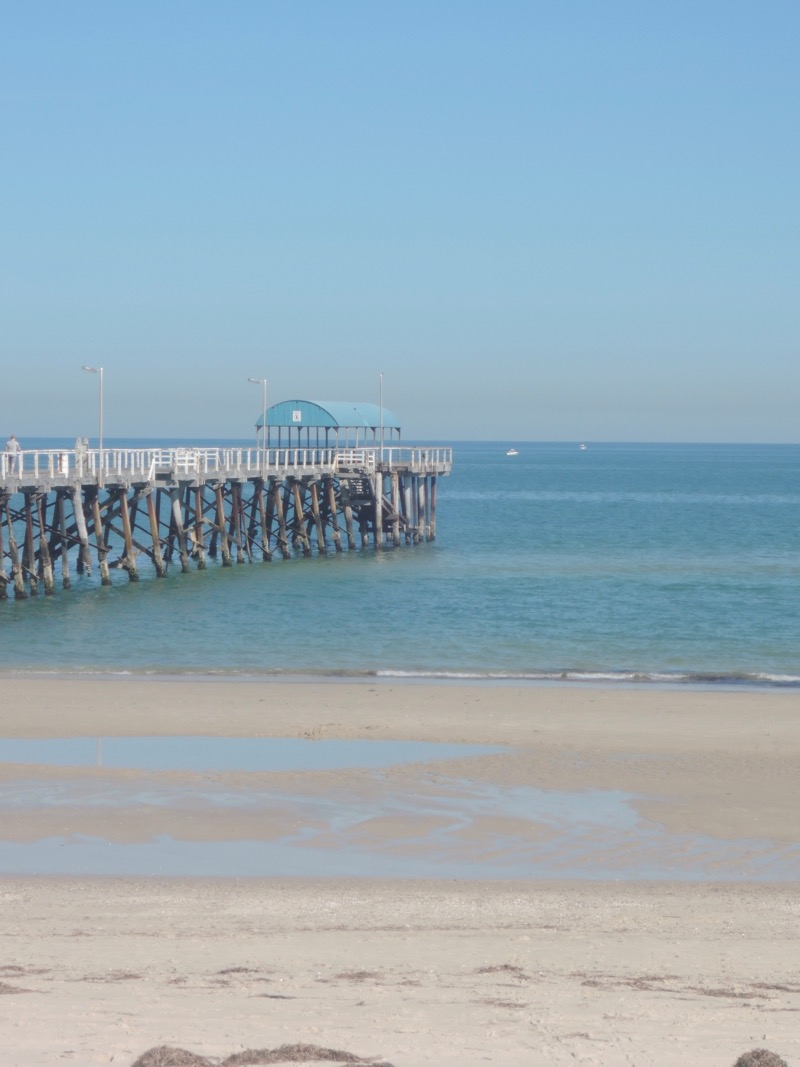
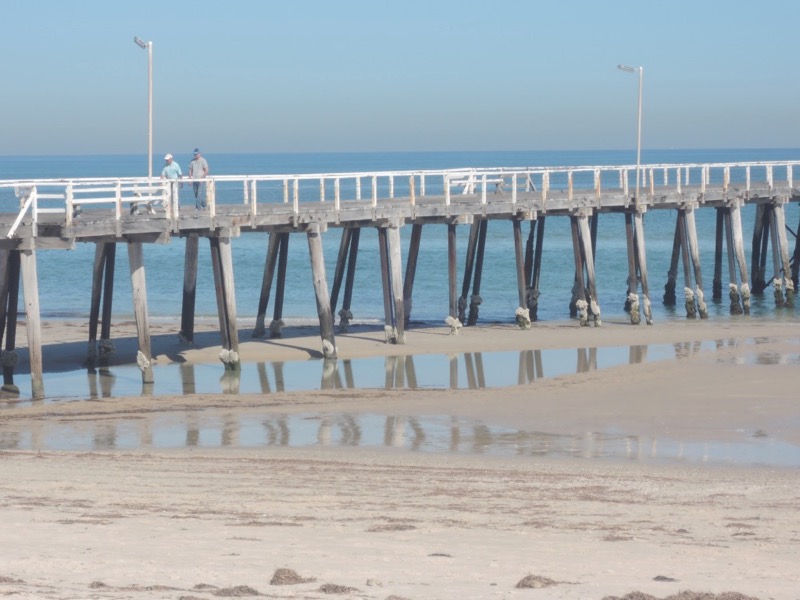
When I got to the fourth jetty (the one pictured in most of the photos in today’s post) I stopped and parked my bike. I wandered across the main road to the supermarket and bought some dried-fruit-and-nut mix, and then I dropped into my favourite café at that particular beach and ordered a take-away cup of tea. They’ve recently started selling tea made from leaf tea instead of teabags there, even for take-away drinks, which is a little thing, I know, but it makes me very happy. I carried my lidded red cardboard cup of too-milky leaf tea back across the road and plopped myself down in the middle of the foreshore square. And there I sat, cross-legged on the sun-warmed grass, nibbling my fruit and nuts, sipping my tea, looking (and looking) at the sea.

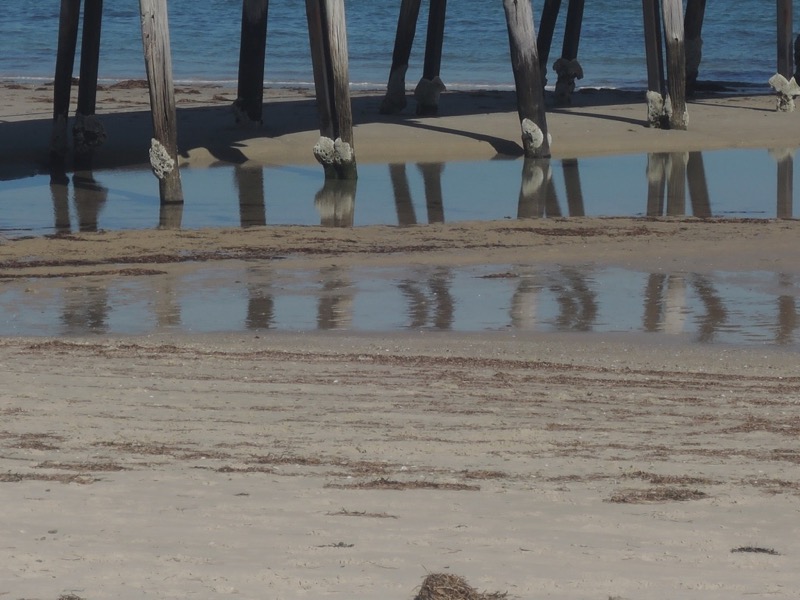
In a few weeks’ time, the grass in that foreshore square will be wet with rain, and a cold wind will whip between the lamp-posts up over the grey roof of the pavilion. I contemplated this a while, stretching my arms out behind me, resting my weight back, feeling the blades of grass tickle my palms. The beach was only a few steps away from where I sat on the grass, and I could see the jetty pylons reflected in the water, and I’ve said it once already in this post, but little things like that — they make me very happy indeed.
So what has this to do with the words I quoted at the beginning of this post? There was a bit of sweat involved in my bike ride, sure, but there was no swagger. I cannot say I moved with shameless confidence or unapologetic greatness. I was motivated, certainly, but I did nothing epic or magic. I am certain I did not glisten.

Thank goodness.
I do not wish this post to be unkind. I do not wish to say, as Arzón herself says many times throughout her book, I call bullshit on her words. But then there’s this:

Our inner monologue can turn can’t into can and dreams into realities. Extinguish doubt with action. Let’s write the story that says we are a little better than yesterday. We can push ourselves to where we want to be. It’s going to take a little sweat, though. Happy is something you do, baby, and only you are responsible for your happiness. Life is happening right now, so stop making up excuses and tell me, what do you want your story to be? Do you want to be a runner? Have you always dreamed of completing a marathon? Whatever it is, write it down, look back on it, and own it.

These sentences — sentences like this — worry me. Arzón’s thoughts are not unique; her words are a part of a general conversation, one that I hear around me almost every day. And it is a conversation I can’t help fretting about. I am alarmed when I hear someone confuse athletic prowess with personal greatness. Or when I hear someone link the idea of their becoming a better person, of their living a better life, with the act of slipping on a pair of running shoes. Or when I hear someone use words and phrases like ‘strive’ and ‘focus’ and ‘dedication’ and human potential (that last is Arzón again) to describe, not acts of goodness, let alone greatness, but essentially self-centred feats of fitness and strength, speed and endurance.

I decided to do one thing with my life — epic shit — and I want you to come along for the ride, Arzón writes, of her long-distance running. Maybe I’m wrong, but those words make me feel empty and sad.
Having said that, I also do not wish this post to turn into a lecture, or a rant. I do not wish to moralise. So I will just say this: I took my bike ride that morning slowly, because that was what the day asked of me, and what my life seems to be asking of me generally right now — regardless of my dreams, regardless of whatever kind of story I might prefer to write about myself. It was a gentle ride, and I felt gentler for it afterwards (though still somewhat unwell).

And that, I think, is how I want to live out my days: gently. Slowly. With kindness, both to myself and to others. With humility.

Tell me, am I alone in this? How do you want to live?

When the wall comes down

Other people’s words about … the view

When I was about fourteen or so, I studied a poem in school by David Campbell, called ‘On the Birth of a Son‘. It was a sonnet, and I didn’t know much about sonnets, except that Shakespeare wrote a lot of them. It never occurred to me that a contemporary poet might write one.

This sonnet by David Campbell has stayed in my mind ever since. It remains one of my favourite poems. Here it is, in its entirety:

The day the boy was born, the wall fell down
That flanks our garden. There’s an espaliered pear,
And then the wall I laboured with such care,
Such sweat and foresight, locking stone with stone,
To build. Well, it’s just a wall, but it’s my own,
I built it. Sitting in a garden chair
With flowers against the wall, it’s good to stare
Inwards. But now some freak of wind has blown
and tumbled it across the lawn — a sign
Perhaps. Indeed, when first I saw the boy,
I thought, he’s humble now, but wait a few
Years and we’ll see! — out following a line
Not of our choice at all. And then with joy
I looked beyond the stones and saw the view.

On the face of it, this poem is about becoming a parent — the fears new parents have; the limitations parenthood imposes on their lives; the unexpected, unsettling joys it rewards them with. So it might seem strange that Campbell’s words have always resonated with me, though I have chosen, deliberately, never to become a parent.

But that’s the thing about great poems: they are universal. They manage to strike a chord in different people at different times for different reasons.

For myself, every time I read this poem I am moved by the contrast the poet makes between the act of looking inward — at his safe, pretty, cosy life — and the act of looking up, out, to glimpse a view of the world, and his life, beyond.

The view beyond. Recently, I went on a holiday in Yorke Peninsula. I returned to one of my favourite spots, following a long, undulating, unpaved road to get there — one that is corrugated and dotted with puddle-holes, dusty with sand stirred up by other passing vehicles, and lined with dense thickets of bush where brown snakes lie coiled, sleeping.

Each day I passed my time the way I always pass my time there. Each day I woke to the same view.

But it is a spectacular view: of open skies, of wide seas, of sprawling cliffs and rolling sand dunes. It is a view of a life beyond the life I normally lead. It is a view that sets me free.

I live a small life: small things give me pleasure. I consider myself, mostly, lucky to be able to live this way. And yet it’s good to escape from time to time: to look up and out and beyond.

And to see, again, the beautiful view.

Notes

You can find a link to this poem here and here.

From one year to the next

Other people’s words about … loneliness

She had told herself more than once not to call it loneliness, since it wasn’t any different from one year to the next, it was just how her body felt, like hungry or tired, except it was always there, always the same. Now and again she had distracted herself from it for a while. And it always came back and felt worse.

from ‘Lila
by Marilynne Robinson

A couple of years ago, I began to experience recurrent bouts of unexplained nausea. The waves of sickness came every three or four weeks, and left me feeling depleted and frustrated. My symptoms of illness were made more difficult by the fear that accompanied them: a fear that I’ve touched on here and here, and will no doubt touch on again.

In her memoir Slipstream, Elizabeth Jane Howard mentions in passing a phase in her life, when she was a young woman, during which she experienced something like this.

In those days, I had bouts of being unable to eat that sometimes lasted for weeks. This seemed to be one of them. I was very tired from my illness, but encouragement to build up my strength by these kindly people was of no avail. I’d sit before an immense juicy steak and delicious salad, trying to swallow the first pieces of meat, my stomach heaving, and wanting to cry from embarrassment. ‘I’m so sorry. I don’t eat much,’ I had to say.

It was my mother who, just recently, introduced me to Slipstream. When I read the passage above, I wished that Howard was still alive, so that I could write to her and thank her for these words. It helps, when you are going through difficult times, or when you are experiencing something troubling and bewildering for which you yourself have no words, to read someone else’s words on the same thing. Here is Howard again:

I had no energy for writing, I didn’t like living alone, and I could hardly drag myself to the office every other week to earn the six pounds that barely kept the wolf from the door … I remember the misery of sitting in restaurants faced with enormous menus and finally asking for something like a piece of cold chicken only some of which I managed to force down.

During the worst phase of my own bouts of nausea, I felt my life began to fold in on itself. Although I wasn’t ill all the time — although there were days and weeks when I felt well: days, even, when I felt as though I’d never feel sick again — those bouts took a toll on me. I called in sick at work frequently, and worried about the consequences. (Would I be put on a performance plan? Would I get sacked? What if I couldn’t hold my job down anymore? How would I live with myself if I couldn’t make a living?) I worried about my social life. (What if I lost all my friends because I kept cancelling on them at the last moment? What if they didn’t believe me when I told them I was sick? What if they thought I was just neurotic, or antisocial?) And I fretted about people in my family, whom I wanted to see more frequently than I did. (Did they know I still loved them? Did my absence hurt them? Were they, too, judging me?) I began to feel disabled on all fronts — by my symptoms of illness, by my fear of those symptoms, and by my shame about my fear.

The sickness happens less often now, I am glad to say, though it still comes, accompanied by symptoms that feel worse than they sound: fatigue, headaches, nausea, heavy eyes, weak limbs. I am as yet to find a cause. In the meantime, when I do experience bouts of illness like this, I try not to let myself feel the way I felt during that worst phase. Isolated is one word that comes to mind to describe the way I felt. Lonely is another.

And here is where reading helps. Reading Howard’s words I feel a sense of kinship. The kinship makes me reflect, as I so often do, that writing is an act of sharing, and that sometimes — sometimes — reading can feel like a defence against loneliness.

It wasn’t until I read Toni Bernhard’s How to Live Well with Chronic Pain and Illness that it finally became clear to me that illness — whether it’s serious or mild, whether it’s intermittent or constant, whether it’s accompanied by fear or not — is, inherently, lonely. Experienced long-term, it is all the more so. Bernhard, who lives with a fatigue-related chronic illness that keeps her largely bedridden, is illuminating on the theme. She writes:

In these moments when I accept that some of the people I know may never understand what life with chronic illness is like for me, I’m able to let go of the painful longing and fruitless desire for them to behave as I want them to. It’s like putting down a heavy load because I’m finally giving up a fight I cannot win. This gives rise to equanimity –- that calm sense of peace and well-being with my life as it is, whether others understand it or not.

Read those sentences again: Some of the people I know may never understand. Those words go to the heart of loneliness. So do these: painful longing. Fruitless desire. Illness should not entail any of these kinds of feelings, but it does. It is a very lonely experience. (If you are experiencing illness-related loneliness, I highly recommend Bernhard’s book. Her words are both wise and comforting. They may even impart a sense of kinship.)

The main character in Marilynne Robinson’s book, from which I quoted at the top of this post, is lonely in another way. Lila’s loneliness is the result of poverty and an extreme lack of love in her upbringing, and her experience of it is utterly embodied. I’ve never heard loneliness described this way before, but I find the interpretation as enlightening as Bernhard’s. Loneliness, Robinson is saying, is a physical — a visceral — thing. It is as much a part of living as hunger and fatigue; it is with us from our first breath to our last. Like illness, it is a part of the cycle of being alive in this world.

dscn3063

Perhaps the difficulty we have with loneliness, then, is not so much with its actual presence, nor with its cause — whatever that may be — as it is with the way we experience it and interpret it. I find this thought strangely consoling.

Is it possible to feel consolation and loneliness simultaneously? Probably — but it’s much harder.

Note:
There are a number of bloggers who write about their experience of living with serious or long-term illness. Here is where the blogging community comes into its own! Two bloggers whose frank, clear-sighted words on illness I particularly admire are Elana Amsterdam of Elana’s Pantry, who lives with Multiple Sclerosis and writes about managing her illness through a grain-free diet and a low-stress lifestyle, and Ali Feller from Ali on the Run, a passionate runner who blogs about living (and running) with Crohn’s Disease.

Words unfurled

Other people’s words about … paths

This is what is behind the special relationship between tale and travel, and, perhaps, the reason why narrative writing is so closely bound up with walking. To write is to carve a new path through the terrain of the imagination, or to point out new features on a familiar route. To read is to travel through that terrain with the author as guide — a guide one may not always agree with or trust, but who can at least be counted upon to take one somewhere. I have often wished that my sentences could be written out as a single line running into the distance so that it would be clear that a sentence is likewise a road and reading is traveling … Perhaps those Chinese scrolls one unrolls as one reads preserve something of this sense. The songlines of Australia’s native aboriginal peoples are the most famous examples conflating landscape and narrative. The songlines are tools of navigation across the deep desert, while the landscape is a mnemonic device for remembering the stories: in other words, the story is a map, the landscape a narrative.

So stories are travels and travels are stories.

from ‘Wanderlust
by Rebecca Solnit

Last year, a theme I returned to often on this blog was paths. I had decided not to make a New Year’s Resolution for once: instead, I thought, I would learn to find, and then follow, my own path. Paths became a metaphor for me; once I began to look, I found them in the most startling and beautiful moments. There were paths in the sea, paths across the sky, paths to the horizon, paths trodden by other creatures than myself, making their way through the bush.

Path through the sky

Perhaps it was a theme painfully obvious in its metaphors. Less painfully obvious is the metaphor Rebecca Solnit employs in the passage above. To consider one’s job as a writer to be the task of carving a path for one’s readers to follow: what a wonderful thought. What an honour.

The sun's path over the sea
Path of the sun

I was interested in Solnit’s comparison with the songlines of the First Australians. In these days of serious debate about cultural appropriation, I considered long and hard whether it would be appropriate to include that part of the quote. In doing so, I found an explanation which seemed genuine and made sense to me. You can read it here.

Path across the sea
Path across the sea

Landscape as narrative. This is something I have long believed in, right down to my core. When I go for a bushwalk in a place that is familiar to me, a track I’ve walked many times before, part of the joy I find in my wandering is in the act of observing how the seasons have wrought changes on the place since the last time I was there — how rain brings forth wildflowers, for example; and how those wildflowers differ in variety and in abundance, depending on that year’s rainfall. It feels then as though I am following a narrative which is both part of me, as a creature on this earth, and also greater than me. Songlines are not mine to appropriate, but the sense of a story, and the sense of the sacred, is everyone’s to share.

Other creatures' paths
Other creatures’ paths

But story as map: that’s something I hadn’t considered before. I am both a reader and a writer,and I am intensely aware, in both roles, of the contract between the two. The writer makes a promise; the reader holds the writer to it. I like the idea of viewing this contract as a map. It explains the sense of awe I feel as a reader, and the sense of humility I feel as a writer.

Path across the sand

In the end, we each tread our own path across our own landscape, using our own map.

But it is nice to know there are guides along the way.

Tread your own path ...
Tread your own path …

Happy new year, everyone!

Snatched phrases (on hope)

‘It’s maybe why her mother took to walking, Tess thinks  as she clambers through thickets of ash, brown kurrajong, weeping fig.
When you’re walking the view shifts and changes.
Walking’s a form of hope.’

from ‘The World Without Us
by Mireille Juchau

When you're walking ...
When you’re walking …
... the view shifts and changes.
… the view shifts and changes.
Walking's a form of hope.
Walking’s a form of hope.

Recovery

Other people’s words about … therapy

And perhaps not coincidentally, he also found himself doubting therapy — its promises, its premises — for the first time. He had never before questioned that therapy was, at worst, a benign treatment: when he was younger, he had even considered it a form of luxury, this right to speak about his life, essentially uninterrupted, for fifty minutes proof that he had somehow become someone whose life deserved such lengthy consideration, such an indulgent listener. But now, he was conscious of his own impatience with what he had begun to see as the sinister pedantry of therapy, its suggestion that life was somehow reparable, that there existed a societal norm and that the patient was being guided toward conforming to it.

‘You seem to be holding back, Willem,’ said Idriss — his shrink now for years — and he was quiet. Therapy, therapists, promised a rigorous lack of judgment (but wasn’t that an impossibility, to talk to a person and not be judged?), and yet behind every question was a nudge, one that pushed you gently but inexorably toward a recognition of some flaw, toward solving a problem you hadn’t known existed.

From ‘A Little Life
by Hanya Yanaghihara (p. 568)

When I was sixteen, I received in-patient treatment for an eating disorder. Though my weight loss wasn’t life-threatening, I had become stuck in a pattern of abstinence that my doctor considered a risk to both my physical and my mental health in the long term. And so, into hospital I went.

I am grateful for the treatment I received during the six weeks I spent on that ward. I am grateful to the dietitian who laughed when I told her I didn’t like Mars Bars, and said, ‘That’s your anorexia speaking.’ (Actually, I genuinely don’t like Mars Bars, but I am extremely fond of Cherry Ripes, so I think I pass the test.) I am grateful to the plump, curly-haired nurse whose pudgy feet squelched in her white shoes as she plodded down the corridor carrying a bedpan, who said, ‘If you can’t help yourself to a biscuit from that tin on the table just because you feel like eating one, you’re not better.’ I am grateful to the patient in her mid-fifties who sat opposite the dinner table from me one evening, asking me to pour her a glass of water, ‘because, you see,’ she told me — and her face was a maze of articulated wrinkles and creases as she leaned across the table to speak, her shoulders prematurely humped, her voice husky from years of smoking instead of eating — ‘my wrist bones are so fragile from osteoporosis that I can’t lift the water jug in case I get a fracture.’

I am grateful to these people, because they helped to strip starvation of its glamour for me. Because they helped me to escape.

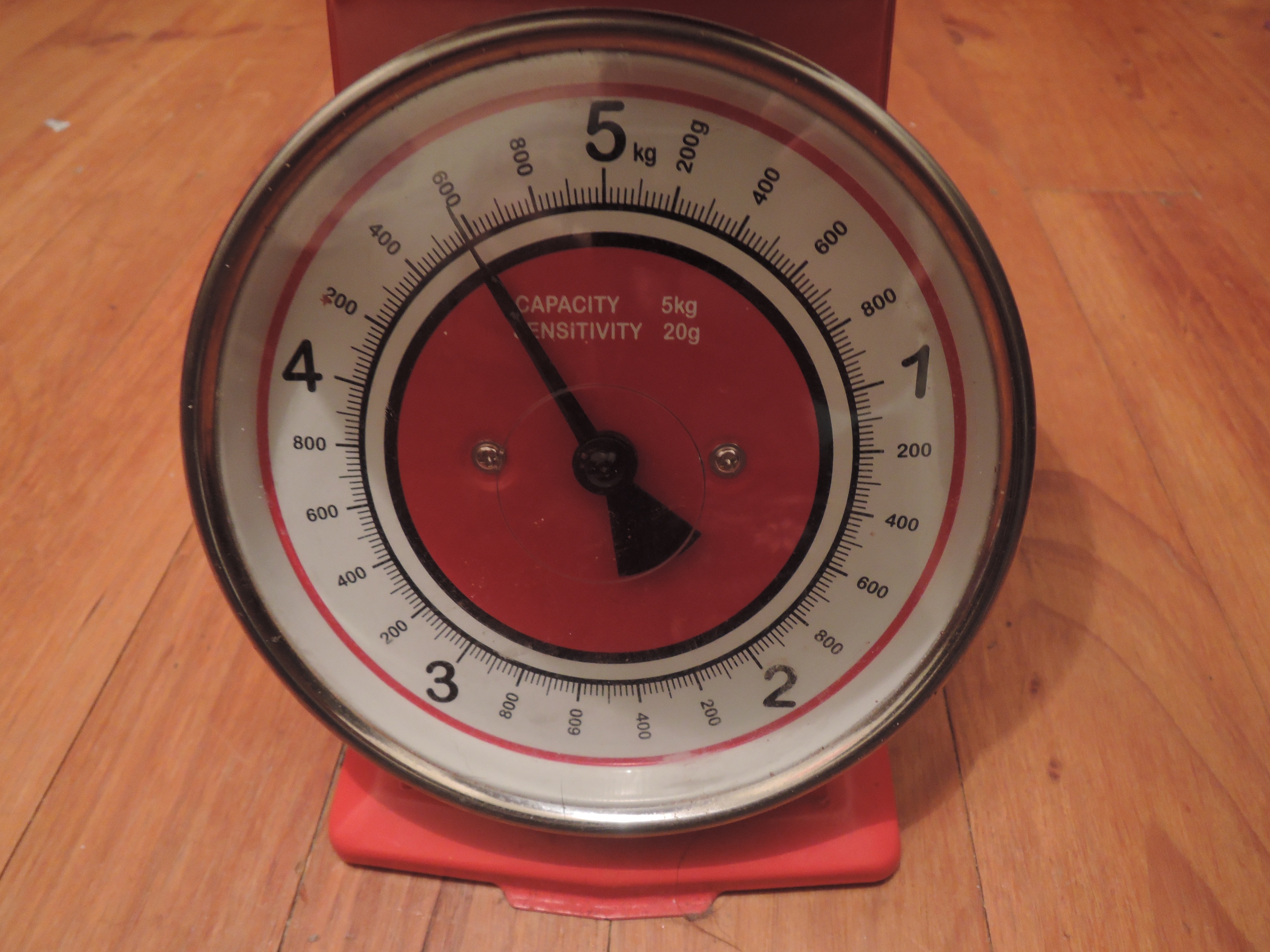
Regular weigh-ins were a part of the hospital treatment ...
Regular weigh-ins were a part of the hospital treatment …

During my time in hospital and afterwards, my therapists talked to me about getting well, moving on, recovering, leading a normal life, finding happiness. Because we talked about these things, I assumed they were not only achievable but also desirable — essential, even. Many people make the same assumption.

But now I am not so sure. I don’t think therapy’s orientation towards focusing on health and happiness and normality is sinister (Yanaghihara’s word). But I do think, like Yanaghihara, that some people’s lives are not reparable, or that some aspects of their lives are not reparable. Some people suffer terribly, some people less so; in either case, there are times when a person’s suffering cannot be eased, either through therapy or through other means. In that context, perhaps there are qualities other than health and happiness which a person might explore. Resilience, for example. Dignity. Grace. Surrender.

I think of Viktor Frankl, who wrote so eloquently and poignantly about people’s need to find meaning in their suffering, if that suffering was unavoidable. I think we shy away from that word, these days — unavoidable. We form goals, we foster dreams, we try to shape our lives, based on that act of shying away. I think this is a mistake.

... but the number on the scale is only one factor in the equation
… but the number on the scale is only one factor in the equation

There is only so much you can can say in one post, and so I will leave the rest for another day. Instead, I will finish with some more words by Yanaghihara — words that, I think, complement these thoughts, though the millennial New York society she writes about is so far away from the terrible world of Frankl’s concentration camp:

But these were days of self-fulfillment, where settling for something that was not quite your first choice of a life seemed weak-willed and ignoble. Somewhere, surrendering to what seemed to be your fate had changed from being dignified to being a sign of your own cowardice. There were times when the pressure to achieve happiness felt almost oppressive, as if happiness were something that everyone should and could attain, and that any sort of compromise in its pursuit was somehow your fault.

(p. 41)

This is a tricky subject to write about, not least because it involves personal disclosure, if only on my side. But I would love to know what you, my readers, think about this. Please leave a comment and let me know. Your thoughts matter to me.

A bitter pill to swallow

Other people’s words about … cures

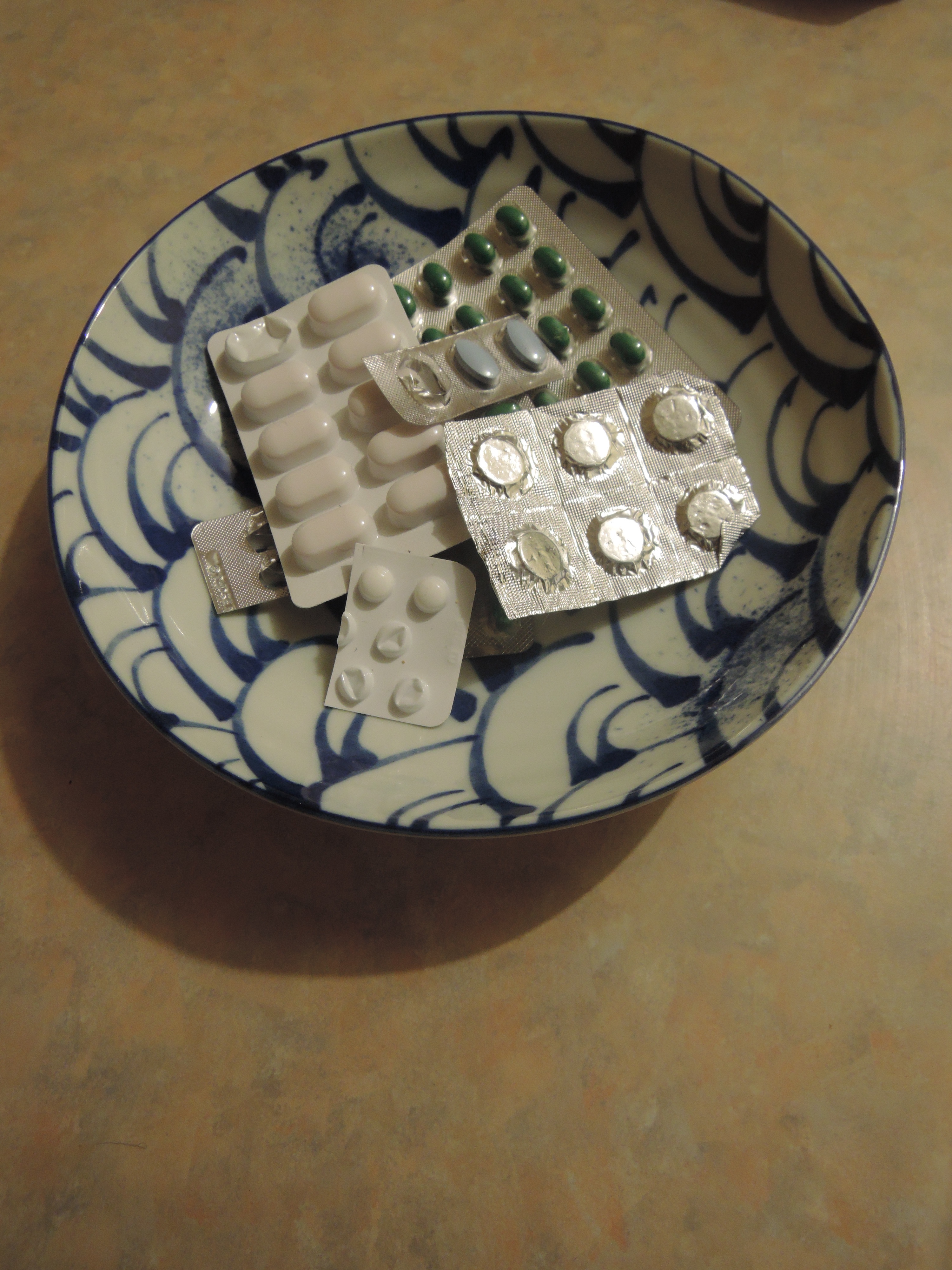
We feel sick even if we are physically well. We are organically diseased by lack or excess. Most of our healers — mainstream and alternative — now act and are treated like shopkeepers, and have become entrepreneurs (or the pawns of entrepreneurs). If they don’t give us the goods — the diagnosis and pill — we’ll shop elsewhere. We seek passive means of attaining health and longevity, which is what medicine (both conventional and alternative) promotes. We want diagnoses. We want solutions we can browse, buy and swallow, be they pharmaceuticals, tinctures or vitamins. It’s convenient for politicians, suits industry very nicely. Pills are our tiny white black holes: absorbing all our hope, agency and energy. They divert attention from prevention, population health and inequity; they promote consumption.

from ‘Too many pills?
by Karen Hitchcock
in The Monthly magazine (September 2015)

I like Hitchcock’s thinking. A doctor who works on the acute medical ward of a big city hospital, she pulls no punches when it comes to discussing health in our society.

Health, she says, is more than just a physical issue. It is an issue of combined mental, physical, environmental, interpersonal, social and political factors.

Too many pills?
Too many pills?

I can’t do justice to her argument here. It is complex and passionate, encompassing the need for both personal action (at the individual level) and social action (at the socio-political level). And it is about considering the idea of a cure not as something we can buy but rather as something we should do.

And, oh, these are words well worth reading.