Chasing clouds

Other people’s words about … running

Some athletes love to talk about what a simple sport running is. They say that all you need is a pair of sneakers. That’s not true. What you need is some freedom of movement and the ability to see a clear path ahead of you. It took me years to see that path and to find my pace. When I finally got moving, I hoped I might be able to run forever.

From ‘The Long Run’
by Catriona Menzies-Pike

After I wrote my last post here, in which I mentioned that I’d been too tired to run very much recently, I caught a cold and stopped running altogether for almost three weeks. It was probably the longest period I’ve gone without running since I took the habit up again, back in 2015, at the age of forty-five.

This past Thursday, I went for my first run since catching that cold, feeling fragile and wobbly and exhausted. I was so tired that I ran half the distance that I usually run, and I stopped at the midway point — partly to rest, partly just to soak up the wonder of being out under the sky again, with my feet thudding against the ground.

I sat on a rock looking out over the sailboats anchored in the cove, and I thanked whatever grace it is that allows me to continue to run. There are so many people who would like to run but can’t, whether because of disability or illness, injury or lack of opportunity. I remembered that I am one of the lucky ones: that it is my great good fortune and privilege to be able to run, however slow my pace, however short my distance.

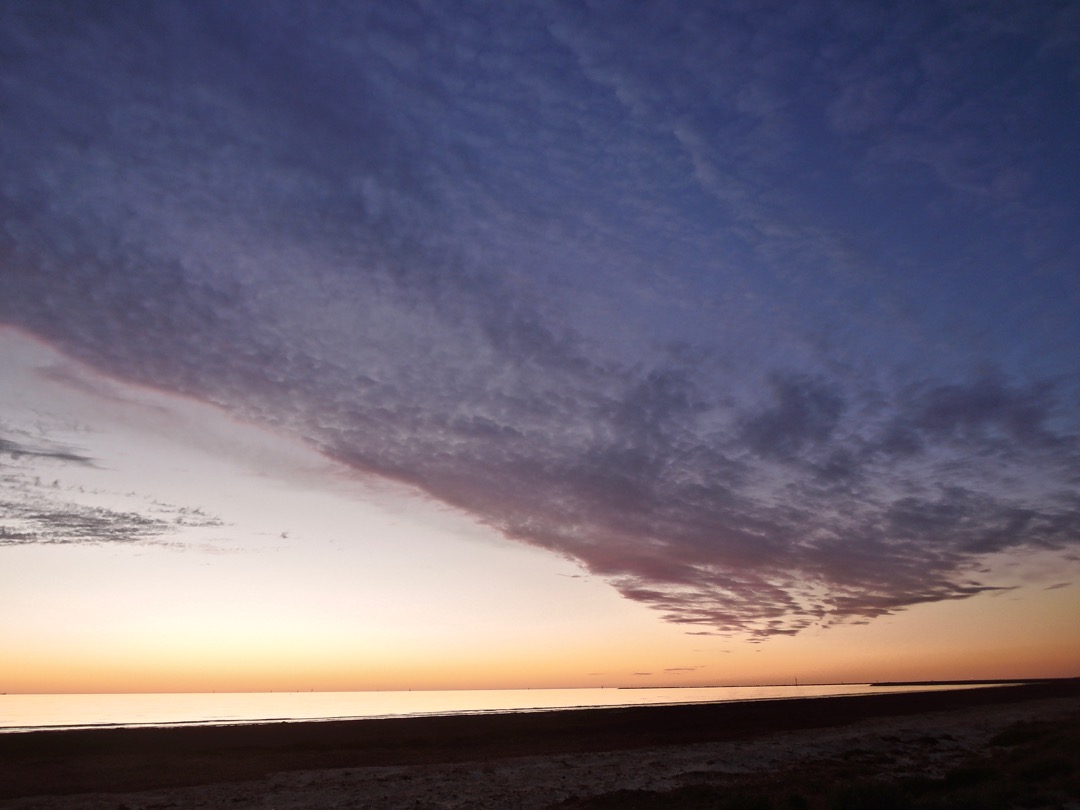
I took the photographs in today’s post as I was sitting on those rocks, midway through that run. It was a short, tiring, exhausting, feeble run, and it left me feeling both humbled and blessed.

And that is what I love most about this privileged pursuit of mine: the gratitude it feels me with. The joy that it brings.

Savour it

Other people’s words about … moments of beauty

Her head nested in spindly weeds [as she lay down in the grass]; the sky glowed preternaturally blue through the slats. As her breathing slowed, she noted a bee crawling along a blade of grass above her head. She counted its stripes, amazed to see them juxtaposed with the stripes of sky. The bee’s were a warning, the sky’s a promise she could not yet fathom, and for a moment everything seemed connected, aching beauty and imminent danger, the fragility of the bee and the scalded roof of her mouth, the transcendent savour of [the stolen loaf of freshly baked] bread and the fact that she was literally lying in a ditch.

From ‘Tess of the Road’
by Rachel Hartman

I love this passage, in which the protagonist of Rachel Hartman’s novel, Tess, feels utterly present in a single moment of her life: feels herself watching the moment as it unfolds. Tess’s experience of this moment, her sense of being present in it, is what a meditation teacher might call an experience of mindfulness. And yet the description is beautiful rather than didactic, descriptive rather than prescriptive.

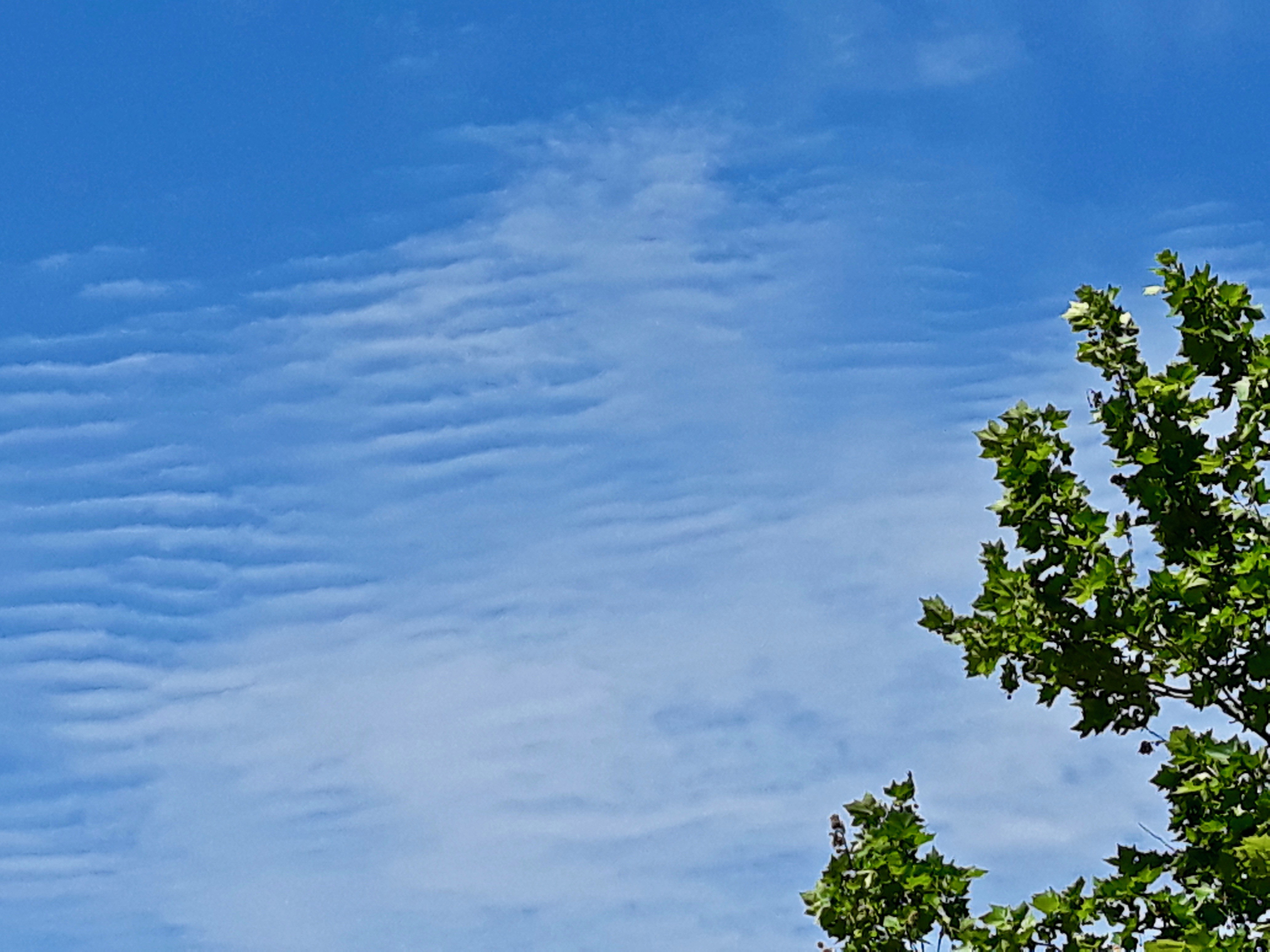
Stripes in the sky (1)

Hartman’s words are, I think, a description of the practice of mindfulness at its best. Mindfulness, to me, is not about mantras or breathing or (heaven forbid!) colouring-in books. Instead, and far more simply, it is about slowing down, about looking around, about noticing the world around you. It is, most of all, about seeing.

Because the practice of mindfulness — this kind of mindfulness, anyway, which to me is the only kind that makes any practical or spiritual sense at all — is about stepping outside, into the living, breathing world, the one that exists beyond walls and ceilings and computers and cars. It’s about looking and seeing. And about being grateful for what you see.

Stripes in the sky (2)

This year has been a strange, uneasy year for me: a year of trying to make a living from freelancing, and then trying to readjust to a salaried living, working regular hours, meeting KPIs and targets. I’m grateful for everything I’ve learned throughout the year, and grateful most of all that I was able to seek out other opportunities when freelancing alone wasn’t enough to sustain me.

Still, at times this year, when things got hard, I felt myself becoming frighteningly disconnected from the things that usually matter most to me: those still, small moments like the one Hartman describes, those moments when you stop and breathe the world in, exactly as it. Call it fear that stole those moments away from me; call it loss; call it depression; call it change. Whatever it was, it shocked me. I felt that I had stepped away from the world, and I didn’t know how to step back in.

And yet here I am now, months down the track, and I’m still here, still breathing. I’m stepping back in.

Take note

Other people’s words about … gratitude

I am so glad to still be here. Every day, I do my best to see the colours. I take note. I breathe them in.

From ‘How it Feels to Float’
by Helena Fox

It’s been a while since I’ve posted, I know. I want you all to know that I have been thinking of you, and I have been thinking of posting. There just hasn’t been room inside my head to get to it.

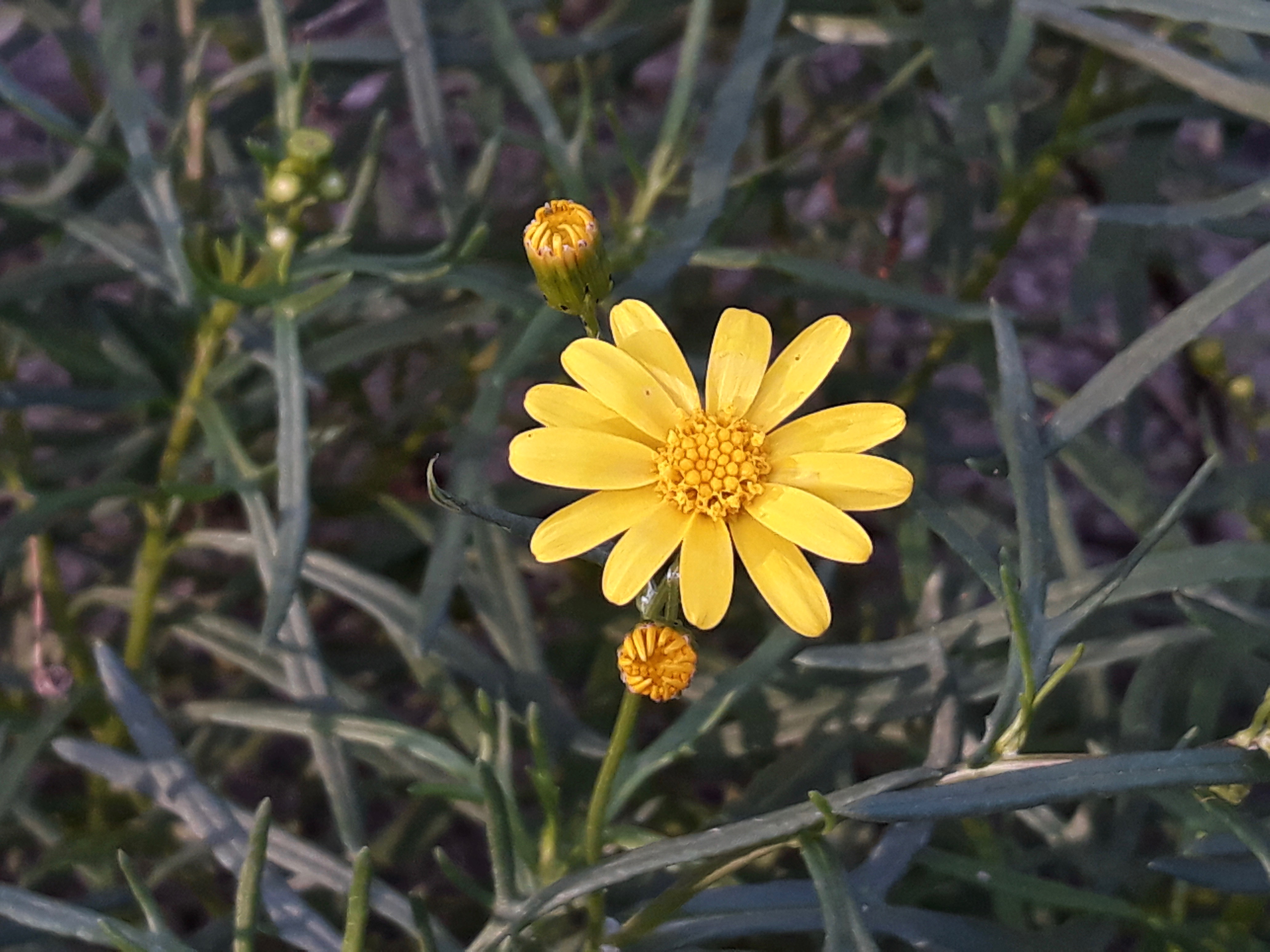
The first groundsel flowers of the season
(Spring is coming)

But when I read Helena Fox’s words in the Acknowledgments section at the back of her wonderful novel for young adults, How it Feels to Float, I wanted to pass them on. Because no matter how crammed my head — my brain, my mind — feels at the moment, I, too, do my best to see the colours, to breathe them in.

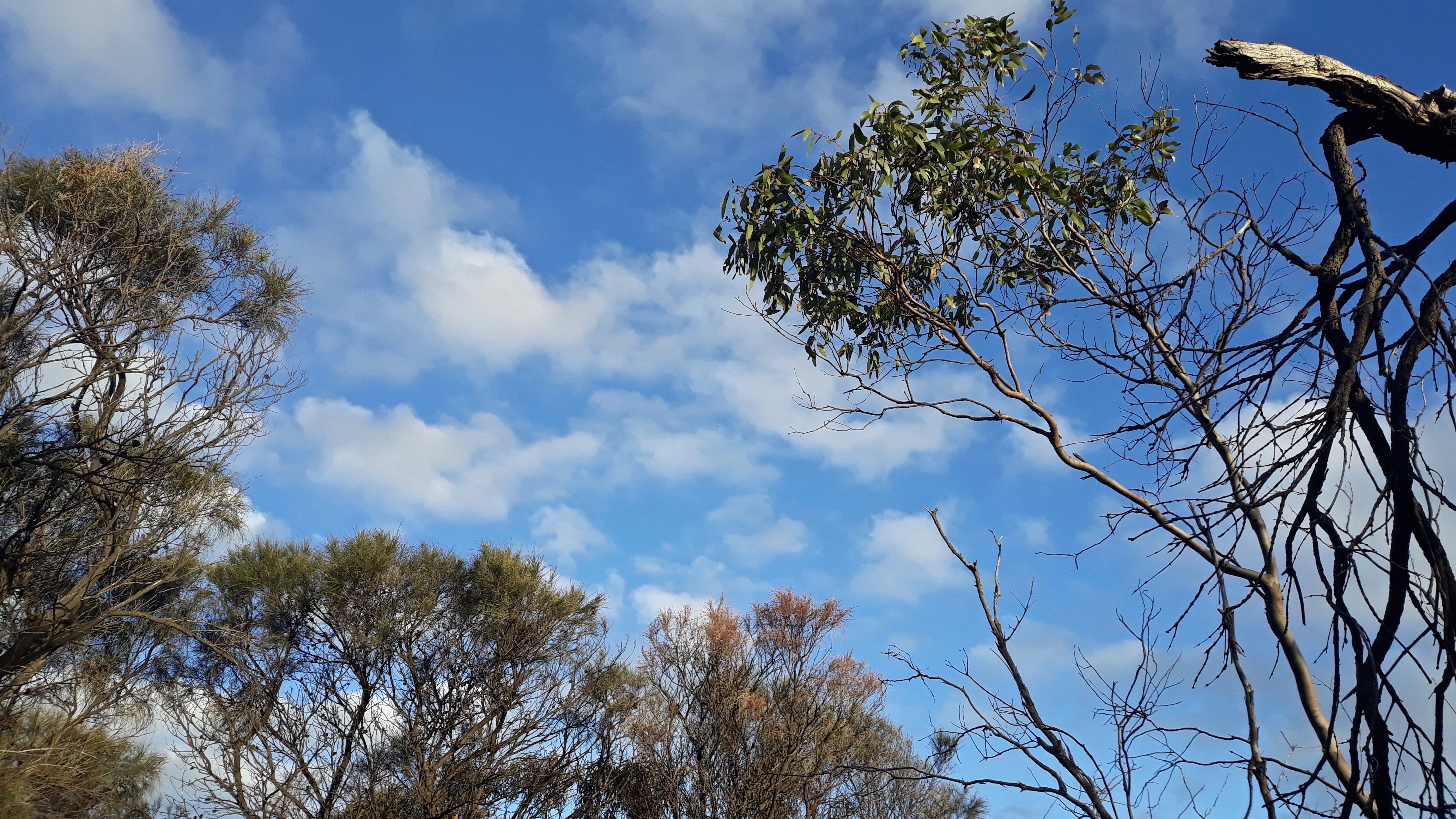
Blue winter sky

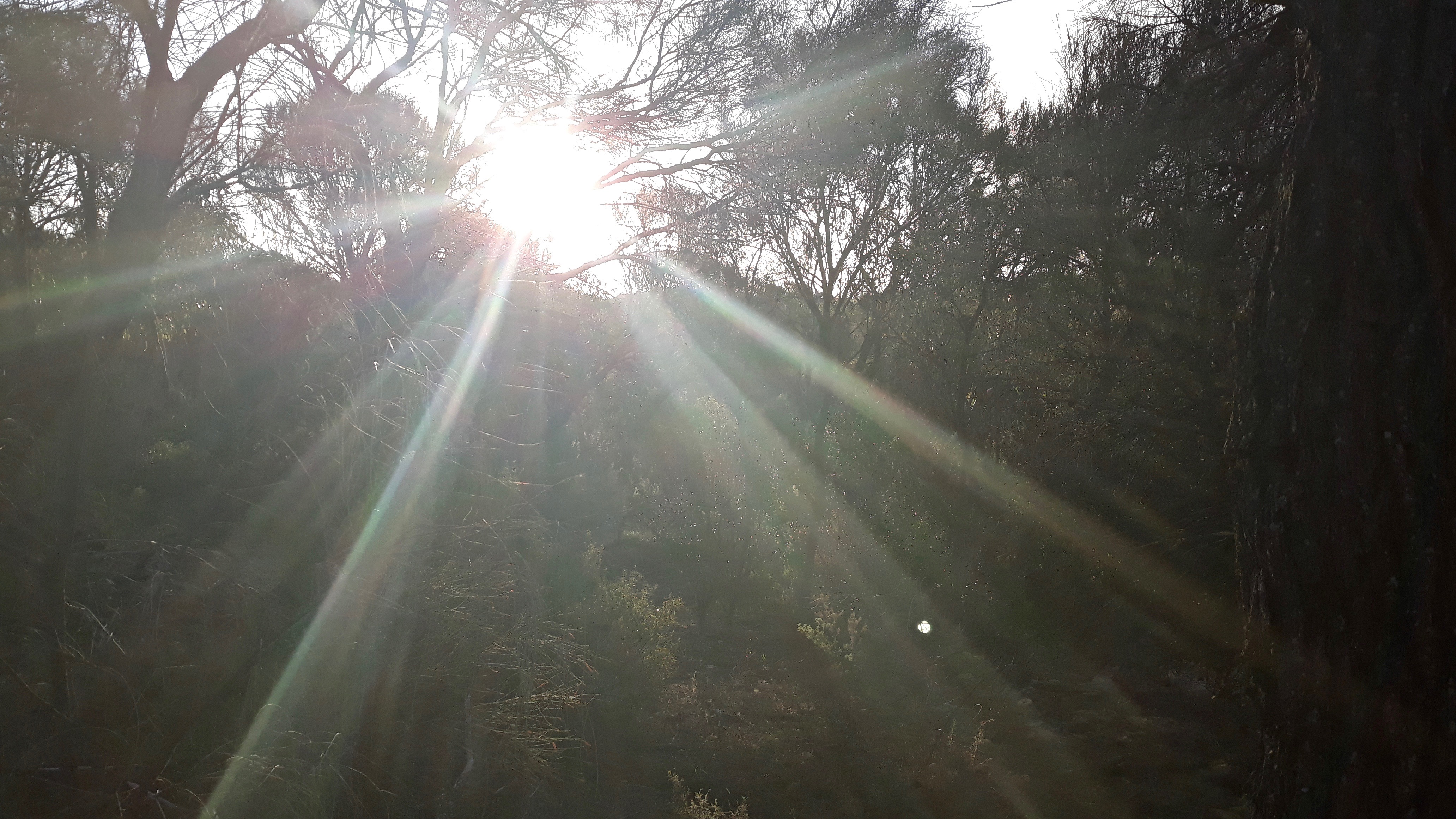
The photographs in today’s post come from a walk I took a few weeks back. I hadn’t walked that path for a while, and I haven’t walked it since, but those moments were precious. I am still breathing them in.

Last rays

Tip your head back and look up at the sky

Other people’s words about … the sky

Axel … breathed out, trying for calm. He tipped his head back, looked at the sky, wide and empty of trouble. His heart slowed. The moment passed.

From ‘Shell
by Kristina Olsson

Oh, that beautiful sky …

Out & about: enough

‘When you’re walking the view shifts and changes.
Walking’s a form of hope.’

from ‘The World Without Us
by Mireille Juchau


Some days, after work, I don’t have time to go for the kind of walk that the passage above, which I quote on this blog so often, describes: a long walk, a wandering walk, a wondering walk. Some days there just aren’t enough hours of daylight left — not for that kind of walk.

There might be a few moments, though — just enough moments to dash down the road and glimpse a dark swathe of clouds in the sky —

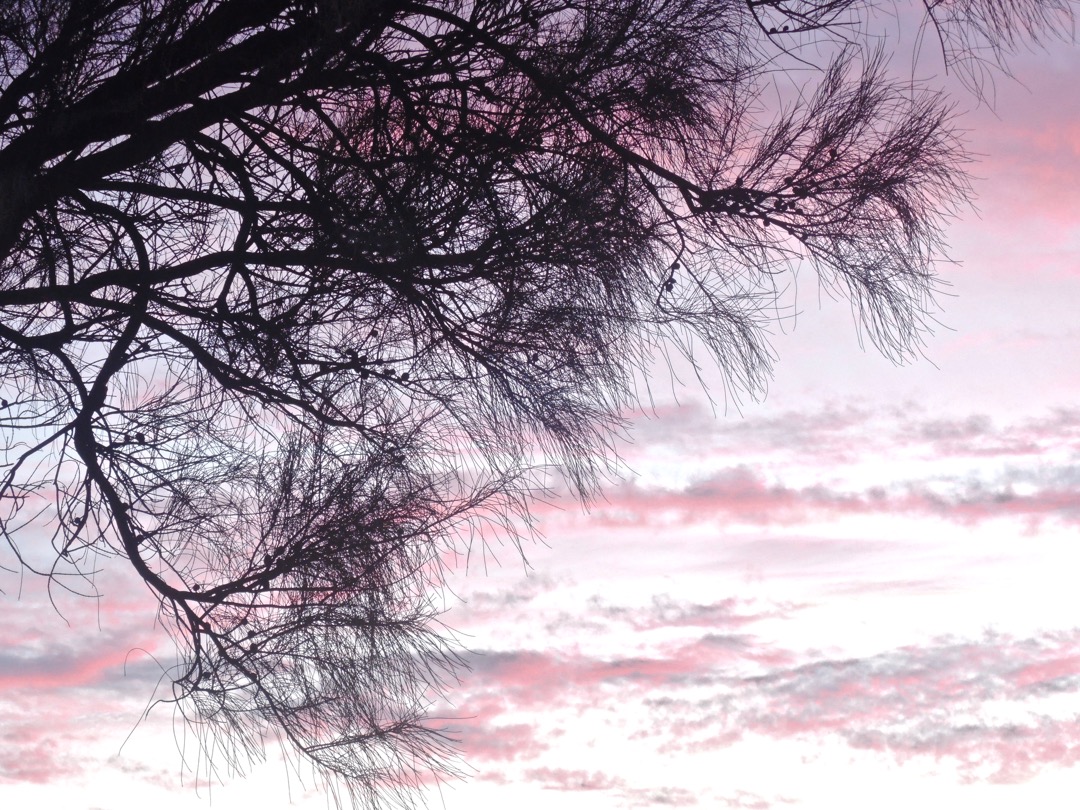
— or the branches of a sheoak tree silhouetted against cotton-pink clouds —

— or a sea turned opal.

Beacons to guide the ships home

The day I took the photos in this post was one of those days. All I had left of that day were those few moments — the last few moments of the day. So I told myself that they were enough, those few moments.

And for a few moments they were. They really were.

On purpose

Other people’s words about … meaning

Some people … believe they have to find their purpose to live fully … [But] it is perfectly fine — and in fact recommended — to simply live each of your moments fully and marvel at it all. What if that is your purpose?

From ‘The Energy Guide
by Dr Libby Weaver

I am not much one for self-help books, these days, especially ones that focus on how to find happiness or health. I don’t think — as I did when I was younger, as young people so often do — that health and happiness are things you can seek out or earn, or that they are things you can, or should, feel entitled to.

But I do like Libby Weaver’s words here, even though her book falls squarely into that category of books I’ve just derided. I like her words because what else does it make sense to do other than to simply live each of your moments fully, no matter what each of those moments is like, or what is happening during it? What better thing can we do as we live out our days than marvel at it all?

Weaver goes on to say:

Consider that the real purpose of anyone’s life is to be fully involved in living. Be present for the journey. Act on what you care about.

You could call the attitude Weaver is advocating mindful, if you so chose. Or you could call it sensible. Or humble. Or grateful. Whatever you call it, I think it’s an attitude worth cultivating.

Winter sunrise: be present.

Because unlike health and happiness, unlike riches and freedom, unlike love and success, unlike youth and beauty, unlike wisdom and intelligence, being fully involved in living is achievable. It’s not always easy, but it’s possible.

And that, I think, is a good place to start.

Tipping point

Otherwise

I got out of bed
on two strong legs.
It might have been
otherwise. I ate
cereal, sweet
milk, ripe, flawless
peach. It might
have been otherwise.
I took the dog uphill
to the birch wood.
All morning I did
the work I love.

At noon I lay down
with my mate. It might
have been otherwise.
We ate dinner together
at a table with silver
candlesticks. It might
have been otherwise.
I slept in a bed
in a room with paintings
on the walls, and
planned another day
just like this day.
But one day, I know,
it will be otherwise.

by Jane Kenyon

I have never known whether this poem, which I love, is about gratitude or fear, joy or sorrow. Is Kenyon, who experienced terrible bouts of depression throughout her life, describing her gratitude for, and joy in, the small moments of beauty and happiness she has experienced on the day she describes in her poem — the peach, the walk with her dog, the work she loves, the time with her mate?

Or is she describing her fear of losing these moments — of tipping away from happiness, back down into sorrow and depression?

A small thing, this, of beauty.
It might have been otherwise.

It’s a see-saw, this poem, I think. The poet hangs in a kind of precarious balance between one life and the other, without knowing when the hinge will tip her down again, away from the things she loves. It might have been otherwise, she writes at the start, and then, later, sadder and more afraid: it will be otherwise (my emphasis).

Gratitude. Joy. Fear. Sorrow. Grief. Yearning. They’re all there in this one, short poem.

One day

Other people’s words about … the sea

After lunch, as a reward for their fine behaviour, Nurse allowed them to bundle into coats and hats and bolt from a back door along a path that ran behind Mr Styles’s house to a private beach. A long arc of snow-dusted sand tilted down to the sea. Anna had been to the docks in winter, many times, but never to a beach. Miniature waves shrugged up under skins of ice that crackled when she stomped them. Seagulls screamed and dove in the riotous wind, their bellies stark white. The twins had brought along Buck Rogers ray guns, but the wind turned their shots and death throes into pantomime.

From ‘Manhattan Beach’
by Jennifer Egan

I have never been to a beach in the kind of winter that Jennifer Egan describes in the passage above. Many years ago, in Michigan, I walked across a frozen lake (and thereby learnt the meaning of the term ‘wind chill factor’), but that was a lake, not the ocean. I’d like to experience that wild, violent chill, just once in my life.

The beaches along the South Australian coast have their own seasons of peace and restlessness. Often, the early months of Autumn are times of softness and stillness, and this past April there were several days when the sea lay like blue, shining silk on a bed of sand.

As you can see from the photos in today’s post, which I took at the beach in the first week of April, the South Australian coastal world is utterly unlike Egan’s, but there is wildness at its essence, all the same.

Downpour

Other people’s words about … having sad thoughts

Understand, for instance, that having a sad thought, even having a continual succession of sad thoughts, is not the same as being a sad person. You can walk through a storm and feel the wind but you know you are not the wind.

That is how we must be with our minds. We must allow ourselves to feel their gales and downpours, but all the time knowing this is just necessary weather.

From ‘Reasons to Stay Alive’
by Matt Haig

It was Toni Bernhard who first introduced me, in her book How to Live Well with Chronic Pain and Illness, to the idea that moods are like the weather: impermanent, changeable. She writes elsewhere:

In ‘How to be Sick’, I call it Weather Practice. I like to think of emotions and moods as being as changeable and unpredictable as the weather. They blow in; they blow out. Working with this weather metaphor allows me to hold emotions and moods more lightly, knowing that, like the weather pattern of the moment, they’ll be changing soon. One moment, life looks grey and foreboding; the next moment, a bit of brightness — maybe even a rainbow — begins to break through.

Both Bernhard and Haig are covering the same theme here, a theme that is one of the basic tenets of any kind of mindfulness practice. But while I like Bernhard’s clear, practical prose, there is something about Haig’s phrasing (despite his erratic sense of grammar) that particularly speaks to me.


Necessary weather. Those two words, paired together, feel to me immensely comforting, and true. I murmur them to myself on days when my mind and my mood feel clouded and grey like the clouds pictured in today’s post.

Call these words a mantra, if you like. They bear repeating.