On wonder, and grief

Other people’s words about … this amazing world

Look at the sky. (It’s amazing. It’s always amazing.)

From ‘Notes on a Nervous Planet’
by Matt Haig

I’ve found myself at a loss for words to write in here recently. The loss of words carries over to images, too, and therefore to other media like my Instagram account — I haven’t taken a photograph for weeks. I haven’t even been able to pick up a pen and write in my own diary.

I am, in general, someone who is readily able to immerse myself in the wonder of the natural world. The photographs I take and post, here and on Instagram, of the scrub and the sea and the sky and the sand and the sunset, are the physical manifestation of this. The habit of wondering is one I taught myself, years ago, as a way to manage the bouts of anxiety and sadness I’ve always experienced. Call it mindfulness, call it relaxation therapy, call it diversion, call it meditation, it’s what I do: it’s how I move through the world. It’s how I stay present, how I stay humble.

But since the end of last year, ever since the fires began raging here, I haven’t been able to respond that way to the world around me: to access that wonder. In fact, wonder feels frivolous — insensitive, tasteless — when the world around you, the living world, is burning, burning.

Here in South Australia, in the last couple of weeks, we’ve had milder weather, and even some rainfall. As a result, the fires, for now, are largely under control, though when the heat returns — as it will — so, I think, may the fires.

But in the wake of those fires, the land in those areas has burned to nothingness. The trees and the animals have been killed. There is nothing left. There is nothing to wonder at.

What I feel now, instead of wonder, is rage and grief. These fires should not have happened. For thousands of years, before 1788, the people who lived here managed the land, and they managed fire. They co-existed with the natural world. In the last two hundred years, we have lost that ability, and with it we are losing the land.

There are books you can read about this, if you want to know more — books that were written well before this year’s fires, books that studied the past and made warnings about the future. I would recommend, in particular, Bill Gammage’s The Biggest Estate on Earth (about which, you can read more here).

There are also things you can do, right now — organisations to which you can donate your money, or your time, or your talent. If you are an Australian, there are choices you can make today, as you go about your daily life, about how you spend any disposable income you might have — for example, where you buy your food, where you go on holiday — so that your money goes towards local communities affected by the fires (for example, #bookthemout and Empty Esky). I hope that, though movements such as these are aimed at helping the people affected by the fires, they will also, as a natural consequence, help the other living beings affected by the fires. By contributing to these areas, you contribute to all the lives within those areas.

I would add: do these things now. Please. But also, do them forever.

Bushfire prevention is a long-term strategy. It’s a lifestyle choice, and it’s a political choice. If we are to change the course of the future in Australia, if we are to change the way we live in our environment, if we are to learn to co-exist in this Australian environment, then we have to change things forever.

Until we manage to do this, I, like many other Australians, will continue to feel rage and grief instead of wonder.

Burning, breaking

Other people’s words about … climate change

For the very first time, the wetlands are also on fire. Old Gondwana growth, ancient forests are aflame. This is not the forest that regenerates; what is being lost will never return. It is not hard to see that something is deeply, palpably wrong. All winter drought conditions have intensified; the building fire skipped the river, which should have been a natural break. There is practically no water left; the Shoalhaven is so parched that the town will run dry within months.

From ‘Mourning a Disappearing World as Australia Burns’
by Jessica Friedmann
Read the whole article here

Happy New Year to all my readers. I wish you all a joyous 2020.

I’m writing this post on a day in which bushfires continue to rage uncontrolled across much of my country. I know that this story is being covered by the media, and so there is not much I can say that you yourselves probably haven’t read or thought already. The article I’ve quoted in today’s post is worth reading, though, in addition to whatever else you’ve read or heard: I am in accordance with much of what Friedmann writes.

All I will say is this: it has astonished me for years that I live in a country where it is possible for politicians to deny that climate change is occurring, that I live in a country (a world?) where apathy and bluster are accepted forms of political leadership.

My country is burning. It has been getting ready to burn like this for years. It breaks my heart.

It breaks my heart.

Holiday views, though the fires were already burning when I took this photograph.
View from the Kangaroo Island ferry, 29 December 2019

Paradise

Other people’s words about … the ocean at night

They [drive] across the train tracks where they see a sign proclaiming PARADISE JUST 7 KMS AHEAD.

Paradise is a caravan park. Her father kills the engine and sits still, gripping the wheel. Rose can hear the ocean; the sudden intake of its breath, as though it has remembered something, something terrible, but finding there is nothing it can do, it breathes out again. The night is dark and starless.

‘It’s as good a place as any,’ he finally says.

From ‘The Midnight Dress’
by Karen Foxlee

Usually, when I quote passages describing the sea on this blog, I accompany them with whatever latest shots I have taken of the sea. So it seems more than a little ironic to me that I don’t have any recent shots of the ocean at all to accompany the beautiful quote in today’s post. I live by the sea! I love the sea! How can I not have any new photos of it?

But it’s been a hot, windy spring in South Australia, creating conditions that are less than photogenic, particularly here where I live, by the coast. And in addition, I’ve been busy and tired for the last few weeks, settling into my new job, working new hours, stepping back into life after a period of withdrawal.

Still, I’m quoting this description of the sea today anyway, because I love the metaphor in it: the idea that you can hear the sea breathing.

Hot, blue, windy sky

Besides, like all good metaphorical words, Karen Foxlee’s words, which I’ve quoted above, aren’t really (or aren’t only) about the sea. Have Rose and her father really arrived at a paradisiacal destination? Is any destination, at any stage in our lives, paradisiacal?

No. Of course not.

Seagull surviving the heat by the Port River

And so back to me, and to the real reason for my lack of sea-themed photographs. One of my favourite times for taking photos of the sea is when I’m running right alongside it: either on the foreshore path, or on the shore itself, by the water’s edge. But I’ve been so tired over the last few weeks — exhausted, actually, to the point of illness — that I haven’t had the energy to run much, if at all.

I am grateful for my new job, which, in comparison to my previous work situation seems virtually paradisiacal. All the same, I’ve been trudging through my days, and the sea has been, at best, a distant companion.

And yet. The place I am now, this place I have arrived at in my life — a little by design, mostly by chance — is, as Rose’s father says, as good a place as any.

I’ll settle for this life I’m living, paradise or no.

Scenes from my life over the last few weeks

Lately I’ve been reading about …

Unrepentant

Other people’s words about … life after therapy

It’s an odd sensation to be done with therapy, to believe it is no longer available to me as a recourse. I watch as people around me flow in and out of therapy, and as therapy flows in and out of them. I feel a familiar sense of alienation, and sometimes I’m also troubled by an obscure sense of uncleanliness, as if my resolution to abjure therapy were a perverse abstention from universally accepted hygienic practices — as if I’d taken a vow never to wash again. Therapy is an ablution, a Ganges in which everyone bathes.

From ‘Mockingbird Years’
by Emily Fox Gordon

There are two things I experimented with to excess in the years before I turned forty: restricting my eating and, like Emily Fox Gordon, consulting therapists.

So many different eating plans.

So many damn therapists!

I thought they would make me a better, healthier, happier person, but I was wrong on both counts.

Things that make me happy that don’t involve therapy or dieting (1):
A bunch of flowers planted in the dune, which I happened upon on a recent run

But in my early forties I came to a turning point, and now, nearing fifty, I know there’s no turning back. I am done with diets and therapists forever.

So here is my promise, to myself and to you: I will grow old therapy-free, no matter how unenlightened that may leave me.

And I will grow old (joyfully, unrepentantly) eating cake!

Things that make me happy that don’t involve therapy or dieting (2):
Views like this on my walk to work in the morning

Lately I’ve been reading about …

Precarious

Other people’s words about … fighting against entropy

Schizophrenia terrifies. It is the archetypal disorder of lunacy. Craziness scares us because we are creatures who long for structure and sense; we divide the interminable days into years, months, and weeks. We hope for ways to corral and control bad fortune, illness, unhappiness, discomfort, and death — all inevitable outcomes that we pretend are anything but. And still, the fight agains entropy seems wildly futile in the face of schizophrenia, which shirks reality in favour of its own internal logic.

From ‘The Collected Schizophrenias’
by Esmé Weijun Wang

It’s a strange experience returning to the salaried workforce after a period of time away from it. When I went freelance at the beginning of this year due to the closure of the Press for which I had worked as an in-house editor for the previous five years, I suspected that it would be difficult to make a sustainable living from a solely freelance income. And it was. I thought, at first, that it might just be a matter of making contacts, of building up a client base, of learning how to market myself: of learning, essentially, how to ‘hustle’. I thought at first, in other words, that it might just be a matter of time.
So I allowed time to pass as a freelancer, because I knew that I had to. And gradually, after enough time had passed, I came to understand that the passing of time would never be enough to change the precariousness of an income based solely on freelance work. I came to see that the gig economy, which relies on the work of freelancers and contractors like me (more about which, if you’re interested, you can read here), doesn’t just allow for precariousness: it depends on it. And I came to see that precariousness is not something I tolerate gladly.

I do not believe that precariousness is a synonym for freedom or flexibility, as proponents of the gig economy would have us believe. I believe that it is a synonym for anxiety. And anxiety is also something I don’t tolerate gladly.

So I have returned to a part-time salaried job, which I intend to combine with part-time freelance editing work, with an enormous sense of gratitude and relief. Though no job is ever truly permanent or secure, a salary brings with it, for as long as it lasts, certain things that are the antithesis of precariousness: regular hours, fortnightly pay, annual leave, sick leave, superannuation. Along with these financial benefits, a salaried office job, which is what my new job is, also brings with it a workplace outside of the home, and colleagues with whom one interacts every day. These things, too — which are, in essence, about belonging and community — contradict the concept and practice of precariousness. I am immensely grateful for them.

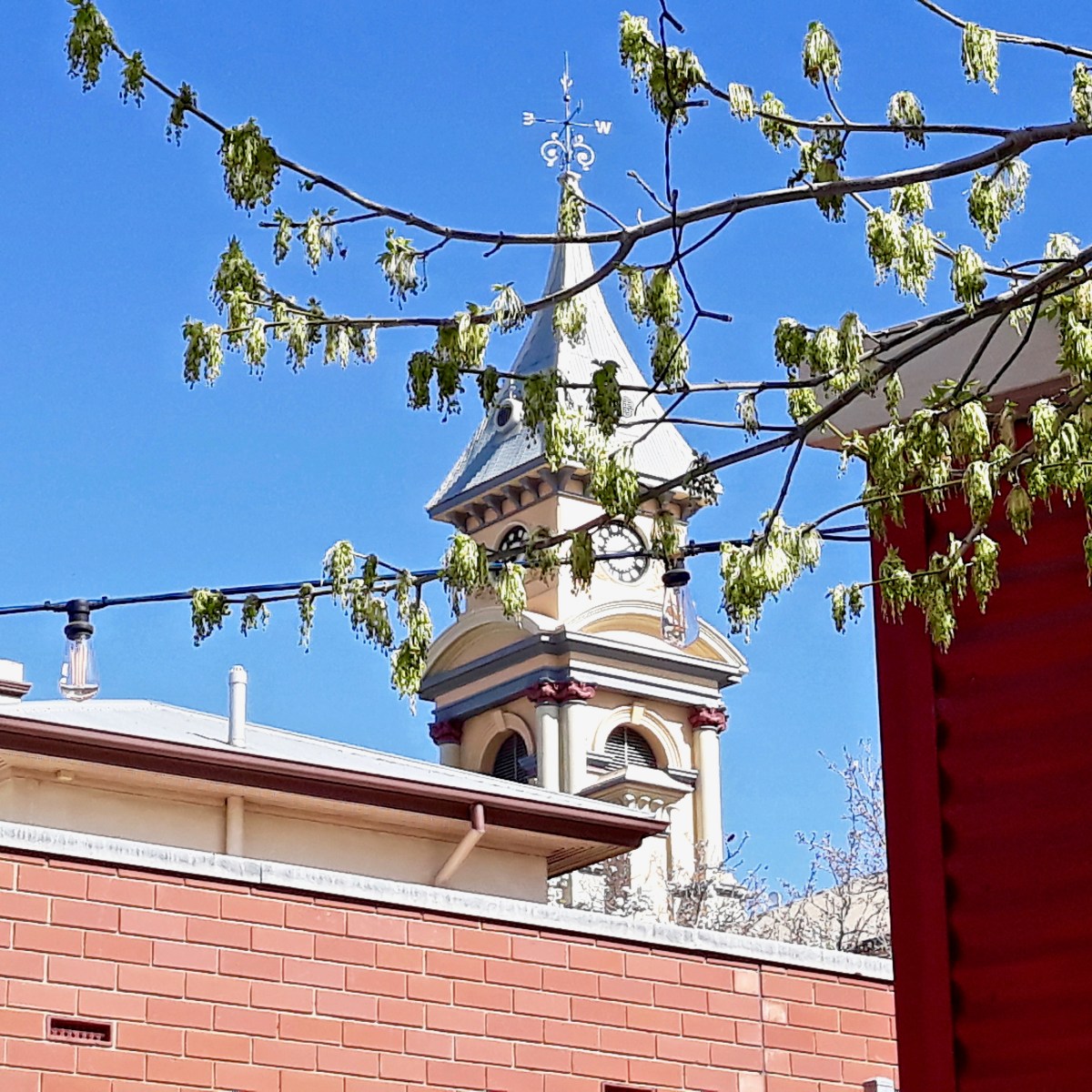
I took the first three photos in today’s post as I wandered the neighbourhood in my lunch break at my new job — a lunch break being yet another one of the ‘perks’ of a salaried office job. I’m working now in Port Adelaide, a suburb in the north-west of Adelaide which was once the heart of the marine industry of Adelaide. The wharves and docks of Port Adelaide are no longer busy in the industrial sense for which they were originally designed, so the streets I now stroll along during my lunch break are lined with abandoned warehouses and marine businesses. At the docks, dolphins swim beneath the bridge that spans the Port River, while trucks thunder overhead. The area has, on the one hand, a sense of history, beauty and purpose, and on the other hand, an air of loss, and decay, and death.

Craziness scares us because we are creatures who long for structure and sense, Esmé Weijun Wang writes in the passage I’ve quoted at the start of this post: we divide the interminable days into years, months, and weeks. She is writing about schizophrenia, and yet I’ve thought of her words frequently as I’ve wandered the streets of Port Adelaide. Because though it is true, now that I am working for a salary once more, that my feeling of precariousness has reduced, still, somehow, this fear remains. I still long for something that feels just out of reach: something that Wang describes as a way to corral and control bad fortune, illness, unhappiness, discomfort, and death, those things that, like precariousness, are, in the end, inevitable.

I took the fourth photo in this post, the photo below, last weekend, which I spent with a group of women in a holiday house in Carrickalinga, a coastal suburb south of Adelaide. The women I was with are all writers and artists. Some of them supplement the income they get from their art with a salaried or waged job; others exist solely on their freelance income. Each of these women is talented and successful in her own right, and each balances her sense of precariousness with a sense of purpose and joy and productivity in her chosen field of art.

I climbed a hill to take the photo you see here. I stood at the top of that hill and looked down at the world below me — the crumbling cliffs, the winding coastal road, the shining blue sea, the horizon at the edge of the ocean — and I felt the world expand around me, stretching out, out, out. The moment felt precarious, as the weekend had felt precarious, as the previous week — which was my first week in my new job — had felt precarious, as my freelance income had felt, and will always feel, precarious. As life feels precarious.

There was nothing I could do to remove the precariousness. All I could do was wonder at the view.

Lately I’ve been reading about …

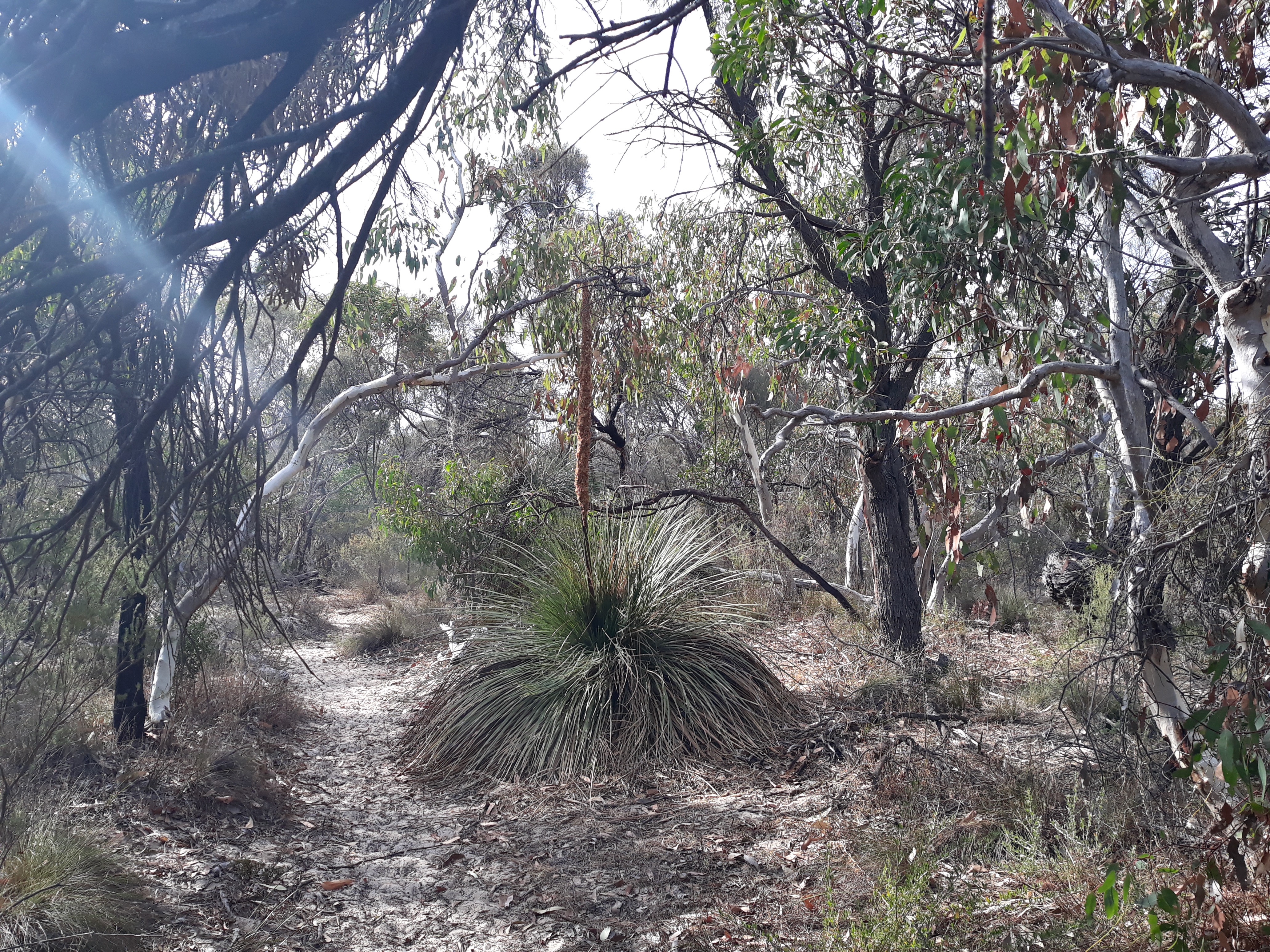
Because we can

Other people’s words about … making myths

Women who run: women with disabilities, fat women, women who’ve recovered from physical injuries, trans women, migrant women, Indigenous women, depressed women, women with no time, women with no kids, women ladies of leisure, schoolgirls, retirees, mothers, aunts, grandmothers, queer women, straight women, slow women. Scrutinise any one of these categories and a set of stories that defy generalisation will emerge, stories that destabilise the big stupid myths that say women can’t run, that only certain kinds of women can run, that it’s too dangerous, that it’s unfeminine, that it’s a sign of trouble.

From ‘The Long Run’
by Catriona Menzies-Pike

Next week, I start a new job in a new workplace. It’s been nine months since I had a salaried job, and though I’ve enjoyed the challenge of working as a freelance editor — and though I don’t plan to stop freelance editing any time soon, despite my new job, because my new job is part-time and therefore will allow me to continue freelance editing on a similar part-time basis — I feel both relieved and blessed to be returning to the salaried work force. At forty-nine, I am willing to admit that job security and a regular income is important to me. I knew this when I began freelancing. I know it even more deeply now, nine months later.

Winter sunset

I took some of the photos that you see in today’s post over the last few weeks, while I was out walking or running around my local neighbourhood. Running for me isn’t so much about, as Catriona Menzies-Pike puts it in the passage I’ve quoted above, destabilis[ing] the big stupid myths that say women can’t run: it’s more about destabilising my own personal, stupid myths about myself, one of which, for many years, was that I wasn’t an athlete, I wasn’t strong, and I couldn’t run.

Deep blue sky

In fact, some of the stories I’ve told myself all my life are true. I’ll never be an athlete. I’ll never be strong, physically or mentally. But I do continue to run, and continuing to run continues to make me feel good.

Spring flowers 

No matter how slowly I run some days — no matter how old or stiff or sad or achey I feel when I’m running — and no matter whether I have a stable, salaried income or an unstable, freelance income, I run. Not far, and not fast, it’s true.

Nonetheless.

I run, not just because it makes me feel good, but because I can.

Hole in the sky

Lately I’ve been reading about …

Take note

Other people’s words about … gratitude

I am so glad to still be here. Every day, I do my best to see the colours. I take note. I breathe them in.

From ‘How it Feels to Float’
by Helena Fox

It’s been a while since I’ve posted, I know. I want you all to know that I have been thinking of you, and I have been thinking of posting. There just hasn’t been room inside my head to get to it.

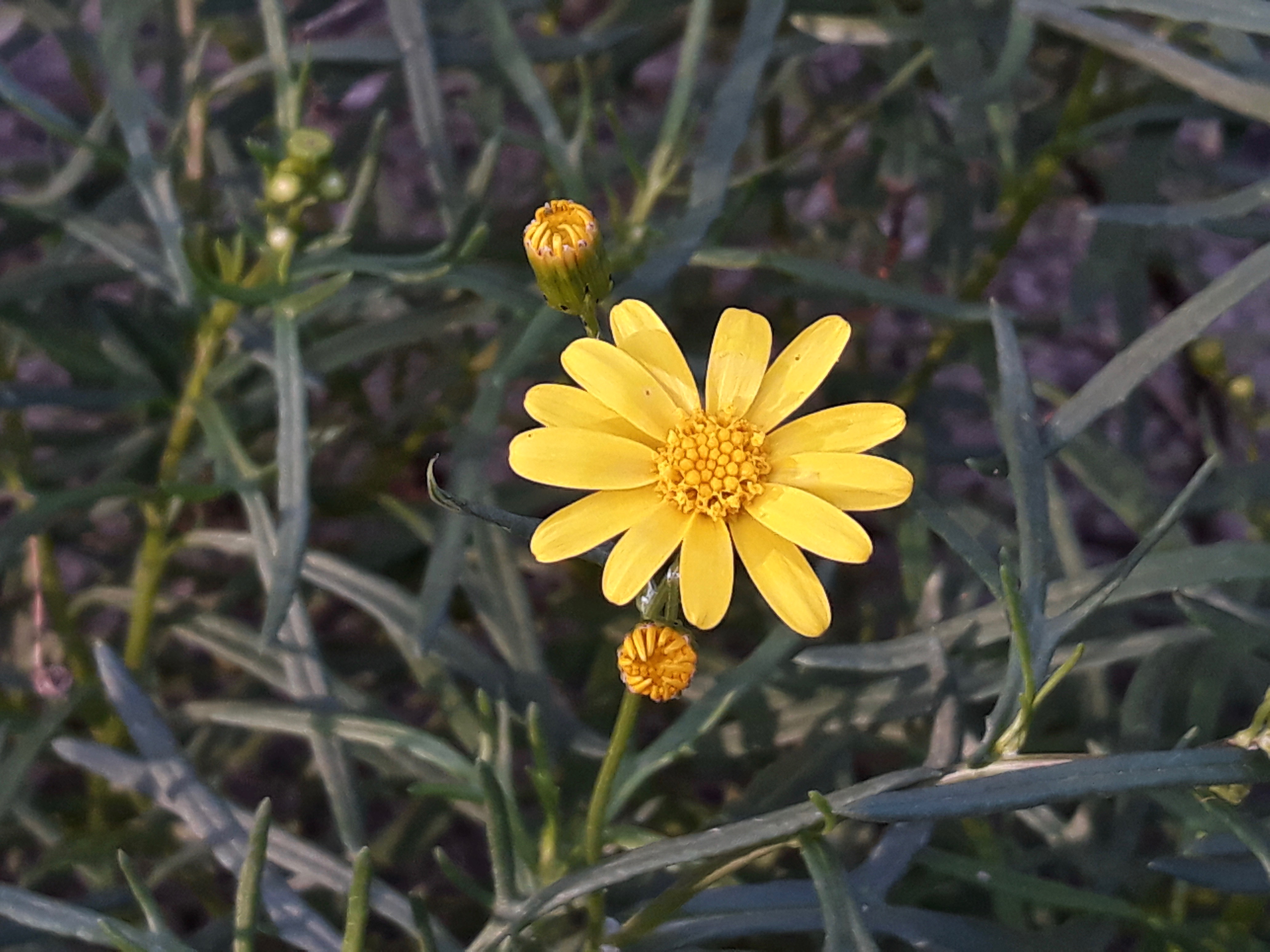
The first groundsel flowers of the season
(Spring is coming)

But when I read Helena Fox’s words in the Acknowledgments section at the back of her wonderful novel for young adults, How it Feels to Float, I wanted to pass them on. Because no matter how crammed my head — my brain, my mind — feels at the moment, I, too, do my best to see the colours, to breathe them in.

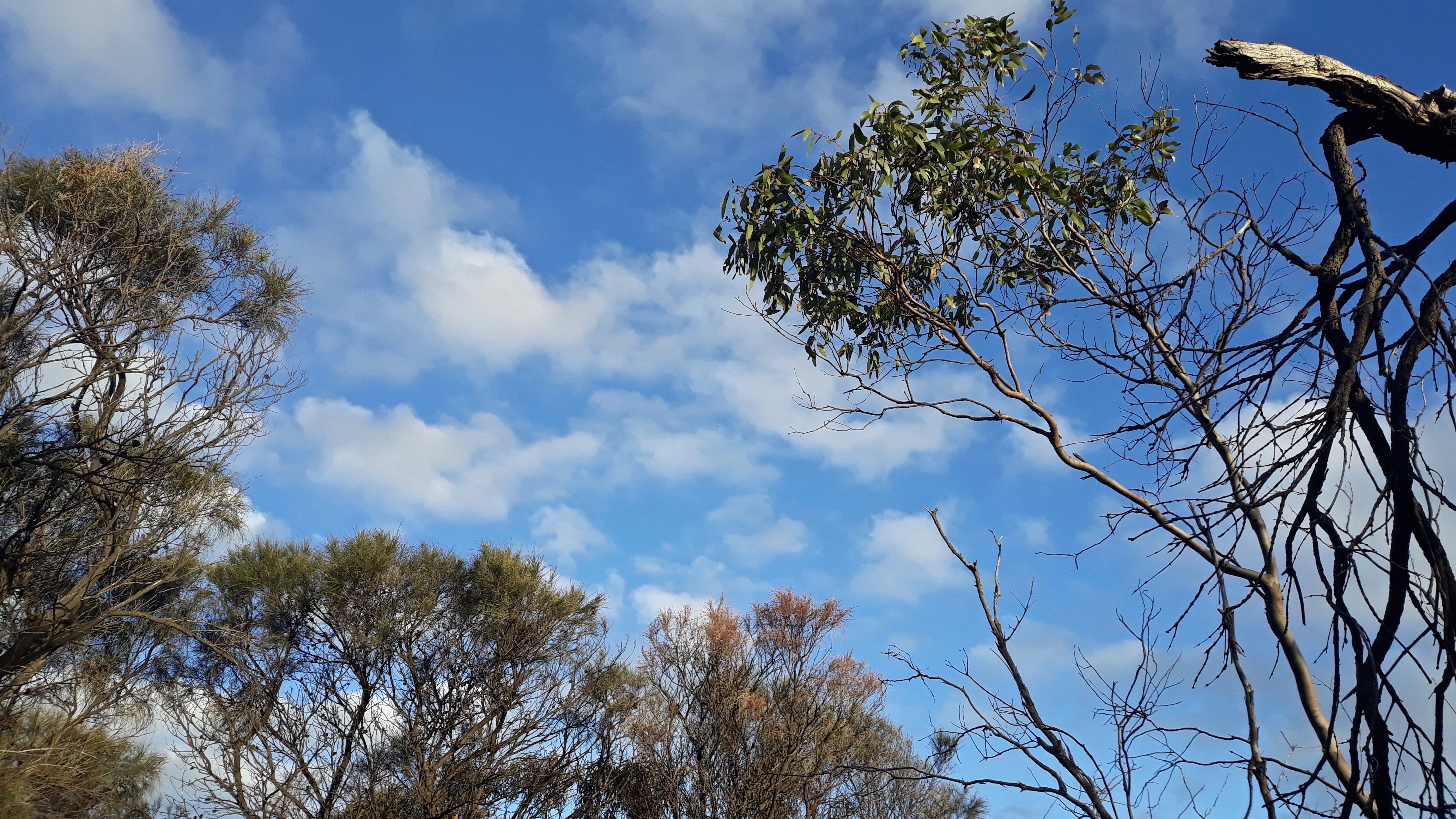
Blue winter sky

The photographs in today’s post come from a walk I took a few weeks back. I hadn’t walked that path for a while, and I haven’t walked it since, but those moments were precious. I am still breathing them in.

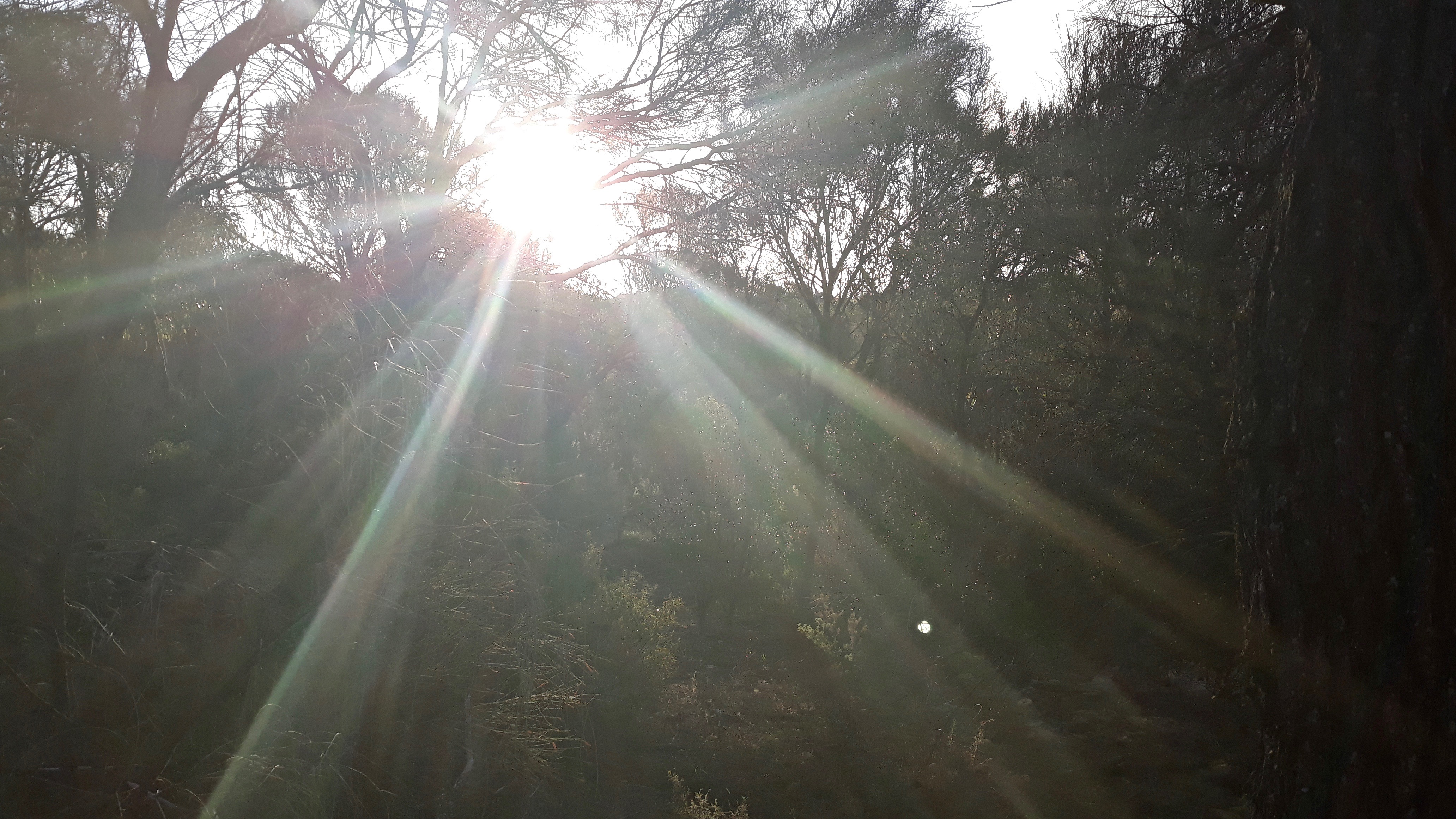
Last rays

Sigh

Other people’s words about … living by the sea

We walk back to our car, the morning seeming eerily quiet. I’m used to living close enough to the shore that occasionally we can hear the gulls in the distance, crying. Here, there’s nothing. With the cold, there’s no insect noise, no bird noise. Just the wind moving the leaves, the branches swaying, the world, faintly sighing.

From ‘Fragments of the Lost’
by Megan Miranda

Once, years ago, when I was in my mid-twenties, I left the house by the sea in which I was living to stay for a couple of weeks with a man with whom I thought I was in love. He lived interstate, in a suburb miles from the coast: a suburb of twisting cul-de-sacs lined with neat brick houses and small, grassy parks, each of which had a set of swings, and a see-saw, and a coin-operated barbecue.

With the passing of each day in that man’s house, I felt a terrible, growing sense of fatigue and disenchantment. At first, I thought that I must be ill. I felt tired, so tired: my limbs seemed stiff and leaden, and each night, as I lay in my bed in his guest room, sleep blanketed me so rapidly, so heavily, that I felt as though it was smothering me.

Then I thought that, rather than becoming ill, I was falling out of love. This was, in fact, partly the case: from the moment I first walked through his back door, I felt myself growing angrier and angrier with this man, whose life was nothing like I had thought it would be, and who (transported from the town where I had met him, my home town) seemed a different man, a different beast altogether, from the man I had been drawn to just a few weeks earlier.

But finally, as my days in his house passed, I came to realise that my strongest feeling of all, beyond the bewildering exhaustion, beyond the unjustifiable anger, was that I was lost. I mean the word in its literal sense: not as a metaphor for some kind of emotional loss (although that was undoubtedly a part of what I was feeling; I was, after all, very young), but as a geographical descriptor. I could not locate myself in the twisting, winding, circling streets of his suburb. I could not tell north from south, east from west. I felt as though I was in a maze. I knew that it was a maze of my own making, and I knew that I had to find a way out.

And it seemed to me that if only I could hear the sea the way I could hear it when I was at home (its sighs, its mutters, its roars), if only I could hear the gulls crying in the skies above me, the way Megan Miranda describes in the passage I’ve quoted above, I would know where I was, and I would no longer be lost.

Eventually, I found my way out of that maze, and I got myself safely back home. Still, I’ve never forgotten the weeks I spent in that man’s house. I came to understand, during that time, that the sea, for me, had become a kind of compass in my life, both literal and metaphorical. That the sea gives me a sense of place. A sense of direction. A sense of home.

Here, there’s nothing, Miranda’s narrator writes, describing her visit to a place far from the sea. Perhaps that’s what the sea gives most of all to those of us who live beside it: a sense of something outside of ourselves. A sense of presence.

Sea and sand

Lately I’ve been reading about …

Fragmented

Other people’s words about … making time count

Most people miss their whole lives, you know. Listen, life isn’t when you are standing on top of a mountain looking at the sunset. Life isn’t waiting at the altar or the moment your child is born or that time you were swimming in deep water and a dolphin came up alongside you. These are fragments. Ten or twelve grains of sand spread throughout your entire existence. These are not life. Life is brushing your teeth or making a sandwich or watching the news or waiting for the bus. Or walking. Every day, thousands of tiny events happen and if you’re not watching, if you’re not careful, if you don’t capture them and make them count, you could miss it.

You could miss your whole life.

From ‘Addition’
by Toni Jordan

Many years ago, when I was in my very early twenties, and travelling through Israel, I climbed a mountain with a man I had just met. Perhaps it was more of a hill than a mountain, although in my memory it was a mountain. It was September, and it was hot, and later — perhaps that afternoon, or perhaps the following afternoon (time blurs a little in my memory, here) — we found a small cafe with tables outside, where we sat and drank glasses of mint tea, hot and sweet and syrupy, and we talked. We talked about fear (me) and excitement (him) and the lives that lay ahead of us (both of us), and I thought, in this one, tiny, fragmentary moment of my life, that the world was a strange and wonderful place.

But life, as Toni Jordan so eloquently writes in the passage I’ve quoted above, is more than the sum of such moments. And though I can think of other exhilarating moments in my life like the one I’ve described above, the moments of daily living are, I believe, what truly count.

Somehow, these moments of daily living have to sustain us. Somehow, they have to be enough.

Perhaps, as Jordan suggests, if we take the time to remark upon them, to capture them — even if only for ourselves — they will be.

Daily moments: winter sun, winter shadows

Lately I’ve been reading about …

Quiet days

Other people’s words about … reading

For me, reading was never an antisocial activity. It was deeply social. It was the most profound kind of socialising there was. A deep connection to the imagination of another human being. A way to connect without the many filters society normally demands.

So often, reading is seen as important because of its social value. It is tied to education and the economy and so on. But that misses the whole point of reading.

Reading isn’t important because it helps to get you a job. It’s important because it gives you room to exist beyond the reality you’re given. It is how humans merge. How minds connect. Dreams. Empathy. Understanding. Escape.

Reading is love in action.

From ‘Notes on a Nervous Planet’
by Matt Haig

I love these words by Matt Haig. Reading gives me, too, the sense that my mind is merging with another person’s mind. Sometimes, a good book will make me cry; sometimes it will make me laugh. Always, a good book gives me a sense of connection, and a sense of escape.

I mentioned in a recent post that I was going through a quiet phase in my life, feeling my way through it. That hasn’t changed: I’m still there, still in that quiet phase. I’m spending my days learning the ropes as a freelance editor: working out the things I like about freelancing, along with the things I don’t; working out the things I can change, along with the things I can’t. Sometimes I feel as though my journey away from salaried employment towards freelance work — a journey that I was forced into, but that I have chosen to continue on, at least for now — is a hopeful, purposeful one, and sometimes I feel as though it’s a short-lived, doomed one.

Whichever it is, I’m still here. I’m still on my journey.

Still travelling.

A quiet day at the jetty

Most of all, I’m still reading. Reading helps me through these quiet days. It helps me make sense of them. It helps me feel connected.

It helps me, simply.

A quiet end to a quiet day

Lately I’ve been reading about …