Savour it

Other people’s words about … moments of beauty

Her head nested in spindly weeds [as she lay down in the grass]; the sky glowed preternaturally blue through the slats. As her breathing slowed, she noted a bee crawling along a blade of grass above her head. She counted its stripes, amazed to see them juxtaposed with the stripes of sky. The bee’s were a warning, the sky’s a promise she could not yet fathom, and for a moment everything seemed connected, aching beauty and imminent danger, the fragility of the bee and the scalded roof of her mouth, the transcendent savour of [the stolen loaf of freshly baked] bread and the fact that she was literally lying in a ditch.

From ‘Tess of the Road’
by Rachel Hartman

I love this passage, in which the protagonist of Rachel Hartman’s novel, Tess, feels utterly present in a single moment of her life: feels herself watching the moment as it unfolds. Tess’s experience of this moment, her sense of being present in it, is what a meditation teacher might call an experience of mindfulness. And yet the description is beautiful rather than didactic, descriptive rather than prescriptive.

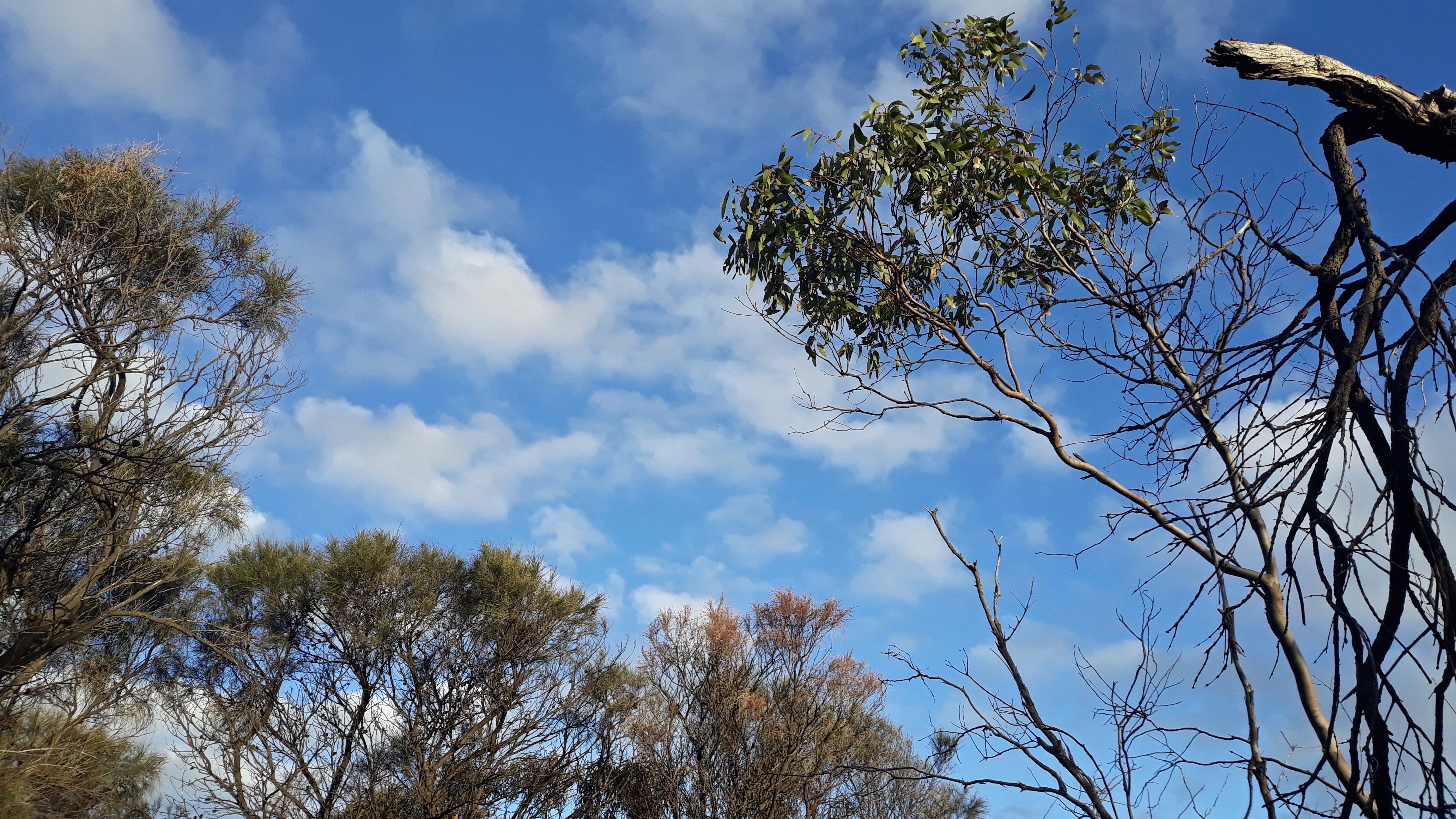
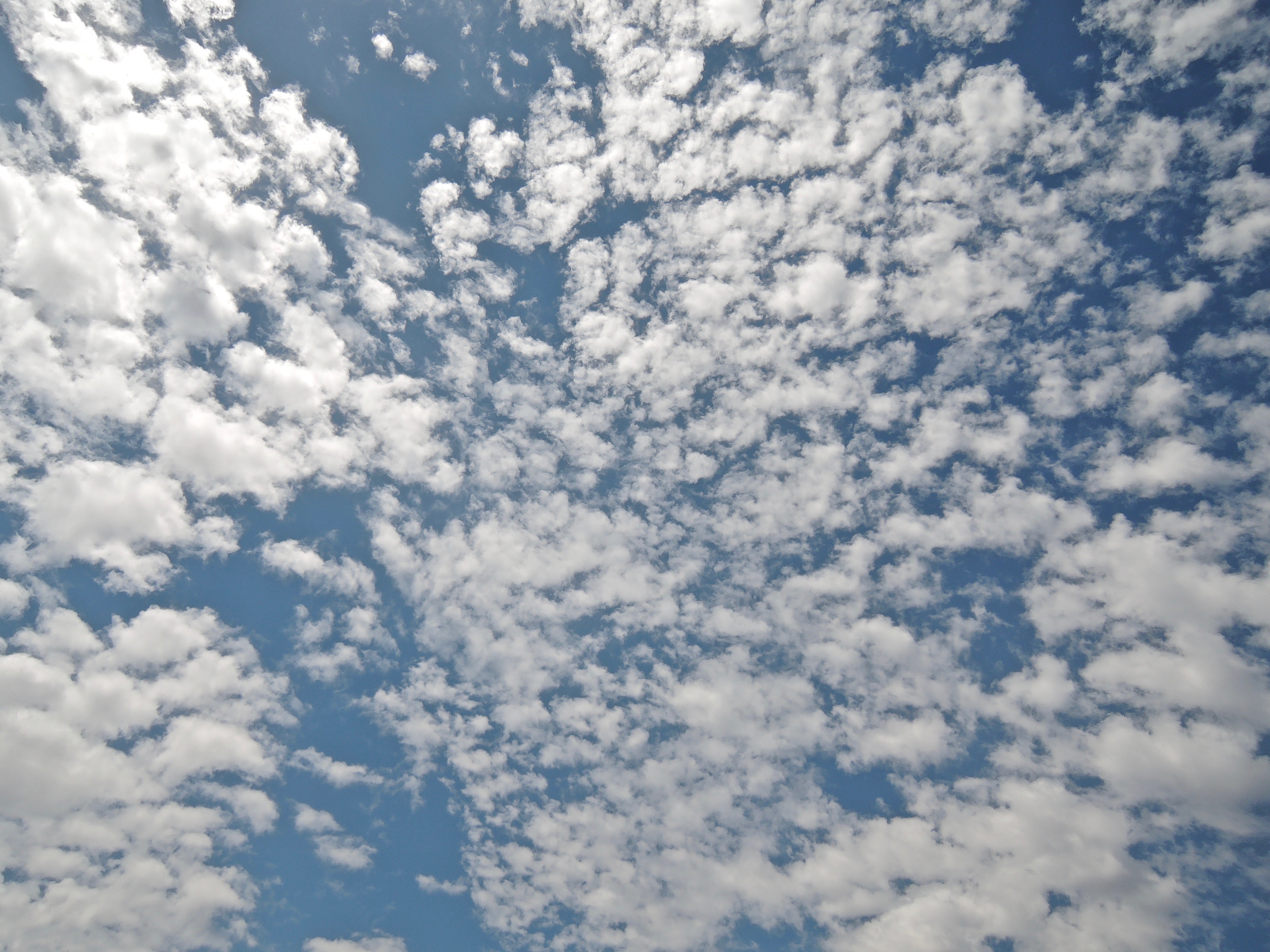
Stripes in the sky (1)

Hartman’s words are, I think, a description of the practice of mindfulness at its best. Mindfulness, to me, is not about mantras or breathing or (heaven forbid!) colouring-in books. Instead, and far more simply, it is about slowing down, about looking around, about noticing the world around you. It is, most of all, about seeing.

Because the practice of mindfulness — this kind of mindfulness, anyway, which to me is the only kind that makes any practical or spiritual sense at all — is about stepping outside, into the living, breathing world, the one that exists beyond walls and ceilings and computers and cars. It’s about looking and seeing. And about being grateful for what you see.
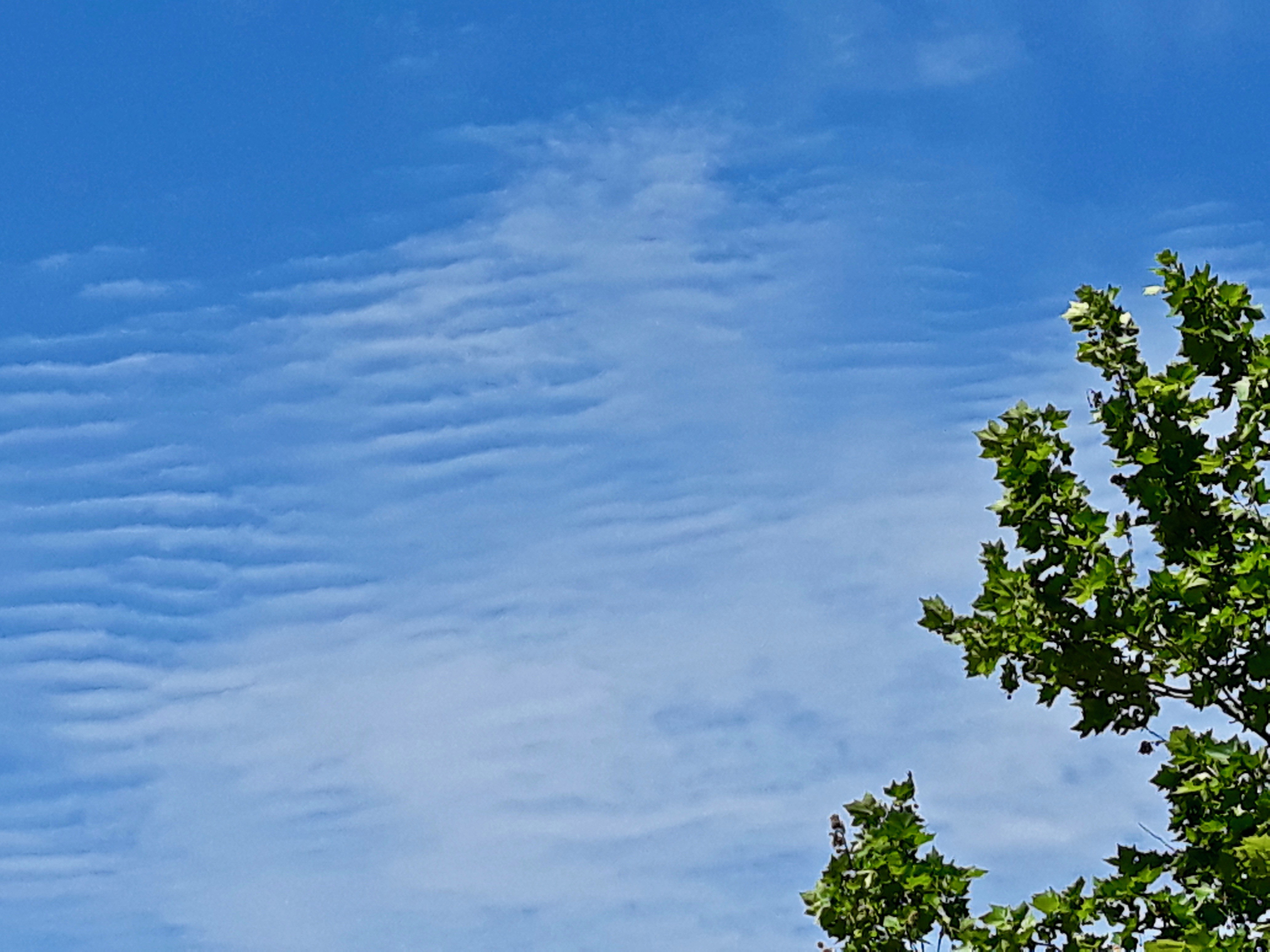
Stripes in the sky (2)

This year has been a strange, uneasy year for me: a year of trying to make a living from freelancing, and then trying to readjust to a salaried living, working regular hours, meeting KPIs and targets. I’m grateful for everything I’ve learned throughout the year, and grateful most of all that I was able to seek out other opportunities when freelancing alone wasn’t enough to sustain me.

Still, at times this year, when things got hard, I felt myself becoming frighteningly disconnected from the things that usually matter most to me: those still, small moments like the one Hartman describes, those moments when you stop and breathe the world in, exactly as it. Call it fear that stole those moments away from me; call it loss; call it depression; call it change. Whatever it was, it shocked me. I felt that I had stepped away from the world, and I didn’t know how to step back in.

And yet here I am now, months down the track, and I’m still here, still breathing. I’m stepping back in.

Unrepentant

Other people’s words about … life after therapy

It’s an odd sensation to be done with therapy, to believe it is no longer available to me as a recourse. I watch as people around me flow in and out of therapy, and as therapy flows in and out of them. I feel a familiar sense of alienation, and sometimes I’m also troubled by an obscure sense of uncleanliness, as if my resolution to abjure therapy were a perverse abstention from universally accepted hygienic practices — as if I’d taken a vow never to wash again. Therapy is an ablution, a Ganges in which everyone bathes.

From ‘Mockingbird Years’
by Emily Fox Gordon

There are two things I experimented with to excess in the years before I turned forty: restricting my eating and, like Emily Fox Gordon, consulting therapists.

So many different eating plans.

So many damn therapists!

I thought they would make me a better, healthier, happier person, but I was wrong on both counts.

Things that make me happy that don’t involve therapy or dieting (1):
A bunch of flowers planted in the dune, which I happened upon on a recent run

But in my early forties I came to a turning point, and now, nearing fifty, I know there’s no turning back. I am done with diets and therapists forever.

So here is my promise, to myself and to you: I will grow old therapy-free, no matter how unenlightened that may leave me.

And I will grow old (joyfully, unrepentantly) eating cake!

Things that make me happy that don’t involve therapy or dieting (2):
Views like this on my walk to work in the morning

Lately I’ve been reading about …

Say it loud, say it true

Other people’s words about … writing

Dan sits at his desk [to write his book] and closes the door to the hall, to the world. Winter unfolds around the cottage, June to July, and time flutters to the ground like pages. Too few pages. Never enough.

From ‘The Breeding Season’
by Amanda Niehaus

A few weeks ago, right at the end of my first week in my new job, I spent a weekend with a group of women who are writers and artists, some of whom I’d known for many years, a couple of whom I’d never met before. We walked along the beach, and we talked, and we laughed, and we ate, and we drank gin and tonic. And then we parted ways again, some of us driving back along the winding coastal roads towards the city to a life made entirely of writing and drawing, some of us driving back to a life made partly of writing and partly of child-rearing or paid work outside of the home.

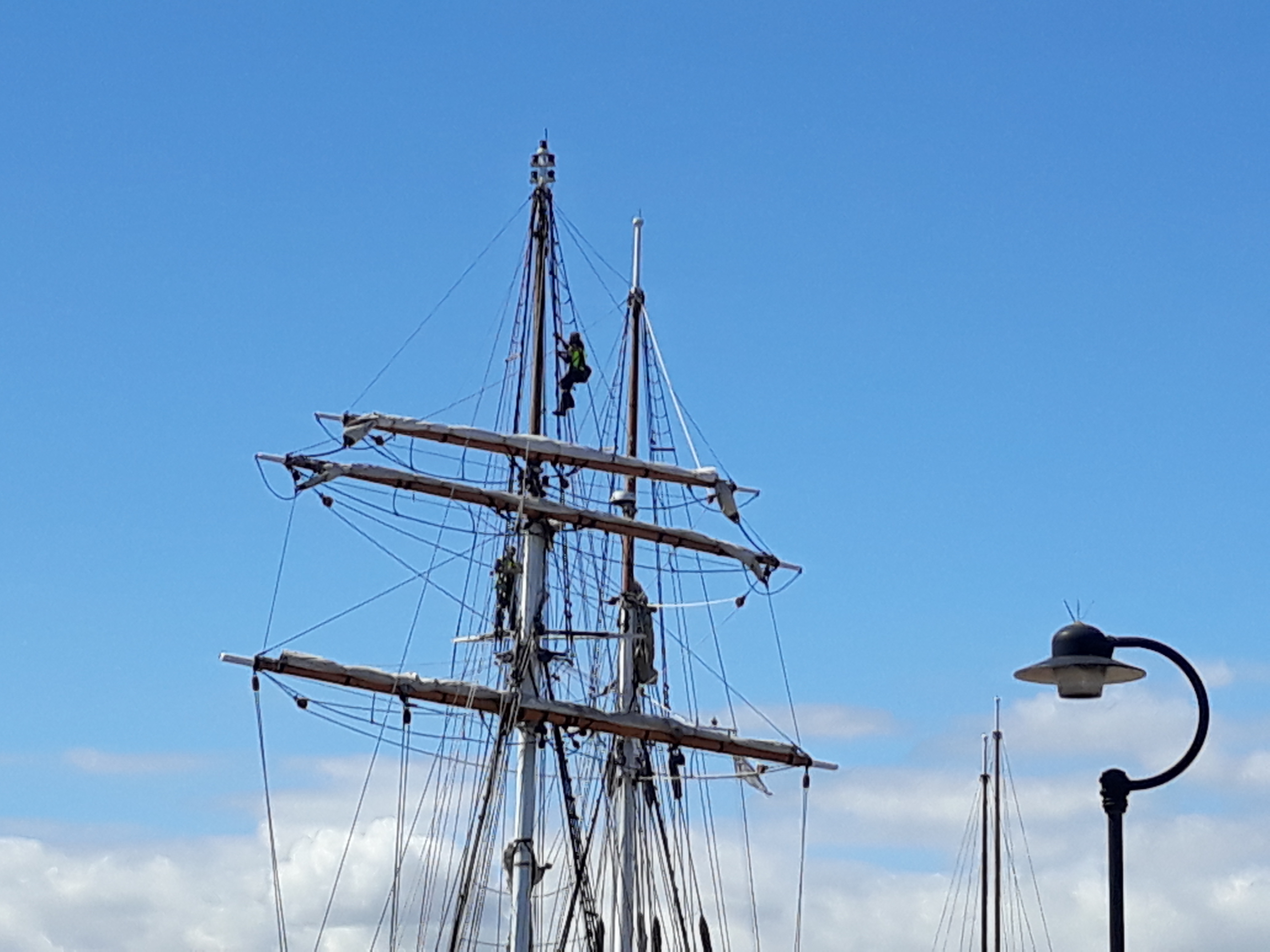
Lunch break view (1): Climbing the mast

The woman who had organised the weekend had planned it, loosely, as a writers’ retreat, and indeed some of the women — a couple of whom had strict deadlines to meet with their publishers — did write during the weekend. The rest of us sat outside around a table on the sun-drenched balcony, sharing stories of our writing: our latest work in progress, recent reviews, launches we’d attended, talks we’d given, and so on.

I say we and us, but the first-person pronoun sits queasily with me, because I haven’t published anything for ten years, and because I’ve been through periods in recent years where I’ve consciously stopped writing altogether and tried to move on to other things in my life. This year, during the early months of my freelance life, I started writing again, but the process has continued to feel tentative, precarious (that word again!), and filled with doubt and fear.

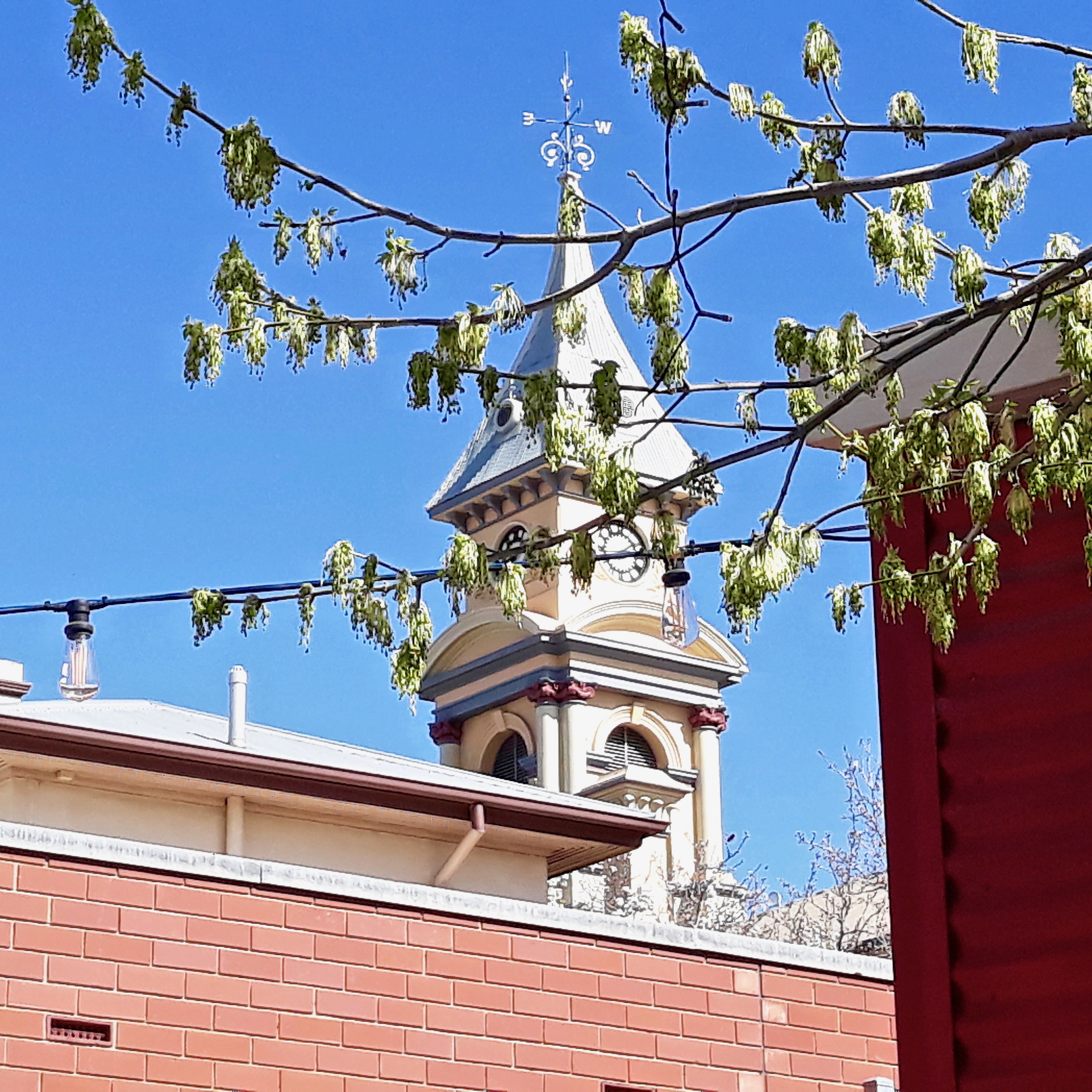
Lunch break view (2): Red and blue

And so I felt a little like an intruder at that sun-splashed table on the balcony overlooking the sea. Sure, I have stories to tell about writing and about the books I’ve written, but they’re stories anchored in the past, not the present. Mostly, then, I stayed silent, without contributing when the talk turned back to writing. I listened to the things my companions were discussing, the things they said they thought about as they wrote. And as I listened, I reflected — as I have so many times over the last year or two — that what stops me from writing these days (or, more accurately, what stops me from completing any of the writing I start these days) isn’t so much a lack of confidence in my writing as it is a lack of confidence in my self: who I am, where I fit in the world. What I experience. What I think. What I stand for. What I believe. What I feel.

What I want to say.

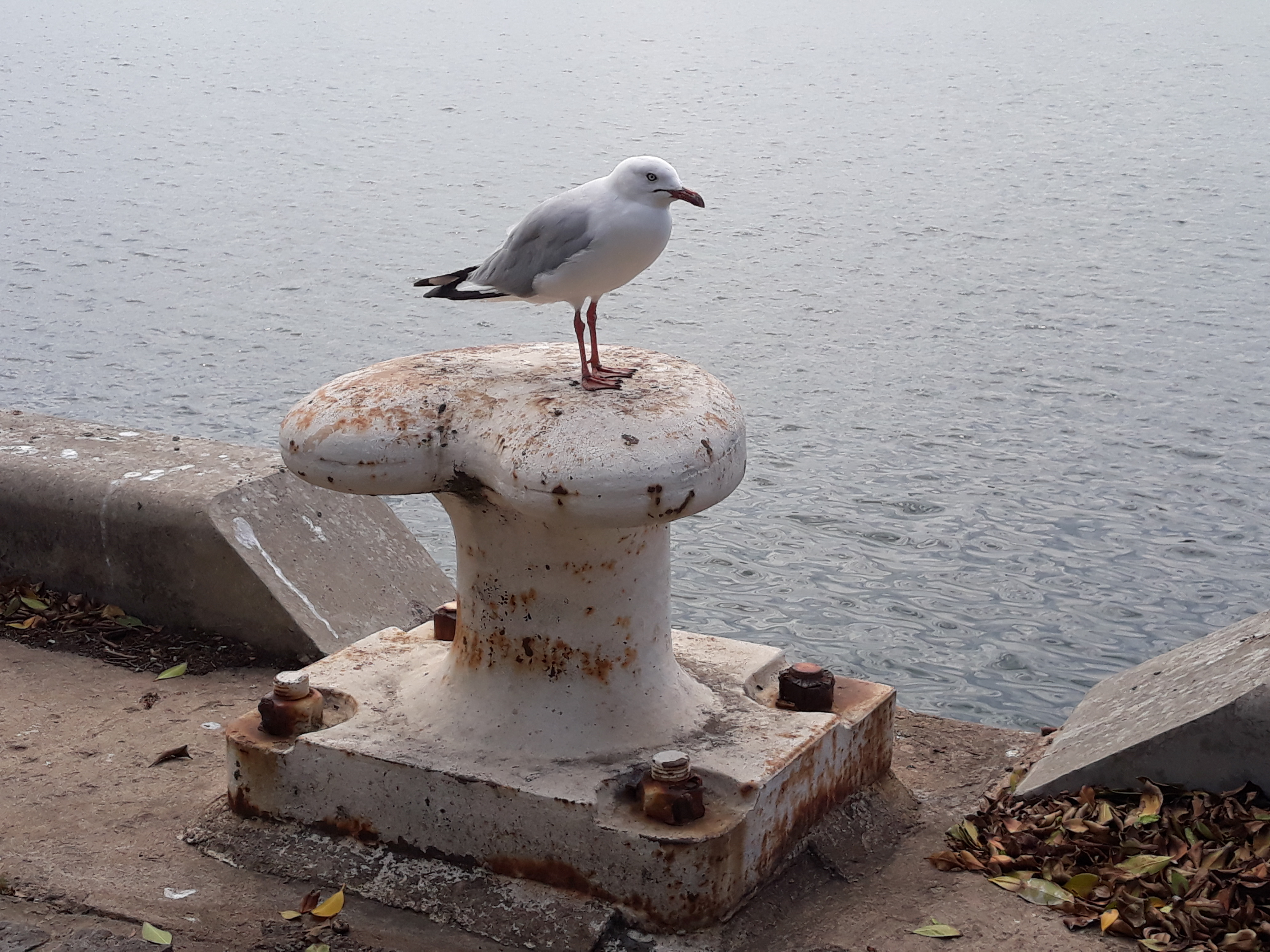
Lunch break view (3): Seagull companion

For me, writing has always been about having a voice. In essence, it’s about having a conversation on the page with my readers. And so, implicitly, it’s about feeling that I have the right to express myself, to speak up, to tell a story: my story. It makes sense, then, that in the last few years, as I’ve found it increasingly hard to talk aloud — in conversation, I mean, to family, to friends, to peers, to colleagues — about the way I experience the world, my world, I have also found it increasingly hard to write.

I don’t know whether I’ll ever write or publish another book again in my life, and I understand that, in the scheme of things, whether I do or not is probably neither here nor there. But I do know that in order to write again, I will have to learn to believe in my voice once more, and to be able to listen to myself somehow, and to manage to see myself not as an intruder but as someone who belongs in this world. Until I can do these things, I will keep letting those pages of mine — the actual pages and the metaphorical ones, the pages of time, the pages of my life — flutter, like Dan’s in the passage I’ve quoted above, to the ground.

Weekend view: under the arch

Sometimes when I write posts like this on my blog, they feel self-indulgent, self-referential, self-absorbed. And perhaps my posts are all of these things. But perhaps, too, there’s a reader out there somewhere, reading this post, who has felt (some of) the things I’m writing about today, and who hears her voice reflected back to her as she reads. I want you to know, reader out there, that you are not alone in this world. Your voice matters. Your short life matters. You matter.

So go on, say what you have to say: and say it loud, say it true. This world, this life, belongs to you, too.

Precarious

Other people’s words about … fighting against entropy

Schizophrenia terrifies. It is the archetypal disorder of lunacy. Craziness scares us because we are creatures who long for structure and sense; we divide the interminable days into years, months, and weeks. We hope for ways to corral and control bad fortune, illness, unhappiness, discomfort, and death — all inevitable outcomes that we pretend are anything but. And still, the fight agains entropy seems wildly futile in the face of schizophrenia, which shirks reality in favour of its own internal logic.

From ‘The Collected Schizophrenias’
by Esmé Weijun Wang

It’s a strange experience returning to the salaried workforce after a period of time away from it. When I went freelance at the beginning of this year due to the closure of the Press for which I had worked as an in-house editor for the previous five years, I suspected that it would be difficult to make a sustainable living from a solely freelance income. And it was. I thought, at first, that it might just be a matter of making contacts, of building up a client base, of learning how to market myself: of learning, essentially, how to ‘hustle’. I thought at first, in other words, that it might just be a matter of time.

So I allowed time to pass as a freelancer, because I knew that I had to. And gradually, after enough time had passed, I came to understand that the passing of time would never be enough to change the precariousness of an income based solely on freelance work. I came to see that the gig economy, which relies on the work of freelancers and contractors like me (more about which, if you’re interested, you can read here), doesn’t just allow for precariousness: it depends on it. And I came to see that precariousness is not something I tolerate gladly.

I do not believe that precariousness is a synonym for freedom or flexibility, as proponents of the gig economy would have us believe. I believe that it is a synonym for anxiety. And anxiety is also something I don’t tolerate gladly.

So I have returned to a part-time salaried job, which I intend to combine with part-time freelance editing work, with an enormous sense of gratitude and relief. Though no job is ever truly permanent or secure, a salary brings with it, for as long as it lasts, certain things that are the antithesis of precariousness: regular hours, fortnightly pay, annual leave, sick leave, superannuation. Along with these financial benefits, a salaried office job, which is what my new job is, also brings with it a workplace outside of the home, and colleagues with whom one interacts every day. These things, too — which are, in essence, about belonging and community — contradict the concept and practice of precariousness. I am immensely grateful for them.

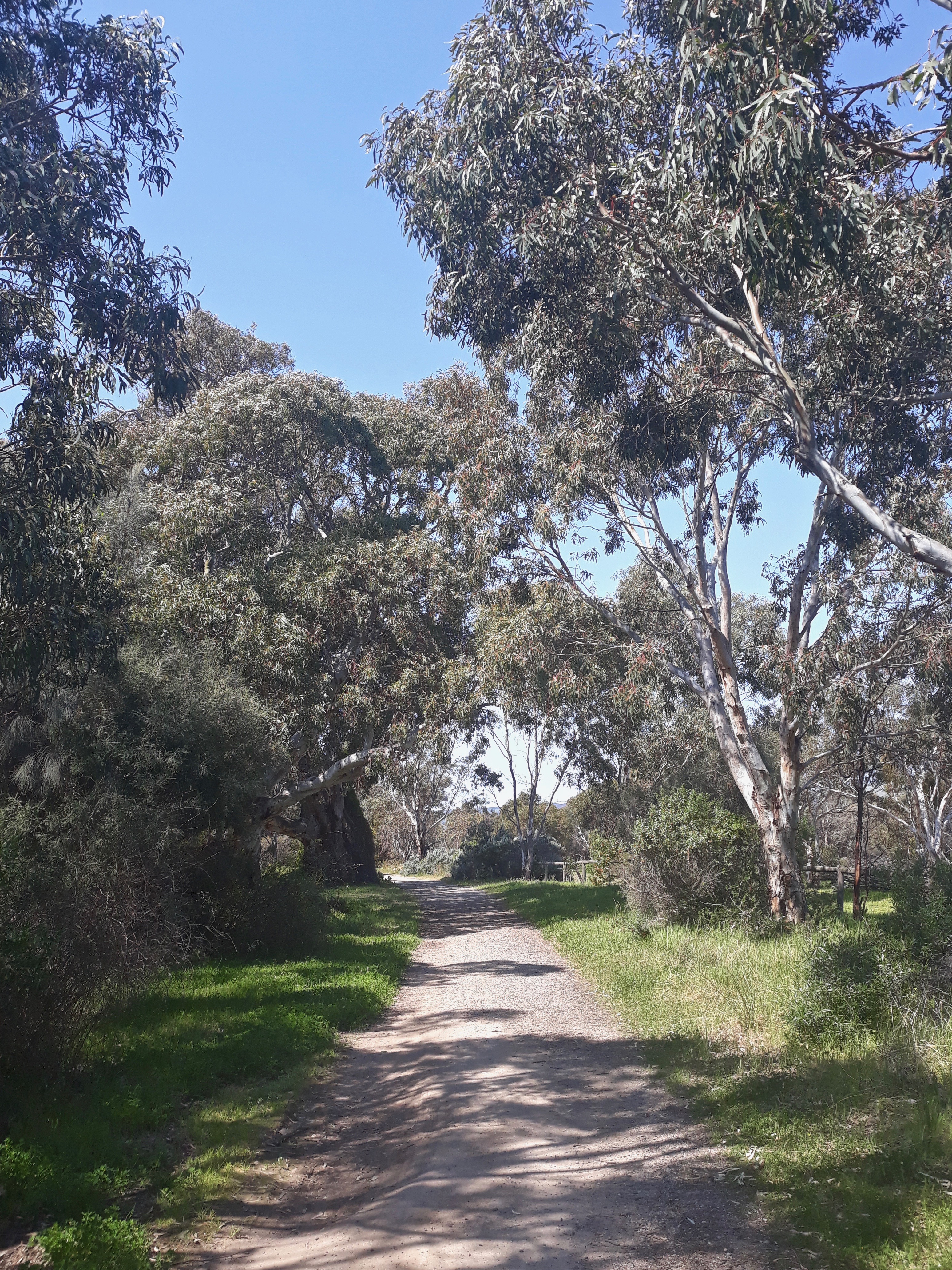
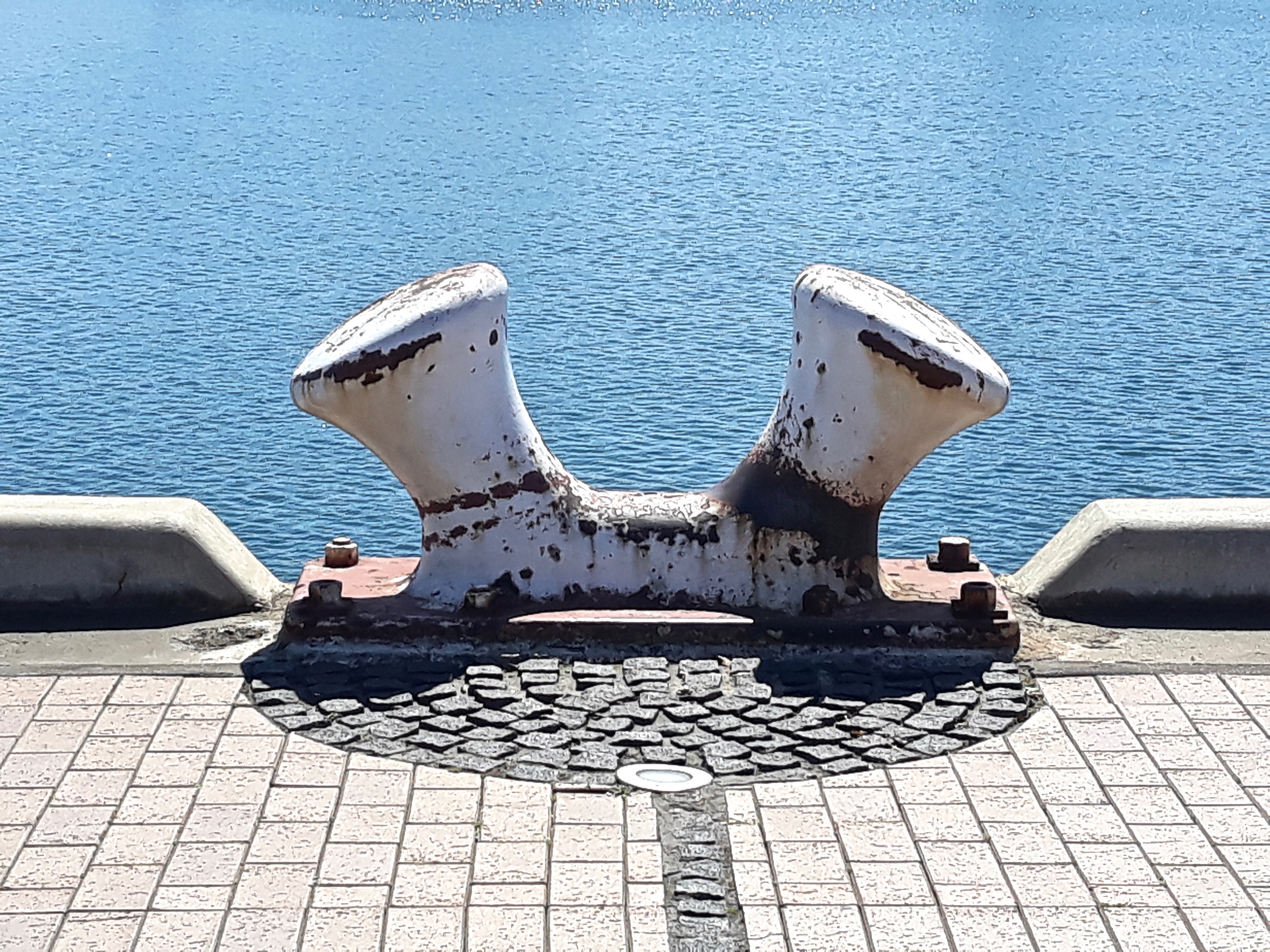
I took the first three photos in today’s post as I wandered the neighbourhood in my lunch break at my new job — a lunch break being yet another one of the ‘perks’ of a salaried office job. I’m working now in Port Adelaide, a suburb in the north-west of Adelaide which was once the heart of the marine industry of Adelaide. The wharves and docks of Port Adelaide are no longer busy in the industrial sense for which they were originally designed, so the streets I now stroll along during my lunch break are lined with abandoned warehouses and marine businesses. At the docks, dolphins swim beneath the bridge that spans the Port River, while trucks thunder overhead. The area has, on the one hand, a sense of history, beauty and purpose, and on the other hand, an air of loss, and decay, and death.

Craziness scares us because we are creatures who long for structure and sense, Esmé Weijun Wang writes in the passage I’ve quoted at the start of this post: we divide the interminable days into years, months, and weeks. She is writing about schizophrenia, and yet I’ve thought of her words frequently as I’ve wandered the streets of Port Adelaide. Because though it is true, now that I am working for a salary once more, that my feeling of precariousness has reduced, still, somehow, this fear remains. I still long for something that feels just out of reach: something that Wang describes as a way to corral and control bad fortune, illness, unhappiness, discomfort, and death, those things that, like precariousness, are, in the end, inevitable.

I took the fourth photo in this post, the photo below, last weekend, which I spent with a group of women in a holiday house in Carrickalinga, a coastal suburb south of Adelaide. The women I was with are all writers and artists. Some of them supplement the income they get from their art with a salaried or waged job; others exist solely on their freelance income. Each of these women is talented and successful in her own right, and each balances her sense of precariousness with a sense of purpose and joy and productivity in her chosen field of art.

I climbed a hill to take the photo you see here. I stood at the top of that hill and looked down at the world below me — the crumbling cliffs, the winding coastal road, the shining blue sea, the horizon at the edge of the ocean — and I felt the world expand around me, stretching out, out, out. The moment felt precarious, as the weekend had felt precarious, as the previous week — which was my first week in my new job — had felt precarious, as my freelance income had felt, and will always feel, precarious. As life feels precarious.

There was nothing I could do to remove the precariousness. All I could do was wonder at the view.

Lately I’ve been reading about …

Because we can

Other people’s words about … making myths

Women who run: women with disabilities, fat women, women who’ve recovered from physical injuries, trans women, migrant women, Indigenous women, depressed women, women with no time, women with no kids, women ladies of leisure, schoolgirls, retirees, mothers, aunts, grandmothers, queer women, straight women, slow women. Scrutinise any one of these categories and a set of stories that defy generalisation will emerge, stories that destabilise the big stupid myths that say women can’t run, that only certain kinds of women can run, that it’s too dangerous, that it’s unfeminine, that it’s a sign of trouble.

From ‘The Long Run’
by Catriona Menzies-Pike

Next week, I start a new job in a new workplace. It’s been nine months since I had a salaried job, and though I’ve enjoyed the challenge of working as a freelance editor — and though I don’t plan to stop freelance editing any time soon, despite my new job, because my new job is part-time and therefore will allow me to continue freelance editing on a similar part-time basis — I feel both relieved and blessed to be returning to the salaried work force. At forty-nine, I am willing to admit that job security and a regular income is important to me. I knew this when I began freelancing. I know it even more deeply now, nine months later.

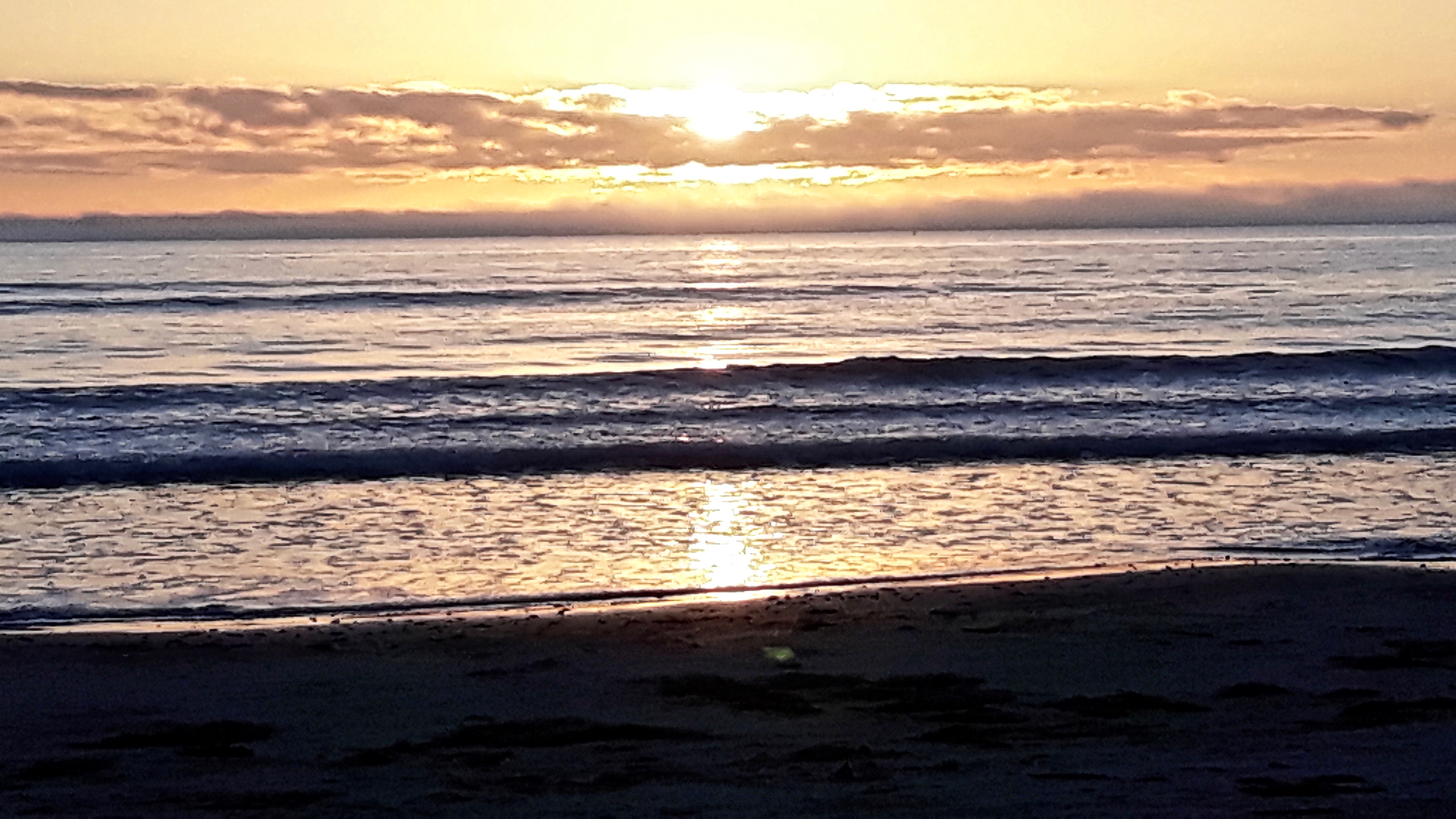
Winter sunset

I took some of the photos that you see in today’s post over the last few weeks, while I was out walking or running around my local neighbourhood. Running for me isn’t so much about, as Catriona Menzies-Pike puts it in the passage I’ve quoted above, destabilis[ing] the big stupid myths that say women can’t run: it’s more about destabilising my own personal, stupid myths about myself, one of which, for many years, was that I wasn’t an athlete, I wasn’t strong, and I couldn’t run.

Deep blue sky

In fact, some of the stories I’ve told myself all my life are true. I’ll never be an athlete. I’ll never be strong, physically or mentally. But I do continue to run, and continuing to run continues to make me feel good.

Spring flowers 

No matter how slowly I run some days — no matter how old or stiff or sad or achey I feel when I’m running — and no matter whether I have a stable, salaried income or an unstable, freelance income, I run. Not far, and not fast, it’s true.

Nonetheless.

I run, not just because it makes me feel good, but because I can.

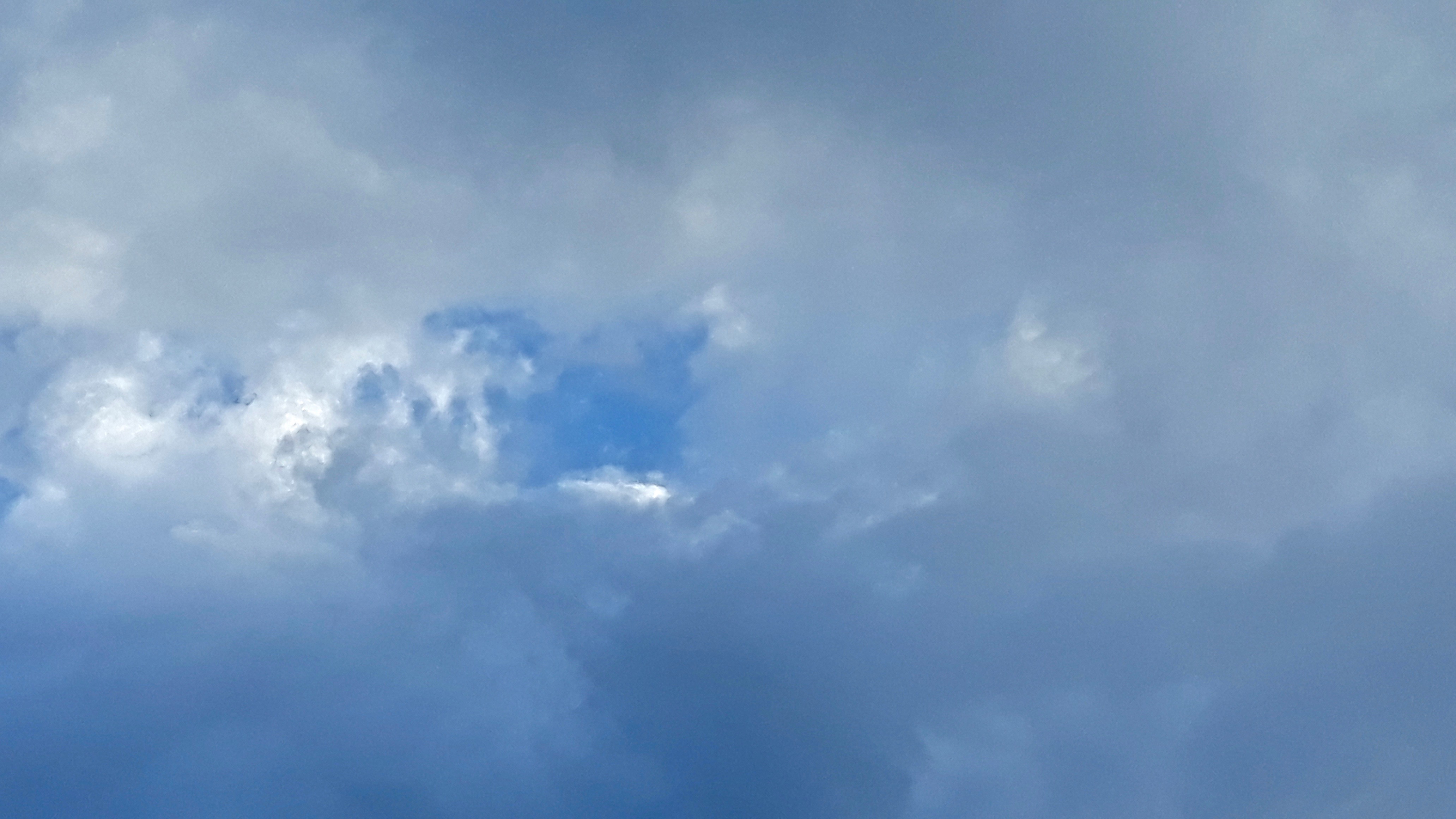
Hole in the sky

Lately I’ve been reading about …

Take note

Other people’s words about … gratitude

I am so glad to still be here. Every day, I do my best to see the colours. I take note. I breathe them in.

From ‘How it Feels to Float’
by Helena Fox

It’s been a while since I’ve posted, I know. I want you all to know that I have been thinking of you, and I have been thinking of posting. There just hasn’t been room inside my head to get to it.

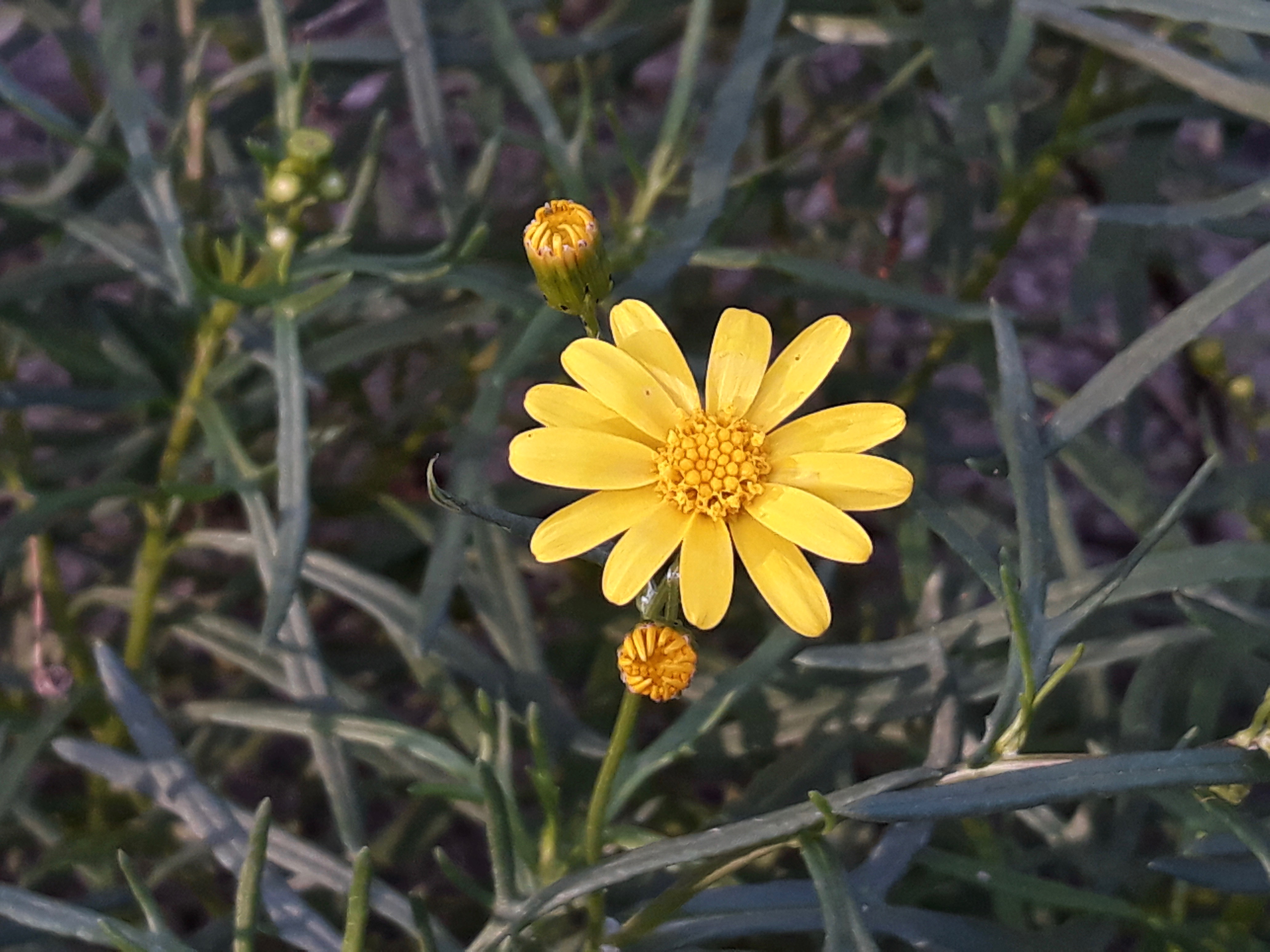
The first groundsel flowers of the season
(Spring is coming)

But when I read Helena Fox’s words in the Acknowledgments section at the back of her wonderful novel for young adults, How it Feels to Float, I wanted to pass them on. Because no matter how crammed my head — my brain, my mind — feels at the moment, I, too, do my best to see the colours, to breathe them in.

Blue winter sky

The photographs in today’s post come from a walk I took a few weeks back. I hadn’t walked that path for a while, and I haven’t walked it since, but those moments were precious. I am still breathing them in.

Last rays

If only I’d known

Other people’s words about … what’s important (or not)

I found a studio where I could practise a particular kind of semi-cultish yoga; I sweated on my purple mat for ninety minutes to pounding trance beats, drank smoothies in the vegan cafe, relished the feeling of freezing sweat on my cheeks when I threw my coat on over my leggings and walked in the snow to the Q train.

Maybe this will be the year I’ll learn to stand on my head, I thought, maybe a headstand is the thing I will accomplish in 2014. I thought about it a lot, like a headstand was a thing that was important.

From ‘This Really isn’t About You’
by Jean Hannah Edelstein

If only I’d known. That’s the feeling Jean Hannah Edelstein is describing in the passage above. In her case, these words applied to a period in her life when she didn’t yet know that she had Lynch syndrome, a hereditary condition that predisposes her to developing cancer later in her life.

If only. If only. Who hasn’t said that to themselves, at some point in their lives? If only I’d known, I’d have focused on other things. If only I’d known, I’d have made different plans. I’d have done more; I’d have said more; I’d have tried more. I’d have been more.

Don’t tell me you haven’t ever thought that.

*

It’s been a quiet couple of weeks over here in my nook of the world, as I continue to try to find my way in the freelance world. I don’t know whether I’ll manage to make a living from freelance editing, in the end. But on tough days, uncertain days, I remind myself that at least I’ll always know that I tried.

Which makes for one less if only in my life.

Grey skies

And meanwhile, in my spare time, I’ve gone wandering beneath grey skies, and blue skies, and cloudy skies, and clear skies. Because there’s no hint of an if only whenever I’m out wandering.

Blue(-ish) skies

Lately I’ve been reading about …

An open and shut case

Other people’s words about … signs

[The waitress] leans over our table and turns the sign in the window so that it says CLOSED on the outside. But on our side, perfectly positioned between Mabel’s place and mine, it says OPEN. If this were a short story, it would mean something.

From ‘We Are Not Alone’
by Nina La Cour

I am the kind of person who, like Marin, the narrator in the passage above, can’t help seeing life through symbols and signs: I see metaphorical OPEN and CLOSED signs in my own life every day.

Lately, as some of you know, I’ve been released (at least for now) from the routine of salaried office work. I’m not answerable to an employer any more; I don’t have to be at the office at a particular time, or sign on and off at the beginning and end of my shift, or conform to a certain dress code, or take my lunch hour at a stipulated time for a stipulated duration. All of which implies a certain freedom, the kind of freedom I’ve often craved.

But I do have to hustle. If I want to get work as a freelancer, I have to go out and seek it, something I never had to do as a salaried employee. And in the daily transactions of that hustling — contacting people, letting them know of my existence and of the work I do, following up their responses, thinking of new people to contact and new ways to work — it’s all too easy to see signs everywhere I look. Someone doesn’t answer my email? That’s a CLOSED sign. Someone writes back, saying it’s lovely to hear from me? That’s an OPEN sign.

And so on.

It’s exhausting and exciting, both those things at once, and I don’t know yet where it will take me or what it will lead me to — or whether, ultimately, it will be sustainable. But for now, it’s early days, and I’m giving it a chance, and I still believe there might be some OPEN signs on the path ahead of me …

Signs and symbols: The way forward?

Lately I’ve been reading about …

Meanwhile, as always, I’ve been reading! Here’s the recent digest:

The stories we tell

Lately I’ve been reading about … river red gums

I didn’t just notice the river red gums, but also the cracked mud of receding water, rotting gum leaves, greater eastern egrets, kingfisher, heron, ibis, ducks, emus, kangaroos, wild horses, wasps and flies. I even saw (threatened) Murray cod foraging in the shallow water along the lake’s bank, and quickly learnt to look for them at the centre of the ripples of golden tannin their fins sent out. It was the first time I’d seen them surface, amphibian-like, in this manner. The effect was prehistoric. A single galah feather caught in a spider web stretched, strong as rope, between two river gums, waved gently in the corner of my vision.

From ‘Biyala Stories
by Sophie Cunningham

This year I’m taking regular walks through one of my favourite parts of the world, the Aldinga Scrub — the same walk each time, along the Coral Lichen Circuit, which follows a gentle, undulating loop, with spots that overlook both the coast (to the west) and the hills (to the east) — to watch the seasons ring their changes on the landscape. On previous walks through the Scrub I’ve taken pictures of the trees and the flowers, listened to the birdsong and the sound of the waves in the distance, to the wind moving through the trees. But I want to know the Scrub better, to know it intimately, to witness it. I want to know its intricacies — the kinds of intricacies that Sophie Cunningham describes so beautifully in the passage I’ve quoted above.

Cunningham’s essay is about the river red gums that grow in the part of the world where she lives: Melbourne (mostly), Victoria. It’s a thoughtful, erudite, poetic essay, at least in part about the stories these trees can tell us, the stories they might add to our own (human) narrative if we were able to listen. (You can read it here.)

From what I have read, the trees of the Aldinga Scrub, like the river red gums in Cunningham’s essay, are struggling to survive. So are the plants of the Scrub, the birds and the animals. Their survival is threatened by many things, including encroaching housing developments; farming practices that have, since World War II, diverted the natural water flow away from the Scrub to nearby crops; pollution; climate change; islandisation; the spread of weeds from people’s carefully curated gardens and lawns.

I’m neither a scientist nor an ecologist; I can’t use any particular knowledge or training to save the trees or the plants or the birds on a large scale. But I can keep wandering and and witnessing, and sharing, in the process, the things I see and learn, the passage of the seasons, the stories I discover.

I can ensure those stories don’t go untold. That, at least, is a start.

What it means to be free

Lately I’ve been reading about … how to write

Last year, I stopped writing. At the time, I wasn’t sure if I had stopped writing forever, or if it was just for a while. In my heart, I was convinced it was forever. I felt sad, but also strangely certain. I felt, very strongly, that I had come to the end of the writing I could do, and that I had to learn to let go. To move on.

A few months later, I lost my job as the Senior Editor at a university press. I felt far less sanguine about losing my job than I did about stopping writing, because it wasn’t my decision. And because I loved my job. And because I didn’t know what I would do next, or how I would earn an income. If I’m honest, I still feel all of those things now. I still don’t know what will come next.

But for now, I’m taking a break; I’m not actively job-seeking. I’ve been spending my time building a website to set myself up as a freelance editor, and … I’ve been writing again, working on an old manuscript that I thought I had abandoned forever, and feeling — at least sometimes — as though I might actually, one day, be able to finish it.

Look up. Let go. Move on.

I feel freer now to write than I did last year, or indeed than I did during the years preceding that. I don’t know why this is, except that, without the regular schedule of getting up and going to work four or five days a week, without the commitment to a tiring and demanding (though rewarding) job, my mind feels clear. And the clarity gives me courage. I feel brave enough, suddenly, to take a risk again in the creative sphere, to take the risk of failing.

Because I see now, though I didn’t see it last year when I was still deeply enmeshed in my work, that my fear of failing as a writer had, in the last few years, grown very strong. It had become, at least as far as writing was concerned, incapacitating.

It’s true that not all hardworking writers publish. Often the circumstances that drive the industry are out of our control. But the willingness to write through what might seem to be an unending succession of drafts — however you define “draft” — is one factor that you can control.

From ‘What if All Writing is Just Drafts, Forever?’
by Joseph Scapellato
At The Literary Hub

One of the things that’s so tricky about writing is that there are no rules, no surefire ways to creative success. Some writers write every day, without fail, setting themselves a target (whether that’s a word count, or a certain number of hours they spend at their desk, or a publishing deadline). They write draft after draft, like Joseph Scapellato in the passage I’ve quoted above (which you can read in its entirety here), and in doing so they find a way through to the other end: to the finished book.

But, like Heather Havrilesky in the passage I’ve quoted below (which you can read here), other writers approach writing in a less disciplined way, determined to seek only the joy, only the moments of flow.

Why is my routine so messy, random, and kind of lazy? It’s because I don’t force it anymore. I feel like my brain now knows that I don’t actually have to work that much, I just have be in front of my computer for those times when everything is flowing and it’s possible to hit that high note. I’m not going to torture myself the rest of the time.

From an interview with Heather Havrilesky
At Extraordinary Routines

Clearly, there is no one, right path that every writer must go down in order to write a book. What wasn’t clear to me until very recently, though, is that there isn’t even one, right path that an individual writer must go down in order to write a book. The process, at least for me, this particular individual writer, is a learning one. It changes with the book you’re writing, and with the years, and with the state of your (physical, mental, emotional, spiritual) health.

I still don’t know whether I’ll finish writing the book I’m currently writing, which I began so many years ago. Even if I do finish it, I still don’t know if it will be publishable. But for now, I’m grateful to be experiencing a feeling of freedom again, the freedom to be myself, whatever that means, to write because I want to write, without becoming enmeshed in either hope or despair.