I see you

Other people’s words about … love

The bright lights had been switched off and the place was lit only by small windows. Then there she was — Stella — the top of her head highlighted as she looked down, reading. It never ceased to amaze him the thrill he got at seeing her. Catching her unawares.

From ‘Midwinter Break
by Bernard MacLaverty

Every time I read these words by Bernard MacLaverty, I feel my breath catch. They describe so perfectly those tiny, stolen glimpses we get of the people we love.

The photo accompanying this post is one I took while I was in Yorke Peninsula recently. It was very early summer: fan flower season. One evening just after sunset, as I wandered along the top of the cliffs, I came to a fork in the path where there were fan flower bushes growing at every corner.

And there, in the dim glow of the early-evening sky, the petals of the fan flowers — which in the warm, bright light of the middle of the day are a strong, cheery blue — seemed to shine for a few moments: pale, spectral, luminescent.

Perhaps my talk of fan flowers seems an odd match for the words I began this post with. But this was another one of those tiny, stolen moments we’re given in life from time to time, and it seems to me a good way to honour Bernard MacLaverty’s lovely words …

PS One other thing: a quick shout-out to my mother, who celebrates her birthday today, and who is a person responsible for many lovely moments in my life .

The best-laid plans

Other people’s words about … waiting

Nick didn’t call me that morning, or that night. He didn’t call me the next day, or the day after that. Nobody did. Gradually the waiting began to feel less like waiting and more like this was simply what life was: the distracting tasks undertaken while the thing you are waiting for continues not to happen. I applied for jobs and turned up for seminars. Things went on.

From ‘Conversations with Friends
by Sally Rooney

I hadn’t planned to write this post. I thought that I would be — I planned to be — too busy to post anything between now and next week. I had family celebrations planned, after all, and a holiday trip away with a dear friend, and even a couple of shifts at work.

But I haven’t been well this Christmas, and so most of my plans for the holiday period so far haven’t eventuated.

Christmas is a tricky time, isn’t it? For some reason, I often get sick around this time of the year (and at other times of celebration). Like Sally Rooney’s narrator, Frances, in the passage above, I keep waiting for this to change, but the thing I am waiting for — not to get sick at Christmas, not to feel sad about getting sick at Christmas — continue[s] not to happen.

So why am I writing a post now, after all? Partly, I’m writing because I have unexpected time on my hands. Mostly, though, I’m writing because I wanted to reach out to other people who might also be feeling sad — whether unexpectedly or otherwise — this Christmas.

I don’t have any advice. I wish I did. The only thing I can find to do at times like this is to wait them out — which is ironic, given Rooney’s words above.

Still, whoever you are, wherever you are, if you are feeling sad right now, know this: you are not alone. Sadness is part and parcel of the deal.

And it passes.

Like the weather, like the tide, like footsteps in the sand, like all those hackneyed things — like Christmas, even — sadness, too, passes.

Snatched phrases on … (Christmas and) the sea

‘The sea is flat silver under a lapis sky.’

From ‘I am, I am, I am’
by Maggie O’Farrell

Christmas in my neck of the woods is all about summer, so what better way to celebrate it than by the sea?

That’s how I’ll be spending my Christmas season, anyway — how about you?

Meanwhile, I just wanted to wish a quick merry Christmas to everyone who reads this blog.

Thank you for your companionship once again this year … and here’s to more reading next year, as well as walking, wandering and (of course) time spent by the sea!

Rebecca xo

Snatched phrases on … the sea

‘The sea pronounces something,
over and over, in a hoarse whisper;
I cannot quite make it out. But God knows I have tried.’

From ‘Teaching a Stone to Talk’
by Annie Dillard

Sometimes when I’m walking on the beach I close my eyes and listen to the sea as I keep walking. It’s a way of shutting out the beauty of the visual world, in order to concentrate on the other kinds of beauty accessible to me at that moment, in that particular space.

The sea murmurs.
It sighs.
It whispers.
It roars.

Like Dillard, I can’t make out the language of the sea  …

… although unlike her I’m not sure that I want to try.

I’m happy just to keep listening.

Snatched phrases on … the sea

‘They’d ended up sitting on the beach,
the sea a great black heaving beast,
sighing and rolling under the white light of the moon.’

From ‘Between a Wolf and a Dog
by Georgia Blain

I don’t have any photographs to accompany this post because I still haven’t yet managed to get the hang of the craft of night-time photography. But isn’t that a wonderful image of the sea at night? — that great black heaving beast, sighing and rolling. It makes me want to go for a night-time walk on the beach right now …

On turning forty-seven

Other people’s words about … living small

He wasn’t a big man anymore. He wouldn’t be famous, like he’d dreamed as a kid, teaching himself to sign his name in all curved letters so he would be prepared to autograph a football. He would live a small life, and instead of depressing him, the thought became comforting. For the first time, he no longer felt trapped. Instead, he felt safe.

from ‘The Mothers
by Brit Bennett

Each year, as the number of years I’ve lived on this planet grows, I feel my own life shrink in the scheme of things. And to my own surprise, I have come to find this process, in the words of the protagonist in the passage I’ve quoted above, comforting and safe rather than depressing.

Call it ageing …

Small …

… or perspective …

Smaller …

… or necessity.

Smaller still …

Whatever it is — this passage to smallness, this losing yourself within the bigness of the world — can feel downright joyful, you know?

Note:
I’m not the only blogger who likes to reflect on their birthdays. I loved this post from Nicole from Eat this Poem , who reads Elizabeth Bishop’s poem ‘The Bight’ each year on her birthday. I had not come across this poem before and am so grateful Nicole has drawn my attention to it. It’s a beautiful poem, definitely worth reading each year (if not more often)!

A beautiful thing

Other people’s words about … appetite

To say that I ‘lost’ my appetite during those years would be a joke. On the contrary, I ate, slept, and breathed appetite. I thought about food constantly, pored over food magazines and restaurant reviews like a teenage boy with a pile of porn, copied down recipes on index cards: breads, cakes, chocolate desserts, pies with the richest fillings, things I longed for and wouldn’t let myself have. In truth, I had appetites the size of Mack trucks — driving and insistent longings for food and connection and bodily pleasure — but I found their very power too daunting and fearsome to contend with, and so I split the world into the most rigid place of black and white, yes and no.

from ‘Appetites
by Caroline Knapp

Appetite is a strange, fickle creature. I remember feeling, years ago, when I first read Caroline Knapp’s words in the passage I’ve quoted today, an overwhelming sense of recognition and kinship. I have always had a strong, keen appetite, and back then, when I read Knapp’s book, I felt ashamed of this fact; I fought my driving and insistent longings for food and connection and bodily pleasure.

I don’t feel that way now; my life is on a different keel. In fact, the periodic bouts of nausea I experience lead me to feel the very opposite. During these bouts of sickness, I would give anything — anything at all — to feel hungry.

Part of what I miss when my appetite is gone is the sense of anticipation that I, like all of us, experience with regards to food: the sense of looking forward to something I know will be pleasurable — whether we’re talking solitary pleasures here (sitting on the porch in the sunshine with a plate of cake on my knee and a pot of tea at my feet) or shared pleasures (a meal with family or friends). Anticipation, I realise now, is a pleasure in and of itself. Strip away anticipation and you strip away, with it, a great source of pleasure from your life.
Still, what I have learned is that there are other pleasures to anticipate, apart from food; other things to look forward to; other things, in a way, to hunger for, and then — finally — to savour. These days, the moment I start to feel a little better after a bout of sickness, the moment the nausea begins to fade, I make a big effort to stop languishing inside my house. I take a deep breath and then start seeking out, immediately, the things I know will bring me pleasure.
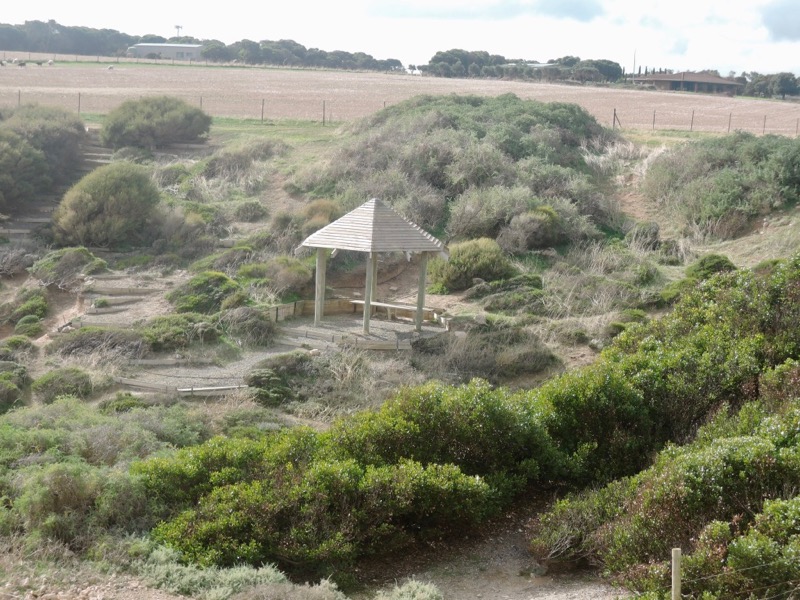
A while back, I quoted some words from Sarah Wilson about managing anxiety by (to paraphrase) simply doing it, leaving it, and moving on. Wilson’s words, I see, apply here, too. Anxiety, after all, is only one source of anguish: sickness is another. By not dwelling on our anguish, by actively making ourselves move on from it, we allow a sense of anticipation and pleasure to return to our lives.

We allow our appetite for life to flourish once again.
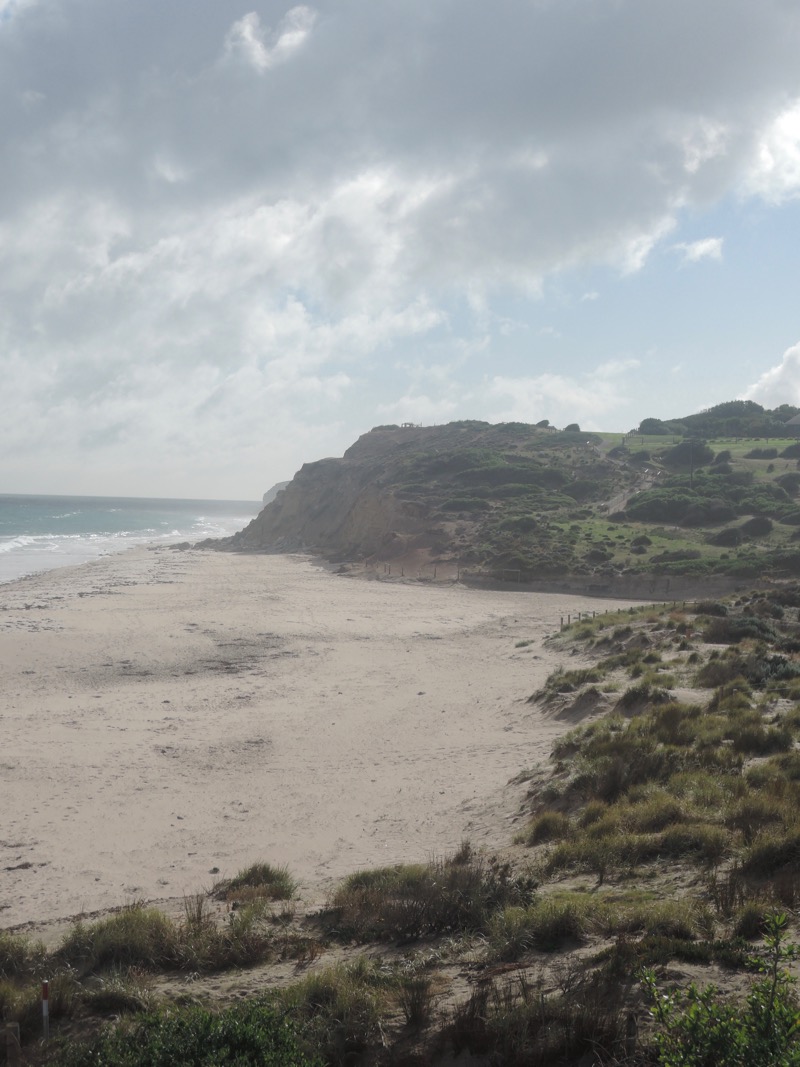
If I could go back in time and give my younger self advice now, I would counsel her to cherish her appetite rather than to be daunted by it (Knapp’s word). I would tell her that hunger and appetite are vital to life. I would tell her that hunger, like appetite, is a beautiful thing. And I would tell her to look up, out and around at the world. To savour the things she sees and experiences. To savour all the pleasures life has to offer.

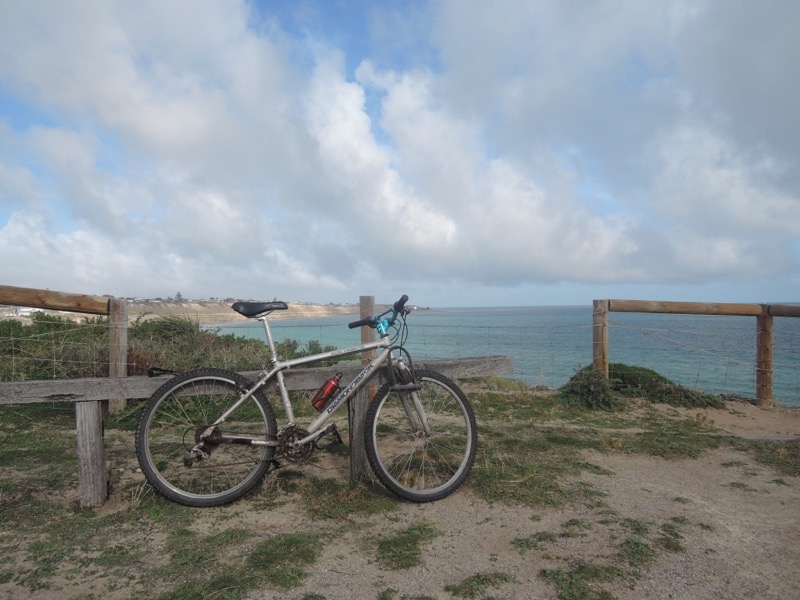
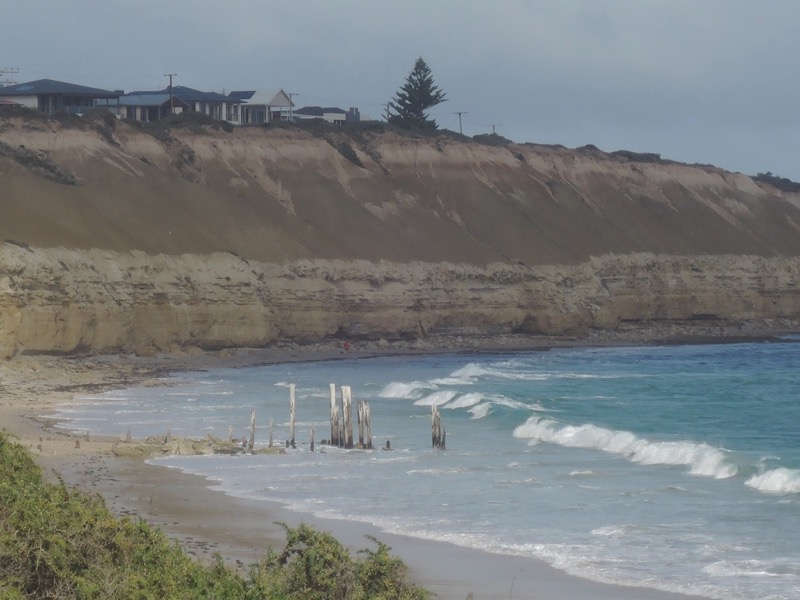
I took the photos you see in today’s post on a recent trip to the Aldinga Beach/Port Willunga area. I had not been feeling particularly well in the days prior to this; I had slept poorly as a result; and though I’d planned a bike ride, I cycled slowly, feeling tired and not terribly fit.

Still, it was good to be out there. I had looked forward to that ride, and I enjoyed it. It felt good to be alive.
But no-one was awake

Other people’s words about … the sound of the sea

Sometime after midnight the rain and the wind stopped. The room filled with the sound and smell of the ocean, both amplified somehow, as if it were about to pour through the windows, full of storm debris — ground up shells, rotting wood, seaweed, the husks of marine animals, endless other fragments suspended in the salt water, all of it caught in the roar of the waves. But by then there was no one awake to hear.

from ‘The Restorer
by Michael Sala

Having lived in various houses by the sea ever since my early twenties, I’ve noticed how the smell that drifts towards my house from the beach differs not just from day to day, but from house to house. Where I live now, my house is pretty much at sea level, and though it stands several streets back from the beach, on days when the wind is westerly, blowing straight off the ocean, the air that drifts into my yard is rank with the smell of salt and damp sand and rotting seaweed.

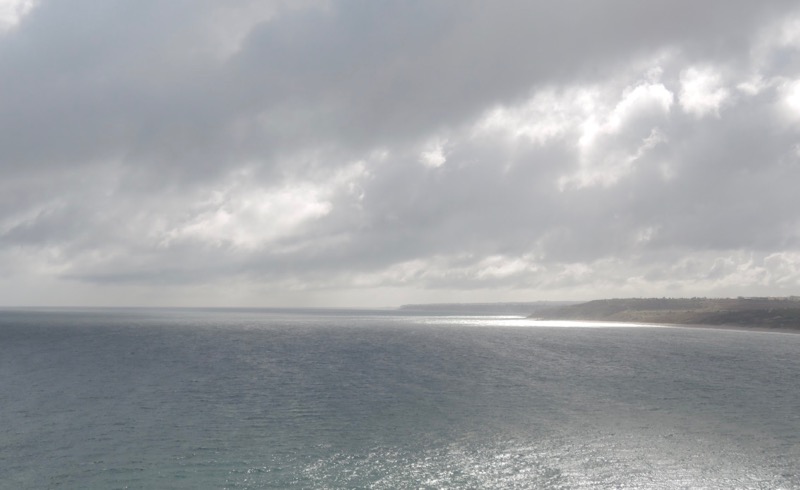
The sea is shallow here, too; you can wade out for quite some distance from the shore, heading towards the horizon, without the water rising much above waist level. You can see this, I hope, in the photos illustrating this post, all of which I took a few weeks ago on one of my early-autumn strolls along the beach.

But it’s the sound of the sea I’m thinking of right now, rather than the scents or the sights. As I write, it’s three o’clock in the morning and — unlike in Michael Sala’s description, quoted above — I am awake to hear the roar of the waves.

I’ve always been a light sleeper. Sometimes the sounds of the house wake me in the middle of the night — the rattle of my window, the sway of an open door. Sometimes it’s my dog who wakes me, sleeping on his blanket in the laundry, sighing and licking his chops, letting out a little snore.

I don’t always get back to sleep easily once I’ve woken. On nights like this, it’s the sound of the sea through the window that comforts me in my sleeplessness, connecting me to something outside myself, outside my house, outside the long, dark, lonely night.

In the morning, the sea will sound different — more distant, somehow, less intimate. But we’re not there yet.

Not yet.

Meadowlands

Other people’s words on … wandering

Musing takes place in a kind of meadowlands of the imagination, a part of the imagination that has not yet been plowed, developed, or put to any immediately practical use. Environmentalists are always arguing that those butterflies, those grasslands, those watershed woodlands, have an utterly necessary function in the grand scheme of things, even if they don’t produce a market crop. The same is true of the meadowlands of imagination; time spent there is not work time, yet without that time the mind becomes sterile, dull, domesticated. The fight for free space — for wilderness and public space — must be accompanied by a fight for free time to spend wandering in that space. Otherwise the individual imagination will be bulldozed over for the chain-store outlets of consumer appetite, true-crime titillations, and celebrity crises.

from ‘Wanderlust
by Rebecca Solnit

Most of you would know by now that one of the greatest pleasures in my life is wandering: along the beach, through the bush. We read a great deal these days about the value of high-intensity exercise (the dreaded HIIT), and though I understand the principle — short bursts of intense exercise, in order to get your heart going — I find the practice intimidating and somewhat soulless. I’m not interested in exercising purely to become ‘fit’, or to ‘get healthy’, or to try to do something epic.

What I’m interested in is wellbeing — a concept that includes mental, emotional and spiritual aspects as well as the more obvious physical ones.

That’s why I like to wander. Wandering, for me, can be a slow stroll through the bush, or it can be a steady march along the shore. Hopping on my bike and riding places — that’s a form of wandering, too. It’s about breathing in fresh air, moving through beautiful surroundings, looking around, and — yes — musing. As Solnit points out, it’s about being unfettered in time as well as space. Musing takes place in a kind of meadowlands of the imagination, she says.

Oh, yes.

So today’s round-up of photos comes from another one of my recent wanders in the bush, back at the end of April. It was a dull, still day, and not many of the plants along the trail were in flower. The bush seemed stripped of bright colour: it was all earthy greens and sandy browns. The birdsong was muted, too — the whistlers don’t call much at this time of year in South Australia; the shrike thrush songs are shorter and softer than in the warmer months. A crow croaked and muttered in the distance, and I heard snatches of broken magpie song.

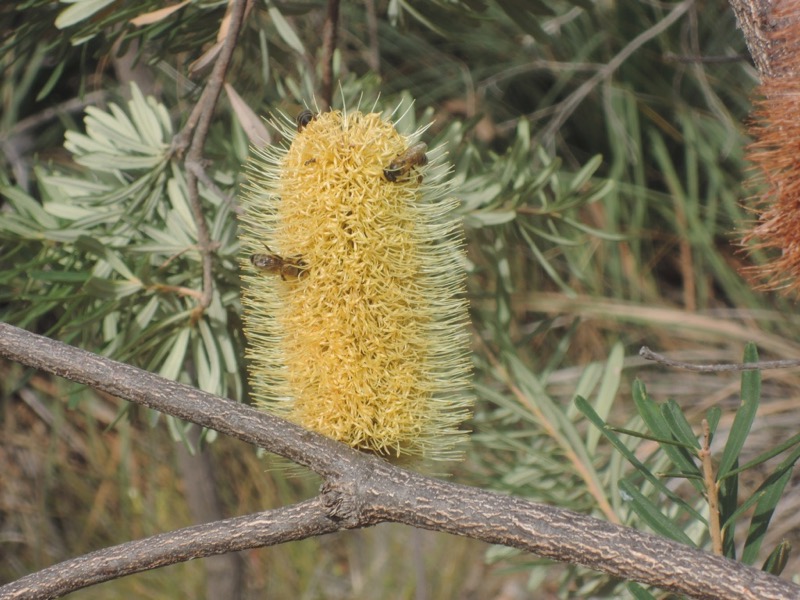
But then I noticed the banksia trees, which were all in flower. I hadn’t seen them at first because I’d stepped in from a louder, brighter world beyond the trail, a world of fences and bitumen streets and painted houses. Banksia leaves are a dark, khaki green, and the flowers blend in with the surrounding vegetation, varying in colour from pale yellow, through light green, to drab brown. Their beauty is as muted as the birdsong I described above, and in order not to miss it — in order to appreciate it — you have to be willing to slow down. To stop. To muse.

And that is what I did.

A prayer

Other people’s words about … the view

At the back of the hotel was a garden. Along its edge ran an earthen pathway pillared by palms. it ended in a low iron gate. They had not noticed the gate before, but now they saw it opened directly onto the beach. Stepping through the gate, they were confronted by the white and blue of ocean and beach in limpid morning light. Bare-chested fishermen were pushing wooden boats into the surf, chanting prayers together for luck. Women in fluorescent knee-high saris walked past in pairs and threes, with fish-baskets on their heads.

From ‘Sleeping on Jupiter
by Anurahda Roy

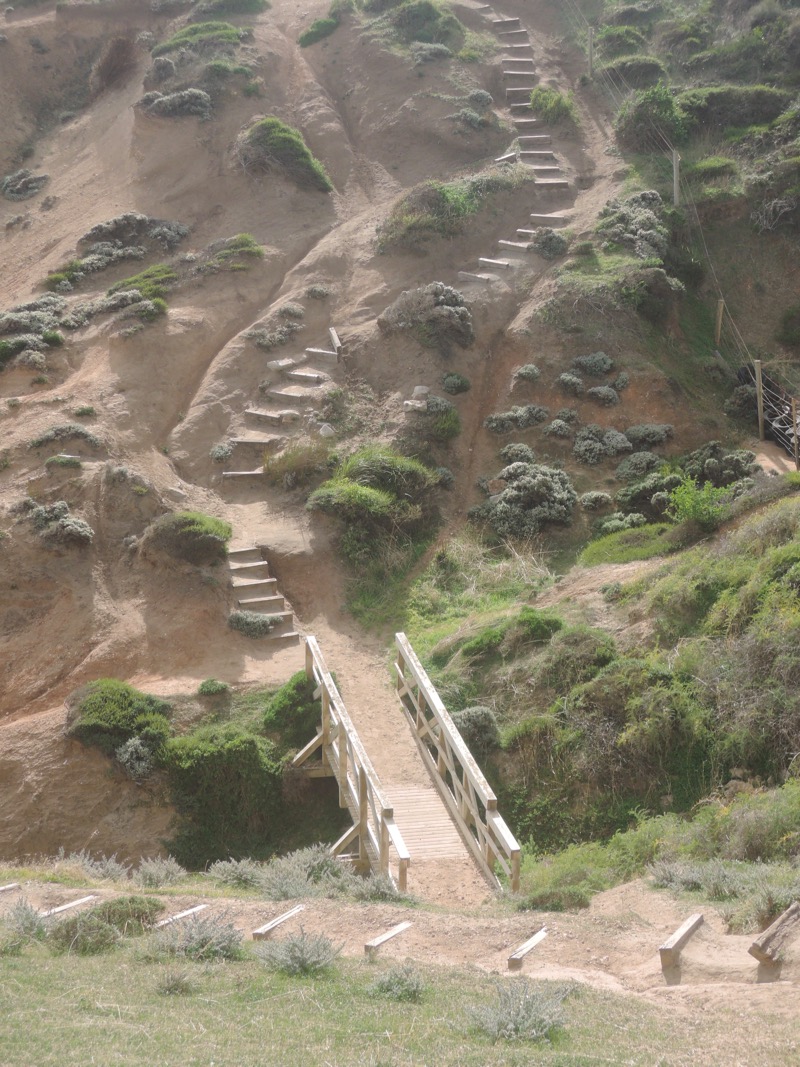
First, an update: I didn’t go to Yorke Peninsula during my fortnight of annual leave as I’d planned, after all. For a variety of reasons, it was impossible to get there. Instead, I spent some time holidaying along the coast down south. So the view from the steps down to the beach was different from the one I’d anticipated, though it was still a view to revel in.

A view to revel in

I complained recently about my dread of autumn and winter, those months of the year I always think of as the grey months. But my complaints this year were premature. Sometimes in South Australia, in the early weeks of autumn, the wind dies off, giving way to still, sunny days; endless blue skies; cold, clear nights. That’s how it’s been here for the last four weeks. I could not have picked better weather for a holiday by the sea, despite my last-minute change in location.

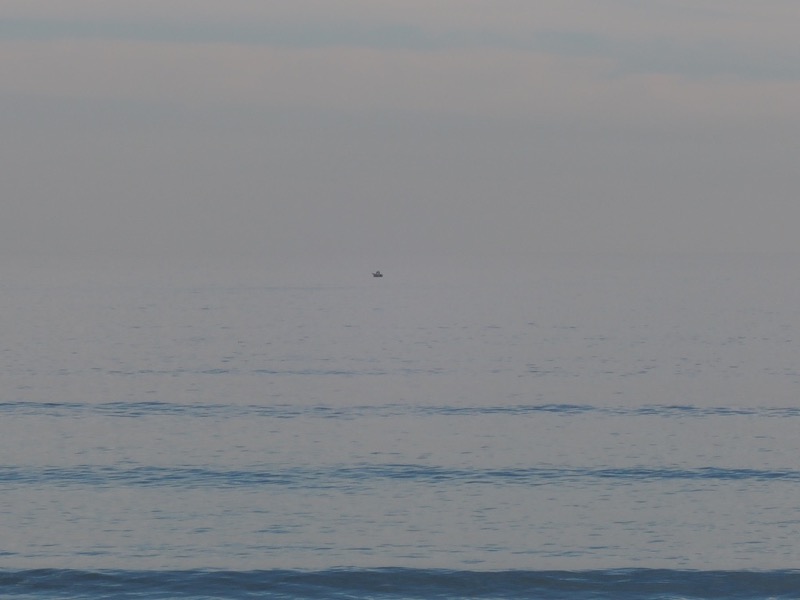
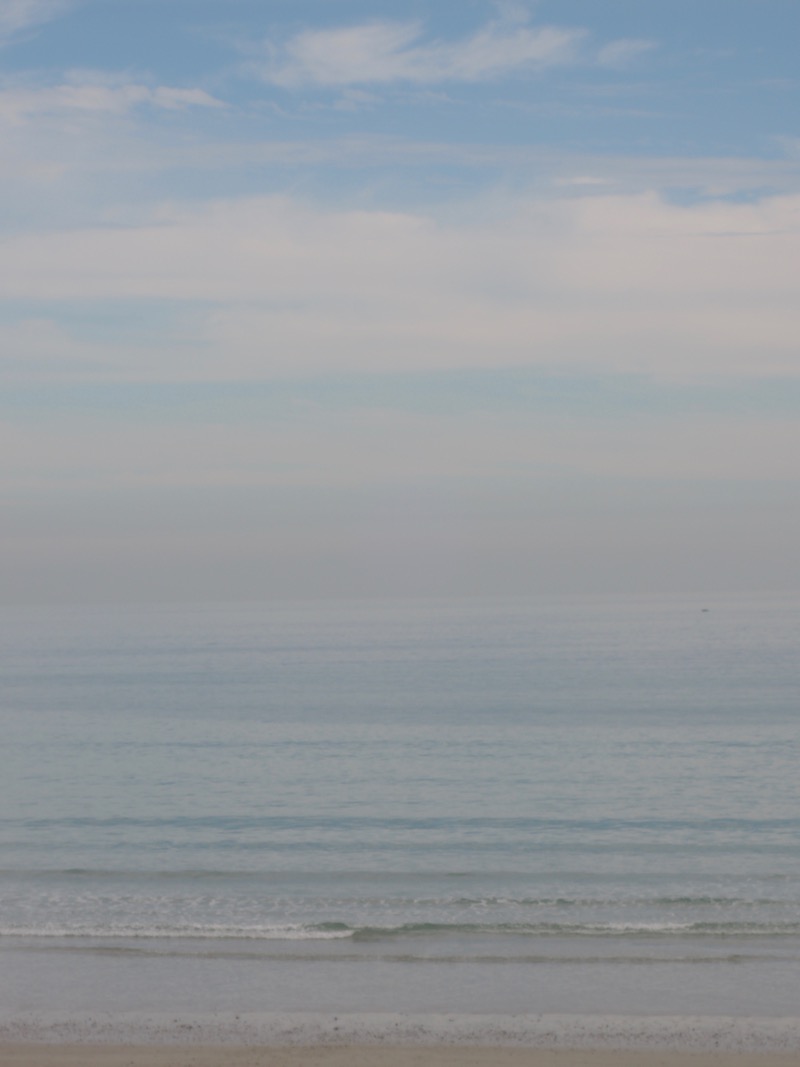
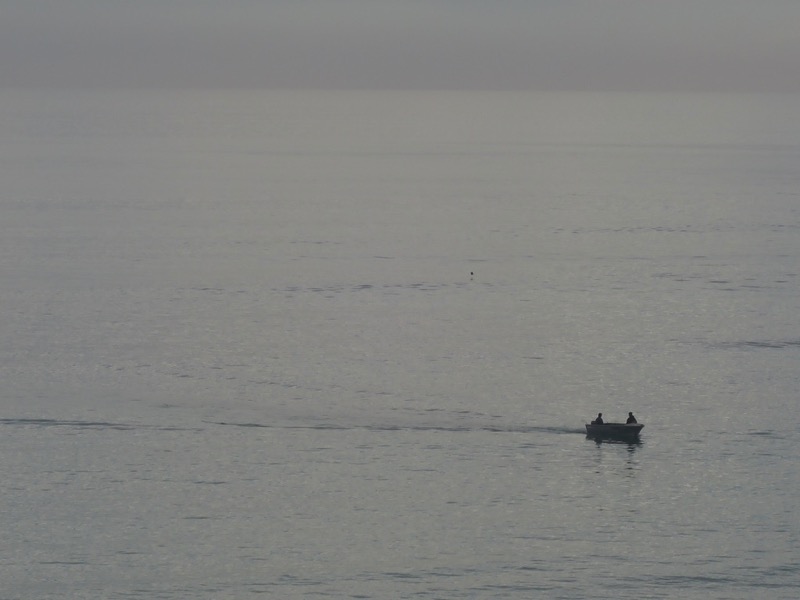
One afternoon I took a walk heading south along Aldinga Beach, beyond the spot where cars are permitted to drive onto the beach to launch fishing boats. It was one of those days where the horizon — that mysterious line between the sky and the sea — seems almost invisible. A boat glided over the surface, somehow suspended between the two, and the headland in the distance was shrouded in a mist of sea spray. The sea changed colour as I walked, from opaque blue, to glassy blue, and then to silver.

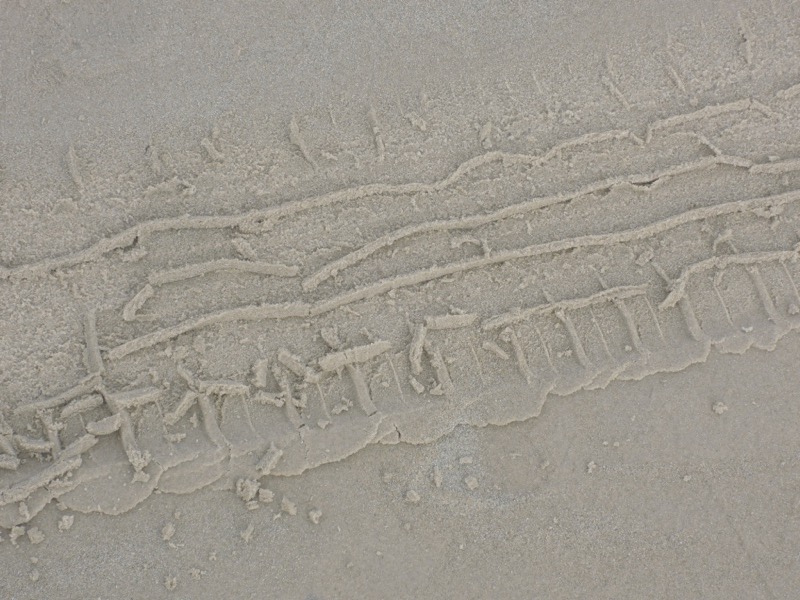
Tyre tracks in the sand
Invisible horizon
Gliding boat
Sea spray shrouding the headland
Opaque blue
Glassy blue
Silver and shining

As I walked, I thought about the words I’ve quoted right at the top of this post. I write about the beach here on my blog as a place, always, of beauty and wonder: a place where I swim and stroll, wander and wonder. But that’s a very Western, privileged, twenty-first-century way of viewing it, isn’t it? The beach in the world Anurahda Roy describes — modern-day India — is another place entirely; and her sea is a different entity. In her world, the sea provides the means for people to strive to make a living, and the making of that living obscures the beautiful view.

I am lucky enough, mostly, not to feel the need to chant a morning prayer for luck, as the fishermen in Roy’s passage do. But if I were the praying type, I would utter a prayer of thanks for the view of the beach I had that day, and for every moment I got to spend by it.